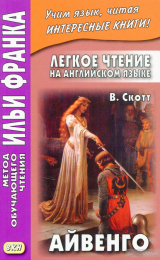
Текст книги "Легкое чтение на английском языке. В. Скотт. Айвенго"
Автор книги: Вальтер Скотт
Соавторы: Илья Франк
Жанры:
Классическая проза
,сообщить о нарушении
Текущая страница: 14 (всего у книги 17 страниц)
18
When the Black Knight left the outlaws (когда Черный рыцарь оставил разбойников; to leave – покидать /кого-либо; какое-либо место/; уезжать), he rode straight back to the priory (он поскакал прямо назад, к тому небольшому монастырю) near the ruins of Torquilstone (рядом с руинами Торкилстона), where he had left the wounded Ivanhoe (где он оставил раненого Айвенго). The two of them discussed some important matters (вдвоем они обсудили несколько важных вопросов; to discuss – обсуждать, дискутировать, дебатировать), and the Black Knight sent messengers out in all directions (и Черный рыцарь разослал гонцов во всех направлениях = во все стороны; messenger – связной, посыльный, курьер; уст. вестник, гонец).
straight [streɪt], priory ['praɪərɪ], matter ['mætǝ]
When the Black Knight left the outlaws, he rode straight back to the priory near the ruins of Torquilstone, where he had left the wounded Ivanhoe. The two of them discussed some important matters, and the Black Knight sent messengers out in all directions.
"We will meet again (мы встретимся снова)," the Black Knight said to Ivanhoe as he got up to leave (сказал Черный рыцарь Айвенго, когда поднялся, чтобы уйти), "at Coningsburgh, the castle of the dead Athelstane (в Конингсбурге, замке погибшего Ательстана; dead – мертвый, бездыханный), where your father will be arranging his funeral (где твой отец будет готовить его погребение)."
"I want to come with you (я хочу поехать с вами)!"
"Rest today, Wilfred (отдохни сегодня, Уилфрид; to rest – отдыхать, давать отдых, покой), otherwise you won't have the strength to travel tomorrow (а то у тебя не будет сил, чтобы путешествовать завтра). I will take Wamba here as my guide (я возьму Вамбу проводником: «в качестве своего проводника»; as – в качестве, как)."
arrange [ǝ'reɪndʒ], funeral ['fju:n(ə)rəl], strength [streŋθ, strenθ], guide [ɡaɪd]
«We will meet again,» the Black Knight said to Ivanhoe as he got up to leave, «at Coningsburgh, the castle of the dead Athelstane, where your father will be arranging his funeral.»
"I want to come with you!"
"Rest today, Wilfred, otherwise you won't have the strength to travel tomorrow. I will take Wamba here as my guide."
"I fear you have chosen (я боюсь, что вы выбрали) a talkative and troublesome fool to be your guide (болтливого и назойливого шута в качестве проводника: «быть вашим проводником»; troublesome – причиняющий беспокойство, трудный; беспокойный, назойливый). But he knows every road in this forest (но он знает каждую дорогу в этом лесу)."
Ivanhoe kissed the Knight's hand (Айвенго поцеловал руку рыцаря) and watched him mount his horse (и посмотрел, как тот взобрался на коня; to watch – /внимательно/ наблюдать, следить; to mount – подниматься, восходить; садиться /на лошадь, велосипед, в машину/). As soon as the Black Knight had left (как только Черный рыцарь уехал), Ivanhoe went to tell the prior (Айвенго пошел сказать приору) that he would be leaving as well (что он тоже уезжает). Together with Gurth, Ivanhoe then set off on the road (вместе с Гуртом Айвенго затем двинулся в путь по дороге; to set off – отправляться /в путь/) which the Black Knight and Wamba had taken into the forest (по которой Черный рыцарь и Вамба /только что/ уехали в лес).
talkative ['tɔ:kətɪv], troublesome ['trʌb(ə)ls(ə)m], mount [maʋnt]
«I fear you have chosen a talkative and troublesome fool to be your guide. But he knows every road in this forest.»
Ivanhoe kissed the Knight's hand and watched him mount his horse. As soon as the Black Knight had left, Ivanhoe went to tell the prior that he would be leaving as well. Together with Gurth, Ivanhoe then set off on the road which the Black Knight and Wamba had taken into the forest.
On their way through the forest (по пути через лес), Wamba sang happily for the Black Knight (Вамба распевал с удовольствием /песни/ для Черного рыцаря; happily – успешно, удачно, счастливо; с удовольствием, охотно), and the Knight soon joined in himself (и рыцарь вскоре и сам присоединился /к его пению/).
"I wish, Sir Jester (жаль, сэр Шут: «как бы мне хотелось, сэр Шут»)," said the Black Knight, laughing (сказал Черный рыцарь, смеясь), "that Friar Tuck could hear your songs now (что брат Тук не слышит, как ты поешь сейчас: «чтобы брат Тук мог бы услышать твои песни сейчас»)."
happily ['hæpɪlɪ], join [dʒɔɪn], laughing ['lɑ:fɪŋ], friar ['fraɪǝ]
On their way through the forest, Wamba sang happily for the Black Knight, and the Knight soon joined in himself.
"I wish, Sir Jester," said the Black Knight, laughing, "that Friar Tuck could hear your songs now."
"Unless I am mistaken, Sir Knight (если я не ошибаюсь, сэр рыцарь)," Wamba said, "some men have been watching us (какие-то люди наблюдают за нами) from among the trees for a while (из-за деревьев уже некоторое время; from among – из, среди). If they were friends (если бы они были друзьями), they would have joined us on the road (то они бы присоединились к нам на дороге)."
unless[ʌn'les, ən-], mistaken [mɪ'steɪkən], among [ǝ'mʌŋ]
«Unless I am mistaken, Sir Knight,» Wamba said, «some men have been watching us from among the trees for a while. If they were friends, they would have joined us on the road.»
At that moment three arrows hit (в этот самый момент три стрелы ударились = попали; to hit – ударять, поражать; попадать в цель) against the helmet of the Black Knight (в шлем Черного рыцаря; against – значение движения по направлению к чему-либо /по направлению к чему-либо вплоть до соприкосновения/: о, в).
"What does this mean (что это значит)!" shouted the Knight angrily (вскричал рыцарь гневно). The men that Wamba had seen rushed forward (те самые люди, которых видел Вамба, бросились вперед) and attacked the Knight from all sides (и напали на рыцаря со всех сторон) with their swords, shouting «Die!» (с мечами и криками «Умри!»: «выкрикивая „Умри!“»).
arrow ['ærǝʋ], shout [ʃaʋt], angrily ['æŋɡrɪlɪ], rush [rʌf], die [daɪ]
At that moment three arrows hit against the helmet of the Black Knight.
"What does this mean!" shouted the Knight angrily. The men that Wamba had seen rushed forward and attacked the Knight from all sides with their swords, shouting "Die!"
A knight in blue armour rode out from behind them (какой-то рыцарь в синих доспехах выехал /верхом/ из-за них; from behind – из-за, сзади) and wounded the Black Knight's horse with his lance (и нанес рану коню Черного рыцаря своим копьем; to wound – ранить). The Black Knight fell to the ground (Черный рыцарь упал на землю) and got up to continue fighting on foot (и поднялся на ноги, чтобы продолжить драться стоя: «на ногах»). Seeing that the Black Knight was greatly outnumbered (видя, что /противники/ Черного рыцаря значительно превосходят его в числе; to outnumber – превосходить численно), Wamba quickly grabbed Locksley's horn from him (Вамба быстро выхватил у него /охотничий/ рожок, /который дал/ Локсли) and blew it with all his might (и задудел в него со всей силой; to blow – веять, дуть /о ветре/; играть /на духовом инструменте/; might – энергия; мощность, физическая сила; with all might – изо всех сил, со всей силой).
blue [blu:], fell [fel], continue [kən'tɪnju:], outnumber [aʋt'nʌmbǝ], blew [blu:], might [maɪt]
A knight in blue armour rode out from behind them and wounded the Black Knight's horse with his lance. The Black Knight fell to the ground and got up to continue fighting on foot. Seeing that the Black Knight was greatly outnumbered, Wamba quickly grabbed Locksley's horn from him and blew it with all his might.
The Blue Knight had already forced the Black Knight up against a tree (Синий рыцарь уже вынудил Черного рыцаря отступить к дереву; to force – оказывать давление, заставлять, принуждать, вынуждать) and was about to kill him with his lance (и уже собирался убить его /своим/ копьем), when suddenly Locksley and Friar Tuck appeared (когда внезапно появились Локсли и брат Тук) at the head of a group of outlaws (во главе группы разбойников; head – голова; головная часть /процессии, колонны и т.п./; глава, руководитель).
tree [tri:], head [hed], group [ɡru:p]
The Blue Knight had already forced the Black Knight up against a tree and was about to kill him with his lance, when suddenly Locksley and Friar Tuck appeared at the head of a group of outlaws.
Within a few minutes (через несколько минут; within – выражает временной предел: не позднее; в течение), most of the attackers lay dead or wounded on the ground (большинство нападавших лежали убитыми или ранеными на земле). Wamba ran up to the Blue Knight (Вамба подбежал к Синему рыцарю), who lay under his fallen horse (который лежал под своей упавшей лошадью), and pulled his helmet off (и стянул его шлем).
dead [ded], lay [leɪ], fallen ['fɔ:ləŋ]
Within a few minutes, most of the attackers lay dead or wounded on the ground. Wamba ran up to the Blue Knight, who lay under his fallen horse, and pulled his helmet off.
«Waldemar Fitzurse!» said the Black Knight, surprised (сказал Черный рыцарь с удивлением). "What made you do this (что заставило тебя так поступить)?"
«Richard,» said Fitzurse, looking up at him (глядя на него; to look up – смотреть вверх, поднимать глаза). "If only you knew what ambition can make people do (если бы вы только знали, что честолюбивые замыслы могут заставить людей делать = до чего могут довести честолюбивые замыслы)."
"Who asked you to become a traitor (кто попросил тебя стать предателем; to ask – спрашивать; просить; to become – стать, становиться, делаться)?"
"Your own father's son (сын твоего родного отца; own – свой, собственный; родной)," answered Fitzurse.
ambition [æm'bɪʃ(ə)n], traitor ['treɪtǝ], father ['fɑ:ðǝ]
«Waldemar Fitzurse!» said the Black Knight, surprised. «What made you do this?»
"Richard," said Fitzurse, looking up at him. "If only you knew what ambition can make people do."
"Who asked you to become a traitor?"
"Your own father's son," answered Fitzurse.
An angry look crossed the Black Knight's face (гневное выражение промелькнуло на лице Черного рыцаря), but he calmed himself down again (но он снова успокоился; to calm – затихнуть, успокоиться /напр., о ветре, море, шторме/; успокаивать, умиротворять /о людях, об обстановке где-либо/; to calm down – успокаивать/ся/, смягчать/ся/).
"I will spare your life on one condition (я пощажу твою жизнь при одном условии; to spare – беречь, жалеть; щадить, избавлять /от чего-либо/; condition – состояние, положение; условие, оговорка). Leave England and go back to your Norman castle within three days (покинь Англию и возвращайся в свой норманнский замок в течение трех дней). Let him leave us unharmed, Locksley (позволь ему покинуть нас = пусть он уйдет целым и невредимым, Локсли; unharmed – неповрежденный, целый; to harm – причинять вред; наносить ущерб)."
cross [krɔs], calm [kɑ:m], spare [spɛə], condition [kən'dɪʃ(ə)n], unharmed[ʌn'hɑ:md]
An angry look crossed the Black Knight's face, but he calmed himself down again.
"I will spare your life on one condition. Leave England and go back to your Norman castle within three days. Let him leave us unharmed, Locksley."
"I would have sent an arrow after him (я бы выпустил стрелу ему вслед: «за ним»)," said Locksley, watching Fitzurse leave (наблюдая, как Фицурс уезжает), "and saved him the trouble of such a long journey (и избавил бы его от такого длинного путешествия; trouble – беспокойство, волнение; труд, усилие; to save smb. the trouble of doing smth. – избавить кого-либо от необходимости сделать что-либо)."
"No. You have an English heart, Locksley (у тебя английская душа, Локсли; heart – сердце /орган тела/; сердце, душа)," said the Black Knight, taking off his helmet (снимая свой шлем), "and therefore you must do what I say (и поэтому ты должен делать то, что я говорю), for I am Richard of England (так как я Ричард /король/ Англии: «Ричард Английский»)."
leave [li:v], trouble ['trʌb(ə)l], journey ['dʒǝ:nɪ]
«I would have sent an arrow after him,» said Locksley, watching Fitzurse leave, «and saved him the trouble of such a long journey.»
"No. You have an English heart, Locksley," said the Black Knight, taking off his helmet, "and therefore you must do what I say, for I am Richard of England."
As he spoke these words (когда он произнес эти слова), the outlaws immediately fell on their knees in front of him (разбойники немедленно пали на колени перед ним) and asked him to forgive them for the crimes (и попросили его простить их за те преступления; crime – преступление; злодеяние, нарушение) that they had committed as outlaws (которые они совершили как разбойники = будучи разбойниками; to commit – совершать /чаще дурное/).
"Rise, my friends (встаньте, мои друзья)," said the King, looking down at them (сказал король, глядя на них).
knee [ni:], forgive [fǝ'ɡɪv], crime [kraɪm], commit [kǝ'mɪt]
As he spoke these words, the outlaws immediately fell on their knees in front of him and asked him to forgive them for the crimes that they had committed as outlaws.
"Rise, my friends," said the King, looking down at them.
"Your crimes are forgiven (ваши преступления прощены; to forgive – прощать) through your loyal service to me at Torquilstone (за вашу верную службу мне в /битве при/ Торкилстоне; through – по причине, вследствие, из-за, благодаря /указывает на причину/; service – служба, занятие; военная служба) and here in the forest today (и здесь в этом лесу сегодня). And you, brave Locksley (а ты, храбрый Локсли) —"
"You don't need to call me Locksley any longer, my lord (вам больше не обязательно называть меня Локсли, мой господин = государь). You can use the name (вы можете использовать имя) which I am also known by (под которым я также известен; known – известный): I am Robin Hood of Sherwood Forest (я Робин Гуд из Шервудского леса)."
loyal ['lɔɪəl], brave [breɪv], call [kɔ:l]
«Your crimes are forgiven through your loyal service to me at Torquilstone and here in the forest today. And you, brave Locksley —»
"You don't need to call me Locksley any longer, my lord. You can use the name which I am also known by: I am Robin Hood of Sherwood Forest."
"King of outlaws (король разбойников)!" exclaimed the King. "Who has not heard of that name (кто не слышал этого имени), from here all the way to Palestine (отсюда до самой Палестины; all the way /from … to/ – от самого … до самого)! Nothing that you have done in these troubled times (ничего из того, что ты совершил в эти смутные времена; troubled – беспокойный, встревоженный) while I have been abroad (пока я был за границей) will ever be held against you (никогда не будет использовано против тебя; to hold it against smb. – иметь претензии к кому-либо, иметь что-либо против кого-либо)."
nothing ['nʌθɪŋ], troubled ['trʌb(ə)ld], abroad [ǝ'brɔ:d]
«King of outlaws!» exclaimed the King. «Who has not heard of that name, from here all the way to Palestine! Nothing that you have done in these troubled times while I have been abroad will ever be held against you.»
"It is true what they say (это правда, что говорят)," said Wamba, "when the cat is away (когда кота нет), the mice will play (мыши будут резвиться; to play – играть, резвиться, забавляться)."
«Wamba,» said the King, "your good service will not be forgotten, either (твоя добрая служба тоже не будет забыта; to forget – забывать)."
mice [maɪs], service ['sǝ:vɪs], forgotten [fǝ'ɡɔtn], either ['aɪðǝ]
«It is true what they say,» said Wamba, «when the cat is away, the mice will play.»
"Wamba," said the King, "your good service will not be forgotten, either."
At that moment, two horsemen arrived (в этот момент появились двое всадников; to arrive – прибывать). One was Ivanhoe on the prior's horse (один /из них/ был Айвенго, /верхом/ на лошади приора), and the other was Gurth on Ivanhoe's war-horse (а второй: «другой из двух» был Гурт, /верхом/ на боевом коне Айвенго). Ivanhoe was surprised to see the group of outlaws (Айвенго был удивлен, увидев группу разбойников) and six or seven dead bodies lying on the ground (и шесть или семь трупов: «мертвых тел», лежащих на земле). He was even more surprised (он был еще более удивлен) to see the King without his helmet on (увидев короля без /своего/ шлема; without – без /отсутствие кого-либо, чего-либо/; to have smth. on – быть одетым во что-либо, иметь на себя надетым что-либо).
horseman ['hɔ:smən], war-horse ['wɔ:hɔ:s], lying ['laɪɪŋ]
At that moment, two horsemen arrived. One was Ivanhoe on the prior's horse, and the other was Gurth on Ivanhoe's war-horse. Ivanhoe was surprised to see the group of outlaws and six or seven dead bodies lying on the ground. He was even more surprised to see the King without his helmet on.
"Don't be afraid, Wilfred, to call me Richard (не бойся, Уилфрид, называть меня Ричардом) in the company of these true English hearts (в компании этих истинно английских сердец; company – общество, компания; друзья, товарищи)," said the King.
"I don't doubt that (я не сомневаюсь в этом; to doubt – сомневаться, испытывать сомнения, не доверять)," answered Ivanhoe, looking around (ответил Айвенго, оглядываясь вокруг). "But what does this mean (но что все это значит), these dead men and the blood on the armour of my King (эти убитые и кровь на доспехах моего короля)?"
company ['kʌmpənɪ], heart [hɑ:t], doubt [daʋt]
«Don't be afraid, Wilfred, to call me Richard in the company of these true English hearts,» said the King.
"I don't doubt that," answered Ivanhoe, looking around. "But what does this mean, these dead men and the blood on the armour of my King?"
"Traitors have been with us, Wilfred (предатели оказались с нами = на нас напали изменники, Уилфрид)," said the King, "but thanks to these brave men (но благодаря этим смелым людям), those traitors have met their deaths (эти предатели встретили свою смерть; to meet). But, I think you have been a traitor yourself (но, мне кажется, что ты и сам оказался предателем)," he continued, smiling at Ivanhoe (продолжил он, улыбаясь Айвенго; to continue – продолжать). "Did I not clearly tell you (разве я не сказал тебе ясно; clear – ясный, понятный, недвусмысленный /о словах, значениях и т.п./) to rest in the priory (отдыхать в том небольшом монастыре) until your wounds have healed (до тех пор, пока твои раны не залечатся)?"
brave [breɪv], smiling ['smaɪlɪŋ], clearly ['klɪəlɪ]
«Traitors have been with us, Wilfred,» said the King, «but thanks to these brave men, those traitors have met their deaths. But, I think you have been a traitor yourself,» he continued, smiling at Ivanhoe. «Did I not clearly tell you to rest in the priory until your wounds have healed?»
"They have healed (они зажили/залечились)," said Ivanhoe. "But why, noble King, do you trouble your servants (но почему, благородный король, вы тревожите своих слуг; to trouble – беспокоить, тревожить) by risking your life on lonely journeys and dangerous adventures (рискуя своей жизнью в одиноких путешествиях и опасных приключениях; adventure – приключение; рискованное предприятие, авантюра)!"
"Richard is prouder to fight (Ричард испытывает большее чувство гордости, когда сражается: «более горд сражаться»; proud – гордый, обладающий чувством собственного достоинства; испытывающий чувство гордости) when he only has his good sword (только своим добрым мечом: «когда у него есть только его добрый меч»)," said the King, "than when he leads an army (чем когда он ведет армию) of a hundred thousand men into battle (/состоящую/ из сотни тысяч человек, на битву)."
noble ['nǝʋb(ə)l], dangerous ['deɪndʒərəs], adventure [ǝd'venʧǝ]
«They have healed,» said Ivanhoe. «But why, noble King, do you trouble your servants by risking your life on lonely journeys and dangerous adventures!»
"Richard is prouder to fight when he only has his good sword," said the King, "than when he leads an army of a hundred thousand men into battle."
"But your kingdom, my lord (но ваше королевство, государь)," exclaimed Ivanhoe, "your kingdom is threatened by civil war (вашему королевству грозит гражданская война; to threaten – грозить, угрожать). You are the only one who can unite this country (вы единственный, кто может объединить эту страну; to unite – соединять; объединять). You owe that to your people (вы обязаны /сделать это/ для своего народа; people – народ, нация)!"
threatened [θretnd], civil ['sɪv(ə)l], unite [ju:'naɪt]
«But your kingdom, my lord,» exclaimed Ivanhoe, «your kingdom is threatened by civil war. You are the only one who can unite this country. You owe that to your people!»
"My kingdom and my people (мое королевство и мой народ)!" answered Richard. "As I told you at the priory (как я сказал тебе в монастыре), I have to remain in disguise (я вынужден оставаться неузнанным = скрывать, кто я; to remain – оставаться, пребывать; оставаться в каком-либо состоянии; disguise – одежда для маскировки; маскировка; переодевание) to give my allies in England time to raise an army (чтобы дать моим союзникам в Англии время собрать армию). In that way, when the return of the King is announced (таким образом, когда о возвращении короля будет объявлено; way – путь, дорога; образ действия, особенность), we will be able to stop any Normans or Saxons from rebelling against us (мы сможем сдержать любых норманнов или саксов от восстаний против нас = мы сможем подавить любые восстания норманнов или саксов против нас; to stop – останавливаться; предотвратить; остановить; предупредить /совершение чего-либо/; to rebel – поднимать восстание, мятеж, бунт)."
kingdom ['kɪŋdəm], remain [rɪ'meɪn], disguise [dɪs'ɡaɪz], rebel [rɪ'bel]
«My kingdom and my people!» answered Richard. «As I told you at the priory, I have to remain in disguise to give my allies in England time to raise an army. In that way, when the return of the King is announced, we will be able to stop any Normans or Saxons from rebelling against us.»
He turned to Robin Hood (он повернулся к Робин Гуду).
"King of outlaws (король разбойников)! Have you no food and drink for your fellow King (нет ли у тебя еды и питья для твоего собрата-короля; fellow – приятель, товарищ, коллега, собрат)?"
A meal was quickly prepared (яства были быстро приготовлены; meal – прием пищи, еда; to prepare – готовить, подготавливать; готовить /обед, лекарство/) beneath a nearby oak tree (под ближайшим дубом; beneath – ниже, под). The outlaws hesitated at first (разбойники замешкались поначалу; to hesitate – колебаться, сомневаться; медлить, находиться в нерешительности) at the idea of eating with the King of England (при мысли о трапезе с /самим/ королем Англии; idea – идея, мысль, план, намерение; eating – принятие пищи, еда), but he laughed and joked with them (но он смеялся и шутил с ними), and soon they happily joined him in the food and wine (и вскоре они с готовностью присоединились к нему за трапезой: «за едой и питьем»).
food [fu:d], prepared [prɪ'peəd], beneath [bɪ'ni:θ], nearby ['nɪəbaɪ], hesitate ['hezɪteɪt]
He turned to Robin Hood.
"King of outlaws! Have you no food and drink for your fellow King?"
A meal was quickly prepared beneath a nearby oak tree. The outlaws hesitated at first at the idea of eating with the King of England, but he laughed and joked with them, and soon they happily joined him in the food and wine.
"We are honoured by the presence of our King (своим присутствием король оказал нам честь = нам лестно присутствие нашего короля; to honour – почитать, уважать, чтить; удостаивать, оказывать честь)," Robin Hood said to Ivanhoe (Робин Гуд сказал Айвенго), "yet we wouldn't want him to be delayed (но нам бы не хотелось задерживать его; to delay – откладывать, отсрочивать; задерживать, замедлять), if the kingdom is in danger (если королевство в опасности)."
"Well spoken, brave Robin Hood (хорошо сказано, храбрый Робин Гуд)," said Ivanhoe.
presence ['prez(ə)ns], delayed [dɪ'leɪd], spoken ['spǝʋkən]
«We are honoured by the presence of our King,» Robin Hood said to Ivanhoe, «yet we wouldn't want him to be delayed, if the kingdom is in danger.»
"Well spoken, brave Robin Hood," said Ivanhoe.
"Wilfred is impatient (Уилфрид нетерпелив)," said Richard, and decided it was time for them to leave (и решил, что им пора уезжать: «это было время для них, чтобы уехать»). Robin Hood gave the King his hand (Робин Гуд протянул королю свою руку), and Richard promised to help him in future (и Ричард пообещал помочь ему в будущем), should he ever need the King's help (если тому когда-либо понадобится помощь короля). While the sun began to set over the trees above them (когда солнце начало садиться за деревьями над ними), Ivanhoe, Wamba and Gurth set off with the King towards the Castle of Coningsburgh (Айвенго, Вамба и Гурт отправились с королем к замку Конингсбург).
impatient [ɪm'peɪʃ(ə)nt], promise ['prɔmɪs], towards [tǝ'wɔ:dz]
«Wilfred is impatient,» said Richard, and decided it was time for them to leave. Robin Hood gave the King his hand, and Richard promised to help him in future, should he ever need the King's help. While the sun began to set over the trees above them, Ivanhoe, Wamba and Gurth set off with the King towards the Castle of Coningsburgh.