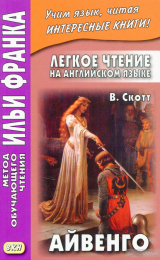
Текст книги "Легкое чтение на английском языке. В. Скотт. Айвенго"
Автор книги: Вальтер Скотт
Соавторы: Илья Франк
Жанры:
Классическая проза
,сообщить о нарушении
Текущая страница: 5 (всего у книги 17 страниц)
"Whatever happens to him, he is the winner of the tournament, and his wounds must be taken good care of!" Prince John added with an evil smile. "Let our own royal doctor take care of him."
But Fitzurse told the Prince (но Фицурс сказал принцу) that Ivanhoe had already been carried out of the lists (что Айвенго уже был унесен с ристалища; to carry – везти, перевозить; нести, носить, относить) by some of his friends (его друзьями).
"I really admire the way (я действительно восхищаюсь тем; to admire – любоваться, рассматривать с восхищением; восторгаться; way – путь, дорога; манера, привычка, образ действия, особенность) the Lady Rowena hid her sorrow (как леди Ровена скрыла свою печаль; to hide – прятать, скрывать), when she saw Ivanhoe fall down before her (когда она увидела, как Айвенго упал перед ней)," Fitzurse added (добавил Фицурс).
"We shall cheer her up then (тогда мы должны утешить ее; to cheer up – развеселить, утешать, ободрять)," replied the Prince, "and marry her to a Norman (и выдать ее замуж за норманна; to marry – жениться или выходить замуж; женить или выдавать замуж). What do you say, De Bracy (что вы скажете, де Браси)? How would you like to have her and her land (как вам это понравится – взять ее /в жены/ и взять ее земли; to have – иметь, обладать; получать, приобретать)?"
admire [ǝd'maɪǝ], sorrow ['sɔrǝʋ], cheer [ʧɪǝ], marry ['mærɪ]
But Fitzurse told the Prince that Ivanhoe had already been carried out of the lists by some of his friends.
"I really admire the way the Lady Rowena hid her sorrow, when she saw Ivanhoe fall down before her," Fitzurse added.
"We shall cheer her up then," replied the Prince, "and marry her to a Norman. What do you say, De Bracy? How would you like to have her and her land?"
"She is very beautiful (она очень красивая), and I would be happy to take her as my wife (и я был бы счастлив взять ее в жены)."
"Well, then she is yours, De Bracy (что ж, тогда она твоя, де Браси)."
A message was handed to Prince John by a servant (какое-то послание было вручено принцу Джону слугой; message – сообщение, письмо, послание; hand – рука /кисть/; to hand – передавать, вручать).
"Where is this from (откуда это)?" the Prince demanded (принц потребовал /ответа/; to demand – требовать, потребовать; спрашивать, задавать вопрос).
"From abroad (из-за границы)," replied the servant (ответил слуга), and Prince John read it (и принц Джон прочел его /послание/). "Beware, the Devil is free (берегитесь, черт свободен)!" it said (говорилось в нем: «говорило оно»). The Prince turned pale (принц побледнел) and handed the message to De Bracy (и вручил/передал послание де Браси). "It means that my brother (это означает, что мой брат) has been released from his prison in Austria (был освобожден из /его/ тюрьмы в Австрии; to release – избавлять, освобождать /от обязательств и т.п./; освобождать /из заключения/, выпускать на волю)," he added in a weak voice (он добавил слабым голосом).
message ['mesɪdʒ], demand [dɪ'mɑ:nd], release [rɪ'li:s], prison ['prɪz(ə)n], Austria ['ɔ:strɪǝ]
«She is very beautiful, and I would be happy to take her as my wife.»
"Well, then she is yours, De Bracy."
A message was handed to Prince John by a servant.
"Where is this from?" the Prince demanded.
"From abroad," replied the servant, and Prince John read it. "Beware, the Devil is free!" it said. The Prince turned pale and handed the message to De Bracy. "It means that my brother has been released from his prison in Austria," he added in a weak voice.
5
As Prince John recovered from the news of his brother's release (когда принц Джон пришел в себя от новости об освобождении /своего/ брата; release – освобождение, высвобождение; освобождение /из заключения/), the trumpets announced the start of the archery competition (трубы возвестили о начале состязания по стрельбе из лука; competition – соревнование, состязание), and more than thirty archers took their places in the lists (и более тридцати лучников заняли свои места на ристалище). Prince John soon found the archer from the day before (принц Джон вскоре нашел того самого лучника, /которого встретил/ накануне).
"You (ты)! Come here (пойди сюда)! What is your name (как тебя зовут)?"
"Locksley (Локсли)," replied the archer (ответил лучник).
announce [ǝ'naʋns], archery ['ɑ:ʧərɪ], thirty ['θǝ:tɪ]
As Prince John recovered from the news of his brother's release, the trumpets announced the start of the archery competition, and more than thirty archers took their places in the lists. Prince John soon found the archer from the day before.
"You! Come here! What is your name?"
"Locksley," replied the archer.
"Watch this man closely (следите за этим человеком внимательно; to watch – наблюдать, следить)," Prince John said to his Norman friends (сказал принц Джон своим друзьям-норманнам). "See how his heart is sinking already (видите, как он /уже/ трусит: «как его сердце падает уже»; to sink – тонуть, утопать; опускаться, падать; his heart sank – он струсил, его душа в пятки ушла). He knows he is going to lose the competition (он знает, что проиграет состязание; to lose – терять; проигрывать)!"
A target was placed at the far end of the lists (мишень была установлена в дальнем = противоположном конце ристалища; target – цель, мишень). As Prince John and Locksley watched (пока принц Джон и Локсли наблюдали), each archer shot three arrows at the target (каждый из лучников выпустил по три стрелы в мишень; to shoot – стрелять, вести огонь; выстреливать, производить выстрел).
sinking ['sɪŋkɪŋ], lose [lu:z], target ['tɑ:ɡɪt]
«Watch this man closely,» Prince John said to his Norman friends. «See how his heart is sinking already. He knows he is going to lose the competition!»
A target was placed at the far end of the lists. As Prince John and Locksley watched, each archer shot three arrows at the target.
At this distance (с этого расстояния), only ten arrows hit the target (только десять стрел попали в мишень; to hit – ударять; попадать /в цель/, поражать), but a man named Hubert hit the center ring twice (но один человек по имени Губерт попал в центральный круг дважды; ring – кольцо; окружность, круг, кружок) and was declared to be the best among them (и был объявлен лучшим среди них; to declare – заявлять; объявлять, провозглашать).
"Now, Locksley (ну же, Локсли)," said Prince John, "will you try to compete against this archer (попытаешься ли ты состязаться с этим лучником; to compete – состязаться, соперничать, конкурировать; участвовать в спортивном соревновании) or will you give up (или ты откажешься; to give up – отказаться /от работы, предложения, участия в соревновании и т.п./; уступать, сдаваться)?"
distance ['dɪst(ə)ns], twice [twaɪs], declare [dɪ'klɛə], compete [kəm'pi:t]
At this distance, only ten arrows hit the target, but a man named Hubert hit the center ring twice and was declared to be the best among them.
"Now, Locksley," said Prince John, "will you try to compete against this archer or will you give up?"
"I will try on one condition (я попытаюсь при одном условии; condition – состояние, положение; условие, оговорка): if I shoot at this man's target (если я буду стрелять /и попаду/ в мишень этого человека), he will have to shoot at my target afterwards (то ему придется стрелять в мою мишень после этого)."
"This is fair (это по-честному; fair – честный, справедливый, беспристрастный)," said the Prince, and the target was replaced with a fresh one (и мишень была заменена на новую; to replace – ставить или класть обратно, на место; заменять; fresh – свежий, только что полученный; новый, дополнительный, еще один). Hubert placed an arrow on his bowstring (Губерт расположил стрелу на тетиве; bow – лук /оружие/; string – веревка, бечевка) and took very careful aim at the target (и очень тщательно прицелился в мишень; aim – цель, намерение; цель, мишень; to take aim at smth. – прицеливаться во что-либо), measuring the distance with his eyes (измеряя расстояние взглядом; to measure – измерять, мерить; eye – глаз, око; взгляд).
condition [kən'dɪʃ(ə)n], afterwards ['ɑ:ftəwədz], bowstring ['bǝʋstrɪŋ], measure ['meʒə], measuring ['meʒərɪŋ]
«I will try on one condition: if I shoot at this man's target, he will have to shoot at my target afterwards.»
"This is fair," said the Prince, and the target was replaced with a fresh one. Hubert placed an arrow on his bowstring and took very careful aim at the target, measuring the distance with his eyes.
He then took a step forward (затем он сделал шаг вперед; to take a step – шагнуть) and drew the bowstring right back to his ear (и оттянул тетиву прямо /назад/ к самому уху). The arrow flew through the air (стрела полетела по воздуху; to fly – летать, лететь) and hit the inner ring of the target (и попала во внутренний круг мишени), but not exactly in the center (но не точно в центр).
"You forgot to pay attention to the wind (ты забыл обратить внимание на ветер = ты забыл учесть ветер; to pay – платить, заплатить; attention – внимание, внимательность; to pay attention – обращать внимание)," Locksley said. "Otherwise it would have been a much better shot (а то бы это был гораздо лучший выстрел; otherwise – иначе, иным способом; в противном случае, иначе; в других обстоятельствах; shot – выстрел; попытка)."
forward ['fɔ:wəd], exactly [ɪɡ'zæktlɪ], attention [ǝ'tenʃ(ə)n], otherwise ['ʌðəwaɪz]
He then took a step forward and drew the bowstring right back to his ear. The arrow flew through the air and hit the inner ring of the target, but not exactly in the centre.
"You forgot to pay attention to the wind," Locksley said. "Otherwise it would have been a much better shot."
While speaking, he walked up beside Hubert (пока /он/ говорил, он подошел /и встал рядом с/ Губертом; to walk up – идти вверх; приближаться, подходить; beside – рядом, около, вблизи) and shot an arrow so carelessly (и выпустил стрелу настолько небрежно; carelessly – небрежно, халатно, невнимательно), it seemed he hadn't looked at the target at all (что казалось, что он даже не взглянул на мишень вовсе). The arrow landed in the target (стрела попала в мишень; to land – высаживать, выгружать /на берег/; нанести /удар/, попасть, угодить) a bit closer to the center than Hubert's arrow (чуточку ближе к центру, чем стрела Губерта; bit – кусок, кусочек; небольшое количество, немного, чуть-чуть).
"By the light of Heaven (клянусь светом небесным)!" exclaimed Prince John (воскликнул принц Джон). "Shoot your best, man (сделай свой лучший выстрел, приятель; to do – делать; осуществлять, выполнять; to do one's best – сделать все возможное, не жалеть сил; man – мужчина, человек; приятель /в обращении/)," he said to Hubert, "or you will be in trouble (или ты попадешь в беду = плохо тебе придется; trouble – беспокойство, волнение; неприятность, беда, горе)!"
arrow ['ærǝʋ], carelessly ['keəlɪslɪ], trouble ['trʌb(ə)l]
While speaking, he walked up beside Hubert and shot an arrow so carelessly, it seemed he hadn't looked at the target at all. The arrow landed in the target a bit closer to the center than Hubert's arrow.
"By the light of Heaven!" exclaimed Prince John. "Shoot your best, man," he said to Hubert, "or you will be in trouble!"
Hubert stepped forward (Губерт шагнул вперед), and paying careful attention to the wind this time (и, обращая тщательное внимание на ветер на этот раз), shot an arrow right into the center of the target (выпустил стрелу прямо в центр мишени). The tournament crowd cried out (толпа, /присутствующая на турнире/ закричала), «Hubert! Hubert!»
"You cannot shoot better than that (ты не сможешь сделать выстрел лучше, чем этот)," the Prince said to Locksley with an evil smile (принц сказал Локсли со зловещей улыбкой).
step [step], stepped [stept], careful ['keəf(ə)l], cry out ['kraɪ'aʋt]
Hubert stepped forward, and paying careful attention to the wind this time, shot an arrow right into the center of the target. The tournament crowd cried out, «Hubert! Hubert!»
"You cannot shoot better than that," the Prince said to Locksley with an evil smile.
Aiming a little more carefully this time (прицелившись немного более тщательно на этот раз), Locksley split Hubert's arrow right down the middle (Локсли расщепил стрелу Губерта прямо посередине; to split – раскалывать; расщеплять).
"And now (а теперь)," he said, "we will shoot at the kind of target (мы будем стрелять в тот вид мишени; kind – сорт, разновидность; разряд) that I am used to (к которому я привычен)!" He went to a nearby tree (он пошел к ближайшему дереву; nearby – близлежащий, соседний, ближайший) and cut down a branch that was six feet long (и срезал ветку, которая была шесть футов длиной; foot – нога, ступня; фут /мера длины, равная 30,48 см/; long – длинный; обладающий определенной протяженностью; имеющий такую-то длину) and as thick as a man's thumb (и толщиной в палец; thick – толстый; полный; thumb – большой палец /руки/). He placed it in the ground (он воткнул: «расположил» ее в землю) next to the other target and came back (рядом с другой мишенью и вернулся назад).
aiming ['eɪmɪŋ], split [splɪt], middle [mɪdl], used [ju:st], nearby [nɪǝ'baɪ], thumb [θʌm]
Aiming a little more carefully this time, Locksley split Hubert's arrow right down the middle. «And now,» he said, «we will shoot at the kind of target that I am used to!» He went to a nearby tree and cut down a branch that was six feet long and as thick as a man's thumb. He placed it in the ground next to the other target and came back.
"I will not shoot at anything (я не буду стрелять в то; anything – ничто, ничего /в отрицательных предложениях/) that I am sure to miss (во что я уж наверняка не попаду; sure – уверенный; несомненный, бесспорный; to miss – промахнуться, промазать; не попасть в цель)," said Hubert, looking at the branch (сказал Губерт, глядя на ветку). "I might as well shoot at a piece of straw (я мог бы с таким же успехом стрелять в соломинку; as well – с таким же успехом, желательно, лучше; piece – кусок, часть; штука, определенное количество; straw – солома) or at a sunbeam (или солнечный луч; sun – солнце; beam – луч), because I can hardly see that target from here (потому что я едва могу видеть эту мишень отсюда)!"
"Cowardly dog (трусливый пес; coward – трус)!" said Prince John. "Locksley, if you can hit that (Локсли, если ты сможешь попасть в то = ту мишень), then I shall say you are the first man ever to do so (тогда я скажу, что ты первый человек, который когда-либо сделал это = которому это удалось)."
branch [brɑ:nʧ], straw [strɔ:], sunbeam ['sʌnbi:m], cowardly ['kaʋədlɪ]
«I will not shoot at anything that I am sure to miss,» said Hubert, looking at the branch. «I might as well shoot at a piece of straw or at a sunbeam, because I can hardly see that target from here!»
"Cowardly dog!" said Prince John. "Locksley, if you can hit that, then I shall say you are the first man ever to do so."
"I will do my best (я сделаю все возможное)," said Locksley and took careful aim at the branch (сказал Локсли и тщательно прицелился в ветку). As the audience watched (пока зрители наблюдали), he released his arrow (он выпустил стрелу; to release – освобождать; отпускать) and split the branch (и расщепил ветку; to split – расщеплять, раскалывать). Even Prince John had to admit that it was a good shot (даже принц Джон вынужден был признать, что это был хороший выстрел).
"You have won the archery prize (ты выиграл приз лучников; archery – искусство стрельбы из лука; ист. собир. лучники)," the Prince said, "and I will pay you twice as much (и я заплачу тебе вдвое больше; twice – дважды; во второй раз; вдвое) if you will become my royal bodyguard (если ты станешь моим королевским телохранителем; bodyguard – личная охрана; телохранитель)."
aim [eɪm], admit [ǝd'mɪt], bodyguard ['bɔdɪɡɑ:d]
«I will do my best,» said Locksley and took careful aim at the branch. As the audience watched, he released his arrow and split the branch. Even Prince John had to admit that it was a good shot.
"You have won the archery prize," the Prince said, "and I will pay you twice as much if you will become my royal bodyguard."
"Pardon me, noble Prince (простите меня, благородный принц)," said Locksley, "but I have promised myself (но я пообещал себе) that if I ever serve anyone (что если я когда-нибудь и буду служить кому-либо; to serve – служить, быть слугой), it will be your royal brother, King Richard (то это будет ваш монарший брат, король Ричард). Give the prize to Hubert instead (отдайте приз Губерту вместо /меня/). If he hadn't refused to shoot (если бы он не отказался стрелять), he would have hit the branch as well (то он бы попал в ветку с таким же успехом)."
Before Prince John could reply (прежде, чем принц Джон смог ответить), Locksley disappeared into the crowd (Локсли скрылся в толпе; to disappear – исчезать, скрываться).
pardon ['pɑ:dn], promise ['prɔmɪs], serve [sǝ:v], disappear ['dɪsǝ'pɪǝ]
«Pardon me, noble Prince,» said Locksley, «but I have promised myself that if I ever serve anyone, it will be your royal brother, King Richard. Give the prize to Hubert instead. If he hadn't refused to shoot, he would have hit the branch as well.»
Before Prince John could reply, Locksley disappeared into the crowd.
6
After the Black Knight had left the tournament at Ashby (после того, как Черный рыцарь покинул рыцарский турнир в Эшби), he rode north for many hours (он скакал на север много часов) through the great forest (через огромный лес). Towards evening (/ближе/ к вечеру; towards – зд. указывает на приближение к определенному моменту времени: к, около), the Knight started to look for a place to spend the night (рыцарь начал подыскивать место, где /он мог бы/ провести ночь; to look for – искать; to spend – тратить, растрачивать; проводить /время/). The sun, which the Knight had used for directions (солнце, которое рыцарь использовал для определения направления движения = солнце, по которому держал путь рыцарь), had already set behind the Derbyshire hills to his left (уже село за Дербиширскими холмами слева от него; to the left – слева; влево, налево), and it soon became too dark for him to see the forest road (и вскоре стало слишком темно, чтобы он /мог/ видеть лесную дорогу).
north [nɔ:θ], towards [tǝ'wɔ:dz], forest ['fɔrɪst]
After the Black Knight had left the tournament at Ashby, he rode north for many hours through the great forest. Towards evening, the Knight started to look for a place to spend the night. The sun, which the Knight had used for directions, had already set behind the Derbyshire hills to his left, and it soon became too dark for him to see the forest road.
Instead, he let his horse find its own way (вместо этого он позволил своему коню искать свой собственный путь), and it took him to a little hut by a stream (и тот привел его к небольшой лачуге у ручья; hut – лачуга, хибарка, хижина; stream – речка, ручей). Near the hut were the ruins of a very old chapel (рядом с лачугой находились развалины очень старой часовни; ruin – гибель, крушение; ruins – развалины, руины), where the roof had fallen in long ago (у которой: «где» крыша провалилась давным-давно; to fall in – падать в /что-либо/; проваливаться, обрушиваться). The Knight got off his tired horse (рыцарь соскочил со своего усталого коня) and knocked on the door to the hut (и постучал в дверь той лачуги; to knock – ударять, бить, колотить; стучать, барабанить).
ruin ['ru:ɪn], chapel ['ʧæp(ə)l], tired ['taɪəd]
Instead, he let his horse find its own way, and it took him to a little hut by a stream. Near the hut were the ruins of a very old chapel, where the roof had fallen in long ago. The Knight got off his tired horse and knocked on the door to the hut.
"Go away, whoever you are (убирайся, кто бы ты ни был; to go away – уходить, уезжать)," said a voice from within (сказал голос изнутри /лачуги/).
"Father, I am a poor traveller (отец, я бедный странник; father – отец; священник; traveller – путешественник; скиталец; странник) who is lost in this forest (который заблудился в этом лесу; lost – потерянный, утраченный; заблудившийся; to lose – терять), and I would like to spend the night here (и я хотел бы провести ночь здесь)."
"Go away, you are interrupting my prayers (убирайся, ты прерываешь мои молитвы; to interrupt – прерывать, приостанавливать /ход, течение чего-либо/)."
whoever [hu:'evǝ], voice [vɔɪs], traveller ['træv(ə)lǝ], prayer [prɛə]
«Go away, whoever you are,» said a voice from within.
"Father, I am a poor traveller who is lost in this forest, and I would like to spend the night here."
"Go away, you are interrupting my prayers."
"The road – the road (дорога)!" said the Knight. "Give me directions for the road, at least (дай мне указания = укажи мне, где же дорога, по крайней мере; direction – адрес /на письме и т.п./; указание, как дойти, добраться куда-либо). That is all I expect (это все, чего я ожидаю; to expect – ждать, ожидать; надеяться, предполагать)."
"The road is easy to find (дорогу легко найти). Go through the swamp (иди через болото; through – через, сквозь, по /указывает на пространственные отношения/), across the deep river (через эту глубокую реку; across – сквозь, через), and then along the top of a cliff (и затем вдоль края обрыва; top – верхушка, вершина; верхняя часть; cliff – утес, крутой обрыв)"
road [rǝʋd], swamp [swɔmp], across [ǝ'krɔs], cliff [klɪf]
«The road – the road!» said the Knight. «Give me directions for the road, at least. That is all I expect.»
"The road is easy to find. Go through the swamp, across the deep river, and then along the top of a cliff'"
"A swamp (болото) – a deep river (глубокая река) – a cliff (крутой обрыв)!" exclaimed the Knight (воскликнул рыцарь). "What kind of directions are they to follow at night (что это за указания /дороги/ такие, чтобы следовать им в ночи)! Either open the door for me (или открой мне дверь), or I will knock it down myself (или я сломаю ее сам; to knock down – сбить /с ног/, свалить; ломать, сносить, разрушать)!" The Knight kicked the door violently (рыцарь ударил ногой по двери с силой; to kick – ударять ногой, давать пинок, лягать; violent – неистовый, яростный; сильный, резкий).
follow ['fɔlǝʋ], myself [maɪ'self], violently ['vaɪələntlɪ]
«A swamp – a deep river – a cliff!» exclaimed the Knight. «What kind of directions are they to follow at night! Either open the door for me, or I will knock it down myself!» The Knight kicked the door violently.
"Be patient (будь терпелив; patient – терпящий страдания, испытывающий страдания; терпеливый, снисходительный), be patient," said the voice (сказал голос), and the door flew open (и дверь распахнулась; to fly open – неожиданно открываться; распахиваться). A fat monk rushed out angrily (толстый монах выбежал наружу рассерженно; to rush – бросаться, кидаться, устремляться). When he saw the big man in armour in front of his hut (когда он увидел большого мужчину в доспехах перед своей лачугой), the monk politely invited the Knight inside (монах вежливо пригласил рыцаря внутрь) and said he had been afraid that it was an outlaw (и сказал, что он боялся, что это был какой-нибудь разбойник; outlaw – лицо, объявленное вне закона; преступник, бандит).
patient ['peɪʃ(ə)nt], monk [mʌŋk], politely [pǝ'laɪtlɪ], invite [ɪn'vaɪt], outlaw ['aʋtlɔ:]
«Be patient, be patient,» said the voice, and the door flew open. A fat monk rushed out angrily. When he saw the big man in armour in front of his hut, the monk politely invited the Knight inside and said he had been afraid that it was an outlaw.
The Knight looked around inside the hut (рыцарь огляделся /вокруг/ внутри лачуги).
"You are so poor (ты настолько беден) that outlaws cannot possibly be interested in stealing from you (что грабителям нечего, наверное, воровать у тебя: «что грабители не могут быть, наверное, заинтересованы в воровстве у тебя»; to steal – воровать, красть, похищать, грабить)."
The Knight took off his helmet (рыцарь снял свой шлем), and the monk saw his thick blond hair and brave face (и монах увидел его светлые волосы и храброе лицо).
"What is your name (как вас зовут: «какое ваше имя»)?" the monk asked the Knight (монах спросил у рыцаря).
"I am known around here as the Black Knight (я известен здесь как Черный рыцарь). But some people call me the Black Sluggard (но некоторые люди называют меня Черным Бездельником)."
possibly ['pɔsəblɪ], stealing ['sti:lɪŋ], sluggard ['slʌɡəd]
The Knight looked around inside the hut.
"You are so poor that outlaws cannot possibly be interested in stealing from you."
The Knight took off his helmet, and the monk saw his thick blond hair and brave face.
"What is your name?" the monk asked the Knight.
"I am known around here as the Black Knight. But some people call me the Black Sluggard."
The monk smiled at this (монах улыбнулся на это) and offered the Knight some dry bread (и предложил рыцарю немного сухого хлеба = сухарей; dry bread – хлеб без масла; сухарь) and some water from the stream (и немного воды из ручья; stream – поток, река, ручей). He told the Black Knight that as a monk (он сказал Черному рыцарю, что будучи монахом: «как монаху»), this was all he was allowed to eat (это было все, что было позволено ему есть). The Black Knight, who was very hungry (Черный рыцарь, который был очень голоден), looked down at the food (взглянул на пищу) and back at the fat monk (и снова на толстого монаха).
"It seems to me (сдается мне: «мне кажется») that you are doing rather well on this (что ты прекрасно поправляешься на этом; to do well – разг. зд. поправляться, чувствовать себя хорошо). But I think there is some better food in this hut (но мне кажется, что есть и лучшая пища в этой лачуге)!"
dry [draɪ], bread [bred], stream [stri:m], hungry ['hʌŋɡrɪ]
The monk smiled at this and offered the Knight some dry bread and some water from the stream. He told the Black Knight that as a monk, this was all he was allowed to eat. The Black Knight, who was very hungry, looked down at the food and back at the fat monk.
"It seems to me that you are doing rather well on this. But I think there is some better food in this hut!"
The monk looked at the smile on the Knight's face (монах взглянул на улыбку на лице рыцаря) and went to get some better food and good wine (и отправился достать немного еды получше и хорошего вина). The Black Knight started eating and drinking (Черный рыцарь начал есть и пить) while the monk watched (в то время как монах наблюдал /за ним/). After a while the Knight looked up at the monk and said (через некоторое время рыцарь взглянул на монаха и сказал), "I have spent some time in Palestine (я провел некоторое время в Палестине; to spend – тратить, расходовать; проводить /о времени/), and it is the custom there (и там есть такой обычай; custom – обычай, традиция /в масштабах одного народа, одной культуры/) that the host always eats and drinks together with his guests (что хозяин всегда ест и пьет вместе со своими гостями; host – хозяин; человек, принимающий гостей)."
watch [wɔʧ], custom ['kʌstəm], together [tǝ'ɡeðǝ]
The monk looked at the smile on the Knight's face and went to get some better food and good wine. The Black Knight started eating and drinking while the monk watched. After a while the Knight looked up at the monk and said, «I have spent some time in Palestine, and it is the custom there that the host always eats and drinks together with his guests.»
"To make you feel better (чтобы вы почувствовали себя лучше; to make – зд. приводить к определенному состоянию)," said the monk, "I will forget that I am a monk and join you (я забуду, что я монах, и присоединюсь к вам; to join – соединять, связывать; присоединяться, входить в компанию)."
"Well, you certainly are the most mysterious monk (что ж, ты действительно самый таинственный монах) I have ever met (которого я когда-либо встречал)," replied the Knight (ответил рыцарь), but soon they were happily eating (но вскоре они со счастливым видом/весело ели; happily – успешно, удачно, счастливо; со счастливым видом, выражением), drinking and singing songs together (пили и распевали песни вместе).
join [dʒɔɪn], mysterious [mɪ'stɪ(ə)rɪəs], happily ['hæpɪlɪ]
«To make you feel better,» said the monk, «I will forget that I am a monk and join you.»
"Well, you certainly are the most mysterious monk I have ever met," replied the Knight, but soon they were happily eating, drinking and singing songs together.