Текст книги "Как выжить женщине в Средневековье. Проклятие Евы, грех выщипывания бровей и спасительное воздержание"
Автор книги: Элеанор Янега
Жанр:
История
сообщить о нарушении
Текущая страница: 19 (всего у книги 20 страниц)
Цит. по Jacqueline Murray, “Twice Marginal and Twice Invisible: Lesbians in the Middle Ages,” in Bullough and Brundage, Handbook of Medieval Sexuality, 197.
Burchard of Worms, Decretorum Liber, in Patrologiae Cursus Completus. Series Latina, ed. Jacques-Paul Migne (Paris: Migne, 1856), 140:971.
Hincmar of Reims, De divortio Lotharii et Theutbergae reginae, in Patrologia Cursus Completus, Series Latina, ed. Jean-Paul Migne (Paris: Migne, 1852), 125: 692–93, цит. по Boswell, Christianity, Social Tolerence, and Homosexuality: Gay People in Western Europe from the Beginning of the Christian Era to the Fourteenth Century (Chicago: University of Chicago Press, 2015), 204. Burchard of Worms, Corrector and Doctor, in Medieval Popular Religion, 1000–1500: A Reader, ed. John R. Shinners, 2nd ed. (Toronto: University of Toronto Press, 2006), 469.
“Gerard Cagnoli (d. 1342) and the Exorcism of Lust,” in Other Middle Ages: Witnesses at the Margins of Medieval Society, ed. Michael Goodich (Philadelphia: University of Pennsylvania Press, 1998), 143–44.
“Bridget of Sweden (d. 1371),” там же, 144–45.
В настоящее время остается спорным вопрос, участвовал ли в написании этого влиятельного трактата второй автор, тоже доминиканец и инквизитор Якоб Шпренгер (ок. 1436–1495). См., например, Hans-Christian Klose, “Die angebliche Mitarbeit des Dominikaners Jakob Sprenger am Hexenhammer, nach einem alten Abdinghofer Brief,” в Pa-derbornensis Ecclesia. Beitrage zur Geschichte des Erzbistums Paderborn. Festschrift fur Lorenz Kardinal Jager zum 80. Geburtstag, ed. Paul-Werner Scheele (Paderborn: Verlag Ferdinand Schoningh, 1972), 197–205.
Heinrich Kramer and James Sprenger, Malleus Malificarum (1487), trans. Montague Summers (New York: Dover, 1971), 41–48 [цит. по Шпренгер Я., Инститорис Г. Молот ведьм / Пер. с лат. Н. Т. Цветкова, предисл. проф. С. Г. Лозинского и проф. М. П. Баскина, статья С. Г. Лозинского – 1-е изд. – Борисов: ОГИЗ ГАИЗ «Атеист», 1932.].
Там же, 43–47.
Там же, 121.
Там же, 117.
Там же, 48.
Там же, 1.
Там же, 104.
Там же, 119.
Max L. W. Laistner, Christianity and Pagan Culture in the Later Roman Empire: Together with an English Translation of John Chrysostom's “Address on Vainglory and the Right Way for Parents to Bring up their Children” (Ithaca, N. Y.: Cornell University Press, 1951), 8.
Bella Millett and Jocelyn Wogan-Browne, eds., Medieval English Prose for Women: Selections from the Katherine Group and Ancrene Wisse (Oxford: Clarendon Press, 1990), 31.
“St. Jerome: Virginity and Marriage (4th c. A. D.),” in Women's Lives in Medieval Europe: A Sourcebook, ed. Emilie Amt (New York: Routledge, 1993), 26. Millett and Wogan-Browne, Medieval English Prose for Women, 23, 25, 21. Judith Bennett, Women in the Medieval English Countryside: Gender and Household in Brigstock Before the Plague (New York: Oxford University Press, 1987), 56.
Henrietta Leyser, Medieval Women: A Social History of Women in England, 450–1500 (London: Weidenfeld & Nicolson, 1995), 143–44.
“Survey of Alwalton: Obligations of Peasants (1279),” в Amt, Women's Lives in Medieval Europe, 182–84.
Zvi Razi, “Family, Land, and the Village Community in Later Medieval England,” Past and Present 93, no. 1 (1981): 5.
Emilie Amt, ed., Women's Lives in Medieval Europe: A Sourcebook (New York: Routledge, 1993), 181.
Там же, 182.
Millett and Wogan-Browne, Medieval English Prose for Women, 35.
Heath Dillard, Daughters of the Reconquest: Women in Castilian Town Society, 1100–1300 (Cambridge, U. K.: Cambridge University Press, 1984), 150; Leyser, Medieval Women, 152.
Martine Segalen, Love and Power in the Peasant Family: Rural France in the Nineteenth Century, trans. Sarah Matthews (Chicago: University of Chicago Press, 1983), 138–39.
Peter Ward, The Clean Body: A Modern History (Montreal: McGill-Queen's University Press, 2019), 89.
Burchard of Worms, Corrector and Doctor, in Medieval Popular Religion, 1000–1500: A Reader, ed. John R. Shinners, 2nd ed. (Toronto: University of Toronto Press, 2006), 461.
“Descriptions of Maidservants' Work (12th–13th c.),” в Amt, Women's Lives in Medieval Europe, 181.
Aelfric, Alfric's Colloquy: Translated from the Latin, trans. Ann E. Watkins, http://www.kentarchaeology.ac/authors/016.pdf, 13.
“Manorial Court rolls (14th c.),” in Amt, Women's Lives in Medieval Europe, 185. Llewellyn Jewitt, “A Few Notes on Ducking Stools,” Green Bag 10 (1898): 522. Позорный стул – в чистом виде промежуточный шаг на пути к окуна-тельному стулу и представлял собой обычный стул, к которому привязывали провинившуюся и оставляли у порога ее дома с тем, чтобы соседи, проходя мимо, осыпали ее насмешками.
“Coroners' Rolls: Violent Incidents (13th–14th c.),” in Amt, Women's Lives in Medieval Europe, 189.
Helena Graham, “ ‘A Woman's Work . . .': Labour and Gender in the Late Medieval Countryside,” в Woman Is a Worthy Wight: Women in English Society, c. 1200–1500 ed. P. J. P. Goldberg (Wolfeboro Falls, N. H.: Alan Sutton, 1992), 141; Leyser, Medieval Women, 147.
Leyser, Medieval Women, 156.
“Parisian Guild Regulations (13th c.),” in Amt, Women's Lives in Medieval Europe, 194.
Там же, 196.
Guy Geltner, “Healthscaping a Medieval City: Lucca's Curia Viarum and the Future of Public Health History,” Urban History 40, no. 3 (2013): 396–400. Christopher Mielke, “Rub-a-dub-dub, Three Maids in a Tub: Women in Bathhouse and Secondary Sites of Sex Work in Medieval Hungarian Towns,” in Same Bodies, Different Women: “Other” Women in the Middle Ages, ed. Christopher Mielke and Andrea-Bianka Znorovszky (Budapest: Trivent, 2019), 118–20.
Там же, 121.
Там же, 197.
Там же.
“Infractions of Commercial Regulations (13th–14th c.),” in Amt, Women's Lives in Medieval Europe, 202.
Там же, 202–3.
Erika Uitz, Women in the Medieval Town (London: Barrie & Jenkins, 1990), 44.
Там же, 40.
Там же, 41.
Цит. по Jenifer Ni Ghradaigh, “Mere Embroiderers? Women and Art in Early Medieval Ireland,” in Reassessing the Roles of Women as “Makers” of Medieval Art and Architecture, ed. Therese Martin (Leiden: Brill, 2012), 93.
Charles Henry Hartshorne, “English Medieval Embroidery,” Archaeological Journal 1, no. 1 (1844): 322.
Dorothy Miner, Anastaise and Her Sisters: Women Artists of the Middle Ages (Baltimore: Walters Art Gallery, 1974), 20–21.
Annemarie Weyl Carr, “Women as Artists in the Middle Ages,” Feminist Arts Journal (Spring 1976), 6.
Pierre Alain Mariaux, “Women in the Making: Early Medieval Signatories and Artists' Portraits (9th–12th c.),” in Martin, Reassessing the Roles, 399–409.
Francoise Baron, “Enlumineurs, peintres et sculpteurs parisiens des XIIIe et XIVe siècles, d'après les roles de la taille,” Bulletin archéologique du Comité des travaux historiques et scientifiques 4 (1968): 37–121; and Baron, “Enlu-mineurs, peintres et sculpteurs parisiens des XIVe et XVe siècles, d'après les archives de l'hôpital Saint-Jaques-aux-Pèlerins,” Bulletin archéologique du Comité des travaux historiques et scientifiques 6 (1971): 77–115.
Katrinette Bodarwé, “Pflege und Medizin in mittelalterlichen Frauenkon-venten / Cure and Medicine in Medieval Nunneries,” Medizinhistorisches Journal 37, no. 3–4 (2002): 231–63.
Vern L. Bullough, “Training of the Non University-Educated Medical Practitioners in the Later Middle Ages,” Journal of the History of Medicine and Allied Sciences 14, no. 4 (1959): 448.
Monica H. Green, ed. and trans., The Trotula: An English Translation of the Medieval Compendium of Women's Medicine (Philadelphia: University of Pennsylvania Press, 2001), xii–xiv.
Green, Trotula, 80.
Leyser, Medieval Women, 127.
Sprenger and Kramer, Malleus Maleficarum, 66.
Augustine, De ordine, in Corpus scriptorum ecclesiasticorum Latinorum, ed. P. Knoll, 63 (Leipzig, 1922), 155; Aquinas, Summa Theologica, pt. Iia–IIae, ques. 10, art. 11.
Ivan Hlaváček and Zdeňka Hledíková, eds., Protocollum visitationis archidi-aconatus Pragensis annis 1379–1382 per Paulum de Janowicz archidiaconum Pragensem factae (Prague: Academia, 1973), 118.
Там же, 62.
“Carpenter's Specifications: A Town House (1308),” in Amt, Women's Lives in Medieval Europe, 213.
Там же, 211.
John Martin Klassen, The Nobility and the Making of the Hussite Revolution (New York: Columbia University Press, 1978), 20.
John Noorthouck, A New History of London Including Westminster and Southwark (London: R. Bladwin, 1773), bk. 3, ch. 1 “Southwark,” note 11, https:// www.british-history.ac.uk/no-series/new-history-london/pp. 678-690.
John E. Lobdell and Douglas Owsley, “The Origin of Syphilis,” Journal of Sex Research 10, no. 1 (1974): 76–79.
Emile Friedberg, ed., Corpus iuris canonici: Editio lipsiensis secunda post Ae-milii Ludouici Richteri curas ad librorum manu scriptorum et editionis ro-manae fidem recognouit et adnotatione critica instruxit Aemilius Friedberg (Graz: Akademische Druck, 1879–81), 2:668.
Vita venerabilis presbyteri Milicii, praelati ecclesiae Pragensis, in Josef Emler, ed., Fontes Rerum Bohemicarum (Prague: Musea Království českého, 1871– 73), 1:418.
Leah Lydia Otis, Prostitution in Medieval Society: The History of an Urban Institution in Languedoc (Chicago: University of Chicago Press, 1985), 72–73.
Там же, 73–76.
“Caesarius of Arles: Rule for Nuns (ca. 512–534),” в Amt, Women's Lives in Medieval Europe, 221–22.
Там же, 223.
James of Vitry, “The Life of Mary of Oignies,” в The Essential Writings of Christian Mysticism, ed. Bernard McGinn (New York: Modern Library, 2006), 65.
Marguerite Porete, The Mirror of Simple Souls, trans. Ellen L. Babinsky (New York: Paulist Press, 1993), 104.
Phillips, Medieval Maidens, 74.
Agnes Strickland, Lives of the Queens of England from the Norman Conquest (Philadelphia: Lea & Blanchard, 1841), 308.
289 Phillips, Medieval Maidens, 118.
290 Там же, 114.
291 “Christine de Pisan: Advice to Noblewomen (1405),” в Amt, Women's Lives in Medieval Europe, 164–65.
292 “Household Accounts of Dame Alice de Bryene (1412–13),” там же, 166–68.
293 “The Paston Family: Letters (15th c.),” там же, 173.
294 Marie Shear, “Media Watch: Celebrating Women's Words,” New Directions for Women 15, no. 3 (May – June 1986): 6.
295 Virginia Woolf, A Room of One's Own (1929; reprint London: Renard Press, 2020), 105 [Вирджиния Вулф, «Своя комната», цит. по https://librebook. me/a_room_of_one_s_own].
296 John Locke, Two Treatises of Government (Cambridge, U. K.: Cambridge University Press, 1969), 37, 16 [первая из двух цитат отсюда: http://filo-sof.historic.ru/books/item/f00/s00/z0000458/st001.shtml; «Два трактата о правлении. 1689». Локк Дж. Соч. в трех томах: Т. 3. – М.: Мысль, 1988].
297 Jean-Jacques Rousseau, Second Discourse, trans. Roger and Judith Masters (New York: St. Martin's Press, 1964), 108, 112, 216 [русскояз. текст труда Жан-Жака Руссо «Рассуждение о происхождении и основаниях неравенства между людьми» цит. по источнику: https://librebook. me/o_proishojdenii_neravenstva/vol1/1].
298 Gina Rippon, The Gendered Brain: The New Neuroscience that Shatters the Myth of the Female Brain (London: Vintage, 2020), 176.
299 Cordelia Fine, Delusions of Gender: The Real Science Behind Sex Differences (London: Icon, 2010), 113.
300 Diane F. Halpern, “How Neuromythologies Support Sex Role Stereotypes,” Science 330, no. 6009 (2010): 1320–21.
301 A. Memrick, Gaston Gazette, January 15, 2011, цит. В Diane F. Halpern et al., “The Pseudoscience of Single-Sex Schooling,” Science 333, no. 6050 (2011), 1706–7.
302 Lacey J. Hilliard and Lynn S. Liben, “Differing Levels of Gender Salience in Preschool Classrooms: Effects on Children's Gender Attitudes and Intergroup Bias,” Child Development 81 no. 6 (2010): 1787–98.
303 James Damore, “Google's Ideological Echo Chamber: How Bias Clouds Our Thinking About Diversity and Inclusion,” July 2017, https://s3.document-cloud.org/documents/3914586/Googles-Ideological-Echo-Chamber.pdf [десятистраничный документ, написанный Джеймсом Деймором, носил название «Идеологическая эхокамера Google»].
304 M. J. Law Smith et al., “Maternal Tendencies in Women Are Associated with Estrogen Levels and Facial Femininity” Hormones and Behavior 61, no. 1 (2012): 12–16.
305 E. James Anthony and Therese Benedek, eds., Parenthood: Its Psychology and Psychopathology (New York: Little, Brown, 1997); Mardy S. Ireland, Reconceiving Women: Separating Motherhood from Female Identity (New York: Guilford, 1993), 48.
306 Nancy J. Chodorow, The Reproduction of Mothering: Psychoanalysis and the Sociology of Gender (Berkeley: University of California Press, 1987), 29.
307 Shelley J. Correll, Stephen Benard, and In Paik, “Getting a Job: Is There a Motherhood Penalty? 1.” American Journal of Sociology 112, no. 5 (2007): 1297–338.
308 Michelle Fox, “The ‘Motherhood Penalty' Is Real, and It Costs Women $16,000 a Year in Lost Wages,” CNBC, March 25, 2019, https://www.cnbc. com/2019/03/25/the-motherhood-penalty-costs-women-16000-a-year-in-lost-wages.html.
309 Eva Sierminska, “Does It Pay to Be Beautiful?” IZA World of Labor (2015): 161; Eva M. Sierminska and Xing (Michelle) Liu, “Beauty and the Labor Market,” in International Encyclopedia of the Social & Behavioral Sciences, ed. James D. Wright, 2nd ed. (Amsterdam: Elsevier, 2015), 383–91; Daniel S. Hamermesh, Beauty Pays: Why Attractive People Are More Successful (Princeton, N. J.: Princeton University Press, 2011); Jason M. Fletcher, “Beauty vs. Brains: Early Labor Market Outcomes of High School Graduates,” Economics Letters 105 (2009): 321–25; D. S. Hamermesh and J. E. Biddle, “Beauty and the Labor Market,” American Economic Review 84 (1994): 1174–94; M. T. French, “Physical Appearance and Earnings: Further Evidence,” Applied Economics 34 (2002): 569–72; D. S. Hamermesh, X. Meng, and J. Zhang, “Dress for Success – Does Primping Pay?” Labour Economics 9 (2002): 361–73.
310 William D. Lassek and Steven J. C. Gaulin, “Evidence Supporting Nubility and Reproductive Value as the Key to Human Female Physical Attractiveness,” Evolution and Human Behavior 40, no. 5 (2019): 408–19; Jeanne Bovet, “Evolutionary Theories and Men's Preferences for Women's Waist-to-Hip-Ratio: Which Hypotheses Remain? A Systematic Review,” Frontiers in Psychology, June 4, 2019, https://doi.org/10.3389/fpsyg.2019.01221.
311 Will Lassek, Steve Gaulin, and Hara Estroff Marano, “Eternal Curves,” Psychology Today, July 2012; Devendra Singh, “Universal Allure of the Hourglass Figure: An Evolutionary Theory of Female Physical Attractiveness,” Clinical Plastic Surgery 33, no. 3 (2006): 359–70; Daniel Davies, “Why Science Says Men Go for Women with Hourglass Figures: It's in Our Nature Apparently,” Men's Health, June 18, 2019; Gad Saad, “Men's Preference for the Female Hourglass Figure: The Appeal of Women with Curves, Latest Data,” Psychology Today, February 2010.
312 De Elizabeth, “Billie Eilish Reveals the Reason for Her Baggy Clothes in New Calvin Klein Ad,” Teen Vogue, May 11, 2019; Eve Barlow, “Billie Eilish Has Already Lived a Hundred Lives – And She's Only 17,” Elle, September 5, 2019.
313 Leyla Mohammed, “Billie Eilish Said Her Experimental Vogue Cover Was Meant to Be ‘A Specific Aesthetic for a Photo Shoot' and ‘Not a New Style' After Critics Called Her Out for Wearing Lingerie and Form-Fitting Clothes,” BuzzFeed News, December 2, 2021, https://www.buzzfeednews.com/article/ leylamohammed/billie-eilish-responds-to-backlash-over-vogue-cover. “House Republicans Balk at Sex-Research Funding,” Washington Times, July 9, 2003, https://www.washingtontimes.com/news/2003/jul/9/20030709-110059-9087r/; Liam Beattie, “Tory Cuts Are Causing a Sexual Health Crisis,” Tribune, December 12, 2020 https://tribunemag.co.uk/2020/12/ tory-cuts-are-causing-a-sexual-health-crisis.
Meg-John Barker and Justin Hancock, Enjoy Sex How, When, and If You Want To: A Practical and Inclusive Guide (London: Icon, 2017), 1–7.
Pietro d'Abano, Conciliator controversarium, quae inter philosophos et medicos versantur (1472), в Danielle Jacquart and Claude Thomasset, Sexuality and Medicine in the Middle Ages, trans. Matthew Adamson (Princeton, N. J.: Princeton University Press, 1988), 46; Sigmund Freud, Three Essays on the Theory of Sexuality (1905), in The Standard Edition of the Complete Psychological Works of Sigmund Freud, vol. 7 (1901–1905): A Case of Hysteria, Three Essays on Sexuality and Other Works (London: Hogarth Press, 1975), 123–246.
David M. Buss, “Evolutionary Psychology: A New Paradigm for Psychological Science,” Psychological Inquiry 6, no. 1 (1995): 5.
Jamie Cuccinelli, “Marriage in the ‘New' America: A Pandemic, Equality, and an Industry Ready for Change,” Brides, December 13, 2021.
World Health Organization, Global Alcohol Action Plan 2022–2030 to Strengthen Implementation of the Global Strategy to Reduce the Harmful Use of Alcohol, June 2021, https://cdn.who.int/media/docs/de-fault-source/alcohol/action-plan-on-alcohol_first-draft-final_formatted. pdf?sfvrsn=b690edb0_1&download=true.
William Goode, World Revolution and Family Patterns (New York: Free Press of Glencoe, 1963), 56.
Simon Baron-Cohen, The Essential Difference: Men, Women, and the Extreme Male Brain (London: Allen Lane, 2003), 185.
Arlie Russell Hochschild, The Second Shift: Working Parents and the Revolution at Home (New York: Viking Penguin, 1989) [русскояз. текст цит. по Арли Хохшильд при уч. Энн Мачун «Вторая смена. Работающие семьи и революция в доме». Издательский дом Высшей школы экономики. М.: 2020].
Peter Kay Chai Tay, Yi Yuan Ting, and Kok Yang Tan, “Sex and Care: The Evolutionary Psychological Explanations for Sex Differences in Formal Care Occupations,” Frontiers in Psychology, April 17, 2019, https://doi.org/10.3389/ fpsyg.2019.00867.
Asaf Levanon, Paula England, and Paul Allison, “Occupational Feminization and Pay: Assessing Causal Dynamics Using 1950–2000 U. S. Census Data,” Social Forces 88, no. 2 (December 2009): 865–91.
Источники иллюстраций
11 Ladies hunting from BL YT 13, f. 81v. The British Library, United Kingdom (Public Domain). 14 Ms. Ludwig IX 8 (83.ML.104), fol. 137. J. Paul Getty Museum. 18 Library of Congress, Rare Book and Special Collections Division. 23 Wikimedia Commons. 25 Everett Collection / Shutterstock. 29 The Hague, MMW, 10 A 11. fol. 388v © Koninklijke Bibliotheek (National Library of the Netherlands). 30, 36 Wikimedia Commons. 40 Detail: Teacher and students from BL YT 19, f. 3 by Brunetto Latini. The British Library, United Kingdom (Public Domain). 41 Astronomy from BL Burn 275, f. 390v by Priscian, Cicero, and Pseudo– Cicero, Boethius, Aristotle, Euclid, Adelard of Bath, Ptolemy, translated by Gerard of Cremona. The British Library, United Kingdom (Public Domain). 43 Biblioteca Digital Hispánica. 47 Ms. 10 (85.ML.80), fol. 35. J. Paul Getty Museum. 49 Geometry from BL Burn 275, f. 293 by Priscian, Cicero, and Pseudo– Cicero, Boethius, Aristotle, Euclid, Adelard of Bath, Ptolemy, translated by Gerard of Cremona. The British Library, United Kingdom (Public Domain). 52 Фотография: Dnalor_01 / Wikimedia Commons (по лицензии CC-BY-SA 3.0). 56 Thomas Aquinas holding a book by Jean le Tavernier – 1454 – KB, National Library of the Netherlands, Netherlands. (Public Domain). 58 Wikimedia Commons. 59 Liber Scivias by Hildegard of Bingen. Heidelberg University Library, Germany (по лицензии CC BY-SA). 60 Library of Congress, World Digital Library. 64 Ms. 50 (93.MS.19). J. Paul Getty Museum. 70 J. Paul Getty Museum. 72 The Wife of Bath's Prologue Tale, from the Ellesmere manuscript of Geoffrey Chaucer's Canterbury Tales / Wikimedia Commons. 73 Lancelot and Guinevere from BL Add 10293, f. 325v. The British Library, United Kingdom (Public Domain). 75 Ms. Ludwig XV 7 (83.MR.177), fol. 2v. J. Paul Getty Museum. 80 Wikimedia Commons. 83 Helen and Paris from BL Royal 16 G V, f. 39v by Giovanni Boccaccio. The British Library, United Kingdom (Public Domain). 84 Neoptolemus and Polyxena from BL Royal 16 G V, f. 36v by Giovanni Boccaccio. The British Library, United Kingdom (Public Domain). 88 Ms. 121 (2021.7), fol. 53. J. Paul Getty Museum. 94 Ms. 121 (2021.7), fol. 21. J. Paul Getty Museum. 97 Ms. Ludwig XV 7 (83.MR.177), fol. 8. J. Paul Getty Museum. 103 Andrew W. Mellon Collection. The National Gallery of Art. 107 Metropolitan Museum of Art. 109 Widener Collection. The National Gallery of Art. 113 Metropolitan Museum of Art. 115 Ms. Ludwig XV 7 (83.MR.177), fol. 3v. J. Paul Getty Museum. 118 Metropolitan Museum of Art. 119 Charles H. and Mary F. S. Worcester Collection. Art Institute of Chicago. 120 Metropolitan Museum of Art. 122 Bequest of John L. Severance. Cleveland Museum of Art. 123 Pygmalion and the statue from BL Harley 4425, f. 178v. The British Library, United Kingdom (Public Domain). 124 Zeuxis and nude models from BL Harley 4425, f. 142 by Guillaume de Lorris and Jean de Meun. The British Library, United Kingdom (Public Domain). 127 Die Codices Palatini germanici in der Universitätsbibliothek Heidelberg. The University Library of Heidelberg. 129 Staatsgalerie Stuttgart, Überstellung 1843 Schloss Ludwigsburg. 131 Rosenwald Collection. The National Gallery of Art. 133 Biblioteca Digital Hispánica. 135 Ms. Ludwig III 1 (83.MC.72), fol. 35v. J. Paul Getty Museum. 136 Ms. Ludwig XV 3 (83.MR.173), fol. 78. J. Paul Getty Museum. 138 Metropolitan Museum of Art. 140 Library of Congress, Rare Book and Special Collections Division. 141 Metropolitan Museum of Art. 143 Woman combing her hair by Master of Catherine of Cleves – 1460 – KB, National Library of the Netherlands, Netherlands. (Public Domain). 145 Woman with death head from BL YT 7, f. 174. The British Library, United Kingdom (Public Domain). 148 Ms. 68 (2001.45), fol. 8. J. Paul Getty Museum. 149, 150, 152 Metropolitan Museum of Art. 157 Lust from BL YT 3, f. 172v.
The British Library, United Kingdom (Public Domain). 161 Adam and Eve from BL Royal 14 E V, f. 13v by Giovanni Boccaccio, translated by Laurent de Premierfait. The British Library, United Kingdom (Public Domain). 164 The ALBERTINA Museum. 170 Austrian National Library / Wikimedia Commons. 173 Vulcan, Venus and Mars from BL Harley 4425, f. 122v by Guillaume de Lorris and Jean de Meun. The British Library, United Kingdom (Public Domain). 175 Mordrain and Giseult in bed from BL Royal 14 E III, f. 32. The British Library, United Kingdom (Public Domain). 179 The old man in bed with his young woman and the thief; (Chapter V: Von den Raben and the Aars) – Heidelberg University Library, Germany. (Public Domain). 184 Cognoscere uxorem (Conjugal intercourse) from BL Royal 6 E VI, f. 323. The British Library, United Kingdom (Public Domain). 186 Ms. Ludwig XV 7 (83.MR.177), fol. 62v. J. Paul Getty Museum. 191 Library of Congress, Rare Book and Special Collections Division. 194 Universitäts-bibliothek Heidelberg, Cod. Pal. germ. 848. Große Heidelberger Liederhandschrift (Codex Manesse). 196 Court of Love from BL Royal 16 F II, f. 1 by Charles, duke of Orléans; Pseudo– Heloise. The British Library, United Kingdom (Public Domain). 199 Wilhelm von Orlens declares his love to Princess Amelie in a chapel by Workshop of Diebold Lauber – KB, National Library of the Netherlands, Netherlands. (Public Domain). 200 Jealous husband from BL Harley 4425, f. 85 by Guillaume de Lorris and Jean de Meun. The British Library, United Kingdom (Public Domain). 202 Aemilia from BL Royal 16 G V, f. 88v by Giovanni Boccaccio. The British Library, United Kingdom (Public Domain). 204 Ms. 79 (2003.105), recto. J. Paul Getty Museum. 205 Attis, unable to respond to Agdistis' love, is driven to madness and emasculates himself by Maïtre François – KB, National Library of the Netherlands, Netherlands. (Public Domain). 212 Detail from BL Sloane 1977, f. 7v by Roger Frugard of Parma (index Roger of Salerno, Roger de Salerne, Rogerius Salernitanus). The British Library, United Kingdom (Public Domain). 213 Ms. Ludwig VIII 3 (83.MK.94), fol. 43. J. Paul Getty Museum. 225 The National Library of Medicine. 229 Wikimedia Commons. 234 Ms. 14 (85.MK.239), fol. 8v. J. Paul Getty Museum. 237 Delia E. Holden and L. E. Holden Funds. Cleveland Museum of Art. 238 Adam and Eve from BL Harley 2838, f. 5. The British Library, United Kingdom (Public Domain). 241 Leonard C. Hanna, Jr. Fund. Cleveland Museum of Art. 244 January from BL Eg 1147, f. 6v. The British Library, United Kingdom (Public Domain). 245 March from BL YT 30, f. 3. The British Library, United Kingdom (Public Domain). 244 (вверху) June from BL YT 3, f. 6. The British Library, United Kingdom (Public Domain). 244 (внизу) Ms. Ludwig IX 18 (83.ML.114), fol. 7. J. Paul Getty Museum. 249 Woman churning by Master of Catherine of Cleves – 1460 – KB, National Library of the Netherlands, Netherlands (Public Domain). 250 Biblioteca Digital Hispánica. 252 Wikimedia Commons. 253 Gaia Caecilia or Tanaquil from BL Royal 20 C V, f. 75 by Giovanni Boccaccio. The British Library, United Kingdom (Public Domain). 261 City from BL Eg 1900, f. 9v. The British Library, United Kingdom (Public Domain). 264 Pamphila from BL Royal 16 G V, f. 54v by Giovanni Boccaccio. The British Library, United Kingdom (Public Domain). 268 Balneum (Bath) from BL Royal 6 E VI, f. 179 by James le Palmer. The British Library, United Kingdom (Public Domain). 274 Wikimedia Commons. 276 Acquired by Henry Walters. The Walters Art Museum (Creative Commons License). 277 Marcie with mirror and sculptor's tools from BL Royal 20 C V, f. 104 by Giovanni Boccaccio. The British Library, United Kingdom (Public Domain). 280 Detail of a woman physician treating a female patient from BL Sloane 6, f. 177v by John of Arderne. The British Library, United Kingdom (Public Domain). 282 Cranial operation from BL Sloane 1977, f. 2 by Roger Frugard of Parma (index Roger of Salerno, Roger de Salerne, Rogerius Salernitanus). The British Library, United Kingdom (Public Domain). 284 Wikimedia Commons. 287 Luxury from BL Royal 17 F IV, f. 297 by Valerius Maximus, translated by Simon de Hesdin and Nicholas de Gonesse. The British Library, United Kingdom (Public Domain). 288 Berlin Staatsbibliothek, Ms. Dep. Breslau 2, vol. 2, fol. 244. 299 Nun from BL Royal 2 B VII, f. 219 The British Library, United Kingdom. (Public Domain). 301 A nun at prayer (female donor?), with guardian angel – KB, National Library of the Netherlands, Netherlands (Public Domain). 304 Female teacher from BL Harley 3828, f. 27v. The British Library, United Kingdom (Public Domain). 305 Lady from BL Harley 4431, f. 153 by Christine de Pizan (index Christine de Pisan). The British Library, United Kingdom (Public Domain). 307 Queen and ladies from BL Harley 4431, f. 323 by Christine de Pizan (index Christine de Pisan). The British Library, United Kingdom (Public Domain). 308 Edward II from BL Royal 15 E IV, f. 295v by Jean de Wavrin. The British Library, United Kingdom (Public Domain). 311 Royal feast from BL Royal 2 B VII, f. 71v. The British Library, United Kingdom (Public Domain). 315 The queen of England, Eleanor of Aquitaine, before pope Clemens III by Maïtre François – KB, National Library of the Netherlands, Netherlands (Public Domain). 318 Presentation scene from BL Royal 15 E VI, f. 2v. 325 Wikimedia Commons. 328 Amalthea from BL Royal 16 G V, f. 27v. The British Library, United Kingdom (Public Domain). 334 April: a woman holding a wreath of flowers – 1470 – K B, National Library of the Netherlands, Netherlands (Public Domain). 343 Sappho from BL Royal 16 G V, f. 57 by Giovanni Boccaccio. The British Library, United Kingdom (Public Domain). 349 Sappho from BL Royal 16 G V, f. 57. The British Library, United Kingdom (Public Domain).
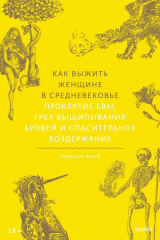
Как жили женщины Средневековья – в городах, деревнях и высоких замках? Какими их хотели видеть мужчины и какими они были на самом деле?
Противоречивые требования преследовали средневековых женщин всю жизнь. Женщине следовало быть красивой, но не следовало ничего для этого предпринимать.
Ей надлежало блюсти благочестие, но ее считали безнадежно порочной по природе. Она должна была хранить домашний очаг, рожать детей и много работать. Женщины были виноваты во всех бедствиях – от грехопадения Евы до Всемирного потопа и чумы. Как же они справлялись со всем этим?
Историк Элеанор Янега рассказывает о выдающихся женщинах того времени и других, менее известных, чьи истории скрыты в документах и судебных делах. Фермерши, хозяйки пивоварен, ремесленницы и художницы – они изменили представление о женской природе, интеллекте и способностях.
Перевод Елены Лалаян
#женскоесредневековье
notes
1
Nine to Five – а мериканская комедия 1980 года с участием знаменитой кантри– певицы и киноактрисы Долли Партон; название фильма «С девяти до пяти» означает график, определяющий часовую норму рабочего времени в день для служащих, то есть получается сорокачасовая рабочая неделя. Прим. пер.
2
Жоффруа де Ла Тур Ландри (между 1326 и 1330 – около 1404 или 1405) – французский рыцарь из Анжу, участник Столетней вой ны, известный также как «Рыцарь Башни», автор нескольких книг. Прим. пер.
3
Предполагается, что Платон родился в промежуток времени с 428 по 423 год до н. э., а умер в 348 или 347 году до н. э. Прим. пер.
4
Значительную часть своих сочинений Платон записал в форме диалогов, бесед между историческими или вымышленными персонажами. Прим. ред.
5
Речь идет об епископе Аврелии Августине, также известном как Блаженный Августин. Прим. пер.
6
Элоиза – философ, писатель, ученый, жена философа Пьера Абеляра. Прим. пер.
7
Маргарита Поретанская – французская монахиня– бегинка, писатель-мистик. Прим. ред.
8
Сервы (от. лат. servus – раб) – феодально– зависимые крестьяне в странах Западной Европы в эпоху Средневековья. Прим. ред.
9
Этот девиз – цитата из Вергилия, «Эклоги», X, стих 69-й: был возможен на застежке четок монахини как двусмысленный вариант евангельского «Любовь превыше всего». Прим. пер.
10
Артуриана – цикл кельтских легенд и рыцарских романов с акцентом на деяниях короля Артура и рыцарей Круглого стола. Прим. пер.
11
Аристотель выделял шесть разновидностей любви: агапе – жертвенная любовь; людус – любовь– игра; эрос – чувственная любовь; мания – любовь-одержимость; прагма – рассудочная любовь; сторге – л юбовь-д ружба. Прим. пер.