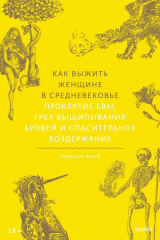
Текст книги "Как выжить женщине в Средневековье. Проклятие Евы, грех выщипывания бровей и спасительное воздержание"
Автор книги: Элеанор Янега
Жанр:
История
сообщить о нарушении
Текущая страница: 18 (всего у книги 20 страниц)
26 Ernesto Bonaiuti, “The Genesis of St. Augustine's Idea of Original Sin,” trans. Giorgio La Piana, Harvard Theological Review 10, no. 2 (1917): 162–63.
27 Augustine, De trinitate 12.7.10; Patrologia Cursus Completus, Series Latina, ed. Jean-Paul Migne (Paris: Garnier Fratres, 1865), 42:1003. [русскояз. текст. цит. по Блаженный Аврелий Августин «О Троице», Книга 12, 7‒10, отсюда: https://azbyka.ru/otechnik/Avrelij_Avgustin/o-troitse/2_4]. Августин, надо отдать ему должное, здесь же утверждает, что женщины – вместе с мужчинами – могут считаться образом и подобием Божиим. Но сами по себе – не могут. В отличие от мужчин. Так что, думаю, это еще неплохая мысль.
28 Tertullian, Tertulliani de cultu feminarum, bk. I, электронный ресурс http://thelatinlibrary.com/tertullian/tertullian.cultu1.shtml. Подробнее о Тертуллиане см. в Eric Osborn, Tertullian: First Theologian of the West (Cambridge, U. K.: Cambridge University Press, 2008).
29 Думаю, вы обратили внимание, что о Лилит здесь ни словом не упоминается. Лилит выведена в образе демона в ряде древнееврейских источников, в том числе в Вавилонском Талмуде. В XI веке талмудист Раби Ицхак бен Яаков Альфаси (1013–1101), который жил и работал в Алжире и Испании, писал, что Лилит должна была стать первой женой Адама, однако она отказалась подчиниться ему и вместо этого предалась плотской любви с архангелом Самаэлем и покинула Эдем. См. Kristen E. Kvam et al., Eve and Adam: Jewish, Christian, and Muslim Readings on Genesis and Gender (Bloomington: Indiana University Press, 1999), 220–21. Однако Лилит не появляется в средневековых библейских текстах, хотя они и опирались на подлинные иудейские источники. Более того, упоминаемая в Книге Исайи Лилит при переводе превратилась в «Ламию», как в греческой мифологии назывался род чудовищ женского пола, пожиравших детей. Представления о Лилит как о первой жене Адама будут постепенно проникать в христианское сознание на заре современной эпохи, и, в частности, их подхватят писатели-романтики, например Гёте.
30 Это очень упрощенная схема изощренно-сложного предмета. Более вразумительное и глубокое объяснение можно найти у Christiaan Kappes, “Gregory of Nazianzen's Prepurified Virgin in Ecumenical and Patristic Tradition: A Reappraisal of Original Sin, Guilt, and Immaculate Conception,” in The Spirit and the Church, ed. J. Isaac Goff (Eugene, Ore.: Wipf and Stock, 2018).
31 Augustine, De natura et gratia, 36.42; Patrologia Cursus Completus, Series Latina, ed. Jean-Paul Migne (Paris: Garnier Fratres, 1865), 44:267.
32 В Европе сотни и сотни средневековых монастырей, их такое множество, что перечислить все невозможно. Что касается большинства из них, то их значение для развития европейского образования нельзя переоценить. Содержательный источник сведений о средневековых европейских монастырях – J. Patrick Greene, Medieval Monasteries (New York: Continuum, 1992).
33 C. Warren Hollister, Henry I (New Haven, Conn.: Yale University Press, 2001), 23.
34 Подробнее об изменениях в средневековом образовании см. в Nicholas Orme, Medieval Schools: From Roman Britain to Renaissance England (New Haven, Conn.: Yale University Press, 2006), где большое внимание уделяется, в частности, Англии.
35 Hildegard of Bingen, Causae et curae: Liber compositae medicinae, ed. Paul Kaiser (Leipzig: B. G. Teubner, 1903), 2:46–47. Если хотите больше узнать о жизни Хильдегарды, советую обратиться к Sabina Flanagan, Hildegard of Bingen: A Visionary Life (New York: Routledge, 1989).
36 Christine de Pizan, The Book of the City of Ladies (1405), trans. Rosalind Brown-Grant (London: Penguin, 1999). Подробнее о жизни Кристины см. в Charity Cannon Willard, Christine de Pizan: Her Life and Works (New York: Persea Books, 1984).
37 Чтобы у вас не возникло впечатления, что это пережиток прошлого, прошу вас подумать о том, что в современных школах есть летние каникулы не потому, что все хотят отдохнуть именно в это время, а потому, что когда-то именно в летний период на полях и фермах были нужны все рабочие руки. А люди нашего времени в лучшем случае всего лишь несколько поколений назад тоже должны были убирать в полях урожай.
38 Подробнее о Glossa Ordinaria, «широко распространенном в середине Средневековья тексте» см. в Lesley Smith, The “Glossa Ordinaria”: The Making of a Medieval Bible Commentary (Leiden: Brill, 2009), 1.
39 David d'Avray, “Method in the Study of Medieval Sermons,” in Modern Questions About Medieval Sermons: Essays on Marriage, Death, History and Sanctity, ed. Nicole Beriou and David d'Avray (Spoleto: Centro italiano di studi sull'Alto medioevo, 1994), 3–29.
Mervyn James, “Ritual, Drama and Social Body in the Late Medieval English Town,” Past and Present 98, no. 1 (1983): 6–7.
Jarmila F. Veltrusky, Mastičkář: A Sacred Farce from Medieval Bohemia (Ann Arbor: Michigan University Press, 1985).
Robert Grosseteste, De unica forma omnium, in L. Bauer, ed., Die philoso-phischen Werke des Roberts Grosseteste, Beitrage 9 (Münster, 1912), 107–8, далее рекомендую Edgar de Bruyne, The Esthetics of the Middle Ages, trans. Eileen B. Hennessy (New York: Ungar, 1969), 71.
Paulus Diaconus, Historia Langobardorum, in Monumenta Germaniae his-torica inde ab anno Christi quingentesimo usque ad annum millesimum et quingentesimum. Scriptores rerum Langobardicarum et Italicarum saec. VI–IX, III, ed. G. Waitz (Hanover: Impensis Bibliopolii Hahniani, 1878), 134–35; Chronicae que dicuntur Fredegarii, in Monumenta Germaniae his-torica . . . Scriptores rerum Merovingicarum, II, IV, c. 51, ed. Bruno Krusch (Hanover: Impensis Bibliopolii Hahniani, 1888), 145–46; Vita Balthildis, in Monumenta Germaniae historica . . . Scriptores rerum Merovin gicarum, II, c. 2, ed. Krusch, 438; Theganani Gesta, Vita Hludowici Imperatoris, in Monumenta Germaniae Historica . . . Scriptores cit., c. 26, ed. Georg Heinrich Pertz (Hanover: Impensis Bibliopolii Hahniani, 1829), 214.
Vita Balthildis A (MGH, Script. rer. Mer., II), c. 2, p. 438.
Mayke de Jong, “Queens and Beauty in the Early Medieval West: Balthild, Theodelinda, Judith,” in Acting as a Woman: Models and Practices of Representation (6th – 10th Centuries), ed. M. C. La Rocca, proceedings of conference in Padua, February 18–19, 2005 (Turnhout, Belgium: Brepols, 2007), 235–48.
См. Ferdinand Otto Meister, ed., Daretis Phrygii De excidio Troiae historia, Bibliotheca Scriptorum Graecorum et Romanorum Teubneriana (Leipzig: Teubner, 1873), 16, 17.
Там же.
Sappho, fragment 23.
Не все современные исследователи видят в элегиях отпечаток личности Максимиана, и большинство склоняются к мнению, что элегии могли принадлежать авторству нескольких других поэтов. См. Richard Webster, The Elegies of Maximianus (Princeton, N. J.: Princeton University Press, 1900), 7–11.
Maximianus, Elegies, 1.93, in Edmond Faral, Les arts poetiques du XIIe et du XIIIe siecle: Recherches et documents sur la technique litteraire du Moyen Age (Paris: Champion, 1924), 80, перевод автора [русский перевод – мой, Е. Л.].
Возможно, творчество Максимиана и правда пользовалось широкой известностью, однако не все любили его поэзию. Как-то раз монах, педагог и поэт XII века Александр из Вильдьё (ок. 1175 – ок. 1240) назвал его поэзию «пустяками». Alexander of Villedieu, Das “Doctrinale” des Alexander de Villedieu, ed. Dietrich Reichling, Monumenta Germanic Pedagogica 12 (Berlin: A. Hofmann, 1893), 2:24–25.
Matthew of Vendome, Ars Versificatoria, in Mathei Vindocinensis, Opera, ed. Franco Munari (Rome: Edizioni di storia e letteratura, 1977), 83.
Там же, 85–86.
Для учебы в средневековом университете требовалось принять церковный сан. Вот почему Гальфред должен был извиняться перед архиепископом, и именно как лицо духовного звания он смог обзавестись такими высокими связями, что это позволяло ему делать подношения самому папе. Попутно отмечу, что обязанность студентов принимать духовное звание заведомо исключала для женщин доступ к университетскому образованию, поскольку им не разрешалось вступать в духовенство. Подробнее о Гальфреде можно узнать из блестящего труда James J. Murphy Three Medieval Rhetorical Arts (Berkeley: University of California Press, 1971), 29–31.
Caroline Spurgeon, Five Hundred Years of Chaucer Criticism and Allusion: 1357–1900 (London, 1925), 1:17, 49; James J. Murphy, “A New Look at Chaucer and the Rhetoricians,” Review of English Studies 15 (1964): 1–20; Karl Young, “Chaucer and Geffrey of Vinsauf,” Modern Philology 41 (1943): 172–82.
Geoffrey of Vinsauf, Poetica Nova, в Faral, Les ars poetiques, 214–15 [рус-скояз. текст цит. по «Проблемы литературной теории в Византии и латинском Средневековье», ответ. ред. М. Л. Гаспаров; М.: «Наука», 1986, с. 131].
Guillaume de Lorris, Le roman de la rose par Guillaume de Lorris et Jean de Meung, ed. Ernest Langlois (Paris: Firmin-Didot, 1914–24), 2:51–52. См. также The Romance of the Rose, trans. Frances Horgan (Oxford: Oxford University Press, 2009) [Гильом де Лоррис, Жан де Мён. Роман о Розе. Средневековая аллегорическая поэма. Пер. и коммент. И. Б. Смирновой – М.: ГИС, 2007. Взято здесь: https://fb2.top/roman-o-roze-657752/ read/part-4].
Там же, 2:28, 44.
F. J. E. Raby, A History of Secular Latin Poetry in the Middle Ages (Oxford: Clarendon Press, 1934), 2:239. Согласно этому автору, Юдифь, о которой идет речь, могла быть настоятельницей женского монастыря в Ремир-моне (на территории современной Франции), но, к сожалению, нет никакой возможности проверить эту гипотезу. Вероятно, мы никогда не узнаем, какая дама обладала столь притягательной внешностью.
Там же, 2:244–45.
Geoffrey Chaucer, “The Miller's Tale,” The Canterbury Tales, 1, lines 3245–62.
John Tzetzes, Antehomerica, trans. Ana Untila (n.p., 2014), 356–58, https:// archive.org/details/TzetzesANTEHOMERICA/mode/2up.
Там же, 115–22.
Walter Mettmann, “ ‘Ancheta de caderas.' Libro de buen amor, C. 432 ss,” Romanische Forschungen 73, nos. 1–2 (1961): 141–47; and Michael Ray Solomon, trans., The Mirror of Coitus: A Translation and Edition of the Fifteenth-Century “Speculum al foderi” (Madison: Hispanic Seminary of Medieval Studies, 1990), 8.12.
Luce Lopez-Baralt, “La bella de Juan Ruiz tenia los ojos de huri,” Nueva Revista de Filologia Hispanica 40 (1992): 73–83.
Faral, Les ars poetiques, 80.
“Colla nivi..,” там же, 84.
“Succuba sit capitis pretiosa colore columna / Lactea, quae speculum vul-tus supportet in altum.” Geoffrey of Vinsauf, Poetica Nova, ibid., 215 [здесь и далее Гальфред Винсальвский, «Новая поэтика», цит. по «Проблемы литературной теории в Византии и латинском Средневековье», ответ. ред. М. Л. Гаспаров; «Наука» М.: 1986; электронный ресурс: http://biblio. imli.ru/images/abook/teoriya/Problemy_literaturnoy_teorii_v_Vizantii_i_ latin.pdf, с. 131, строка 588].
См., например, Peter Dronke, Medieval Latin and the Rise of European Love-Lyric (Oxford: Oxford University Press, 1965), 1:193; Matthew of Vendome, Ars Versificatoria, trans. Aubrey E. Galyon (Ames: University of Iowa Press, 1980), 39.
D. S. Brewer, “The Ideal of Feminine Beauty in Medieval Literature, Especially ‘Harley Lyrics,' Chaucer, and Some Elizabethans,” Modern Language Review 50, no. 3 (1955): 260; Anonymous, “Alysoun,” https://rpo.library.uto-ronto.ca/poems/alysoun.
Francisco A. Marcos-Marin, “Masculine Beauty vs. Feminine Beauty in Medieval Iberia,” in Multicultural Iberia: Language, Literature, and Music, ed. Dru Dougherty and Milton M. Azevedo (Berkeley: University of California Press, 1999), 31.
Guillaume de Machaut, “Le Jugement dou Roy de Behaingne,” in Guillaume de Machaut: The Complete Poetry and Music, vol. 1, The Debate Series, ed. R. Barton Palmer, Domenic Leo, and Uri Smilansky, trans. R. Barton Palmer and Yolanda Plumley (Kalamazoo: Medieval Institute Publications, 2016), https://d.lib.rochester.edu/teams/text/palmer-machaut-thedebateseries-bo-hemia, lines 365–66; Chaucer, Troilus, 2.1247, and The Book of the Duchess, lines 953–54.
Geoffrey of Vinsauf, Poetica nova, 215.
Matthew of Vendome, Ars Versificatoria, in Mathei Vindocinensis, Opera, 85.
Там же, 84.
Geoffrey of Vinsauf, Poetica nova, 215.
Machaut, “Le Jugement dou Roy [de Behaingne],” строки 369–70.
Monica H. Green, ed. and trans., The Trotula: An English Translation of the Medieval Compendium of Women's Medicine (Philadelphia: University of Pennsylvania Press, 2001), 85.
Matthew of Vendome, Ars Versificatoria, 85. Machaut, “Le Jugement dou Roy,” строки 373–75.
Matthew of Vendome, Ars Versificatoria, 85.
См., например, Machaut, “Le Jugement dou Roy,” строки 376–77. Matthew of Vendome, Ars Versificatoria, 85.
Geoffrey of Vinsauf, Poetica nova, 215.
Там же.
Machaut, “Le Jugement dou Roy,” строки 377–79.
Из этого правила есть существенные исключения, в особенности касающиеся королевских семейств и высшей знати. Однако эти исключения, безусловно, существенны. Подробнее на темы замужества и девиц см. в Kim M. Phillips, Medieval Maidens: Young Women and Gender in England, 1270–1540 (Manchester: Manchester University Press, 2003), 36–42. M. C. Seymour et al., eds., De puella, in On the Properties of Things: John Trevisa's Translation of Bartholomaeus Anglicus “De proprietatibus rerum”: A Critical Text (Oxford: Oxford University Press, 1975), col. 1, lib. 6, cap. 6, цит. по Phillips, Medieval Maidens, 6–7.
Phillips, Medieval Maidens, 7.
Физиологическую холодность, которую отмечали у женщин в средневековую эпоху, оспаривали многие выдающиеся врачи и натурфилософы. См., например, Pseudo Albertus Magnus, Women's Secrets: A Translation of Pseudo-Albertus Magnus' “De secretis mulierum,” with Commentaries, ed. and trans. Helen Rodnite Lemay (Albany: SUNY Press, 1992), 60–70; Mazhar H. Shah, The General Principles of Avicenna's “Canon of Medicine” (Karachi: Naveed Clinic, 1966), 33–34.
Caroline Walker Bynum, The Resurrection of the Body in Western Christianity, 200–1336 (New York: Columbia University Press, 1995), 122; Mary Dove, The Perfect Age of Man's Life (Cambridge, U. K.: Cambridge University Press, 1986), 21–25.
Malcolm Andrew and Ronald Waldron, eds., The Poems of the Pearl Manuscript (Exeter, U. K., 1987), lines 197–204.
Neu-Karsthans, “Gesprech biechlin neuw Karsthns,” цит. по Michael Baxandall, The Limewood Sculptors of Renaissance Germany (New Haven, Conn.: Yale University Press, 1980), 88.
Anne-Laure Lalouette, “Bains et soins du corps dans les textes medicaux (XIIe–XIVe siecles),” in Laver, monder, blanchir: Discours et usages de la toilette dans l'Occident medieval, ed. Sophie Albert (Paris: Presses de l'Univer-sity Paris-Sorbonne, 2006), 33–49.
Etienne de Boileau, Le Livre des metiers, in Women's Lives in Medieval Europe: A Sourcebook, ed. Emilie Amt (New York: Routledge, 1993), 162. Тот самый денье, от которого происходит современное название пенни, был самой мелкой и самой распространенной монетой. Работникам и слугам в XIII веке обычно платили поденно где-то от полутора до двух с половиной денье, тогда как торговцы и ремесленники в зависимости от своего мастерства могли зарабатывать в день от трех до девяти денье. См. Jeffrey L. Singman, Daily Life in Medieval Europe (Westport Conn.: Greenwood Press, 1999), 61.
Georges Vigarello, Concepts of Cleanliness: Changing Attitudes in France Since the Middle Ages, trans. Jean Birrell (Cambridge, U. K.: Cambridge University Press, 1988), 21–22.
Olivia Remie Constable, “Cleanliness and Convivencia: Jewish Bathing Culture in Medieval Spain,” in Jews, Christians and Muslims in Medieval and Early Modern Times, ed. Arnold E. Franklin et al. (Leiden: Brill, 2014), 257–58.
О сохранившихся хамамах см., например, в Catherine B. Asher, “The Public Baths of Medieval Spain: An Architectural Study: Cross-Cultural Contacts,” в The Medieval Mediterranean: Cross-Cultural Contacts, ed. Marilyn J. Chait and Kathryn L. Reyerson (St. Cloud, Minn.: Northstar Press, 1988); О подозрениях мужчин в адрес банных привычек женщин см. у Alexandra Cuffel, “Polemicizing Women's Bathing Among Medieval and Early Modern Muslims and Christians,” и в The Nature and Function of Water, Baths, Bathing and Hygiene from Antiquity through the Renaissance, ed. Cynthia Kosso and Anne Scott (Leiden: Brill, 2009).
Kevin M. Dunn, Caveman Chemistry: 28 Projects from the Creation of Fire to the Production of Plastics (Irvine, Calif.: Universal, 2003), 233.
Hildegard of Bingen, Hildegard von Bingen's Physica: The Complete English Translation of Her Classic Work on Health and Healing, trans. Priscilla Throop (Rochester, Vt.: Healing Arts Press, 1998), ch. 4.
Monica H. Green, ed. and trans., The Trotula: An English Translation of the Medieval Compendium of Women's Medicine (Philadelphia: University of Pennsylvania Press, 2001), 115.
Там же.
Geoffrey de La Tour Landry, Le Livre du Chevalier de La Tour Landry pour l'enseignement de ses filles, ed. Anatole de Montaiglon (Paris: P. Jannet, 1854). Английский перевод см. в Geoffroy de La Tour Landry, The Booke of Thenseygnementes and Techynge that the Knyght of the Towre Made to his Doughters, trans. Gertrude Burford Rawlings and William Caxton (London: G. Newnes, 1902).
Jan Milíč of Kroměříž, “Sermon on the Last Day of the Lord,” in The Message for the Last Days: Three Essays from the Year 1367, ed. Milan Opočenský and Jana Opočenská (Geneva: World Alliance of Reformed Churches, 1998), 49. Bernard P. Prusak, “Woman: Seductive Siren and Source of Sin? Pseude-pigraphal Myth and Christian Origins,” in Religion and Sexism: Images of Women in the Jewish and Christian Traditions, ed. Rosemary Radford Ru-ether (Eugene, Ore.: Wipf and Stock, 1998), 89–116.
La Tour Landry, Le Livre du Chevalier, 112, далее из Susan Udry, “Robert de Blois and Geoffroy de la Tour Landry on Feminine Beauty: Two Late Medieval French Conduct Books for Women,” Essays in Medieval Studies 19 (2002): 100.
Montserrat Cabre, “Beautiful Bodies,” in A Cultural History of the Human Body in the Medieval Age, ed. Linda Kalof (New York: Bloomsbury, 2014), 135.
Joanne B. Eicher, ed., Dress and Ethnicity: Change Across Space and Time (New York: Bloomsbury, 1999), 1–16.
Green, Trotula, 115–16.
Там же, 118.
Там же, 121.
La Tour Landry, Le Livre du Chevalier, 109–10, цит. по Udry, “Robert de Blois and Geoffroy de La Tour Landry on Feminine Beauty,” 99.
Chaucer, “The Miller's Tale,” The Canterbury Tales, lines 137–138 [русский перевод цит. по https://facetia.ru/node/577].
Antoninus of Florence, Confessionale: Defecerunt scrutantes scrutinio (Delft: Jacob van der Meer, 1482), chap. 21, “De immodestia mulierum,” fol. 1.11, https://archive.org/details/ned-kbn-all-00001853-001. См. John Block Friedman, “Eyebrows, Hairlines, and ‘Hairs Less in Sight': Depilation in Late Medieval Europe,” in Medieval Clothing and Textiles, ed. Robin Netherton and Gale R. Owen-Crocker (Woodbridge, U. K.: Boydell & Brewer, 2018), 14:102.
Friedman, “Eyebrows, Hairlines,” 14:95.
Там же, 14:113.
Montserrat Cabre i Pairet, “La cura del cos femeni i la medicina medieval de tradicio llatina. Els tractats ‘De ornatu' i ‘De decorationibus mulierum' atribuits a Arnau de Vilanova, ‘Trotula' de mestre Joan, i ‘Flors del tresor de beutat' atribuit a Manuel Diec de Calatayud” (Ph. D. diss., University of Barcelona, 1996), 202, цит. оттуда же, 14:87.
Margaret Scott, Fashion in the Middle Ages (Los Angeles: J. Paul Getty Trust, 2018), 21–24.
W. Nelson Francis, ed., The Book of Vices and Virtues (Oxford: Oxford University Press, 1942), 43–44.
James Tait, ed., Chronica Johannis de Reading et Anonymi Cantuariensis 1346–1367 (Manchester: Manchester University Press, 1914), 88–89, in The Black Death, ed. and trans. Rosemary Horrox (Manchester: Manchester University Press, 1994), 131.
Scott, Fashion in Middle Ages, 20.
Цит. по Phillips, Medieval Maidens, 180.
Peter Von Moos, “ ‘Public' et ‘privé' à la fin du Moyen Age: Le ‘bien commun' et la ‘loi de la conscience,' ” Studi medievali 41, no. 2 (2000): 505–48; Etienne Dra-vasa, “ ‘Vivre noblement.' Recherches sur la derogeance de noblesse du XlVe au XVe siècles,” Revue juridique et economique du Sud-Ouest 16 (1965): 135–93.
L. Gilliodts-Van Severen, ed., Cartulaire de l'ancien grand tonlieu de Bruges, faisant suite au Cartulaire de l'ancienne estaple: Recueil de documents concernant le commerce inferieur et maritime, les relations internationales et l'his-toire economique de cette ville (Bruges: Plancke, 1901), 2:312.
Catherine Kovesi Killerby, “ ‘Heralds of a Well-instructed Mind': Nicolosa Sanuti's Defence of Women and Their Clothes,” Renaissance Studies 13, no. 3 (1999): 255–82.
G. Bistort, “Il magistrato alle pompe nella Repubblica di Venezia. Studio sto-rico,” Miscellanea di storia veneta, ser. 3, 5 (1912): 74–75.
Там же, 71–73.
Augustine, City of God, bk. 14, p. 26. Generation in paradise would have occurred without the shame of lust.
P. J. Payer, The Bridling of Desire: Views of Sex in the Later Middle Ages (Toronto: University of Toronto Press, 1993), 185.
Augustine, On Genesis, bk. 11, p. 41 [русскояз. текст «О книге Бытия» здесь и далее цит. по https://azbyka.ru/otechnik/Avrelij_Avgustin/o-knige-bytija/11_4]. Augustine, City of God, bk. 14, p. 20, The ridiculous indecency of the cynics [русскояз. текст цит. по https://azbyka.ru/otechnik/Avrelij_Avgustin/o-grade-bozhem/14_7].
Там же, 7, The scriptural terms for love.
Ambrose, On Virginity, trans. Daniel Callam, Peregrina Translation Series 7 (Toronto: Peregrinqa, 1989), 13, 81.
Hermann Theodor Bruns, Canones apostolorum et conciliorum saeculorum IV, V, VI, VII: Recognovit atque insignioris lectionum varietatis, Notationes subiunxit (Berlin: G. Reimeri, 1839), 2, 6.
Canons 3 and 21, in Medieval Sourcebook: Ninth Ecumenical Council: Later-an I 1123, https://sourcebooks.fordham.edu/basis/lateran1.asp.
Johannes Gerson, De pollutione (Cologne: Ludwig von Renchen, n. d.). См. также Cadden, Meanings of Sex Difference, 141–42; James A. Brundage, Law, Sex, and Christian Society in Medieval Europe (Chicago: University of Chicago Press, 1987), 400–1.
Aquinas, Summa Theologica, pt. 2, ques. 154, art. 5 [здесь и далее рус-скояз. текст цит. по источнику: https://azbyka.ru/otechnik/konfessii/ summa-teologii-tom-9/32].
Цит. по Jeffrey Richards, Sex, Dissidence and Damnation: Minority Groups in the Middle Ages (New York: Routledge, 1994), 23–24.
Brundage, Law, Sex, and Christian Society, 430.
Цит. по Pierre J. Payer, The Bridling of Desire: Views of Sex in the Later Middle Ages (Toronto: University of Toronto Press, 1993), 118.
Augustine, City of God, bk. 14, p. 16. The evil of lust, in the specifically sexual meaning [русскояз. текст цит. по источнику: https://azbyka.ru/otechnik/ Avrelij_Avgustin/o-grade-bozhem/14_7, гл. XVI].
Aquinas, Summa Theologica, pt. 2, ques. 154, art. 4.
Jerome, Against Jovinianus, trans. W. H. Fremantle, G. Lewis, and W. G. Martley, in A Select Library of Nicene and Post Nicene Fathers of the Christian Church, ed. Philip Schaff (Buffalo, N. Y.: Christian Literature, 1893), 6:367 [цит. по: https://azbyka.ru/otechnik/Ieronim_Stridonskij/ dve-knigi-protiv-ioviniana/#0_2].
Там же, 6:386.
Aquinas, Summa Theologica, pt. 1, ques. 98, art. 2.
Burchard of Worms, Corrector, in Die Busordnungen in der abendlandischen Kirche (Halle: F. W. H. Wasserschleben, 1851), 642.
Aquinas, Summa Theologica, pt. 2, ques. 154, art. 11.
Подробнее об Александре Гэльском см. у James A. Brundage, “Let Me Count the Ways: Canonists and Theologians Contemplate Coitus Positions,” Journal of Medieval History 10 (1984): 81, 86. Об Уильяме из Пагулы см. там же, 87.
Fragmentum Cantabrigiense, MS. Add. 3321 (I), fol. 23v, Cambridge University Library. See Brundage, “Let Me Count,” 85.
James A. Brundage, “Sex and Canon Law,” in Handbook of Medieval Sexuality, ed. Vern L. Bullough and James A. Brundage (New York: Garland, 1996), 157. Там же, 36.
Цит. по Brundage, “Let Me Count,” 84.
Там же, 86.
Isiodore, Etomologias, xi.24.43 [русскояз. текст цит. по «Этимологии» Исидора Севильского, том XI: https://azbyka.ru/otechnik/ Isidor_Sevilskij/etimologii-kniga-xi-o-cheloveke-i-chudesah/].
Brundage, Law, Sex, and Christian Society, 451–52.
Jerome, Against Jovinianus, 367.
Эта совершенно неисчерпаемая тема обстоятельно разбиралась в Cad-den, Meanings of Sex Difference, 117– 29.
Там же, 65.
Avicenna, Liber Canonis, bk. 3 fen. 21 tr. 1, ch. 2, quoted in Ruth Mazo Karras, Sexuality in Medieval Europe: Doing Unto Others, 3rd ed. (2005; reprint New York: Routledge, 2017), 106.
Brian Lawn, ed., The Prose Salernitan Questions: Edited from a Bodleian Manuscript (London: Open University Press, 1979), 4.
Аналогию с промокшим лесом см. у William of Conches, A Dialogue on Natural Philosophy (Dragmaticon Philosophiae), trans. Italo Ronca and Matthew Curr (Notre Dame: University of Notre Dame Press, 1997), 2:135. Аналогию с металлом – в Danielle Jacquart and Claude Thomasset, Sexuality and Medicine in the Middle Ages, trans. Matthew Adamson (Princeton, N.J.: Princeton University Press, 1988), 28.
Jacquart and Thomasset, Sexuality and Medicine, 81.
Pseudo-Albertus Magnus, Women's Secrets: A Translation of Pseudo-Alber-tus Magnus' “De secretis mulierum” with Commentaries, ed. and trans. Helen Rodnite Lemay (Albany: SUNY Press, 1992), 51.
Albert the Great, Alberti Magni. Opera omnia, vol. 12, Quaestiones super de animalibus, ed. Ephrem Filthaut (Munster: Aschendorff, 1955), 5.Q4.Q6. Vincent of Beauvais, Speculum naturale, bk. 31, chap. 5.
Цит. по Joan Cadden, “It Takes All Kinds; Sexuality and Gender Differences in Hildegard of Bingen's Book of Compound Medicine,” Traditio 40 (1984): 159. Цит. по Joyce E. Salisbury, “Gendered Sexuality,” in Handbook of Medieval Sexuality, ed. Vern L. Bullough and James A. Brundage (New York: Garland, 1996), 93.
Mazo Karras, Sexuality in Medieval Europe, 16– 17.
Wife of Bath's Prologue, lines 44– 46, в собственном переводе автора, из Larry D. Benson and F. N. Robinson, eds., The Riverside Chaucer, 3rd ed. (Oxford: Oxford University Press, 2008), 105. [Дж. Чосер «Кентерберийские рассказы. 26. Пролог Батской ткачихи. Пер. И. А. Кашкина. Взято здесь: https://facetia.ru/node/590].
Georg Heinrich Pertz, ed., Monumenta Germaniae Historica (Hanover: Hahn, 1835), 1:345.
Aquinas, Summa Theologica, pt. XP, ques. 58, art. 1.
Jacquart and Thomasset, Sexuality in Middle Ages, 171.
R. H. Hemholz, Marriage Litigation in Medieval England (Cambridge, U.K.: Cambridge University Press, 1974|), 89; Mazo Karras, Sexuality in Medieval Europe, 94.
Цит. по Jacquart and Thomasset, Sexuality in Middle Ages, 173.
Thomas of Chobham, Summa Confessorum, ed. F. Broomfeld (Louvain: Editions Nauwelaerts, 1968), 184. См. также Catherine Ryder, “Magic and Impotence in the Middle Ages,” Societas Magicas Newsletter 13 (Fall 2004): 1. Giovanni Boccaccio, The Decameron, trans. G. H. McWilliam (New York: Penguin, 1972), 240.
Jean de Meun, The Romance of the Rose, trans. Harry W. Robbins (New York: E.P. Dutton, 1962), 172, 182. [русскоязычный перевод обнаруживает некоторые расхождения с английским переводом романа с французского языка; русский перевод взят отсюда: https://fb2.top/roman-o-roze-657752/read/part-5 (строки от 8500 до 8520 и далее)]
John C. Jacobs, trans., The Fables of Odo of Cheriton (Syracuse, N.Y.: Syracuse University Press, 1985), 143. See also Mazo Karras, Sexuality in Medieval Europe, 115.
Michael Goodich, ed., Other Middle Ages: Witnesses at the Margins of Medieval Society (Philadelphia: University of Pennsylvania Press, 1998), 111.
Geoffrey de La Tour Landry, Le Livre du Chevalier de La Tour Landry pour l'enseignement de ses filles, ed. Anatole de Montaiglon (Paris: P. Jannet, 1854), 24, 96.
Andreas Capellanus, The Art of Courtly Love, trans. John Jay Parry (New York: Columbia University Press, 1960), 27. [русскояз. текст цит. по источнику: https://www.vostlit.info/Texts/Dokumenty/France/XIII/Zizneop_ Trubadur/101-120/108.phtml?id=].
Там же, 28, 30.
Там же, 32, 145.
Там же, 150.
Там же, 23.
Там же, 175.
Там же, 171.
Там же, 194– 97.
Там же, 208.
Avicenna, Canon, bk. 3, fen 21, tr. 1, ch. 9, quoted in Jacquart and Thomasset, Sexuality and Medicine, 130. [русскояз. текст цит. по источнику: https:// www.4italka.ru/nauka_obrazovanie/meditsina/295171/fulltext.htm, эл. ресурс]
Джастин Хэнкок (Justin Hancock), в разговоре с автором, 17 февраля 2021 года.
Pietro d'Abano, Conciliator (Venice: O. Scoti, 1521), in Jacquart and Claude Thomasset, Sexuality and Medicine, 46.
Avicenna, Canon, bk. 3, fen 21, tr. 1, ch. 9, цит. по Jacquart and Thomasset, Sexuality and Medicine, 130–31. [русскояз. текст цит. по тому же источнику] И что любопытно, Авиценна также определяет, что «очаг наслаждения» у женщин располагается «между анусом и вульвой», и это позволяет предположить, что его наблюдения касательно наслаждения могли проистекать из его личного опыта.
William of Conches, Dialogue on Natural Philosophy, 136.
Aquinas, Summa Theologica, pt. SS, ques. 154, art. 7.
Там же.
William of Conches, Dialogue on Natural Philosophy, 137.
Humber of the Romans, To the Leprous, in Goodich, Other Middle Ages, 147. Odette Pontal, trans., Les statuts de Paris et le synodal de l'Ouest (XIIIme sie-cle) (Paris: Bibliotheque nationale, 1971), 205–7.
P. de Koning, trans., Trois traites d'anatomie arabe (Leiden: Brill, 1903), 403–5, cited in Jacquart and Thomasset, Sexuality and Medicine, 72. Любопытно, что другие части тела, классифицируемые как «белые» по своей природе, согласно представлениям этого врача, формируются из спермы как отцовской, так и материнской.
William of Conches, Dialogue on Natural Philosophy, 137–38.
Цит. по Benjamin Lee Gordon, Medieval and Renaissance Medicine (London: Peter Owen, 1960), 534.
Green, Trotula, 97, 98, 127–28, 133–34.
Там же, 71.
Цит. по Jacquart and Thomasset, Sexuality and Medicine, 174.
Green, Trotula, 72.
John of Gaddesden, Rosa Anglica practica medicine a capite ad pedes, ed. N. Scyllacius (Augsburg: Augustae Vindelicorum, 1595), 596–96. См. также Jacquart and Thomasset, Sexuality and Medicine, 176.
Jacquart and Thomasset, Sexuality and Medicine, 176.
De Animalibus, bk. IX, tr. I, ch. 1, p. 7, цит. по Joan Cadden, “Western Medicine and Natural Philosophy,” in Handbook of Medieval Sexuality, ed. Vern L. Bullough and James A. Brundage (New York: Garland, 1996), 59.