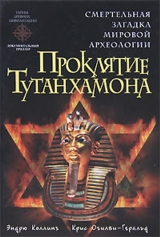
Текст книги "Проклятие Тутанхамона"
Автор книги: Эндрю Коллинз
Соавторы: Крис Огилви-Геральд
сообщить о нарушении
Текущая страница: 29 (всего у книги 30 страниц)
6Hoving, p. 222.
7For instance, see Reeves and Taylor, Howard Carter before Tutankhamun, pp. 156—7.
8Merton, «Ld. Carnarvon's Death. 16 Years» Work in Egypt», The Times, 6 April 1923, p. 11.
9Brackman, The Search for the Gold of Tutankhamen, p. 106.
10Merton, op cit.
11Breasted, p. 347.
12Reeves, The Complete Tutankhamun, p. 62.
13James, pp. 256—7.
14Ibid, p.257
15Gardiner, My Working Years, p.40.
16Merton.
17Letter from Lady Evelyn Herbert to Howard Carter, 18 March 1923, in the Carter archives of the Metropolitan Museum of Art and quoted in James, pp. 257—8.
18Letter from Albert Lythgoe to Howard Carter, 20 March 1923, held by the Egyptology Department of the Metropolitan Museum of Art and quoted in Hoving, pp. 223—4.
19Merton, op. cit.
20Letter from the Hon. Richard Bethell to Howard Carter, 26 March 1923, held by the Egyptology Department of the Metropolitan Museum of Art and quoted in Hoving, p. 224.
21Merton, op. cit.
22Ibid.
23Carnarvon, No Regrets: Memoirs oj the Earl of Carnarvon, pp. 120, 124.
24Letter from Alan Gardiner to his wife, dated 1 April
1923, quoted by Margaret Gardiner in A Scatter of Memoirs, pp. 107-8.
25Merton, op. cit.
26Ibid.
27Lord Carnarvon's last hours: sudden failure of hotel lights Daily Express, 6 April 1923, p. 1.
28Merton, op. cit. Merton incorrectly states that his death occurred at 2.30 a.m.
29Ibid.
30Ibid.
31Daily Express, 6 April 1923, p. 1.
32This appears to have been Algernon Maudslay (1873–1948), a public servant, although the authors have been unable to verify this fact.
33Gardiner, pp. 39–40.
34Reeves, p. 62.
35Hoving, p. 221.
36Letter from Lord Carnarvon to Howard Carter, December 1922 – January 1923, source unknown, quoted in Hoving, p. 153.
37Weigall, Tutankhamen And Other Essays, p. 96.
38Ibid., p. 89.
ЧАСТЬ ВТОРАЯ. ПРОКЛЯТИЕ
ГЛАВА ДЕВЯТАЯ. ПРОКЛЯТИЕ КАРНАРВОНА
1Brackman, The Search for the Gold of Tutankhamen, p. 114.
2From a conversation between Anthony Leadbetter, a surviving godson of Almina, Countess of Carnarvon, and the authors on 3 August 2001.
3Carnarvon, Ermin Tales: More Memoirs of the Earl of Carnarvon, 1980, p. 16.
4Ibid.
5Ibid.
6Ibid.
7Ibid.
8Ibid.
9Ibid.
10From a conversation between Anthony Leadbetter and the authors on 3 August 2001.
11'Cheiro (Hamon), Confessions: memoirs of a modem seer, 1932, р. 38; «Cheiro» (Hamon), Real Life Stories: A Collection of Sensational Personal Experiences, 1934, p. 29.
12'Cheiro» (Hamon), 1932, Mark Twain, p. 168; Sarah Bernhardt, p. 147; Austin Chamberlain, pp. 123—4; Oscar Wilde, p. 152; Mata Hari, pp. 248-57.
13Ibid., p. 132.
14Ibid., pp. 97—100.
15Ibid., pp. 108—9.
16Ibid., p. 113–16.
17Ibid., p. 39–42.
18Ibid., p. 62.
19Ibid., p. 66.
20Ibid., p. 68.
21Wynne, Behind the Mask of Tutankhamen, p. 51.
22'Cheiro» (Hamon), 1932, pp. 135—44.
23Ibid., pp. 142, 144.
24'Cheiro» (Hamon), 1934, p. 45.
25Ibid., pp. 19–26, 35–47. See also Nelson, Out of the Silence, pp. 31—2.
26'Cheiro» (Hamon), 1934, p. 45.
27Ibid, p. 46.
28Ibid., p. 47.
29Ibid.
30Carnarvon, No Regrets: Memoirs of the Earl of Carnarvon, 1976, p. 120.
31Lee…the grand piano came by camel: Arthur С Mace, the neglected Egyptologist, p. 111.
32Carter, The Tomb ofTut.ankh.Amen, II, p. xxv.
33Ibid.
34'Lord Carnarvon's last hours: sudden failure of hotel lights», Daily Express, 6 April 1923, p. 1.
35Rapp, unpublished memoirs (GB165 – 0234), Private Papers Collection, Middle East Centre, Oxford.
36Weigall, Tutankhamen And Other Essays, p. 137.
37Ibid, pp. 137-8.
38Wynne, p. 95.
39Ibid., pp. 95—6.
40Ibid., p. 96.
41Ibid., p. 96.
42Ibid.
43Ibid.
44Ibid., p. 103.
45Ibid.
46Ibid., p. 104.
47Ibid.
48Ibid.
49Carnarvon, 1976, pp. 120—2.
50See Coats and Bell, Marie Corelli: The Writer & the Woman.
51Reeves, The Complete Tutankhamun, p. 62 and Mahdy, Tutankhamun: The Life and Death of a Boy King, p. 129.
52Keys, «Curse (& Revenge) of the Mummy Invented by Victorian Writers», The Independent, 31 December 2000.
53Ibid.
54LMA (Louisa May Alcott), «Lost in a Pyramid» The New World, vol. 1, no. 1, 1869, p, 8. Periodicals collection, Library of Congress, Washington DC, Cat. No. AP2 N6273. See also Montserrat, «Louisa May Alcott and the Mummy's Curse», KMT 9:2 (Summer 1998), pp. 70—5.
55See Stoker, The Jewel of Seven Stars. By far the best film to be based on Stoker's book is The Awakening (1980), starring Charlton Heston.
56A letter from Herbert E Winlock, assistant curator of Egyptology at the Metropolitan Museum, New York, to its director Edward Robinson, 28 March 1923, quoted in Hoving, Tutankhamun – The Untold Story, p. 82. See also James, Howard Carter: The Path to Tutankhamun, p. 218, who quotes the first paragraph.
57Vandenberg, The Forgotten Pharaoh: The discovery of Tutankhamun, p. 158.
58Ibid.
59Weigall, pp. 137-8.
60Wynne, p. 200.
ГЛАВА ДЕСЯТАЯ. СМЕРТНЫЙ ПРИГОВОР
1Carnarvon, No Regrets: Memoirs of the Earl of Carnarvon, p. 124.
2Ibid.
3Ibid.
4'Lord Carnarvon's last hours: sudden failure of hotel lights», Daily Express, 6 April 1923, p. 1.
5Winstone, Howard Carter and the Discovery of the Tomb of Tutankhamun, p. 189.
6Daily Express, 6 April 1923, p. 1.
7For instance, see Vandenberg, The Forgotten Pharaoh: The Discovery of Tutankhamun, 1978, p. 160.
8For instance, see Carnarvon, p. 126; Wynne, Behind the Mask of Tutankhamun, p. 134.
9Daily Express, 6 April 1923, p. 1.
10For those readers who possess a copy of Nicholas Reeves's superb book The Complete Tutankhamun, a photograph of the death certificate (currently on display at High-clere Castle) appears in a plate on Page 63, and the time of death is clearly visible.
11Mahdy, Tutankhamun: The Life and Death of a Boy King, p. 130.
12Vandenberg, 1978, p. 161.
13Ibid.
14Carnarvon, p. 127.
15Ibid.
16'Egyptian collectors in a panic: Sudden rush to hand over their treasures to museums: Groundless fears», Daily Express, 7 April 1923, p. 1.
17Ibid.
18Ibid.
19Brackman, p. 113.
20Ibid.
21Ibid., p. 114.
22Hoving, Tutankhamun – The Untold Story, p. 227.
23Ibid.
24Ibid.
25Vandenberg, The Curse of the Pharaohs, 1973, p. 19-
25Ibid.
27Ibid.
28A letter from Herbert E Winlock, assistant curator of Egyptology at the Metropolitan Museum, New York, to its director Edward Robinson, 28 March 1923, quoted in Hoving, Tutankhamun – The Untold Story, p. 82. See also James, Howard Carter: The Path to Tutankhamun, p. 218, who quotes the first paragraph.
29Carter, The Tomb of Tut.ankhAmen, II, p. xxv.
30See Lucas, «The Chemistry of the Tomb, in Carter, II, pp. 162-88.
31Ibid., -II, p. 165.
32Ibid., II, pp. 165-6.
33Ibid., II, p. 166.
34Vandenberg, 1973, p. 157.
35Ibid.
36Ibid.
37NBC television report, no screening date, c. 1990s.
38Hoving, p. 221.
ГЛАВА ОДИННАДЦАТАЯ. НАЛИЧИЕ ЯДА
1Quoted in Brackman, The Search for the Gold of Tutankhamen, p. 114.
2Morton, «Tragedy of Lord Carnarvon», Daily Express, 6 April 1923, p. 4.
3A number of Internet news sites posted articles on the discovery. For example see: http://www.egyptvoyager.com/ drhawass_findingthetomb_2.htm.
4Posted on various Internet news sites. For example see: http://abcnews.go.com/sections/science/DailyNews/egyptmayor000523.html,
5Email from Michael Carmichael to Andrew Collins, dated 11 January 2002.
6Ibid.
7Letter from Arthur С. Mace to his wife Winifred, dated 4 March 1923, quoted in Lee…the grand piano came by camel: Arthur С Mace, the neglected Egyptologist, p. 109.
8Letter from Arthur С Mace to his wife Winifred, dated 4 March 1923, quoted in James, Howard Carter: The Path to Tutankhamun, p. 253.
9Letter from Arthur С Mace to Albert Lythgoe, dated 14 January 1927, from the Mace file at the Metropolitan Museum of Art, New York, quoted in Lee, p. 138.
10Ibid.
11Ibid, pp. 139-40.
12Letter from Arthur С Mace to Albert Lythgoe, dated 14 January 1927, from the Mace file at the Metropolitan Museum of Art, New York,quoted in ibid., p. 140.
13Letter from Arthur С Mace to Albert Lythgoe, dated 7 August 1927, from the Mace file at the Metropolitan Museum of Art, New York, quoted in ibid.
14Ibid.
15Chris Ogilvie-Herald spoke at length with Christopher С Lee, the curator of the Paisley Museum in Scotland, during July 2001, who was unable to elaborate any further on the cause of Mace's arsenic poisoning.
16Email from Dorothy Arnold to Andrew Collins, dated
12 March 2002.
17Pearce, «Bangladesh's arsenic poisoning – who is to blame?» UNESCO Courier, January 2001.
18F. Hoefear, Histoire de la chimie, 1842,1, p. 226, quoted in Lucas, «Poisons in Ancient Egypt», JEA 24 (1938), pp. 198—9.
19Pliny, Natural History, XV, xiii, 45.
20Lucas, p. 198.
21Ibid., p. 199.
22Ibid., p. 199.
23Email from Michael Carmichael to Andrew Collins, dated 11 January 2002.
24See Davis, The Serpent and the Rainbow.
25For further information on arsenic sulphate visit www. sis.gov.eg/pharo/html/immort03.htm.
26See Lucas, op cit.
27Harmon, «Oakland arsenic fears resurface», Detroit News, 12 March 1997.
28Hoving, Tutankhamun – The Untold Story, p. 221.
29Email from Michael Carmichael to Andrew'Collins, dated 11 January 2002.
ГЛАВА ДВЕНАДЦАТАЯ. ЛОКАУТ
1Carter, TutAnkhAmen, The Politics of Discovery, pp. 10–12. 2Ibid., p. 69.
3Ibid., p. 5.
4Ibid.
5Ibid., Appendix I, p. 133 6Ibid.
7Ibid., p. 134
8Carter and Mace, The Tomb ofTut.ankhAmen, II, p. 51.
9Ibid., II, p. 53.
10Carter, p. 99.
11Hoving, Tutankhamun – The Untold Story, p. 325.
ГЛАВА ТРИНАДЦАТАЯ. ГРАБИТЕЛИ ГРОБНИЦ
1Lucas, Notes on Some of the Objects from the Tomb of Tutankhamun», ASAE 41 (1942) pp. 136.
2Carter, The Tomb ofTut.ankhAmen, II, pp. 89–90.
3Ibid., II, p. 90.
4Lucas, p. 137.
5Ibid.
6Ibid, pp. 137-8.
7Hoving, Tutankhamun – The Untold Story, p. 350.
8Ibid.
9Ibid.
10Ibid., pp. 350—1.
11Ibid., p. 351.
12Ibid.
13Ibid.
14Ibid., p. 354.
15Ibid.
16Ibid., p. 352–353.
I7Ibid.
18Ibid., p. 350.
19Ibid., p. 352.
20Ibid.
21Ibid., p. 351.
22Ibid.
23Ibid., p. 356.
24See Harris, «Akhenaten and Nefernefruaten in the Tomb of Tutankhamun,» in Reeves, After Tufankhamun: Research and excavation in the Royal Necropolis at Thebes, p. 60. For information online concerning the Nelson-Atkins sequins go to http://echoesofeternity.umkc.edu/Sequins.htm
25Harris, p. 60.
26Hoving, p. 356.
27Ibid. p. 355.
28Reeves, The Complete Tutankhamun, pp. 96—7.
29Carter, III, p. 34.
30Hoving, p. 357.
31Ibid.
32Lee…the grand piano came by camel: Arthur C. Mace, the neglected Egyptologist, p. 100, from a conversation with Margaret Orr.
33'Cheiro» (Hamon), Real Life Stories: A Collection of Sensational Personal Experiences, p. 47.
34Ibid., p. 49–50.
35'Tragedy of the Hon. R Bethell. Death at his club. Tutankhamen curse recalled.», Daily Mail, 16 November 1929, p. 11.
36'Cheiro» (Hamon), p. 52, cf. Universal News Service press release on the death of Lord Westbury, February 1930.
37Ibid., p. 49.
38Ibid., p. 51.
39Daily Mail, 16 November 1929, p. 11.
40Tragedy of Lord Westbury. «I cannot stand any more horrors.» Pharoah's curse», Daily Express, 22 February 1930, pp. 1–2.
41Ibid, p. 1.
42See Hoving, pp. 27–37.
43Letter from Arthur Weigall to Howard Carter, dated 25 January 1923, to be found in the Carter Files, Department of Egyptian Art, Metropolitan Museum of Art, New York, and quoted in James, Howard Carter: the Path to Tutankhamun, p. 242.
44James, pp. 242—3.
ГЛАВА ЧЕТЫРНАДЦАТАЯ. СКАНДАЛЬНЫЙ ДОКЛАД
1Кееdick, op. cit.
2The exact date of the exchange is not recorded in Keedick's memoirs.
3Hoving, Tutankhamun – The Untold Story, p. 311.
4Letter from Lord Carnarvon to Alan H Gardiner, dated 28 November 1922, quoted in Reeves and Taylor, Howard Carter: Before Tutankhamun, p. 141.
5Budge, Tutankhamen: Amenism, Atenism, and Egyptian Monotheism etc., pp. xviii – xix.
6Merton, «An Egyptian treasure: Great find at Thebes: Lord Carnarvon's long quest»; «Doctor Petrie's views: Unique finds», The Times, 30 November 1922, p. 13.
7'The Egyptian find: Lord Carnarvon's hopes: Difficulties of photography: The unopened chamber», The Times 18 December 1922, p. 14.
8Telegram from Howard Carter to Alan H Gardiner, date unknown, c. early December 1922, quoted in Vandenberg, The Forgotten Pharaoh, p. 125.
9'The Egyptian treasure: The importance of the find: Dr. A Gardiner's views», The Times 4 December 1922, p. 7.
10Carter and Mace, The Tomb of Tut.ankhAmen, I, p. viii.
11Carter and Mace, I, p. viii.
12Herbert, account of discovery of Tutankhamun's tomb (copy), c. 1922—3, British Library Manuscript Collection, RP 17991.
13Reeves, «Tutankhamun and his Papyri», GS 88 (1985), pp. 39–45.
14Ibid., p. 39.
15Ibid.
16Belzoni, Narrative, p. 235 f.; cf. Belzoni, Description of the Egyptian Tomb, 1821, 10, quoted in Ibid., p. 40.
17List of Egyptian Antiquities belonging to Ну. Salt Esqr. forwarded to the British Museum, one of two MSS in the Department of Egyptian Antiquities, the British Museum, quoted in ibid, p. 40.
18Ibid., p. 40, cf. Arundale, Bonomi and Birch, Gallery, 47.
19Ibid., pp. 40—1. The item in question is British Museum No. EA882.
20Ibid, pp. 40, 44 n. 14.
21Reeves and Taylor, Howard Carter: Before Tutankhamun, p. 18.
22Reeves, 1985, p. 41.
23Reeves, The Complete Tutankhamun, 1995, p. 129.
24Budge, p. xii.
25Brackman, The Search for the Gold of Tutankhamen, p. 180.
26Hoving, p. 311.
27Keedick, op. cit.
ЧАСТЬ ТРЕТЬЯ. МОИСЕЙ
ГЛАВА ПЯТНАДЦАТАЯ. ЭПОХА ИСХОДА
1Ex. 1: 8. All biblical quotations and references are taken from the Revised King James Bible, unless otherwise indicated
2Ex. 1: 11.
3Ex. 1: 12.
4Ex. 1: 14.
5Ex. 2: 1.
6Ex. 2: 3.
7Ex. 2: 10.
8Acts 7: 22.
9Josephus, Antiquities of the Jews, II, x, 1–2.
10Ех. 3: 1.
11Ex. 3: 2–3.
12Ех. 3: 7–8.
13Ех. 3: 14.
14Ех. 3: 14–15.
15Ех. 14: 21.
16Ех. 16: 1.
17Ех. 19: 11.
18Ех. 33: 6.
19Ех. 32: 4.
20Deut. 34: 1.
21Deut. 34: 6.
22Keedick, «Howard Carter», unpublished memoirs, c. 1924.
23Easton, The Illustrated Bible Dictionary, s.v. «Pharaoh», pp. 538—42, which describes Rameses II as Pharaoh of the Oppression.
24Gen. 45: 10; 46: 28, 29, 34.
25Gen. 47: 11.
26Num. 13: 22 27Ps. 78: 12, 43.
28Easton, s.v. «Zo» an», pp. 713—14.
29Bietak, «Avaris and Piramesse: Archaeological Exploration in the Eastern Nile Delta», PBA 65 (1979), pp. 228—9.
30Adam, «Recent discoveries in the Eastern Delta», ASAE 55 (1958), pp. 306, 318-20.
31Ibid., p. 320.
32Ibid., p. 323; Habachi, «Khata» na-Qantir, Importance», ASAE 52 (1952), p. 443.
33See Adam, pp. 322—4.
34Habachi, pp. 443—4.
35Van Seters, The Hyksos: a new investigation, pp. 127—51.
36Naville, The Geography of the Exodus», JEA 10 (1924), pp. 28–32.
37Wan Seters, pp. 148—9.
38Bietak., pp. 247—53.
39Ibid, p. 269.
40Ibid, р. 273.
41Ibid., р. 279-
42Easton, s.v. «Pharaoh», pp. 538—42.
43Pritchard, Ancient Near Eastern Texts Relating to the Old Testament, «Hymn of Victory of Mer-ne-Ptah (The «Israel Stela»)», pp. 376—8.
44Ibid, p. 378.
45Lichtheim, Ancient Egyptian Literature, pp. 57–73.
46Pritchard, p. 378 n. 19.
47Lichtheim, pp. 77.
48P Anastasi VI, 4: 11—5:5, in Redford, Egypt, Canaan, and Israel in Ancient Times, p. 228.
49Naville, The Store-city of Pithom and the Route of the Exodus, pp. 4–5.
50Ibid.
51Ibid., p. 4.
52Ibid., pp. 13–14, 28.
53Ibid, pp. 4, 10, 12–13.
54Ibid., pp. 12–13.
55Ibid., pp. 11–12. See Ex. 5:7–8.
56Holladay, Cities of the Delta, pi. Ill: Tell el Maskhuta: Preliminary Report on the Wadi Tumilat Project 1978–1979, pp. 10–27.
57Millard, «How Reliable Is Exodus?», BAR 24:4 (July/August 2000), p. 55.
58A11 dates for biblical events are taken from Easton, The Illustrated Bible Dictionary, Appendix I–Chronological tables, pp. 715–727. However, Wright, The Illustrated Bible Treasury, p. 173, gives 973 BC as the date for the foundation of Solomon's Temple.
59Ex. 12: 40.
60Bimson, «A Chronology for the Middle Kingdom and Israel's Egyptian Bondage», SISR3 (1979), pp. 64—9.
61Ibid.
62Wilson, The Exodus Enigma, p. 20.
63Ibid.
ГЛАВА ШЕСТНАДЦАТАЯ. ЕГИПТЯНИН ПО ИМЕНИ МОИСЕЙ
1Weigall, The Life and Times of Akhenaten.
2Weigall, Tutankhamen And Other Essays, p. 100.
3Ibid., pp. 101—2.
4See Manetho, trans., Waddell, p. xiv.
5Weigall, p. 107.
6Manetho, Aegyptiaca, quoted in Josephus, Flavius Josephus Against Apion, trans. Whiston, I, 26.
7Ibid.
8Ibid.
9Ibid.
10Ibid.
11Ibid.
12Ibid.
13Manetho, trans. Waddell, fr. 54,1. 237.
14Manetho, trans. Whiston, I, 26.
15Ibid., Osarsiph, or Osarseph in Manetho, trans. Waddell, fr. 54,1. 238.3.
16Manetho, trans. Whiston, I, 26.
17Ibid. I, 14.
18Manetho, trans. Waddell, fr. 54,1. 246.
19Manetho, trans. Whiston, I, 26.
20Ibid.
21Ibid. It is «grandfather Rapses» in Manetho, trans. Waddell, fr. 54,1. 245.
22Manetho, trans. Whiston, I, 27.
23Weigall, pp. 108-9.
24Ibid., p. 109.
25Ibid., p. 110.
26Ibid., p. 111.
27Ibid.
28Ibid., p. 112.
29Ibid.
30See Greenberg, The Hab/piru, and Na» aman, «Habiru and Hebrews: the transfer of a social term to the literary sphere», JNES 45: 4 (1986), pp. 271—88; Rowton, «Dimorphic structure and the problem of the «Apiru-«Ibrim», JNES 35:1 (1976), pp. 13–20.
31Weigall, pp. 115-6.
32See Meyer, Geschichte des Altertums, ii, pp. 421, 424-5, and Meyer, Aegyptische Chronologie, pp. 92—5.
33Budge, Tutankhamen, Amenism, Atenism and Egyptian Monotheism etc., p. xiii.
34Freud, Moses and Monotheism, pp. 97—8.
35Ibid., p, 42.
36Ex. 12: 12.
37Weigall,p. 111.
38Hecataeus of Abdera, quoted in Diodorus Siculus, Bib-liotheca Historica, 40, 1–8.
39Ibid., 40, 1.
40Ibid., 40, 3.
41Apion, Aegyptiaca, quoted in Josephus, II, 2.
42Redford, Akhenaten: the Heretic King p. 152.
43Weigall, p. 110.
44Budge, Gods of the Egyptians, I, p. 471; II, p. 361.
45Aldred, Akhenaten – King of Egypt, pp. 43, 260;
46Redford, pp. 146—7.
47Aldred, pp. 87, 273.
48Apion, in Josephus, II, 2.
ГЛАВА СЕМНАДЦАТАЯ. БОЖЬИ КАРЫ
1Manetho, Aegyptiaca, quoted in Josephus, «Flavius Josephus Against Apion», trans. Whiston, I, 26.
2Ibid.
3Ibid.
4Ibid.
5Redford, Pharaonic King-Lists, Annals and Day-books, 1986, p. 293.
6Assmann, Moses the Egyptian: The Memory of Egypt in Western Monotheism, p. 39.
7For an extensive discussion on the relationship between the Hyksos, the Thera eruption and the Tempest Stela see Chapter 16, Note 49– See also Redford, Egypt, Canaan, and Israel in Ancient Times, 1992, pp. 419—20.
8Aldred, Akhenaten: King of Egypt, pp. 173—4.
9Ibid., p. 174.
10Pendlebury, «Summary report on the excavations at Tell el-«Amarnah 1935–1936», JEA 22 (1936), p. 198.
11Ibid.
12See Pendlebury, pp. 197—8.
13Aldred, p. 174.
14Pendlebury, p. 198.
15Aldred, p. 180.
16See, for example, Reeves, Akhenaten; Egypt's False Prophet, pp. 75–78.
17Assmann, p. 26.
18See Pausanias, Description of Greece, 1,42.
19Aldred, p. 164.
20Mahdy, Tutankhamun: The Life and Death of a Boy King p. 175.
21Manetho, trans. Whiston, I, 26.
22Aldred, p. 164.
23Manetho, trans. Whiston, I, 26.
24Manetho, trans. Waddell, fr. 54,1. 232.
25Ibid., fr. 50, 1. 96, from Josephus, Contra Apionem, who gives the reign of Orus as 36 years 5 months; fr. 51, from Theophilus, Ad Autolyc. iii. 19, who gives 36 years 5 months; fr. 52, from Syncellus, according to Africanus, who gives 37 years; fr. 53 (a), from Syncellus, according to Eusebius, who gives 36 years (38 years in another copy); 53 (b) Armenian version of Eusebius, which gives 28 years.
26Ibid., fr. 50, 1. 96, from Josephus, Contra Apionem, who gives the reign ofAmenophisas 30 years 10 months; fr. 51, from Theophilus, Ad Autolyc. iii. 19, who gives 30 years 10 months; fr. 52, from Syncellus, according to Africanus, who gives 31 years; fr. 53 (a), from Syncellus, according to Eusebius, who gives 31 years; 53 (b) Armenian version of Eusebius, which gives 31 years.
27Ibid., fr. 50,1. 96, from Josephus, Contra Apionem, who gives the names of 18 kingsof the Eighteenth Dynasty; fr. 51, from Theophilus, Ad Autolyc. iii. 19, who gives 18 kings; fr. 52, from Syncellus, according to Africanus, who gives 16 kings; fr. 53 (a), from Syncellus, according to Eusebius, who gives 14 kings (but Syncellus elsewhere says he leaves out two kings); 53 (b) Armenian version of Eusebius, which gives 14 kings.
28Ibid., fr. 52, from Syncellus, according to Africanus; fr. 53 (a), from Syncellus, according to Eusebius; fr. 53 (b), Armenian version of Eusebius: «This is the king who was reputed to be Memnon, a speaking stone».
29Manetho, trans. Waddell, fr. 50,1. 96, from Josephus, Contra Apionem, who gives thereign of Acencheres as 12 years 1 month; fr. 51, from Theophilus, Ad Autolyc. iii. 19, who gives the reign of Acencheres as 12 years 1 month; fr. 52, from Syncellus, according to Africanus, who gives the reign of Acherres as 12 years; fr. 53 (a), fromSyncellus, according to Eusebius, who gives the reign of Achencherses as 12 years; 53 (b), Armenian version of Eusebius, which gives the reign of Achencheres as 16 years.
30Ibid., fr. 50, from Josephus, Contra Apionem; fr. 51, from Theophilus, Ad Autolyc. iii. 19.
31Ibid., fr. 50, from Josephus Contra Apionem; fr. 51, from Theophilus, Ad Autolyc. iii. 19.
32Ibid., fr. 52, from Syncellus, according to Africanus.
33Ibid., fr. 53 (a), from Syncellus, according to Eusebius; fr. 53 (b), Armenian version of Eusebius.
34Ibid., fr. 50,1. 96, from Josephus, Contra Apionem, who gives the reign of Ramessesas 1 year 4 months; fr. 51, from Theophilus, Ad Autolyc, iii. 19, who gives him 1 year 4 months; fr. 52, from Syncellus, according to Africanus, who gives him 1 year; fr. 53 (a), from Syncellus, according to Eusebius, who gives him 68 years; 53 (b), Armenian version of Eusebius, which gives him 68 years.
35Ibid., fr. 50, 1. 96, from Josephus, Contra Apionem, who gives the reign of Harmals as 4 years 1 month; fr. 51, from Theophilus, Ad Autolyc, iii. 19, who gives the reign of Harmais as 4 years 1 month; fr. 52, from Syncellus, according to Africanus, who gives the reign of Armesis as 5 years; fr. 53 (a), from Syncellus, according to Eusebius, who gives the reign of «Armais, also called Danaus» as 5 years; 53 (b), Armenian version of Eusebius, which gives the reign of Armais, also called Danaus» as 5 years.
36Ibid., fr. 53 (a), from Syncellus, according to Eusebius.
37Ibid., fr. 53 (b), Armenian version of Eusebius.
38Ibid., fr. 53 (a), Syncellus's additional note to Eusebius's text.
39See Manetho, trans. Waddell, fr. 52, from Africanus.
40For a full resume of these different Graeco-Egyptian and Graeco-Roman Exodus accounts, see Redford, 1986, pp. 282—96.
41See, for instance, Lysimachos, Aegyptiaca, from Josephus, Contra Apionem, trans. Waddell, I, 34.
42Ibid.
43Ibid.
44Ibid., I, 35.
45Cheremon, quoted in ibid., I, 33.
46Ibid.
47Pompeius Trogus, quoted in Assmann, p. 36.
48Bower, Scotichronicon, I, 9.
49Ibid.
50Ibid., I, 12.
51Ibid., I, 14.
52Ibid., I, 15.
53Ibid., I, 18.
54Ibid.
55For the descendants of Scota colonising the Irish DilRiata, see Lebor Gabala Erenn: The book of the taking of Ireland, Bk. 5, VIII, 384-6. Bk. 5, VIII, 387.
56For Scota going to Scotland see the «Pleading of Baldred Biset», 1301, as referenced in the Intro, to Bower, p. xx.
57For Scota going straight to Ireland see «Instructions», 1301, as referenced in the Intro, to Bower, p. xx.
58For Scota going first to Ireland and then on to Scotland see Chron. Piets-Scots, 106– 16 and SEHI, 609—10, as referenced in the Intro, to Bower, p. xix. Here Scota is the wife of Neius or Niulus, a Greek, the son of a certain Lacedaemonian Aeneas, a prince of the Choriscii.
59See the «Pleading of Baldred Biset», f 301, as referenced in the Intro, to Bower, p. xx.
60Nennius, Historia Brittonum, 15.
61Bower, I, 10.
62See Evans, Kingdom of the Ark.
63Moran, The Amama Letters, EA35, 11–15.
64Aldred, p. 283.
65Ibid.
66Goetze, «The Plague Prayers of Mursilis» in Pritchard (ed.), Ancient Near Eastern Textsre lating to the Old Testament, KUB, xiv, 8; KUB, xxiv, 3, pp. 394—6.
67Ibid. KUB, xiv, 8, p. 394.
68Ibid., KUB, xiv, 8, p. 395.
69Ibid., KUB, xxiv, 3, p. 396.
70Kitchen, Suppiluliuma and the Amama Pharaohs: A Study in Relative Chronology, p. 47.
71Moran, EA11, 5—14.
72Phillips, Act of God, pp. 301—2.
73Ex. 11: 1.
74Ex. 12: 29–30.
75Phillips, pp. 302—3.
76Gardiner, Egypt of the Pharaohs, pp. 244—5.
77Redford, 1986, p. 282.
ЧАСТЬ ЧЕТВЕРТАЯ. ЯХВЕ
ГЛАВА ВОСЕМНАДЦАТАЯ. В ПОИСКАХ ЯХВЕ
1Giveon, «Toponymes quest-Asiatiques a Soleb», in VT 14,1964, pp. 239—55; Giveon, Les Bedouins Shosou des documents Egyptians, 1971, pp. 24—8.
2Giveon, 1964, pp. 244—5; Giveon, 1971, pp. 25—7.
3Giveon, 1964, pp. 244—5; Giveon, 1971, p. 27.
4Redford, Egypt, Canaan, and Israel in Ancient Times, p. 272 n. 70, cf. P. Harris I, 76:9 («Se» ir with the Shasu clans»).
5Ward, «The Shasu «Bedouin»: notes on a recent publication», JESHO 15 (1972), pp. 50-1.
6Ibid.
7Grdseloff, «Edom, d'apres les sources egyptiennes», RHJE 1 (1947), p. 74 n. 1, after Champillion and Sethe.
8P Anastasi IV, 18, quoted in Redford, p. 228.
9Bedford, p. 203.
10Redford, p. 270. See also Moran, The Amama Letters, EA 285: 5–6.
11Barkay, «What's an Egyptian Temple doing in Jerusalem?», BAR 26:3 (May/June 2000), pp. 48–57, 67.
12Redford, p. 271. See also Moran, EA 287.
13Redford, p. 275; Ward, p. 46
14Redford, p. 275.
15Giveon, 1971, pp. 235—6.
16Ward, p. 52, cf. P Anastasi I, 19, 1–4 & 23, 7–8.
17Ibid., p. 53.
18Ibid., p. 54.
19Giveon, The Shasu of the Late XXth Dynasty», JARCE 8 (1969-70), p. 52.
20Giveon, 1971, pp. 48—9-
21Giveon, 1969—70, pp. 51—3.
22Giveon, 1971, p. 28.
23Ibid., p. 28.
24Ibid., p. 236.
25See Grdseloff, pp. 86, 98—9.
26Ibid., pp. 81-2.
27Redford, pp. 272-3.
28Giveon, 1971, pp. 74—7; Grdseloff, pp. 79–83.
29Gen. 32: 38.
30See Greenberg, The Hab/piru, and Na'aman, «Habiru and Hebrews: the transfer of a social term to the literary sphere», JNES 45: 4 (1986), pp. 271—88; Rowton, «Dimorphic structure and the problem of the «Apiru-'Ibrtm», JNE§ 35:1 (1976), pp. 13–20.
31Ех. 3: 1.
32Easton, The Illustrated Bible Dictionary, s.v. «Horeb», p. 336.
33Ex. 3: 14.
34Ex. 3: 15, trans. Propp. Exodus 1—18: A New Translation with Introduction and Commentary, p. 6.
35Propp, p. 204.
36Ex. 6: 3.
37Gen. 33: 20.
38Ex. 15: 17.
39Ex. 15: 17, trans. Propp, p. 22.
40Ex. 3: 5.
41Ex. 19: 11, 18, 20, 23.
42Ex. 33: 6.
43Ex. 32: 15.
44 Kings 19: 8.
451 Kings 19: 9.
461 Kings 19: 3.
47Harel, The Sinai Journeys: The Route of the Exodus, p. 181.
48Ibid.
49Ibid.
50Ibid.
51Ibid.
52Petrie, Researches in Sinai, pp. 251—2.
53Ibid., pp. 252-3.
54Ex. 13: 17.
55Ex. 13: 18.
56Propp, pp. 339, 486—7.
57Ex. 15: 22.
58Lucas, The Route of the Exodus of the Israelites from Egypt, pp. 32—3. Ex. 15: 27. Lucas, p. 48. 1 Kings 9: 26. Ex. 16: 1. Ex. 17: 1–6.
59Ex. 15: 27
60Lucas, p. 48.
611 Kings 9: 26.
62Ex. 16: 1
63Ex. 17: 1–6.
64Ех. 19: 1–2.
65Finkelstein and Silberman, The Bible Unearthed: Archaeology's New Vision of Ancient Israel and the Origin of its Sacred Texts, p. 13.
66Deut. 33: 2.
67Jud. 5: 3–5.
68Redford, p. 272 n. 70, cf. E Moment, Kemi 5 (1937), pi. Ill («despoiler of the land of the Shasu, plunderer of the mountain of Se» ir»); Ward, pp. 50-1.
69Redford, p. 272 n. 70, cf. P Anastasi vi. 54–56 («clans of the Shasu of Edom»); Giveon, 1971, pp. 235—6.
70Deut. 2: 10.
71Deut. 2: 11.
72Gen. 6: 4, Num. 13: 33. See Collins, From, the Ashes of Angels, for a full account of the relationship between the Anakim, Nephilim and the Watchers of the «Book of Enoch».
73Gen. 36: 20.
74Gen. 14: 6
75Deut. 2: 12, 16.
76Gen. 36: 8.
77Gen. 36: 20.
78Odelain and Seguineau, Dictionary of Proper Names and Places in the Bible, s.v. «Horites», p. 164.
79Pritchard, Ancient Near Eastern Texts relating to the Old Testament, «Hymn of Victory of Mer-ne-Ptah (The «Israel Stela»)», p. 378 n. 19.
80Easton, s.v. «Se» ir», p. 611.
81Gen. 36: 9.
82Gen. 36: 8.
83Bamberger, Fallen Angels, p. 154.
84Ibid.
85Lev. 9: 3, 15; 10: 16.
86Lev. 16: 9—10.
87See Collins, From the Ashes of Angels, p. 252.
88Bamberger, p. 154, cf. Pirfee d'R Eliezer, ed. D Luria, Warsaw, 1852; Bereshit Rabba, ed. J. Theodor and Ch. Albeck, Berlin, 1912-29.
89Ibid.
90Bamberger, p. 155.
91Gen. 25: 30-1.
92Gen. 36: 16; 1 Chr. 1: 36
93Neilsen, The Site of the Biblical Mount Sinai: A claim for Petra, p. 11.
94Num. 20: 14–21.
ГЛАВА ДЕВЯТНАДЦАТАЯ. ЛУННАЯ ГОРА
1Vaux, The Bible and the Ancient Near East, p. 152.
22 Kings 22: 2.
32 Chron. 25: 1.
42 Chron. 25: 14.
5Eze. 35: 3–5.
6Mackenzie, The Myths of Babylonia and Assyria, p. 52. 7Ibid.
8Gen. 10: 22, 11: 10, 24-7, 22: 21.
9Gen. 11: 26.
101 Chron. 1: 32.
11Gen. 11: 28, 31, 15: 7.
12Gen. 11: 2.
13Woolley, Ur of the Chaldees, p. 14.
14Ibid.
15Gilbert, Magi: The quest for a secret tradition, p. 177.
16Ibid.
17Ibid.
18Gundiiz, The Knowledge of Ufe» JSS 3 (1994), pp. 32-3, 35.
19Gen. 12: 1–5.
20Gen. 12: 6.
2'Gen. 12: 8.
22Jg. 21: 19.
23Easton, The Illustrated Bible Dictionary, s.v. «Si» nai», p. 634.
24Giinduz, p. 201.
25Ibid., p. 200.
26Ibid., p. 224.
27Ibid.
28Ibid, p. 44.
29Ibid.
30Ibid., p. 224; Drawer, The Mandaeans of Iraq and Iran, pp: 265—9.
31Drower, p. 266.
32Ibid.
33Gtinduz, p. 225.
34Ibid., p. 207.
35Ibid.
36Oesterley and Robinson, Hebrew Religion: Its Origin and Development, p. 65.
37Ibid., p. 128. See also Nielsen, Die altarabische Mondreli-gion und die mosaische Ueberlieferung 1904, p. 50.
38Ibid.
39Ex. 12: 12–28.
40Deut. 16: 1: «Observe the month of Abib and keep the passover unto the Lord thy God». See also Oesterley and Robinson, p. 128; Nielsen, Handbuch der Altarabischen Altertums-kunde, 1927, i, 244.
41Propp, Exodus 1 —18: A New Translation with Introduction and Commentary, p. 392.
42Ex. 12: 9.
43Ex. 12: 46.
44Oesterley and Robinson, p. 131.
45Nielsen, The Site of the Biblical Mount Sinai: A claim for Petra, 1928, p. 21.
46Ibid., p. 23.
47At the Council of Nicea in AD 325 it was decided that since the Last Supper is thought to have occurred on the feast of the Passover (most probably on the Feast of the Unleavened Bread), then Easter Day should be celebrated on the first Sunday either on or after the full moon that follows the spring equinox in the northern hemisphere. This Roman calculation of Easter Day was imposed on the Church of England at the Synod of Whitby in AD 664.
48Propp, p. 399.
49Num. 29: 12–13.
50Num. 29: 17.
51Num. 29: 20.
52Num. 20: 32.
53Oesterley and Robinson, pp. 128—9. For a review of the lunar cult among the Semitic peoples of the Near East see Nielsen, 1901, pp. 50 ff., and 1927, i, pp. 213-24.