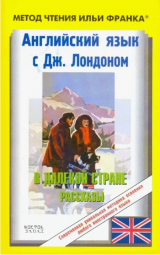
Текст книги "Английский язык с Джеком Лондоном. В далекой стране (рассказы)"
Автор книги: Джек Лондон
Соавторы: Илья Франк
Жанр:
Языкознание
сообщить о нарушении
Текущая страница: 21 (всего у книги 21 страниц)
squirrel ['skwIr(q)l], clumsy ['klAmzI], quarrelsome ['kwOr(q)lsqm]
He placed a stick carefully upon the fire and resumed his meditations. It was the same everywhere, with all things. The mosquitoes vanished with the first frost. The little tree-squirrel crawled away to die. When age settled upon the rabbit it became slow and heavy, and could no longer outfoot its enemies. Even the big bald-face grew clumsy and blind and quarrelsome, in the end to be dragged down by a handful of yelping huskies. He remembered how he had abandoned his own father on an upper reach of the Klondike one winter, the winter before the missionary came with his talk-books and his box of medicines. Many a time had Koskoosh smacked his lips over the recollection of that box, though now his mouth refused to moisten. The «painkiller» had been especially good. But the missionary was a bother after all, for he brought no meat into the camp, and he ate heartily, and the hunters grumbled. But he chilled his lungs on the divide by the Mayo, and the dogs afterwards nosed the stones away and fought over his bones.
Koskoosh placed another stick on the fire and harked back deeper into the past (Коскуш положил еще одну палку в огонь и возвратился глубже в прошлое; to hark back – возвращаться /в мыслях/; вспоминать). There was the time of the Great Famine (было время великого голода), when the old men crouched empty-bellied to the fire (когда старики съеживались/садились на корточки с пустыми животами к огню; belly – живот; empty – пустой), and let fall from their lips dim traditions of the ancient day (и роняли: «давали упасть» с губ туманные предания прошлых дней) when the Yukon ran wide open for three winters (когда Юкон бежал широко открытый = без льда три зимы), and then lay frozen for three summers (а потом стоял замерзший три лета). He had lost his mother in that famine (он потерял свою мать в тот голод; to lose – терять что-либо, утрачивать, лишаться). In the summer the salmon run had failed (тем летом косяк лосося не появился; run – косяк рыбы во время миграции; to fail – истощаться, не сделать, не исполнить), and the tribe looked forward to the winter and the coming of the caribou (и племя с нетерпением ожидало зимы и появления оленей; to look forward – ожидать с нетерпением; caribou – северный канадский олень). Then the winter came (затем пришла зима), but with it there were no caribou (но с ней не было оленей). Never had the like been known (никогда подобное не было известно), not even in the lives of the old men (даже в жизни стариков = на памяти стариков). But the caribou did not come, and it was the seventh year (но олени не появились, и это был седьмой год), and the rabbits had not replenished (и зайцы не пополнялись = не плодились), and the dogs were naught but bundles of bones (и собаки были всего лишь связками костей; naught – ничто). And through the long darkness the children wailed and died (и долгой полярной ночью: «темнотой» дети вопили и умирали), and the women, and the old men (и женщины, и старики); and not one in ten of the tribe lived to meet the sun (и даже один из десяти /человек/ племени не дожил до встречи с солнцем) when it came back in the spring (когда оно вернулось весной). That was a famine (вот это был голод)!
ancient ['eInS(q)nt], famine ['fxmIn], naught [nLt], through [TrH]
Koskoosh placed another stick on the fire and harked back deeper into the past. There was the time of the Great Famine, when the old men crouched empty-bellied to the fire, and let fall from their lips dim traditions of the ancient day when the Yukon ran wide open for three winters, and then lay frozen for three summers. He had lost his mother in that famine. In the summer the salmon run had failed, and the tribe looked forward to the winter and the coming of the caribou. Then the winter came, but with it there were no caribou. Never had the like been known, not even in the lives of the old men. But the caribou did not come, and it was the seventh year, and the rabbits had not replenished, and the dogs were naught but bundles of bones. And through the long darkness the children wailed and died, and the women, and the old men; and not one in ten of the tribe lived to meet the sun when it came back in the spring. That was a famine!
But he had seen times of plenty, too (но он видел времена изобилия тоже), when the meat spoiled on their hands (когда мясо портилось в их руках), and the dogs were fat and worthless with overeating (и собаки были жирными и бесполезными от переедания) – times when they let the game go unkilled (времена, когда они позволяли добыче уйти неубитой = живой; game – дичь, зверь, добытый на охоте; игра), and the women were fertile (и женщины были плодовиты), and the lodges were cluttered with sprawling men-children and women-children (и вигвамы были заполнены ползающими мальчиками и девочками; children – ребенок). Then it was the men became high-stomached (тогда мужчины становились заносчивыми; stomach – желудок, живот), and revived ancient quarrels (и возобновляли старые ссоры/склоки), and crossed the divides to the south to kill the Pellys (и пересекали водораздельные хребты на юг /чтобы/ убивать /людей из племени/ пелли), and to the west that they might sit by the dead fires of the Tananas (и на запад, чтобы они могли посидеть у мертвых = потухших костров /племени/ танана). He remembered, when a boy, during a time of plenty (он вспомнил, когда /он был/ мальчиком во время изобилия), when he saw a moose pulled down by the wolves (когда он увидел лося, сбитого волками). Zing-ha lay with him in the snow and watched (Зинг-ха лежал с ним в снегу и наблюдал) – Zing-ha, who later became the craftiest of hunters (Зинг-ха, который позднее стал самым хитрым/ловким из охотников), and who, in the end, fell through an air-hole on the Yukon (и кто, в конечном счете, погиб в полынье на Юконе; to fall – падать, погибать, попадать; air-hole – полынья на реке: «воздушная дыра»). They found him, a month afterward (они нашли его месяцем позже), just as he had crawled halfway out and frozen stiff to the ice (едва выползшим наполовину и примерзшим крепко ко льду; stiff – тугой, негибкий; окостеневший, одеревенелый).
worthless ['wWTlIs], quarrel ['kwOr(q)l], stomach ['stAmqk]
But he had seen times of plenty, too, when the meat spoiled on their hands, and the dogs were fat and worthless with overeating – times when they let the game go unkilled, and the women were fertile, and the lodges were cluttered with sprawling men-children and women-children. Then it was the men became high-stomached, and revived ancient quarrels, and crossed the divides to the south to kill the Pellys, and to the west that they might sit by the dead fires of the Tananas. He remembered, when a boy, during a time of plenty, when he saw a moose pulled down by the wolves. Zing-ha lay with him in the snow and watched – Zing-ha, who later became the craftiest of hunters, and who, in the end, fell through an air-hole on the Yukon. They found him, a month afterward, just as he had crawled halfway out and frozen stiff to the ice.
But the moose (так вот, лось; but – в начале предложения служит указанием на переход к новой теме). Zing-ha and he had gone out that day to play at hunting after the manner of their fathers (Зинг-ха и он /Коскуш/ вышли в тот день поиграть в охоту /таким/ способом /как/ их отцы = подражая своим отцам; to go out – выйти, выходить; manner – манера, поведение, образ действий.) On the bed of the creek they struck the fresh track of a moose (на дне ручья они обнаружили свежий след лося; to strike – бить; открыть, обнаружить, достичь желаемого /внезапно/), and with it the tracks of many wolves (и с ним – следы многих волков). «An old one,» Zing-ha, who was quicker at reading the sign, said (старый /лось/, – Зинг-ха, кто был быстрее /чем Коскуш/ при чтении следов, сказал) – "an old one who cannot keep up with the herd (старый /лось/, который не может держаться со стадом). The wolves have cut him out from his brothers (волки отрезали его от собратьев), and they will never leave him (и они никогда = вовсе не отпустят его). " And it was so (так оно и было). It was their way (это был их способ /охотиться/). By day and by night (днем и ночью), never resting (без отдыха), snarling on his heels (рыча на его пятки), snapping at his nose (щелкая /зубами/ у его носа = морды), they would stay by him to the end (они будут не отставать от него: «оставаться при нем» до конца). How Zing-ha and he felt the blood-lust quicken (как Зинг-ха и он почувствовали /что/ кровь закипела: «кровь страстно ускорилась»)! The finish would be a sight to see (на этот конец стоит посмотреть: «конец будет зрелищем достойным, чтобы посмотреть»)!
moose [mHs], father ['fRDq], sight [saIt]
But the moose. Zing-ha and he had gone out that day to play at hunting after the manner of their fathers. On the bed of the creek they struck the fresh track of a moose, and with it the tracks of many wolves. «An old one,» Zing-ha, who was quicker at reading the sign, said – «an old one who cannot keep up with the herd. The wolves have cut him out from his brothers, and they will never leave him.» And it was so. It was their way. By day and by night, never resting, snarling on his heels, snapping at his nose, they would stay by him to the end. How Zing-ha and he felt the blood-lust quicken! The finish would be a sight to see!
Eager-footed (сгорая от нетерпения; eager – страстно желающий, жаждущий; энергичный), they took the trail, and even he, Koskoosh (они взяли след и даже он, Коскуш), slow of sight and an unversed tracker (медлительный и неопытный охотник; slow – медленный; sight – зрение, взгляд, прицел), could have followed it blind, it was so wide (мог последовать за ним /следом/ слепо, так он был широк). Hot were they on the heels of the chase (разгоряченными/возбужденными были они по пятам погони), reading the grim tragedy (читая жестокую трагедию), fresh-written, at every step (свеже-написанную, на каждом шагу). Now they came to where the moose had made a stand (вот они подошли /к месту/, где лось сделал остановку). Thrice the length of a grown man's body (/на/ три длины человеческих роста), in every direction (во всех направлениях), had the snow been stamped about and uptossed (снег был истоптан и расшвырян). In the midst were the deep impressions of the splay-hoofed game (в середине были глубокие отпечатки дичи с расширенными копытами), and all about (и вокруг), everywhere (везде), were the lighter footmarks of the wolves (были более легкие следы волков). Some, while their brothers harried the kill (некоторые, в то время как их собратья добивали добычу; to harry – совершать набеги; опустошать, доводить до разорения; разграблять; обездоливать; the kill – добыча /на охоте/), had lain to one side and rested (лежали на одном боку и отдыхали). The full-stretched impress of their bodies in the snow was as perfect as though made the moment before (растянутый отпечаток их тел в снегу был так ясен: «совершенен», словно был сделан за момент перед этим). One wolf had been caught in a wild lunge of the maddened victim and trampled to death (одного волка /лось/ ударил в диком прыжке обезумевшей жертвы и затоптал до смерти: «один волк был пойман в диком прыжке обезумевшей жертвы и затоптан до смерти»). A few bones (несколько костей), well picked (чисто обглоданных), bore witness (свидетельствовали /об этом/).
though [Dqu], thrice [TraIs], length [leNT]
Eager-footed, they took the trail, and even he, Koskoosh, slow of sight and an unversed tracker, could have followed it blind, it was so wide. Hot were they on the heels of the chase, reading the grim tragedy, fresh-written, at every step. Now they came to where the moose had made a stand. Thrice the length of a grown man's body, in every direction, had the snow been stamped about and uptossed. In the midst were the deep impressions of the splay-hoofed game, and all about, everywhere, were the lighter footmarks of the wolves. Some, while their brothers harried the kill, had lain to one side and rested. The full-stretched impress of their bodies in the snow was as perfect as though made the moment before. One wolf had been caught in a wild lunge of the maddened victim and trampled to death. A few bones, well picked, bore witness.
Again, they ceased the uplift of their snowshoes at a second stand (снова они замедлили подъем своих лыж при второй остановке; snow – снег; shoe – туфля, колодка). Here the great animal had fought desperately (здесь /это/ крупное животное сражалось отчаянно; to fight). Twice had he been dragged down (дважды его опрокидывали: «оно было стащено вниз = сбито с ног»), as the snow attested (как свидетельствовал снег), and twice had he shaken his assailants clear and gained footing once more (и дважды он стряхивал своих противников и поднимался на ноги снова; clear – ясный; to shake clear – стряхнуть; to gain – получать, приобретать, добиваться). He had done his task long since (он выполнил свою задачу давно), but none the less was life dear to him (но, тем не менее, жизнь была дорога ему). Zing-ha said it was a strange thing, a moose once down to get free again (Зинг-ха сказал /что/ это было странно, чтобы лось, однажды опрокинутый, снова освободился); but this one certainly had (но этот /лось/ несомненно сделал /так/). The shaman would see signs and wonders in this when they told him (шаман увидит знаки и чудеса в этом, когда они расскажут ему).
desperately ['desp(q)rItlI], assailant [q'seIlqnt], certainly ['sWtnlI]
Again, they ceased the uplift of their snowshoes at a second stand. Here the great animal had fought desperately. Twice had he been dragged down, as the snow attested, and twice had he shaken his assailants clear and gained footing once more. He had done his task long since, but none the less was life dear to him. Zing-ha said it was a strange thing, a moose once down to get free again; but this one certainly had. The shaman would see signs and wonders in this when they told him.
And yet again (и все же снова), they came to where the moose had made to mount the bank and gain the timber (они подошли /туда/, где лось сделал /попытку/ подняться на насыпь и достичь леса; timber – древесина). But his foes had laid on from behind (но его враги насели /на него/ сзади), till he reared and fell back upon them (пока он не поднялся на дыбы и не упал на них спиной; to rear – становиться на дыбы /о лошади/), crushing two deep into the snow (вдавливая двух /волков/ глубоко в снег). It was plain the kill was at hand (было очевидно, /что/ убийство было близко), for their brothers had left them untouched (потому что их /волков/ собратья оставили нетронутыми). Two more stands were hurried past (еще две остановки были проскочены мимо = мальчики пробежали мимо них; to hurry – торопиться, спешить), brief in time-length and very close together (короткие по времени и очень близкие друг к другу). The trail was red now (след был красным теперь), and the clean stride of the great beast had grown short and slovenly (и свежий шаг большого зверя стал коротким и неровным; sloven – неопрятный, неряшливый; небрежный). Then they heard the first sounds of the battle (затем они услышали первые звуки битвы) – not the full-throated chorus of the chase (не громогласный хор погони), but the short, snappy bark (а короткий, отрывистый лай) which spoke of close quarters and teeth to flesh (который рассказывал о близости /волчьих/ лап и зубов к плоти /лося/). Crawling up the wind, Zing-ha bellied it through the snow (медленно передвигаясь против ветра, Зинг-ха полз на животе по снегу; to belly – ползти или скользить на брюхе), and with him crept he, Koskoosh (и с ним полз он /Коскуш/; to creep – подкрадываться, ползти), who was to be chief of the tribesmen in the years to come (кому предстояло стать вождем племени с годами). Together they shoved aside the under branches of a young spruce and peered forth (вместе они отпихнули в сторону нижние ветки молодой пихты и выглянули дальше; to shove – пихаться, толкаться). It was the end they saw (это был конец /битвы/ /который/ они увидели = им осталось увидеть лишь конец).
foe [fqu], spruce [sprHs], rear [rIq]
And yet again, they came to where the moose had made to mount the bank and gain the timber. But his foes had laid on from behind, till he reared and fell back upon them, crushing two deep into the snow. It was plain the kill was at hand, for their brothers had left them untouched. Two more stands were hurried past, brief in time-length and very close together. The trail was red now, and the clean stride of the great beast had grown short and slovenly. Then they heard the first sounds of the battle – not the full-throated chorus of the chase, but the short, snappy bark which spoke of close quarters and teeth to flesh. Crawling up the wind, Zing-ha bellied it through the snow, and with him crept he, Koskoosh, who was to be chief of the tribesmen in the years to come. Together they shoved aside the under branches of a young spruce and peered forth. It was the end they saw.
The picture (эта картина), like all of youth's impressions (как все впечатления юности), was still strong with him (была еще сильна в нем: «с ним»), and his dim eyes watched the end played out as vividly as in that far-off time (и его тусклые глаза смотрели на конец, /который/ разворачивался так ясно, как в то далекое время). Koskoosh marvelled at this (Коскуш удивился этому), for in the days which followed (потому что в те дни, которые последовали), when he was a leader of men and a head of councillors (когда он был вождем людей и главой членов совета; council – совет /орган власти/; councillor – советник), he had done great deeds and made his name a curse in the mouths of the Pellys (он совершил великие деяния и сделал свое имя проклятием в устах племени пелли), to say naught of the strange white man he had killed, knife to knife, in open fight (не говоря о неизвестном белом человеке, /которого/ он убил ножом: «нож к ножу» в открытом бою).
councillor ['kaunslq], naught [nLt], impression [Im'preS(q)n]
The picture, like all of youth's impressions, was still strong with him, and his dim eyes watched the end played out as vividly as in that far-off time. Koskoosh marvelled at this, for in the days which followed, when he was a leader of men and a head of councillors, he had done great deeds and made his name a curse in the mouths of the Pellys, to say naught of the strange white man he had killed, knife to knife, in open fight.
For long he pondered on the days of his youth (долго он размышлял о днях своей юности), till the fire died down and the frost bit deeper (пока огонь потух и мороз стал кусать сильнее). He replenished it with two sticks this time (он пополнил его /костер/ двумя палками сразу), and gauged his grip on life by what remained (и измерил свою власть над жизнью тем, что осталось). If Sit-cum-to-ha had only remembered her grandfather (если бы Сит-кум-то-ха только подумала о своем деде), and gathered a larger armful (и собрала побольше охапку), his hours would have been longer (его часы были бы дольше). It would have been easy (это было бы легко). But she was ever a careless child (но она всегда была очень беззаботным ребенком), and honored not her ancestors from the time the Beaver (и не почитала/не уважала своих предков с /того/ времени, как Бобер), son of the son of Zing-ha, first cast eyes upon her (сын сына Зинг-ха, впервые бросил взгляд на нее). Well, what mattered it (ну, не все ли равно: «какое это имело значение»)? Had he not done likewise in his own quick youth (разве он не делал подобно в своей собственной короткой молодости)? For a while he listened to the silence (некоторое время он вслушивался в тишину; while – промежуток времени). Perhaps the heart of his son might soften (может быть, сердце его сына смягчится), and he would come back with the dogs to take his old father on with the tribe (и он вернется с собаками, /чтобы/ забрать своего старого отца с племенем) to where the caribou ran thick and the fat hung heavy upon them (туда, где стада карибу бегут толстые и /с/ жирными боками: «и жир висит тяжело на них»).
gauge [geIG], hour ['auq], honor ['Onq]
For long he pondered on the days of his youth, till the fire died down and the frost bit deeper. He replenished it with two sticks this time, and gauged his grip on life by what remained. If Sit-cum-to-ha had only remembered her grandfather, and gathered a larger armful, his hours would have been longer. It would have been easy. But she was ever a careless child, and honored not her ancestors from the time the Beaver, son of the son of Zing-ha, first cast eyes upon her. Well, what mattered it? Had he not done likewise in his own quick youth? For a while he listened to the silence. Perhaps the heart of his son might soften, and he would come back with the dogs to take his old father on with the tribe to where the caribou ran thick and the fat hung heavy upon them.
He strained his ears (он напряг свои уши = свой слух), his restless brain for the moment stilled (его тревожный мозг на мгновение успокоился). Not a stir, nothing (ни звука, ничего; stir – шевеление, движение). He alone took breath in the midst of the great silence (он один переводил дух посереди полной тишины). It was very lonely (было очень одиноко). Hark (чу)! What was that (что это было)? A chill passed over his body (дрожь прошла по его телу). The familiar, long-drawn howl broke the void (знакомый, протяжный вой разбил пустоту), and it was close at hand (и он был недалеко: «плотно/близко под рукой»). Then on his darkened eyes was projected the vision of the moose (затем перед его затуманенными глазами вырисовалось видение лося) – the old bull moose – the torn flanks and bloody sides (старого самца – истерзанные и окровавленные бока; flank – бочок /мясистая часть между ребрами и бедром/; side – сторона, бок), the riddled mane (взъерошенная грива), and the great branching horns (и большие ветвистые рога), down low and tossing to the last (пригибая /их/ книзу и кидаясь до последнего; to toss – бросать, кидать, метать; трясти). He saw the flashing forms of gray (он видел мелькающие очертания серых /тел/), the gleaming eyes (светящиеся глаза), the lolling tongues (высунутые языки; to loll – высовывать язык), the slavered fangs (слюну, стекающую с клыков; to slaver – пускать слюну). And he saw the inexorable circle close in till it became a dark point in the midst of the stamped snow (и он видел, как неумолимый круг смыкался, пока не стал темной точкой посреди истоптанного снега).
stir [stW], inexorable [In'eks(q)rqbl], tongue [tAN]
He strained his ears, his restless brain for the moment stilled. Not a stir, nothing. He alone took breath in the midst of the great silence. It was very lonely. Hark! What was that? A chill passed over his body. The familiar, long-drawn howl broke the void, and it was close at hand. Then on his darkened eyes was projected the vision of the moose – the old bull moose – the torn flanks and bloody sides, the riddled mane, and the great branching horns, down low and tossing to the last. He saw the flashing forms of gray, the gleaming eyes, the lolling tongues, the slavered fangs. And he saw the inexorable circle close in till it became a dark point in the midst of the stamped snow.
A cold muzzle thrust against his cheek (холодная морда ткнулась ему в щеку), and at its touch his soul leaped back to the present (и при этом прикосновении его душа перенеслась/перепрыгнула обратно в настоящее). His hand shot into the fire and dragged out a burning faggot (его рука устремилась/дернулась к огню и вытащила головешку = горящую охапку; to shoot – стрелять; бросаться, мчаться; делать резкое движение). Overcome for the nonce by his hereditary fear of man (побежденное в этот момент своим наследственным страхом перед человеком; nonce – данный случай, данное время), the brute retreated, raising a prolonged call to his brothers (животное отступило, издавая продолжительный зов своим собратьям); and greedily they answered (и жадно они ответили), till a ring of crouching, jaw-slobbered gray was stretched round about (пока кольцо припадающих к земле, брызжущих слюной с челюстей серых /волков/ не вытянулось вокруг; slobber – слюни). The old man listened to the drawing in of this circle (старик прислушался к подтягиванию этого круга). He waved his brand wildly (он взмахнул своей головней дико = отчаянно), and sniffs turned to snarls (и фырканья перешли в рычание); but the panting brutes refused to scatter (но тяжело дышащие звери отказывались разбегаться). Now one wormed his chest forward, dragging his haunches after (вот один подал грудь вперед, волоча/подтягивая заднюю часть за собой; haunch – ляжка, бедро /человека/; задняя часть /животного/), now a second, now a third (вот второй, вот третий); but never a one drew back (но ни один не пошел назад). Why should he cling to life (почему он должен цепляться за жизнь)? – he asked, and dropped the blazing stick into the snow (он спросил /себя/ и уронил пылающую палку в снег). It sizzled and went out (она зашипела и потухла). The circle grunted uneasily, but held its own (круг заворчал беспокойно, но не отступил: «сохранил свое собственное = свои позиции»). Again he saw the last stand of the old bull moose (опять он увидел последнюю остановку старого самца лося), and Koskoosh dropped his head wearily upon his knees (и Коскуш уронил свою голову устало на колени). What did it matter after all (не все ли равно, в конце концов)? Was it not the law of life (разве это не был закон жизни)?
hereditary [hI'redIt(q)rI], haunch [hLnC], knee [nJ]
A cold muzzle thrust against his cheek, and at its touch his soul leaped back to the present. His hand shot into the fire and dragged out a burning faggot. Overcome for the nonce by his hereditary fear of man, the brute retreated, raising a prolonged call to his brothers; and greedily they answered, till a ring of crouching, jaw-slobbered gray was stretched round about. The old man listened to the drawing in of this circle. He waved his brand wildly, and sniffs turned to snarls; but the panting brutes refused to scatter. Now one wormed his chest forward, dragging his haunches after, now a second, now a third; but never a one drew back. Why should he cling to life? he asked, and dropped the blazing stick into the snow. It sizzled and went out. The circle grunted uneasily, but held its own. Again he saw the last stand of the old bull moose, and Koskoosh dropped his head wearily upon his knees. What did it matter after all? Was it not the law of life?
![Обложка: Честь Воина [CИ]](/files/books/110/no-cover.jpg)