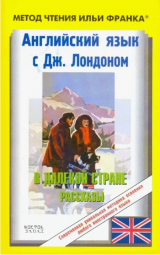
Текст книги "Английский язык с Джеком Лондоном. В далекой стране (рассказы)"
Автор книги: Джек Лондон
Соавторы: Илья Франк
Жанр:
Языкознание
сообщить о нарушении
Текущая страница: 3 (всего у книги 21 страниц)
A DAY'S LODGING
(Однодневная стоянка)
It was the gosh-dangdest stampede (это была сумасшедшая гонка = бегство; by gosh! – черт возьми /выражение изумления, досады/, dang it! – черт побери, stampede – паническое бегство) I ever seen (/которую/ я когда-либо видел). A thousand dog-teams hittin' the ice (тысяча собачьих упряжек двигалась с большой скоростью = мчалась по льду; to hit – бить). You couldn't see 'm fer smoke (вы не могли видеть их из-за пара; smoke – туман, дымка; `m = them; fer = for). Two white men an' a Swede froze to death that night (два белых человека и швед замерзли насмерть той ночью; to freeze), an' there was a dozen busted their lungs (и дюжина: «там была дюжина» испортила /себе/ легкие; to bust – сломать, разрушить). But didn't I see with my own eyes the bottom of the water-hole (но разве я не видел своими собственными глазами дно проруби)? It was yellow with gold like a mustard-plaster (оно было желтое от золота, как горчичник). That's why I staked the Yukon for a minin' claim (вот почему я застолбил /участок/ на Юконе для заявки на открытие рудника; stake – кол, столб; рисковать; to stake out a claim – отмечать границы участка, заявлять права; mining – горный, рудный). That's what made the stampede (вот что послужило причиной гонки). An' then there was nothin' to it (а потом там ничего не оказалось: «было ничто»). That's what I said – NOTHIN' to it (вот что я сказал – ничего). An' I ain't got over guessin' yet (я так до сих пор и не знаю, чем это объяснить: «не перестал гадать об этом»; ain't – have not; to get over – преодолевать что-либо, покончить с чем-либо; guess – угадать, догадываться). – NARRATIVE OF SHORTY (рассказ Шорти).
stampede [stxm'pi: d], bust [bAst], guess [gqs]
It was the gosh-dangdest stampede I ever seen. A thousand dog-teams hittin' the ice. You couldn't see 'm fer smoke. Two white men an' a Swede froze to death that night, an' there was a dozen busted their lungs. But didn't I see with my own eyes the bottom of the water-hole? It was yellow with gold like a mustard-plaster. That's why I staked the Yukon for a minin' claim. That's what made the stampede. An' then there was nothin' to it. That's what I said – NOTHIN' to it. An' I ain't got over guessin' yet. – NARRATIVE OF SHORTY.
JOHN MESSNER clung with mittened hand to the bucking gee-pole (Джон Месснер держался /одной/ рукой, /которая была/ в рукавице, за поворотный шест; to cling – цеплять/ся/, прилипать; buck – самец животного, gee – межд. но! пошел!) and held the sled in the trail (и направлял нарты по следу; to hold – держать; sled = sledge – сани, нарты; trail – след, тропа, тащить/ся/). With the other mittened hand he rubbed his cheeks and nose (другой рукой в рукавице он тер свои щеки и нос). He rubbed his cheeks and nose every little while (он тер свои щеки и нос то и дело: «каждый малый промежуток времени»). In point of fact, he rarely ceased from rubbing them (по сути дела, он редко переставал/прекращал тереть их), and sometimes, as their numbness increased, he rubbed fiercely (а иногда, когда их окоченение/онемение усиливалось, он тер неистово). His forehead was covered by the visor of his fur cap (его лоб был покрыт козырьком его меховой шапки), the flaps of which went over his ears (свешивающиеся концы которой закрывали его уши; to go over). The rest of his face was protected by a thick beard, golden-brown under its coating of frost (остальное лицо: «остаток его лица» было защищено густой бородой, золотисто-коричневой под покрывающим ее инеем).
mitten [mItn], rub [rAb], cease [sI: s], numbness ['nAmnIs], increase [In'krI: s]
JOHN MESSNER clung with mittened hand to the bucking gee-pole and held the sled in the trail. With the other mittened hand he rubbed his cheeks and nose. He rubbed his cheeks and nose every little while. In point of fact, he rarely ceased from rubbing them, and sometimes, as their numbness increased, he rubbed fiercely. His forehead was covered by the visor of his fur cap, the flaps of which went over his ears. The rest of his face was protected by a thick beard, golden-brown under its coating of frost.
Behind him churned a heavily loaded Yukon sled (позади него, раскачиваясь, скользили тяжело нагруженные юконские нарты; to churn – взбалтывать, вспенивать; сбивать масло) and before him toiled a string of five dogs (перед ним тащилась упряжка = вереница из пяти собак; to toil – с трудом идти, усиленно трудиться; string – веревка; струна). The rope by which they dragged the sled rubbed against the side of Messner's leg (веревка = постромка, которой они тянули нарты, терлась о ногу Месснера: «о сторону ноги Месснера»). When the dogs swung on a bend in the trail, he stepped over the rope (когда собаки поворачивали на изгибе дороги, он переступал через веревку; to swing – качать/ся/, вертеть/ся/). There were many bends, and he was compelled to step over it often (поворотов: «изгибов» было много, и он был вынужден переступать через нее часто). Sometimes he tripped on the rope, or stumbled (иногда он цеплялся за веревку или спотыкался), and at all times he was awkward (и всегда он был неуклюжим/неловким), betraying a weariness so great that the sled now and again ran upon his heels (/его движения/ выдавали огромную усталость: «выдавая усталость настолько большую», что нарты снова и снова наезжали ему на пятки = ноги; to run upon – натолкнуться, наскочить на что-либо).
churn [tSq: n], compel [kqm'pql], stumble [stAmbl], awkward ['O: kwqd], weariness ['wIqrInIs]
Behind him churned a heavily loaded Yukon sled, and before him toiled a string of five dogs. The rope by which they dragged the sled rubbed against the side of Messner's leg. When the dogs swung on a bend in the trail, he stepped over the rope. There were many bends, and he was compelled to step over it often. Sometimes he tripped on the rope, or stumbled, and at all times he was awkward, betraying a weariness so great that the sled now and again ran upon his heels.
When he came to a straight piece of trail (когда он выехал на прямой участок: «кусок» дороги), where the sled could get along for a moment without guidance (где нарты могли продвигаться вперед некоторое время без управления), he let go the gee-pole and batted his right hand sharply upon the hard wood (он отпустил шест и ударил свою правую руку резко по крепкому/твердому дереву; to let – позволять, разрешать). He found it difficult to keep up the circulation in that hand (он находил это трудным = было трудно поддерживать кровообращение в этой руке; to find; to keep – хранить, держать). But while he pounded the one hand (но пока/в то время как он колотил одну руку), he never ceased from rubbing his nose and cheeks with the other (он вовсе /не/ переставал/прекращал тереть свой нос и щеки другой / рукой/).
"It's too cold to travel, anyway (во всяком случае, слишком холодно, /чтобы/ разъезжать/передвигаться)," he said (сказал он). He spoke aloud, after the manner of men who are much by themselves (он говорил громко, как люди, привыкшие к одиночеству). "Only a fool would travel at such a temperature (только глупец/дурак будет разъезжать при такой температуре). If it isn't eighty below, it's because it's seventy-nine (если /сейчас/ не восемьдесят /градусов/ ниже нуля, это потому, что семьдесят девять)."
guidance ['gQId(q)ns], circulation ["sq: kju'lqIS(q)n], pound [pQund]
When he came to a straight piece of trail, where the sled could get along for a moment without guidance, he let go the gee-pole and batted his right hand sharply upon the hard wood. He found it difficult to keep up the circulation in that hand. But while he pounded the one hand, he never ceased from rubbing his nose and cheeks with the other.
"It's too cold to travel, anyway," he said. He spoke aloud, after the manner of men who are much by themselves. "Only a fool would travel at such a temperature. If it isn't eighty below, it's because it's seventy-nine."
He pulled out his watch (он вытащил/достал свои часы; to pull – тянуть, тащить), and after some fumbling got it back into the breast pocket of his thick woollen jacket (и после того, как повертел их в руках, положил их обратно в нагрудный карман своей толстой шерстяной куртки). Then he surveyed the heavens (затем/потом он осмотрел/обозрел = посмотрел на небеса/небо) and ran his eye along the white sky-line to the south (и пробежал своим глазом вдоль белой линии горизонта к югу /от него/; to run).
«Twelve o'clock (двенадцать часов),» he mumbled (пробормотал он), «A clear sky, and no sun (небо чистое, и нет солнца).»
He plodded on silently for ten minutes (он брел молча минут десять; plod – тяжелая походка, тяжелый путь; to plod on – тащиться, идти тяжело без остановок), and then, as though there had been no lapse in his speech, he added (а затем, как будто не было паузы в его речи, он добавил; lapse – промежуток времени; упущение):
"And no ground covered, and it's too cold to travel (и не продвинулся вперед: «и нет расстояния покрытого», и слишком холодно, /чтобы/ разъезжать)".
Suddenly he yelled "Whoa!" at the dogs, and stopped (внезапно он закричал на собак: «Хо-о!» и остановился). He seemed in a wild panic over his right hand (ему показалось в диком ужасе: «панике», что его правая рука слишком /онемела/), and proceeded to hammer it furiously against the gee-pole (и /он/ продолжил/возобновил стучать ею неистово о шест).
fumble [fAmbl], survey [sq:'vqI], lapse [lxps], proceed [prq'si: d]
He pulled out his watch, and after some fumbling got it back into the breast pocket of his thick woollen jacket. Then he surveyed the heavens and ran his eye along the white sky-line to the south.
"Twelve o'clock," he mumbled, "A clear sky, and no sun."
He plodded on silently for ten minutes, and then, as though there had been no lapse in his speech, he added:
"And no ground covered, and it's too cold to travel."
Suddenly he yelled "Whoa!" at the dogs, and stopped. He seemed in a wild panic over his right hand, and proceeded to hammer it furiously against the gee-pole.
«You – poor – devils (вы – бедные черти = бедняги)!» he addressed the dogs, which had dropped down heavily on the ice to rest (он обратился к собакам, которые упали тяжело на лед отдохнуть). This was a broken, jerky utterance, caused by the violence with which he hammered his numb hand upon the wood (это было прерывистое, резкое высказывание, вызванное усилием, с которым он колотил свою окоченевшую руку по дереву). "What have you done anyway (так или иначе, что вы сделали = чем вы провинились) that a two-legged other animal should come along (что двуногие другие животные должны идти/сопровождать /вместе с вами/), break you to harness (приучать вас к упряжи; to break to), curb all your natural proclivities (обуздывать/сдерживать все ваши природные склонности = инстинкты), and make slave-beasts out of you (и делать рабов-животных из вас)?"
poor [puq], utterance ['Atqrqns], curb [kq: b], beast [bI: st]
«You – poor – devils!» he addressed the dogs, which had dropped down heavily on the ice to rest. His was a broken, jerky utterance, caused by the violence with which he hammered his numb hand upon the wood. «What have you done anyway that a two-legged other animal should come along, break you to harness, curb all your natural proclivities, and make slave-beasts out of you?»
He rubbed his nose (он тер свой нос), not reflectively, but savagely (не задумчиво, а свирепо/остервенело), in order to drive the blood into it (для того чтобы нагнать = вызвать прилив крови в него; to drive – гнать), and urged the dogs to their work again (и побудил = заставил собак к их работе снова). He travelled on the frozen surface of a great river (он передвигался/перемещался по замерзшей поверхности большой реки). Behind him it stretched away in a mighty curve of many miles (позади него она простиралась, /делая/ громадные изгибы = повороты, на много миль), losing itself in a fantastic jumble of mountains, snow-covered and silent (теряясь в причудливой путанице гор, покрытых снегом и молчаливых/безмолвных; to lose; jumble – беспорядочная смесь, куча, беспорядок; смешивать/ся/). Ahead of him the river split into many channels (впереди него река делилась на множество рукавов; to split; channel – пролив, канал, русло) to accommodate the freight of islands it carried on its breast (/чтобы/ приспособиться к грузу островов, /которые/ она несла на своей груди; to accommodate – приспосабливать, давать пристанище; примирять; согласовывать). These islands were silent and white (эти острова были безмолвные и белые). No animals nor humming insects broke the silence (тишину /не/ нарушали ни звери, ни жужжащие насекомые; to break – ломать, прерывать /молчание/). No birds flew in the chill air (ни одна птица не пролетала в прохладном/неприятно холодном воздухе; to fly). There was no sound of man, no mark of the handiwork of man (там не было ни звука = голоса человека, ни следа ручной работы человека = человеческой деятельности). The world slept, and it was like the sleep of death (мир спал, и это было подобно сну смерти; to sleep).
savagely ['sxvIGlI], blood [blAd], surface ['sq: fIs], jumble [GAmbl], accommodate [q'kOmqdqIt]
He rubbed his nose, not reflectively, but savagely, in order to drive the blood into it, and urged the dogs to their work again. He travelled on the frozen surface of a great river. Behind him it stretched away in a mighty curve of many miles, losing itself in a fantastic jumble of mountains, snow-covered and silent. Ahead of him the river split into many channels to accommodate the freight of islands it carried on its breast. These islands were silent and white. No animals nor humming insects broke the silence. No birds flew in the chill air. There was no sound of man, no mark of the handiwork of man. The world slept, and it was like the sleep of death.
John Messner seemed succumbing to the apathy of it all (Джон Месснер, казалось, поддался/уступил безразличию/апатии этого всего). The frost was benumbing his spirit (мороз сковывал его дух). He plodded on with bowed head (он тащился /вперед/ со склоненной головой), unobservant, mechanically rubbing nose and cheeks (невнимательный/ненаблюдательный, механически растирая нос и щеки), and batting his steering hand against the gee-pole in the straight trail-stretches (и колотя своей направляющей рукой по шесту на прямых пространствах = участках дороги; to steer – править рулем, управлять; следовать курсу; stretch – протяжение; вытягивание).
But the dogs were observant (но собаки были начеку: «внимательными»), and suddenly they stopped (и внезапно они остановились), turning their heads and looking back at their master out of eyes that were wistful and questioning (повернув их = свои головы и смотря назад на их хозяина глазами, которые были тоскливыми и вопрошающими). Their eyelashes were frosted white, as were their muzzles (их ресницы были белыми от мороза = выбелены морозом, как /и/ их морды), and they had all the seeming of decrepit old age, what of the frost-rime and exhaustion (и они казались совсем дряхлыми из-за морозного инея и изнеможения/истощения).
succumb [sq'kAm], benumb [bI'nAm], observant [qb'zq: vqnt], decrepit [dI'krqpIt], exhaustion [Ig'zO: stSqn]
John Messner seemed succumbing to the apathy of it all. The frost was benumbing his spirit. He plodded on with bowed head, unobservant, mechanically rubbing nose and cheeks, and batting his steering hand against the gee-pole in the straight trail-stretches.
But the dogs were observant, and suddenly they stopped, turning their heads and looking back at their master out of eyes that were wistful and questioning. Their eyelashes were frosted white, as were their muzzles, and they had all the seeming of decrepit old age, what of the frost-rime and exhaustion.
The man was about to urge them on (человек собирался /было/ подстегнуть их), when he checked himself (когда он удержался), roused up with an effort (пробудился с усилием = собрался с силами), and looked around (и посмотрел вокруг). The dogs had stopped beside a water-hole (собаки остановились около проруби), not a fissure, but a hole man-made (не трещины, а отверстия, сделанного человеком), chopped laboriously with an axe through three and a half feet of ice (вырубленного старательно/тщательно топором сквозь три с половиной фута льда). A thick skin of new ice showed that it had not been used for some time (толстая корка нового льда показывала = свидетельствовала, что /прорубью/ не пользовались некоторое время). Messner glanced about him (Месснер мельком взглянул вокруг него = по сторонам). The dogs were already pointing the way (собаки уже указывали путь), each wistful and hoary muzzle turned toward the dim snow-path (каждая тоскливая и седая = заиндевевшая морда /при этом/ повернулась по направлению к едва заметной снежной тропе) that left the main river trail and climbed the bank of the island (которая оставляла главный речной путь = ответвлялась от главного речного пути и взбиралась = подымалась вверх на берег острова; to leave).
"All right, you sore-footed brutes (хорошо/ладно, вы, животные с больными лапами = бедняги)," he said. "I'll investigate (я разузнаю/исследую; I`ll = I shall). You're not a bit more anxious to quit than I am (вы ничуть /не/ более озабочены, /чтобы/ бросить/освободиться от /поездки/, чем я = я не менее вас хочу отдохнуть)."
fissure ['fISq], hoary ['hO: rI], muzzle [mAzl], laboriously [lq'bO: rIqslI]
The man was about to urge them on, when he checked himself, roused up with an effort, and looked around. The dogs had stopped beside a water-hole, not a fissure, but a hole man-made, chopped laboriously with an axe through three and a half feet of ice. A thick skin of new ice showed that it had not been used for some time. Messner glanced about him. The dogs were already pointing the way, each wistful and hoary muzzle turned toward the dim snow– path that left the main river trail and climbed the bank of the island.
"All right, you sore-footed brutes," he said. "I'll investigate. You're not a bit more anxious to quit than I am."
He climbed the bank and disappeared (он поднялся/вскарабкался на берег и исчез). The dogs did not lie down (собаки не легли; to lie), but on their feet eagerly waited his return (но на своих лапах = стоя нетерпеливо ждали его возвращения). He came back to them (он вернулся к ним), took a hauling-rope from the front of the sled (взял веревку/канат /для волочения/ с передка нарт; to haul – тянуть, тащить), and put it around his shoulders (и поместил ее вокруг своих плеч = накинул себе на плечи; to put – помещать, класть, ставить). Then he gee’d the dogs to the right (затем он повернул собак направо) and put them at the bank on the run (и у берега погнал их). It was a stiff pull (это было сильное напряжение; stiff – тугой; густой; непреклонный; сильный), but their weariness fell from them as they crouched low to the snow (но их усталость упала = оставила их, когда они припали низко к снегу; to fall), whining with eagerness and gladness as they struggled upward to the last ounce of effort in their bodies (скуля/воя = визжа от рвения/пыла и радости, в то время как они боролись до последней унции/капли усилия в их телах = до последнего). When a dog slipped or faltered (когда собака поскальзывалась или спотыкалась), the one behind nipped his hind quarters (другая сзади кусала ее за заднюю часть = за задние лапы; to nip – щипать; кусать). The man shouted encouragement and threats (человек выкрикивал ободрения и угрозы = своими криками то подбадривал собак, то угрожал им), and threw all his weight on the hauling-rope (и налегал всем своим весом на веревку; to throw – бросать, кидать).
eagerly ['I: gqlI], crouch [krQutS], falter ['fO: ltq], threat [Trqt], encouragement [In'kArIGmqnt]
He climbed the bank and disappeared. The dogs did not lie down, but on their feet eagerly waited his return. He came back to them, took a hauling-rope from the front of the sled, and put it around his shoulders. Then he gee’d the dogs to the right and put them at the bank on the run. It was a stiff pull, but their weariness fell from them as they crouched low to the snow, whining with eagerness and gladness as they struggled upward to the last ounce of effort in their bodies. When a dog slipped or faltered, the one behind nipped his hind quarters. The man shouted encouragement and threats, and threw all his weight on the hauling-rope.
They cleared the bank with a rush (они проехали со стремлением = стремительно берег), swung to the left, and dashed up to a small log cabin (повернули налево и помчались/понеслись к маленькой бревенчатой хижине; to swing – качаться, размахивать). It was a deserted cabin of a single room, eight feet by ten on the inside (это была заброшенная хижина из одной комнаты площадью в восемь футов на десять). Messner unharnessed the animals, unloaded his sled and took possession (Месснер распряг животных = собак, разгрузил нарты и вступил во владение /жильем/; to take possession of – вступать во владение, овладевать). The last chance wayfarer had left a supply of firewood (последний случайный путник/странник оставил запас дров). Messner set up his light sheet-iron stove and started a fire (Месснер установил = поставил свою легкую печку из тонкого листового железа и развел огонь; to set). He put five sun-cured salmon into the oven to thaw out for the dogs (он положил пять вяленых на солнце семг/лососей в духовку, /чтобы/ оттаять/разморозить для собак), and from the water-hole filled his coffee-pot and cooking-pail (и из проруби наполнил свой кофейник и кастрюлю; pail – ведро; бадья; кадка).
While waiting for the water to boil (ожидая, пока закипит вода), he held his face over the stove (он держал = склонил свое лицо над печкой; to hold). The moisture from his breath had collected on his beard and frozen into a great mass of ice (влага от его дыхания собралась на его бороде и замерзла в большую массу льда = кусок льда/сосульку), and this he proceeded to thaw out (и он принялся/продолжил оттаивать это = его). As it melted and dropped upon the stove (по мере того как он таял и падал на печь) it sizzled and rose about him in steam (он шипел и поднимался над ним паром; to rise). He helped the process with his fingers (он помогал процессу своими пальцами = помогал, отдирая сосульки), working loose small ice-chunks (освобождая маленькие кусочки льда = сосульки) that fell rattling to the floor (которые падали стуча/гремя = со стуком на пол; to fall).
desert [dI'zq: t], possession [pq'zqS(q)n], thaw [TO: ], moisture ['mOIstSq], sizzle [sIzl]
They cleared the bank with a rush, swung to the left, and dashed up to a small log cabin. It was a deserted cabin of a single room, eight feet by ten on the inside. Messner unharnessed the animals, unloaded his sled and took possession. The last chance wayfarer had left a supply of firewood. Messner set up his light sheet-iron stove and started a fire. He put five sun-cured salmon into the oven to thaw out for the dogs, and from the water-hole filled his coffee-pot and cooking-pail.
While waiting for the water to boil, he held his face over the stove. The moisture from his breath had collected on his beard and frozen into a great mass of ice, and this he proceeded to thaw out. As it melted and dropped upon the stove it sizzled and rose about him in steam. He helped the process with his fingers, working loose small ice-chunks that fell rattling to the floor.
A wild outcry from the dogs without (дикий/неистовый крик = лай собак снаружи) did not take him from his task (не оторвал его от этого занятия). He heard the wolfish snarling and yelping of strange dogs and the sound of voices (он услышал волчье рычание/ворчание и визг/лай чужих собак и звук голосов; to hear). A knock came on the door (в дверь постучали).
"Come in, (войдите)" Messner called, in a voice muffled (позвал = крикнул Месснер приглушенным голосом = глухо; to muffle – глушить, заглушать /звук/) because at the moment he was sucking loose a fragment of ice from its anchorage on his upper lip (потому что в этот момент он всасывал, /чтобы/ освободить фрагмент льда = льдинку от ее основы/опоры на его верхней губе = всасывал кусок льда с верхней губы; anchor – якорь).
The door opened (дверь открылась), and, gazing out of his cloud of steam (и, пристально глядя из облака пара), he saw a man and a woman pausing on the threshold (он увидел мужчину и женщину, остановившихся на пороге).
outcry ['QutkrQI], snarl [snQ: l], yelp [jqlp], knock [nOk], muffle [mAfl], anchorage ['xnkqrIG], threshold ['TrqShquld]
A wild outcry from the dogs without did not take him from his task. He heard the wolfish snarling and yelping of strange dogs and the sound of voices. A knock came on the door.
"Come in," Messner called, in a voice muffled because at the moment he was sucking loose a fragment of ice from its anchorage on his upper lip.
The door opened, and, gazing out of his cloud of steam, he saw a man and a woman pausing on the threshold.
«Come in (войдите),» he said peremptorily (сказал он повелительно), «and shut the door (и закройте дверь)!»
Peering through the steam (вглядываясь/всматриваясь сквозь пар), he could make out but little of their personal appearance (он мог увидеть/различить лишь немного их личную внешность = он едва мог их рассмотреть). The nose and cheek strap worn by the woman (завязка для носа и щек носилась женщиной = женщина носила на лице повязку от холода; to wear (wore, worn) – носить, strap – ремень; полоска материи) and the trail-wrappings about her head allowed only a pair of black eyes to be seen (и дорожный платок/шаль около ее головы = на ее голове позволял видеть только пару черных глаз; trail – тропа, путь; to wrap – заворачивать; закутывать; платок; шаль; wrapping – обертка). The man was dark-eyed and smooth-shaven all except his mustache (мужчина был темноглазый и гладковыбритый, за исключением его усов; smooth – гладкий, ровный), which was so iced up as to hide his mouth (которые были такими обледеневшими, что скрывали/прятали его рот; to hide).
peremptory [pq'rqmpt(q)rI], peer [pIq], mustache [mqs'tQ: S]
«Come in,» he said peremptorily, «and shut the door!»
Peering through the steam, he could make out but little of their personal appearance. The nose and cheek strap worn by the woman and the trail-wrappings about her head allowed only a pair of black eyes to be seen. The man was dark-eyed and smooth-shaven all except his mustache, which was so iced up as to hide his mouth.
"We just wanted to know (мы просто хотели узнать; to know (knew; known)) if there is any other cabin around here (есть ли тут какая-нибудь другая хижина поблизости)," he said, at the same time glancing over the unfurnished state of the room (сказал он, в то же самое время бегло осматривая немеблированное состояние комнаты = пустую /лишенную мебели/ комнату; to glance over – бегло просматривать). "We thought this cabin was empty (мы подумали, /что/ эта хижина была пустой = эта хижина пустая; to think)."
"It isn't my cabin (это не моя хижина)," Messner answered (ответил Месснер). "I just found it a few minutes ago (я только что нашел ее несколько минут назад; to find). Come right in and camp (входите и располагайтесь). Plenty of room (много места/пространства), and you won't need your stove (и вам не понадобится ваша печка; won't = will not; to need – нуждаться). There's room for all (здесь есть место для всех)."
At the sound of his voice the woman peered at him with quick curiousness (при звуке его голоса женщина посмотрела на него с любопытством; to peer – всматриваться, вглядываться; quick – острый /о зрении, слухе, уме/).
"Get your things off (снимайте ваши вещи = раздевайся; to get off – снимать)," her companion said to her (ее спутник сказал ей). «I'll unhitch and get the water (я распрягу /собак/ и принесу воды) so we can start cooking (таким образом, мы сможем начать готовить = приняться за стряпню).»
unfurnished [`An`fq: nISt], glance [glQn: s], thought [TO: t]
«We just wanted to know if there is any other cabin around here,» he said, at the same time glancing over the unfurnished state of the room. «We thought this cabin was empty.»
"It isn't my cabin," Messner answered. "I just found it a few minutes ago. Come right in and camp. Plenty of room, and you won't need your stove. There's room for all."
At the sound of his voice the woman peered at him with quick curiousness.
"Get your things off," her companion said to her. "I'll unhitch and get the water so we can start cooking."
Messner took the thawed salmon outside (Месснер взял оттаявшую семгу/лосося наружу = на улицу) and fed his dogs (и покормил своих собак; to feed). He had to guard them against the second team of dogs (он был вынужден защищать их от второй упряжки собак), and when he had reentered the cabin (и когда он вернулся в хижину) the other man had unpacked the sled (другой мужчина /уже/ разгрузил нарты) and fetched water (и принес воды). Messner's pot was boiling (котелок/кружка = кофейник Месснера закипел). He threw in the coffee (он бросил = засыпал в /него/ кофе; to throw), settled it with half a cup of cold water (дал отстояться ему, /влив/ половину кружки холодной воды; to settle – оседать; очищать от мути), and took the pot from the stove (и взял = убрал кофейник с печки). He thawed some sour-dough biscuits in the oven (он оттаял несколько сухарей из кислого теста в духовке = печи; biscuit – сухое печенье), at the same time heating a pot of beans (в то же самое время разогревая котелок = кастрюлю бобов) he had boiled the night before (/которые/ он сварил прошлой ночью: «ночью перед») and that had ridden frozen on the sled all morning (и которые ехали = которые вез замороженными на нартах все утро; to ride – ехать верхом).
Removing his utensils from the stove (снимая свою утварь/посуду с печки), so as to give the newcomers a chance to cook (чтобы дать вновь прибывшим шанс = возможность приготовить /еду/), he proceeded to take his meal from the top of his grub-box (он приступил/принялся за еду: «принимать/потреблять пищу», /которая стояла/ на ящике для провизии: «с верха его коробки для еды»), himself sitting on his bed-roll (сам сидя на своем тюке с постелью; to roll – свертывать; катить/ся/). Between mouthfuls he talked trail and dogs with the man (за едой: «между кусками/глотками» он говорил /о/ дороге и собаках с мужчиной), who, with head over the stove (который, с головой над печкой), was thawing the ice from his mustache (оттаивал лед с его усов = на своих усах). There were two bunks in the cabin (в хижине было две койки), and into one of them, when he had cleared his lip (и на одну из них, когда он освободил свою губу = избавился от сосулек), the stranger tossed his bed-roll (незнакомец бросил свой тюк с постелью).