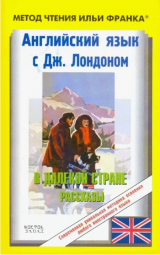
Текст книги "Английский язык с Джеком Лондоном. В далекой стране (рассказы)"
Автор книги: Джек Лондон
Соавторы: Илья Франк
Жанр:
Языкознание
сообщить о нарушении
Текущая страница: 7 (всего у книги 21 страниц)
NEGORE, THE COWARD
(Негор-трус)
HE had followed the trail of his fleeing people for eleven days (он шел по следу своего убегающего народа одиннадцать дней), and his pursuit had been in itself a flight (и его преследование само по себе было бегством); for behind him he knew full well (ибо за ним, он знал очень хорошо) were the dreaded Russians (были ужасные русские; dread – ужас), toiling through the swampy lowlands and over the steep divides (которые с трудом шли через болотистые низменности и крутые водоразделы; to toil – усиленно трудиться; с трудом идти, тащиться), bent on no less than the extermination of all his people (стремящиеся не менее как истребить весь его народ; to bent on – устремлять свои помыслы на что-либо; стремиться к чему-либо). He was travelling light (он путешествовал налегке). A rabbit-skin sleeping-robe (спальная накидка из кроличьих шкур), a muzzle-loading rifle (заряжающееся с дула ружье), and a few pounds of sun-dried salmon constituted his outfit (и несколько фунтов вяленой лососины составляли его снаряжение; to dry – сушить). He would have marvelled that a whole people (он бы удивился, что целый народ) – women and children and aged (женщины, дети и старики) – could travel so swiftly (могут идти так стремительно), had he not known the terror that drove them on (если бы не знал ужаса, который гнал их вперед; to drive – гнать).
pursuit [pq'sjHt], swampy ['swOmpI], salmon ['sxmqn]
HE had followed the trail of his fleeing people for eleven days, and his pursuit had been in itself a flight; for behind him he knew full well were the dreaded Russians, toiling through the swampy lowlands and over the steep divides, bent on no less than the extermination of all his people. He was travelling light. A rabbit-skin sleeping-robe, a muzzle-loading rifle, and a few pounds of sun-dried salmon constituted his outfit. He would have marvelled that a whole people – women and children and aged – could travel so swiftly, had he not known the terror that drove them on.
It was in the old days of the Russian occupancy of Alaska (это было в /те/ прежние дни, когда Аляской владела Россия; occupancy – завладение, оккупация; владение), when the nineteenth century had run but half its course (когда девятнадцатый век миновал лишь половину своего времени; course – курс; период /времени/; ход), that Negore fled after his fleeing tribe and came upon it this summer night by the head waters of the Peelat (когда Негор убежал вслед за своим спасающимся бегством народом и наткнулся на него этой летней ночью у верховьев реки Пилат; to flee – убегать, спасаться бегством). Though near the midnight hour (несмотря на почти полночный час), it was bright day as he passed through the weary camp (стоял яркий день, когда он проходил через уставший лагерь). Many saw him (многие увидели его), all knew him (все знали его), but few and cold were the greetings he received (но малочисленны и холодны были приветствия, которые он получил).
"Negore, the Coward (Негор-трус)," he heard Illiha, a young woman, laugh (услышал он, как засмеялась Иллиха, молодая женщина), and Sun-ne, his sister's daughter, laughed with her (и Сун-не, дочь его сестры, засмеялась с ней).
occupancy ['OkjupqnsI], century ['senCurI], course [kLs]
It was in the old days of the Russian occupancy of Alaska, when the nineteenth century had run but half its course, that Negore fled after his fleeing tribe and came upon it this summer night by the head waters of the Pee-lat. Though near the midnight hour, it was bright day as he passed through the weary camp. Many saw him, all knew him, but few and cold were the greetings he received.
"Negore, the Coward," he heard Illiha, a young woman, laugh, and Sun-ne, his sister's daughter, laughed with her.
Black anger ate at his heart (злой гнев терзал его сердце; black – злой, сердитый; мрачный; to eat – разъедать, разрушать); but he gave no sign (но он не подал виду; sign – знак), threading his way among the camp-fires (прокладывая себе путь среди лагерных костров; to thread one’s way – прокладывать себе путь, пробираться, протискиваться) until he came to one where sat an old man (пока он не добрался до одного, где = у которого сидел старик). A young woman was kneading with skilful fingers the tired muscles of his legs (молодая женщина массировала ловкими пальцами уставшие мышцы его ног). He raised a sightless face and listened intently (он поднял незрячее лицо и внимательно прислушался) as Negore's foot crackled a dead twig (когда под ногой Негора хрустнула сухая ветка).
"Who comes (кто идет)?" he queried in a thin, tremulous voice (спросил он тонким, дрожащим голосом).
"Negore (Негор)," said the young woman (сказала молодая женщина), scarcely looking up from her task (едва подняв взор от своего занятия; task – задача, задание; дело; обязанность).
sign [saIn], thread [Tred], scarcely ['skFqslI]
Black anger ate at his heart; but he gave no sign, threading his way among the camp-fires until he came to one where sat an old man. A young woman was kneading with skilful fingers the tired muscles of his legs. He raised a sightless face and listened intently as Negore's foot crackled a dead twig.
"Who comes?" he queried in a thin, tremulous voice.
"Negore," said the young woman, scarcely looking up from her task.
Negore's face was expressionless (лицо Негора было невыразительно = бесстрастно). For many minutes he stood and waited (много минут он стоял и ждал). The old man's head had sunk back upon his chest (голова старика снова опустилась на грудь; to sink – тонуть; опускаться). The young woman pressed and prodded the wasted muscles (молодая женщина давила и тыкала худосочные мышцы; to waste – тратить даром; изнурять; чахнуть; худеть), resting her body on her knees (стоя на коленях: «опирая туловище на колени»), her bowed head hidden as in a cloud by her black wealth of hair (а ее склоненная голова /была/ скрыта, словно тучей, ее черными пышными волосами; to hide – прятать, скрывать; wealth – богатство; изобилие; wealth of hair – пышные волосы; wealth – богатство). Negore watched the supple body (Негор наблюдал за гибким телом), bending at the hips as a lynx's body might bend (изгибающимся у бедер, как изогнулось бы тело рыси), pliant as a young willow stalk (гибким, как ствол молодой ивы), and, withal, strong as only youth is strong (и к тому же крепким, каким бывает лишь молодость). He looked, and was aware of a great yearning (он посмотрел и ощутил сильное желание; to be aware – знать, сознавать; to yearn – томиться, тосковать по /кому-либо, чему-либо/; очень сильно хотеть), akin in sensation to physical hunger (сродни по ощущению физическому голоду). At last he spoke, saying (наконец он заговорил, /сказав/):
"Is there no greeting for Negore (/разве/ нет приветствия для Негора), who has been long gone and has but now come back (которого долго не было, и он вернулся только сейчас)?"
wealth [welT], stalk [stLk], yearn [jWn]
Negore's face was expressionless. For many minutes he stood and waited. The old man's head had sunk back upon his chest. The young woman pressed and prodded the wasted muscles, resting her body on her knees, her bowed head hidden as in a cloud by her black wealth of hair. Negore watched the supple body, bending at the hips as a lynx's body might bend, pliant as a young willow stalk, and, withal, strong as only youth is strong. He looked, and was aware of a great yearning, akin in sensation to physical hunger. At last he spoke, saying:
"Is there no greeting for Negore, who has been long gone and has but now come back?"
She looked up at him with cold eyes (она подняла на него холодный взгляд). The old man chuckled to himself after the manner of the old (старик хихикнул про себя по-стариковски).
"Thou art my woman, Oona (ты моя женщина, Уна)," Negore said, his tones dominant and conveying a hint of menace (/при этом/ его тон возвышался и выражал оттенок угрозы = при этом он возвысил тон, который нес оттенок угрозы; dominant – господствующий; возвышающийся; hint – намек).
She arose with catlike ease and suddenness to her full height (она поднялась с кошачьей легкостью и внезапностью в полный рост), her eyes flashing, her nostrils quivering like a deer's (ее глаза сверкали, а ноздри подрагивали, как у оленя).
"I was thy woman to be, Negore (я должна была стать твоей женщиной, Негор), but thou art a coward (но ты трус); the daughter of Old Kinoos mates not with a coward (дочь Старого Кинуса не выйдет замуж за труса; to mate – сочетаться браком)!"
She silenced him with an imperious gesture (она заставила его замолчать повелительным жестом) as he strove to speak (когда он попытался заговорить; to strive – стараться).
quiver ['kwIvq], coward ['kauqd], imperious [Im'pIqrIqs]
She looked up at him with cold eyes. The old man chuckled to himself after the manner of the old.
"Thou art my woman, Oona," Negore said, his tones dominant and conveying a hint of menace.
She arose with catlike ease and suddenness to her full height, her eyes flashing, her nostrils quivering like a deer's.
"I was thy woman to be, Negore, but thou art a coward; the daughter of Old Kinoos mates not with a coward!"
She silenced him with an imperious gesture as he strove to speak.
"Old Kinoos and I came among you from a strange land (Старый Кинус и я пришли к вам из чужой земли). Thy people took us in by their fires and made us warm (твой народ приютил нас у своих костров и обогрел нас; to take in – приютить), nor asked whence or why we wandered (не спросил нас, ни откуда мы бредем, ни почему). It was their thought that Old Kinoos had lost the sight of his eyes from age (они думали, что Старый Кинус потерял зрение от старости); nor did Old Kinoos say otherwise (не сказал иного ни Старый Кинус), nor did I, his daughter (ни я, его дочь). Old Kinoos is a brave man (Старый Кинус – храбрец), but Old Kinoos was never a boaster (но Старый Кинус никогда не был хвастуном). And now, when I tell thee of how his blindness came to be (и теперь, когда я расскажу тебе о том, как появилась его слепота), thou wilt know, beyond question (ты, вне всякого сомнения, будешь знать; beyond question – вне всякого сомнения), that the daughter of Kinoos cannot mother the children of a coward such as thou art, Negore (что дочь Кинуса не может быть матерью детей от такого труса, как ты, Негор; to mother – быть матерью, родить, производить на свет)."
warm [wLm], thought [TLt], daughter ['dLtq]
«Old Kinoos and I came among you from a strange land. Thy people took us in by their fires and made us warm, nor asked whence or why we wandered. It was their thought that Old Kinoos had lost the sight of his eyes from age; nor did Old Kinoos say otherwise, nor did I, his daughter. Old Kinoos is a brave man, but Old Kinoos was never a boaster. And now, when I tell thee of how his blindness came to be, thou wilt know, beyond question, that the daughter of Kinoos cannot mother the children of a coward such as thou art, Negore.»
Again she silenced the speech that rushed up to his tongue (снова она остановила слова, которые подступили к его языку; to silence – заставить замолчать; унимать; останавливать; speech – речь; выступление).
"Know, Negore (знай, Негор), if journey be added unto journey of all thy journeyings through this land (если добавить /еще один/ путь/перегон к расстоянию всех твоих перегонов по этому краю; journey – путешествие; путь; расстояние, преодолеваемое за день пути), thou wouldst not come to the unknown Sitka on the Great Salt Sea (ты не дошел бы до неведомой Ситки на Великом Соленом Море). In that place there be many Russian folk (в том месте много русских людей), and their rule is harsh (и их правление сурово). And from Sitka, Old Kinoos (и из Ситки Старый Кинус), who was Young Kinoos in those days (который в те дни был Молодым Кинусом), fled away with me (сбежал со мной), a babe in his arms (младенцем на руках), along the islands in the midst of the sea (по островам посреди моря). My mother dead tells the tale of his wrong (моя мертвая мать подтверждает рассказ = свидетельствует о его преступлении; to tell – показывать, свидетельствовать; уверять, заверять); a Russian, dead with a spear through breast and back (русский, погибший от копья, проткнувшего его насквозь: «с копьем сквозь грудь и спину»), tells the tale of the vengeance of Kinoos (свидетельствует о мести Кинуса).
folk [fquk], island ['aIlqnd], vengeance ['venGqns]
Again she silenced the speech that rushed up to his tongue.
"Know, Negore, if journey be added unto journey of all thy journeyings through this land, thou wouldst not come to the unknown Sitka on the Great Salt Sea. In that place there be many Russian folk, and their rule is harsh. And from Sitka, Old Kinoos, who was Young Kinoos in those days, fled away with me, a babe in his arms, along the islands in the midst of the sea. My mother dead tells the tale of his wrong; a Russian, dead with a spear through breast and back, tells the tale of the vengeance of Kinoos.
"But wherever we fled (но куда бы мы ни бежали), and however far we fled (и как далеко бы мы ни бежали), always did we find the hated Russian folk (мы постоянно находили ненавистных русских). Kinoos was unafraid (Кинус был бесстрашен), but the sight of them was a hurt to his eyes (но их вид был страданием для его глаз; hurt – телесное повреждение; страдание); so we fled on and on (поэтому мы бежали дальше и дальше), through the seas and years (через моря и годы), till we came to the Great Fog Sea (пока мы не пришли к Великому Туманному Морю), Negore, of which thou hast heard (Негор, о котором ты слышал), but which thou hast never seen (но которое ты никогда не видел). We lived among many peoples (мы жили среди многих народов), and I grew to be a woman (и я выросла в женщину = я выросла и стала женщиной); but Kinoos, growing old, took to him no other woman (но Кинус, постарев, не взял себе другую женщину), nor did I take a man (и я тоже не взяла мужчину).
wherever [weqr'evq], however [hau'evq], people [pJpl]
"But wherever we fled, and however far we fled, always did we find the hated Russian folk. Kinoos was unafraid, but the sight of them was a hurt to his eyes; so we fled on and on, through the seas and years, till we came to the Great Fog Sea, Negore, of which thou hast heard, but which thou hast never seen. We lived among many peoples, and I grew to be a woman; but Kinoos, growing old, took to him no other woman, nor did I take a man.
"At last we came to Pastolik (наконец, мы пришли в Пастолик), which is where the Yukon drowns itself in the Great Fog Sea (который находится там, где Юкон тонет = впадает в Великое Туманное Море). Here we lived long (здесь мы жили долго), on the rim of the sea (на краю моря = на берегу моря), among a people by whom the Russians were well hated (среди народа, который очень ненавидел русских: «которым русские были очень ненавидимы»). But sometimes they came, these Russians (но временами эти русские приходили), in great ships (на больших кораблях), and made the people of Pastolik show them the way through the islands uncountable of the many-mouthed Yukon (и заставляли людей Пастолика показывать им дорогу через бесчисленные острова Юкона с множеством устьев). And sometimes the men they took to show them the way never came back (и иногда люди, которых они забирали, чтобы те показали дорогу, никогда не возвращались), till the people became angry and planned a great plan (пока люди не рассердились и не задумали великий план).
drown [draun], uncountable ["An'kauntqbl], angry ['xNgrI]
"At last we came to Pastolik, which is where the Yukon drowns itself in the Great Fog Sea. Here we lived long, on the rim of the sea, among a people by whom the Russians were well hated. But sometimes they came, these Russians, in great ships, and made the people of Pastolik show them the way through the islands uncountable of the many-mouthed Yukon. And sometimes the men they took to show them the way never came back, till the people became angry and planned a great plan.
"So, when there came a ship (и вот, когда пришел корабль), Old Kinoos stepped forward and said he would show the way (Старый Кинус шагнул вперед и сказал, что покажет дорогу). He was an old man then (он был тогда стариком), and his hair was white (и его волосы были седыми); but he was unafraid (но он был храбр). And he was cunning (и он был хитроумным), for he took the ship to where the sea sucks in to the land (ибо он повел корабль туда, где море затягивает на сушу; to suck in – всасывать, затягивать) and the waves beat white on the mountain called Romanoff (а волны взбивают пену на горе = бьются, пенясь, о гору под названием «Романов»). The sea sucked the ship in to where the waves beat white (море затянуло корабль туда, где волны взбивают пену), and it ground upon the rocks and broke open its sides (и он потерся = зацепился о скалы и распорол борта; to grind – тереться со скрипом; to break – прорывать, разрывать). Then came all the people of Pastolik (потом появились все люди Пастолика), (for this was the plan (ибо таков был план)), with their war-spears, and arrows, and some few guns (с боевыми копьями, стрелами и несколькими, очень немногими ружьями). But first the Russians put out the eyes of Old Kinoos (но сначала русские выкололи глаза Старому Кинусу; to put out – выкалывать /глаза/) that he might never show the way again (чтобы он никогда больше не показывал дорогу), and then they fought (а потом они сразились), where the waves beat white (там, где волны взбивают белую пену), with the people of Pastolik (с народом Пастолика).
cunning ['kAnIN], ground [graund], fought [fLt]
"So, when there came a ship, Old Kinoos stepped forward and said he would show the way. He was an old man then, and his hair was white; but he was unafraid. And he was cunning, for he took the ship to where the sea sucks in to the land and the waves beat white on the mountain called Romanoff. The sea sucked the ship in to where the waves beat white, and it ground upon the rocks and broke open its sides. Then came all the people of Pastolik, (for this was the plan), with their war-spears, and arrows, and some few guns. But first the Russians put out the eyes of Old Kinoos that he might never show the way again, and then they fought, where the waves beat white, with the people of Pastolik.
"Now the head-man of these Russians was Ivan (тогда предводителем тех русских был Иван). He it was, with his two thumbs (именно он своими большими пальцами), who drove out the eyes of Kinoos (выдавил глаза Кинусу; to drive out – выбивать; вытеснять). He it was who fought his way through the white water (именно он пробился через прибой; to fight one’s way – прокладывать себе дорогу), with two men left of all his men (с двумя людьми, оставшимися от всех его матросов; men – здесь: солдаты, рядовые; матросы), and went away along the rim of the Great Fog Sea into the north (и ушел по берегу Великого Туманного Моря на север). Kinoos was wise (Кинус был мудр). He could see no more and was helpless as a child (он не мог больше видеть и был беспомощен, как ребенок). So he fled away from the sea (поэтому он убежал от моря), up the great, strange Yukon, even to Nulato (вверх по великому, необыкновенному Юкону, до самого Нулато), and I fled with him (и я убежала с ним).
"This was the deed my father did, Kinoos, an old man (это был подвиг, который совершил мой отец Кинус, старик). But how did the young man, Negore (а как поступил молодой мужчина, Негор)?"
thumb [TAm], north [nLT], even [Jvn]
"Now the head-man of these Russians was Ivan. He it was, with his two thumbs, who drove out the eyes of Kinoos. He it was who fought his way through the white water, with two men left of all his men, and went away along the rim of the Great Fog Sea into the north. Kinoos was wise. He could see no more and was helpless as a child. So he fled away from the sea, up the great, strange Yukon, even to Nulato, and I fled with him.
"This was the deed my father did, Kinoos, an old man. But how did the young man, Negore?"
Once again she silenced him (еще раз она заставила его молчать).
"With my own eyes I saw, at Nulato (собственными глазами я видела в Нулато), before the gates of the great fort (перед воротами большого форта), and but few days gone (и всего лишь несколько дней назад). I saw the Russian, Ivan (я видела, как тот русский, Иван), who thrust out my father's eyes (который выдавил глаза моему отцу), lay the lash of his dog-whip upon thee and beat thee like a dog (порол тебя хлыстом /и избивал/, как собаку; lash – удар хлыстом; the lash – порка; to lay the lash – пороть, сечь). This I saw, and knew thee for a coward (это я видела и сочла тебя трусом; to know – знать; узнавать; понимать). But I saw thee not, that night (но я не видела тебя той ночью), when all thy people (когда весь твой народ) – yea, even the boys not yet hunters (да, даже мальчики, еще не охотники) – fell upon the Russians and slew them all (напал на русских и убил их всех; to fall upon – нападать, атаковать; to slay – убивать)."
thrust [TrAst], yea [jeI], slew [slH]
Once again she silenced him.
"With my own eyes I saw, at Nulato, before the gates of the great fort, and but few days gone. I saw the Russian, Ivan, who thrust out my father's eyes, lay the lash of his dog-whip upon thee and beat thee like a dog. This I saw, and knew thee for a coward. But I saw thee not, that night, when all thy people – yea, even the boys not yet hunters – fell upon the Russians and slew them all."
«Not Ivan (но не Ивана),» said Negore, quietly (сказал спокойно Негор). "Even now is he on our heels (даже сейчас он идет за нами по пятам; to be on smb.’s heels – следовать за кем-либо по пятам), and with him many Russians fresh up from the sea (а с ним много русских, недавно прибывших с моря; fresh /up/ from – только что или недавно появившийся, прибывший с)."
Oona made no effort to hide her surprise and chagrin (Уна не пыталась скрыть свое удивление и досаду; to make an effort – сделать усилие, попытаться) that Ivan was not dead (что Иван жив: «не мертв»), but went on (но продолжала):
"In the day I saw thee a coward (днем я увидела, что ты трус); in the night, when all men fought (ночью, когда все мужчины сражались), even the boys not yet hunters (даже мальчики, еще не охотники), I saw thee not and knew thee doubly a coward (я не видела тебя и поняла, что ты трус вдвойне)."
"Thou art done (ты закончила; done – сделанный, выполненный, законченный)? All done (полностью закончила)?" Negore asked (спросил Негор).
She nodded her head and looked at him askance (она кивнула головой и посмотрела на него неодобрительно; askance – косо; неодобрительно), as though astonished that he should have aught to say (как будто пораженная тем, что ему есть еще что сказать).
chagrin ['SxgrIn], doubly ['dAblI], askance [qs'kxns]
«Not Ivan,» said Negore, quietly. «Even now is he on our heels, and with him many Russians fresh up from the sea.»
Oona made no effort to hide her surprise and chagrin that Ivan was not dead, but went on:
"In the day I saw thee a coward; in the night, when all men fought, even the boys not yet hunters, I saw thee not and knew thee doubly a coward."
"Thou art done? All done?" Negore asked.
She nodded her head and looked at him askance, as though astonished that he should have aught to say.
«Know then that Negore is no coward (тогда знай, что Негор не трус),» he said; and his speech was very low and quiet (и его речь была очень тихой и спокойной). "Know that when I was yet a boy (знай, что когда я был еще мальчиком) I journeyed alone down to the place (я отправился один в то место) where the Yukon drowns itself in the Great Fog Sea (где Юкон топит себя в Великом Туманном Море). Even to Pastolik I journeyed (до самого Пастолика путешествовал я), and even beyond, into the north (и даже дальше, на север), along the rim of the sea (по берегу моря). This I did when I was a boy (это я совершил, когда был мальчиком), and I was no coward (и я не был трусом). Nor was I coward when I journeyed (не был я трусом и когда путешествовал), a young man and alone (молодым мужчиной и в одиночестве), up the Yukon farther (вверх по течению Юкона дальше) than man had ever been (чем бывал когда-либо человек), so far that I came to another folk (так далеко, что пришел к другому народу), with white faces (с белыми лицами), who live in a great fort and talk speech other than that the Russians talk (которые живут в большой крепости и говорят на языке, отличном от того, на котором говорят русские). Also have I killed the great bear of the Tanana country (я также убил огромного медведя из Тананского края), where no one of my people hath ever been (где = в котором никогда не бывал ни один человек из моего народа). And I have fought with the Nuklukyets, and the Kaltags, and the Sticks in far regions, even I (я даже воевал с нуклукетами, калтагами и стиками в дальних районах), and alone (и один). These deeds, whereof no man knows (об этих деяниях, о которых не знает никто), I speak for myself (я говорю от своего лица; to speak for – говорить за /или от лица/ кого-либо). Let my people speak for me of things (пусть мой народ расскажет за меня о том) I have done which they know (что я сделал, что = о чем знают они). They will not say Negore is a coward (они не скажут, что Негор – трус)."
young [jAN], region ['rJGqn], whereof [weqr'Ov]
«Know then that Negore is no coward,» he said; and his speech was very low and quiet. «Know that when I was yet a boy I journeyed alone down to the place where the Yukon drowns itself in the Great Fog Sea. Even to Pastolik I journeyed, and even beyond, into the north, along the rim of the sea. This I did when I was a boy, and I was no coward. Nor was I coward when I journeyed, a young man and alone, up the Yukon farther than man had ever been, so far that I came to another folk, with white faces, who live in a great fort and talk speech other than that the Russians talk. Also have I killed the great bear of the Tanana country, where no one of my people hath ever been. And I have fought with the Nuklukyets, and the Kaltags, and the Sticks in far regions, even I, and alone. These deeds, whereof no man knows, I speak for myself. Let my people speak for me of things I have done which they know. They will not say Negore is a coward.»
He finished proudly (закончил он гордо), and proudly waited (и гордо ждал).
"These be things which happened (это события, которые произошли) before I came into the land (до того, как я пришла в эти земли)," she said, "and I know not of them (и я не знаю о них). Only do I know what I know (я знаю только то, что знаю), and I know I saw thee lashed like a dog in the day (а я знаю, что видела, как тебя пороли, как собаку, днем); and in the night (а ночью), when the great fort flamed red and the men killed and were killed (когда большой форт вспыхнул красным пламенем, а люди убивали, и убивали их: «были убиваемы»), I saw thee not (я тебя не видела). Also, thy people do call thee Negore, the Coward (к тому же твой народ /все-таки/ называет тебя Негором-трусом). It is thy name now, Negore, the Coward (таково теперь твое имя – Негор-трус)."
"It is not a good name (это нехорошее имя)," Old Kinoos chuckled (хихикнул Старый Кинус).
proudly ['praudlI], saw [sL], chuckle [CAkl]
He finished proudly, and proudly waited.
"These be things which happened before I came into the land," she said, "and I know not of them. Only do I know what I know, and I know I saw thee lashed like a dog in the day; and in the night, when the great fort flamed red and the men killed and were killed, I saw thee not. Also, thy people do call thee Negore, the Coward. It is thy name now, Negore, the Coward."
"It is not a good name," Old Kinoos chuckled.
«Thou dost not understand, Kinoos (ты не понимаешь, Кинус),» Negore said gently (мягко сказал Негор). "But I shall make thee understand (но я тебе объясню: «заставлю понять»). Know that I was away on the hunt of the bear (знай, что я уходил на охоту на медведя; to be away – уходить, отлучиться; отсутствовать), with Kamo-tah, my mother's son (с Камо-тахом, сыном моей матери). And Kamo-tah fought with a great bear (и Камо-тах сразился с огромным медведем). We had no meat for three days (у нас не было мяса три дня), and Kamo-tah was not strong of arm nor swift of foot (и у Камо-таха не было силы в руках, ни быстроты в ногах). And the great bear crushed him (и огромный медведь сдавил его), so (вот так), till his bones cracked like dry sticks (пока его кости не захрустели и не треснули, как сухие палки; to crack – трещать; трескаться, растрескиваться; раскалывать/ся/). Thus I found him (таким я нашел его), very sick and groaning upon the ground (очень больным и стонущим на земле). And there was no meat (и не было мяса), nor could I kill aught that the sick man might eat (и я не мог убить ничего, что мог бы съесть больной человек).
bear [bFq], aught [Lt], groan [grqun]
«Thou dost not understand, Kinoos,» Negore said gently. "But I shall make thee understand. Know that I was away on the hunt of the bear, with Kamo-tah, my mother's son. And Kamo-tah fought with a great bear. We had no meat for three days, and Kamo-tah was not strong of arm nor swift of foot. And the great bear crushed him, so, till his bones cracked like dry sticks. Thus I found him, very sick and groaning upon the ground. And there was no meat, nor could I kill aught that the sick man might eat.
"So I said (и я сказал), 'I will go to Nulato and bring thee food (я пойду в Нулато и принесу тебе пищу; to bring – приносить; приводить), also strong men to carry thee to camp (а также приведу сильных мужчин, чтобы отнести тебя в лагерь). And Kamo-tah said, 'Go thou to Nulato and get food (иди в Нулато и принеси еду), but say no word of what has befallen me (но не говори ни слова о том, что случилось со мной; to befall – приключаться, происходить, случаться). And when I have eaten (а когда я поем), and am grown well and strong (и стану здоровым и сильным), I will kill this bear (я убью этого медведя). Then will I return in honor to Nulato (тогда я с честью вернусь в Нулато), and no man may laugh and say Kamo-tah was undone by a bear (и никто не посмеет смеяться и говорить, что Камо-таха погубил медведь; undone – погубленный; to undo – открывать; уничтожать /сделанное/; портить, разрушать).