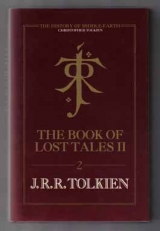
Текст книги "The Book of Lost Tales, Part Two"
Автор книги: John Ronald Reuel Tolkien
Жанр:
Классическое фэнтези
сообщить о нарушении
Текущая страница: 10 (всего у книги 32 страниц)
But Tamar whose heart was numbed with grief and ruth followed as he might, recking little of Turambar, for wrath at the fate of Nienуri filled all his heart. Now the stream and the deep chasm lay across her path, but it so chanced that she turned aside ere she came to its banks and followed its winding course through stony and thorny places until she came once again to the glade at the head of the great roaring fall, and it was empty as the first grey light of a new day filtered through the trees.
There did she stay her feet and standing spake as to herself: “O waters of the forest whither do ye go? Wilt thou take Nienуri, Nienуri daughter of Ъrin, child of woe? O ye white foams, would that ye might lave me clean—but deep, deep must be the waters that would wash my memory of this nameless curse. O bear me hence, far far away, where are the waters of the unremembering sea. O waters of the forest whither do ye go?” Then ceasing suddenly she cast herself over the fall’s brink, and perished where it foams about the rocks below; but at that moment the sun arose above the trees and light fell upon the waters, and the waters roared unheeding above the death of Nienуri.
Now all this did Tamar behold, and to him the light of the new sun seemed dark, but turning from those places he went to the hill-top and there was already gathered a great concourse of folk, and among them were those three that had last deserted Turambar, and they made a story for the ears of the folk. But Tamar coming stood suddenly before them, and his face was terrible to see, so that a whisper ran among them: “He is dead” but others said: “What then has befallen the little Nнniel?”—but Tamar cried aloud: “Hear, O my people, and say if there is a fate like unto the one I tell unto thee, or a woe so heavy. Dead is the drake, but at his side lieth also Turambar dead, even he who was first called Tъrin son of Ъrin,30 and that is well; aye very well,” and folk murmured, wondering at his speech, and some said that he was mad. But Tamar said: “For know, O people, that Nнniel the fair beloved of you all and whom I love dearer than my heart is dead, and the waters roar above her, for she has leapt o’er the falls of Silver Bowl desiring never more to see the light of day. Now endeth all that evil spell, now is the doom of the folk of Ъrin terribly fulfilled, for she that ye called Nнniel was even Nienуri daughter of Ъrin, and this did she know or ever she died, and this did she tell to the wild woods, and their echo came to me.”
At those words did the hearts of all who stood there break for sorrow and for dread, yet did none dare to go to the place of the anguish of that fair lady, for a sad spirit abideth there yet and none sets foot upon its sward; but a great remorse pierced the hearts of those three cravens, and creeping from the throng they went to seek their lord’s body, and behold they found him stirring and alive, for when the dragon died the swoon had left him, and he slept a deep sleep of weariness, yet now was he awakening and was in pain. Even as those three stood by he spake and said “Nнniel”, and at that word they hid their faces for ruth and horror, and could not look upon his face, but afterward they roused him, and behold he was very fain of his victory; yet suddenly marking his hand he said: “Lo! one has been that has tended my hurt with skill—who think ye that it was?”—but they answered him not, for they guessed. Now therefore was Turambar borne weary and hurt back among his folk, and one sped before and cried that their lord lived, but men knew not if they were glad; and as he came among them many turned aside their faces to hide their hearts’ perplexity and their tears, and none durst speak.
But Turambar said to those that stood nigh: “Where is Nнniel, my Nнniel—for I had thought to find her here in gladness—yet if she has returned rather to my halls then is it well”, but those that heard could no longer restrain their weeping, and Turambar rose crying: “What new ill is this—speak, speak, my people, and torment me not!” But one said: “Nнniel alas is dead my lord,” but Turambar cried out bitterly against the Valar and his fate of woe, and at last another said: “Aye, she is dead, for she fell even into the depths of Silver Bowl,” but Tamar who stood by muttered: “Nay, she cast herself thither.” Then Turambar catching those words seized him by the arm and cried: “Speak, thou club-foot, speak, say what meaneth thy foul speech, or thou shalt lose thy tongue,” for his misery was terrible to see.
Now was Tamar’s heart in a great turmoil of pain for the dread things that he had seen and heard, and the long hopelessness of his love for Nнniel, so did rage against Turambar kindle suddenly within him, and shaking off his touch he said: “A maid thou foundest in the wild woods and gave her a jesting name, that thou and all the folk called her Nнniel, the little one of tears. Ill was that jest, Turambar, for lo! she has cast herself away blind with horror and with woe, desiring never to see thee again, and the name she named herself in death was Nienуri daughter of Ъrin, child of woe, nor may all the waters of the Silver Bowl as they drop into the deep shed the full tale of tears o’er Nнniel.”
Then Turambar with a roar took his throat and shook him, saying: “Thou liest—thou evil son of Bethos”—but Tamar gasped “Nay, accursed one; so spake Glorund the drake, and Nнniel hearing knew that it was true.” But Turambar said: “Then go commune in Mandos with thy Glorund,” and he slew him before the face of the people, and fared after as one mad, shouting “He lieth, he lieth” and yet being free now of blindness and of dreams in his deep heart he knew that it was true and that now his weird was spent at last.
So did he leave the folk behind and drive heedless through the woods calling ever the name of Nнniel, till the woods rang most dismally with that word, and his going led him by circuitous ways ever to the glade of Silver Bowl, and none had dared to follow him. There shone the sun of afternoon, and lo, were all the trees grown sere although it was high summer still, and noise there was as of dying autumn in the leaves. Withered were all the flowers and the grass, and the voice of the falling water was sadder than tears for the death of the white maiden Nienуri daughter of Ъrin that there had been. There stood Turambar spent at last, and there he drew his sword, and said: “Hail, Gurtholfin, wand of death, for thou art all men’s bane and all men’s lives fain wouldst thou drink, knowing no lord or faith save the hand that wields thee if it be strong. Thee only have I now—slay me therefore and be swift, for life is a curse, and all my days are creeping foul, and all my deeds are vile, and all I love is dead.” And Gurtholfin said: “That will I gladly do, for blood is blood, and perchance thine is not less sweet than many a one’s that thou hast given me ere now” and Turambar cast himself then upon the point of Gurtholfin, and the dark blade took his life.
But later some came timidly and bore him away and laid him in a place nigh, and raised a great mound over him, and thereafter some drew a great rock there with a smooth face, and on it were cut strange signs such as Turambar himself had taught them in dead days, bringing that knowledge from the caves of the Rodothlim, and that writing said:
Turambar slayer of Glorund the Worm
who also was Tъrin Mormakil
Son of Ъrin of the Woods
and beneath that was carven the word “Nнniel” (or child of tears); but she was not there, nor where the waters have laid her fair form doth any man know.’
Now thereupon did Eltas cease his speaking, and suddenly all who hearkened wept; but he said thereto: ‘Yea, ’tis an unhappy tale, for sorrow hath fared ever abroad among Men and doth so still, but in the wild days were very terrible things done and suffered; and yet hath Melko seldom devised more cruelty, nor do I know a tale that is more pitiful.’
Then after a time some questioned him concerning Mavwin and Ъrin and after happenings, and he said: ‘Now of Mavwin hath no sure record been preserved like unto the tale of Tъrin Turambar her son, and many things are said and some of them differ from one another; but this much can I tell to ye, that after those dread deeds the woodfolk had no heart for their abiding place and departed to other valleys of the wood, and yet did a few linger sadly nigh their old homes; and once came an aged dame wandering through the woods, and she chanced upon that carven rock. To her did one of those woodmen read the meaning of the signs, and he told her all the tale as he remembered it—but she was silent, and nor spoke nor moved. Then said he: “Thy heart is heavy, for it is a tale to move all men to tears.” But she said: “Ay, sad indeed is my heart, for I am Mavwin, mother of those twain,” and that man perceived that not yet had that long tale of sorrow reached its ending—but Mavwin arose and went out into the woods crying in anguish, and for long time she haunted that spot so that the woodman and his folk fled and came never back, and none may say whether indeed it was Mavwin that came there or her dark shade that sought not back to Mandos by reason of her great unhappiness.31
Yet it is said that all these dread happenings Ъrin saw by the magic of Melko, and was continually tempted by that Ainu to yield to his will, and he would not; but when the doom of his folk was utterly fulfilled then did Melko think to use Ъrin in another and more subtle way, and he released him from that high and bitter place where he had sat through many years in torment of heart. But Melko went to him and spoke evilly of the Elves to him, and especially did he accuse Tinwelint32 of weakness and cravenhood. “Never can I comprehend,” said he, “wherefore it is that there be still great and wise Men who trust to the friendship of the Elves, and becoming fools enough to resist my might do treble their folly in looking for sure help therein from Gnomes or Fairies. Lo, O Ъrin, but for the faint heart of Tinwelint of the woodland how could my designs have come to pass, and perchance now had Nienуri lived and Mavwin thy wife had wept not, being glad for the recovery of her son. Go therefore, O foolish one, and return to eat the bitter bread of almsgiving in the halls of thy fair friends.”
Then did Ъrin bowed with years and sorrow depart unmolested from Melko’s realms and came unto the better lands, but ever as he went he pondered Melko’s saying and the cunning web of woven truth and falsity clouded his heart’s eye, and he was very bitter in spirit. Now therefore he gathered to him a band of wild Elves,33 and they were waxen a fierce and lawless folk that dwelt not with their kin, who thrust them into the hills to live or die as they might. On a time therefore Ъrin led them to the caves of the Rodothlim, and behold the Orcs had fled therefrom at the death of Glorund, and one only dwelt there still, an old misshapen dwarf who sat ever on the pile of gold singing black songs of enchantment to himself. But none had come nigh till then to despoil him, for the terror of the drake lived longer than he, and none had ventured thither again for dread of the very spirit of Glorund the worm.34 Now therefore when those Elves approached the dwarf stood before the doors of the cave that was once the abode of Galweg, and he cried: “What will ye with me, O outlaws of the hills?” But Ъrin answered: “We come to take what is not thine.” Then said that dwarf, and his name was Mоm: “O Ъrin, little did I think to see thee, a lord of Men, with such a rabble. Hearken now to the words of Mоm the fatherless, and depart, touching not this gold no more than were it venomous fires. For has not Glorund lain long years upon it, and the evil of the drakes of Melko is on it, and no good can it bring to Man or Elf, but I, only I, can ward it, Mоm the dwarf, and by many a dark spell have I bound it to myself.” Then Ъrin wavered, but his men were wroth at that, so that he bid them seize it all, and Mоm stood by and watched, and he broke forth into terrible and evil curses. Thereat did Ъrin smite him, saying: “We came but to take what was not thine—now for thy evil words we will take what is thine as well, even thy life.”
But Mоm dying said unto Ъrin: “Now Elves and Men shall rue this deed, and because of the death of Mоm the dwarf shall death follow this gold so long as it remain on Earth, and a like fate shall every part and portion share with the whole.” And Ъrin shuddered, but his folk laughed.
Now Ъrin caused his followers to bear this gold to the halls of Tinwelint, and they murmured at that, but he said: “Are ye become as the drakes of Melko, that would lie and wallow in gold and seek no other joy? A sweeter life shall ye have in the court of that king of greed, an ye bear such treasury to him, than all the gold of Valinor can get you in the empty woods.”
Now his heart was bitter against Tinwelint, and he desired to have a vengeance on him, as may be seen. So great was that hoard that great though Ъrin’s company might be scarce could they bear it to the caves of Tinwelint the king, and some ’tis said was left behind and some was lost upon the way, and evil has followed its finders for ever.
Yet in the end that laden host came to the bridge before the doors, and being asked by the guards Ъrin said: “Say to the king that Ъrin the Steadfast is come bearing gifts,” and this was done. Then Ъrin let bear all that magnificence before the king, but it was hidden in sacks or shut in boxes of rough wood; and Tinwelint greeted Ъrin with joy and with amaze and bid him thrice welcome, and he and all his court arose in honour of that lord of Men; but Ъrin’s heart was blind by reason of his tormented years and of the lies of Melko, and he said: “Nay, O King, I do not desire to hear such words—but say only, where is Mavwin my wife, and knowest thou what death did Nienуri my daughter die?” And Tinwelint said that he knew not.
Then did Ъrin fiercely tell that tale, and the king and all his folk about him hid their faces for great ruth, but Ъrin said: “Nay,35 had you such a heart as have the least of Men, never would they have been lost; but lo, I bring you now a payment in full for the troubles of your puny band that went against Glorund the drake, and deserting gave up my dear ones to his power. Gaze, O Tinwelint, sweetly on my gifts, for methinks the lustre of gold is all your heart contains.”
Then did men cast down that treasury at the king’s feet, uncovering it so that all that court were dazzled and amazed—but Ъrin’s men understood now what was forward and were little pleased. “Behold the hoard of Glorund,” said Ъrin, “bought by the death of Nienуri with the blood of Tъrin slayer of the worm. Take it, O craven king, and be glad that some Men be brave to win thee riches.”
Then were Ъrin’s words more than Tinwelint could endure, and he said: “What meanest thou, child of Men, and wherefore upbraidest thou me?36 Long did I foster thy son and forgave him the evil of his deeds, and afterward thy wife I succoured, giving way against my counsel to her wild desires. Melko it is that hates thee and not I. Yet what is it to me—and wherefore dost thou of the uncouth race of Men endure to upbraid a king of the Eldaliл? Lo! in Palisor my life began years uncounted before the first of Men awoke. Get thee gone, O Ъrin, for Melko hath bewitched thee, and take thy riches with thee”—but he forebore to slay or to bind Ъrin in spells, remembering his ancient valiance in the Eldar’s cause.
Then Ъrin departed, but would not touch the gold, and stricken in years he reached Hisilуmл and died among Men, but his words living after him bred estrangement between Elves and Men. Yet it is said that when he was dead his shade fared into the woods seeking Mavwin, and long those twain haunted the woods about the fall of Silver Bowl bewailing their children. But the Elves of Kфr have told, and they know, that at last Ъrin and Mavwin fared to Mandos, and Nienуri was not there nor Tъrin their son. Turambar indeed had followed Nienуri along the black pathways to the doors of Fui, but Fui would not open to them, neither would Vefбntur. Yet now the prayers of Ъrin and Mavwin came even to Manwл, and the Gods had mercy on their unhappy fate, so that those twain Tъrin and Nienуri entered into Fфs’Almir, the bath of flame, even as Urwendi and her maidens had done in ages past before the first rising of the Sun, and so were all their sorrows and stains washed away, and they dwelt as shining Valar among the blessed ones, and now the love of that brother and sister is very fair; but Turambar indeed shall stand beside Fionwл in the Great Wrack, and Melko and his drakes shall curse the sword of Mormakil.’
And so saying Eltas made an end, and none asked further.
NOTES
1 The passage was rejected before the change of Tintoglin to Tinwelint; see p. 69.
2 Above the name Egnor is written ‘Damrod the Gnome’ see Commentary, pp. 139–40.
3 Here and immediately below the name as first written was Tinthellon; this rider must belong to the same time as the note on the MS directing that Tintoglin be changed to Ellon or Tinthellon (p. 69). See note 32.
4 Associated with this replacement is a note on the manuscript reading: ‘If Beren be a Gnome (as now in the story of Tinъviel) the references to Beren must be altered.’ In the rejected passage Egnor father of Beren ‘was akin to Mavwin’, i.e. Egnor was a Man. See notes 5 and 6, and the Commentary, p. 139.
5 ‘Tъrin son of Ъrin’: original reading ‘Beren Ermabwed’. See notes 4 and 6.
6 Original reading ‘and when also the king heard of the kinship between Mavwin and Beren’. See notes 4 and 5.
7 Linwл (Tinto) was the king’s original ‘Elvish’ name, and belongs to the same ‘layer’ of names as Tintoglin (see I.115, 131). Its retention here (not changed to Tinwл) is clearly a simple oversight. See notes 19 and 20.
8 Original reading ‘seeing that he was a Man of great size’.
9 With this passage cf. that in the Tale of Tinъviel p. 11, which is closely similar. That the passage in Turambar is the earlier (to be presumed in any case) is shown by the fact that that in Tinъviel is only relevant if Beren is a Gnome, not a Man (see note 4).
10 ‘dreams came to them’: original reading ‘dreams the Valar sent to them’.
11 ‘and his name was Glorund’ was added later, as were the subsequent occurrences of the name on pp. 86, 94, 98; but from the first on p. 103 onwards Glorund appears in the manuscript as first written.
12 ‘with the aid of Flinding whose wounds were not great’: original reading ‘with the aid of a lightly wounded man’. All the subsequent references to Flinding in this passage were added.
13 Original reading ‘Tъrin’s heart was bitter, and so it was that he and that other alone returned from that battle’.—In the phrase ‘reproaching Tъrin that he had ever withstood his wise counsels’ ‘ever’ means ‘always’: Tъrin had always resisted Orodreth’s counsels.
14 Original reading ‘although all folk at that time held such a deed grievous and cowardly’.
15 Original reading ‘and to look upon Nienуri again’. This was emended to ‘and to look upon Nienуri whom he had never seen’. The words ‘since his first days’ were added still later.
16 The following passage was struck out, apparently at the time of writing:
“Indeed,” said they, “it is the report of men of travel and rangers of the hills that for many and many moons have even the farthest marches been free of them and unwonted safe, and so have many men fared out of Hisilуmл to the Lands Beyond.” And this was the truth that during the life of Turambar as an exile from the court of Tintoglin or hidden amongst the Rothwarin Melko had troubled Hisilуmл little and the paths thereto.
(Rothwarin was the original form throughout, replaced later by Rodothlim.) See p. 92, where the situation described in the rejected passage is referred to the earlier time (before the destruction of the Rodothlim) when Mavwin and Nienуri left Hisilуmл.
17 Original reading ‘twice seven’. When Tъrin fled from the land of Tinwelint it was exactly 12 years since he had left his mother’s house (p. 75), and Nienуri was born before that, but just how long before is not stated.
18 After ‘a great and terrible project afoot’ the original reading was ‘the story of which entereth not into this tale’. I do not know whether this means that when my father first wrote here of Melko’s ‘project’ he did not have the destruction of the Rodothlim in mind.
19 ‘the king’: original reading ‘Linwл’. See note 7.
20 Linwл: an oversight. See note 7.
21 ‘that high place’: original reading ‘a hill’.
22 This sentence, ‘And even so was Tъrin’s boast…’, was added in pencil later. The reference is to Tъrin’s naming himself Turambar—‘from this hour shall none name me Tъrin if I live’, p. 86.
23 This sentence, from ‘for his lineage…’ to approximately this point, is very lightly struck through. On the opposite page of the MS is hastily scribbled: ‘Make Turambar never tell new folk of his lineage (will bury the past)—this avoids chance (as cert.) of Nнniel hearing his lineage from any.’ See Commentary, p. 131.
24 Against this sentence there is a pencilled question-mark in the margin. See note 23 and the Commentary, p. 131.
25 ‘And Nнniel conceived’ was added in pencil later. See Commentary, p. 135.
26 ‘and the captain of these was Mоm the dwarf’ added afterwards in pencil. See Commentary p. 137.
27 The word tract may be read as track, and the word hurt (but with less probability) as burnt.
28 As it stands this sentence can hardly mean other than that the people thought that the men were fighting among themselves; but why should they think such a thing? More likely, my father inadvertently missed out the end of the sentence: ‘betwixt the seven, Turambar and his comrades, and the dragon.’
29 Turambar refers to Glorund’s words to him before the caves of the Rodothlim: ‘O Tъrin Mormakil, who wast once named brave’ (p. 86).
30 These words, from ‘even he who…’, were added later in pencil. Ъrin may also be read as Hъrin.
31 From this point to the end of Eltas’ tale the original text was struck through, and is followed in the manuscript book by two brief narrative outlines, these being rejected also. The text given here (from ‘Yet it is said…’) is found on slips placed in the book. For the rejected material see the Commentary, pp. 135–7.
32 Throughout the final portion of the text (that written on slips, see note 31) the king’s name was first written Tinthellon, not Tintoglin (see note 3).
33 ‘Elves’: original reading ‘men’. The same change was made below (‘Now therefore when those Elves approached’), and a little later ‘men’ was removed in two places (‘his folk laughed’, ‘Ъrin caused his followers to bear the gold’, p. 114); but several occurrences of ‘men’ were retained, possibly through oversight, though ‘men’ is used of Elves very frequently in the Tale of Turambar (e.g. ‘Beleg and Flinding both stout men’, p. 80).
34 This sentence, from ‘But none had come nigh…’, was added later in pencil.
35 This sentence, from ‘Then did Ъrin fiercely…’, was added later, replacing ‘Then said Ъrin: “Yet had you such a heart…”’
36 This sentence, from “What meanest thou…”, replaces the original reading “Begone, and take thy filth with thee.”
Changes made to names in
The Tale of Turambar
Fuithlug
Nienуri At the first occurrence (p. 71) my father originally wrote Nyenтre (Nienor). Afterwards he struck out Nyenтre, removed the brackets round Nienor, and added -i, giving Nienori. At subsequent occurrences the name was written both Nienor and Nienуri, but Nienor was changed to Nienуri later throughout the earlier part of the tale. Towards the end, and in the text written on slips that concludes it, the form is Nienor. I have given Nienуri throughout.
Tinwelint < Tinthellon (p. 72, twice). See p. 69 and note 3. Tinwelint < Tinthellon also in the concluding portion of the text, see note 32.
Tinwelint < Tintoglin throughout the tale, except as just noted (where Tinwelint < Tinthellon in passages added later); see p. 69.
Gwedheling < Gwendeling at all occurrences (Gwendeling unchanged at p. 76, but this is obviously an oversight: I read (Gwedheling in the text). In the Gnomish dictionary the form Gwendeling was changed to Gwedhiling; see p. 50.
Flinding bo-Dhuilin < Flinding go-Dhuilin This change, made at the occurrence on p. 78, was not made at p. 82, but this was clearly because the form was missed, and I read bo-Dhuilin in both cases; the same change from go- to bo- in the Tale of Tinъviel, see p. 51. The form Dhuilin is taken by the name when the patronymic is prefixed (cf. Duilin p. 79).
Rodothlim < Rothwarin at every occurrence.
Gurtholfin < Gortholfin at the first occurrences, but from p. 90 Gurtholfin was the form first written.
Commentary on
The Tale of Turambar
§ 1. The primary narrative
In commenting on this long tale it is convenient to break it into short sections. In the course of this commentary I frequently refer to the long (though incomplete) prose narrative, the Narn i Hоn Hъrin, given in Unfinished Tales pp. 57ff., often in preference to the briefer account in The Silmarillion, chapter XXI; and in reference to the former I cite ‘Narn’ and the page-number in Unfinished Tales.
(i) The capture of Ъrin and Tъrin’s childhood in Hisilуmл (pp. 70–2).
At the outset of the tale, it would be interesting to know more of the teller, Eltas. He is a puzzling figure: he seems to be a Man (he says that ‘our people’ called Turambar Turumart ‘after the fashion of the Gnomes’) living in Hisilуmл after the days of Turambar but before the fall of Gondolin, and he ‘trod Olуrл Mallл’, the Path of Dreams. Is he then a child, one of ‘the children of the fathers of the fathers of Men’, who ‘found Kфr and remained with the Eldar for ever’ (The Cottage of Lost Play, I.19–20)?
The opening passage agrees in almost all essentials with the ultimate form of the story. Thus there go back to the beginning of the ‘tradition’ (or at least to its earliest extant form) the departure of Hъrin to the Battle of Unnumbered Tears at the summons of the Noldor, while his wife (Mavwin = Morwen) and young son Tъrin remained behind; the great stand of Hъrin’s men, and Hъrin’s capture by Morgoth; the reason for Hъrin’s torture (Morgoth’s wish to learn the whereabouts of Turgon) and the mode of it, and Morgoth’s curse; the birth of Nienor shortly after the great battle.
That Men were shut in Hisilуmл (or Hithlum, the Gnomish form, which here first appears, equated with Dor Lуmin, p. 71) after the Battle of Unnumbered Tears is stated in The Coming of the Elves (I. 118) and in the last of the outlines for Gilfanon’s Tale (I.241); later on this was transformed into the confinement of the treacherous Easterling Men in Hithlum (The Silmarillion p. 195), and their ill-treatment of the survivors of the House of Hador became an essential element in the story of Tъrin’s childhood. But in the Tale of Turambar the idea is already present that ‘the strange men who dwelt nigh knew not the dignity of the Lady Mavwin’. It is not in fact clear where Ъrin dwelt: it is said here that after the battle ‘Mavwin got her in tears into the land of Hithlum or Dor Lуmin where all Men must now dwell’, which can only mean that she went there, on account of Melko’s command, from wherever she had dwelt with Ъrin before; on the other hand, a little later in the tale (p. 73), and in apparent contradiction to this, Mavwin would not accept the invitation of Tinwelint to come to Artanor partly because (it is suggested) ‘she clung to that dwelling that Ъrin had set her in ere he went to the great war’.
In the later story Morwen resolved to send Tъrin away from fear that he would be enslaved by the Easterlings (Narn p. 70), whereas here all that is said is that Mavwin ‘knew not in her distress how to foster both him and his sister’ (which presumably reflects her poverty). This in turn reflects a further difference, namely that here Nienуri was born before Tъrin’s departure (but see p. 131); in the later legend he and his companions left Dor-lуmin in the autumn of the Year of Lamentation and Nienor was born early in the following year—thus he had never seen her, even as an infant.
An important underlying difference is the absence in the tale of the motive that Hъrin had himself visited Gondolin, a fact known to Morgoth and the reason for his being taken alive (The Silmarillion pp. 158–9, 196–7); this element in the story arose much later, when the founding of Gondolin was set far back and long before the Battle of Unnumbered Tears.
(ii) Tъrin in Artanor (pp. 72–6)
From the original story of Tъrin’s journey the two old men who accompanied him, one of whom returned to Mavwin while the older remained with Tъrin, were never lost; and the cry of Tъrin as they set out reappears in the Narn (p. 73): ‘Morwen, Morwen, when shall I see you again?’
Beleg was present from the beginning, as was the meaning of his name: ‘he was called Beleg for he was of great stature’ (see I.254, entry Haloisi velikл, and the Appendix to The Silmarillion, entry beleg); and he plays the same rфle in the old story, rescuing the travellers starving in the forest and taking them to the king.
In the later versions there is no trace of the remarkable message sent by Tinwelint to Mavwin, and indeed his curiously candid explanation, that he held aloof from the Battle of Unnumbered Tears because in his wisdom he foresaw that Artanor could become a refuge if disaster befell, is hardly in keeping with his character as afterwards conceived. There were of course quite other reasons for his conduct (The Silmarillion p. 189). On the other hand, Mavwin’s motives for not herself leaving Hithlum remained unchanged (see the passage in the Narn, p. 70, where the word ‘almsguest’ is an echo of the old tale); but the statement is puzzling that Mavwin might, when Nienуri was grown, have put aside her pride and passed over the mountains, had they not become impassable—clearly suggesting that she never left Hithlum. Perhaps the meaning is, however, that she might have made the journey earlier (while Tъrin was still in Artanor) than she in fact did (when for a time the ways became easier, but Tъrin had gone).