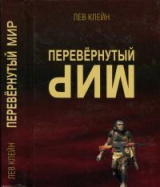
Текст книги "Перевёрнутый мир"
Автор книги: Лев Клейн
Жанр:
Публицистика
сообщить о нарушении
Текущая страница: 23 (всего у книги 24 страниц)
Гомосексуальные люди в России видят свои политические задачи в поддержке общей демократизации общества, в предотвращении возвращения коммунистов к власти. И в объяснительной работе, в просвещении публики относительно гражданских прав, в распространении терпимости к странным сторонам любого меньшинства. Почти все мы принадлежим к какому-нибудь меньшинству. Цыгане – это меньшинство. Писатели – это меньшинство. Ученые – меньшинство.
Но и воры – меньшинство. Уголовники – это очень мобильное и пластичное меньшинство. Они отражают, хотя и в искаженном виде, многие черты нашего общества. В них виднее некоторые контуры природы человека, обычно скрытые развитой культурой. Изучая их, мы начинаем лучше понимать себя.
То же самое относится и к гомосексуалам. Правда, это предмет для другой книги, тоже мною написанной. Что же до настоящей книги, это продукт своего времени. Но у меня подозрение, что от этого времени связи с современностью всё еще очень сильны.
– Лев Клейн
SUMMARIES[31]
L.S.Klejn
THE SAVAGE SOCIETY {THE WORLD TURNED UPSIDE DOWN]
The adventures of a Russian scholar in prison and GULAG camp at the very end of the Brezhnev epoch are related in the first person.
The author of the book, a world-renowned archaeologist, who taught at Leningrad University, was arrested in the last wave of repression, which befell the Leningrad intelligentsia in the early ’80s, – when Soviet troops entered Afghanistan, the detente policy was wrecked and Sakharov was exiled to Gorki. At that time the blow fell upon professors who supported unorthodox positions; who were too often published in the West; or who were too popular among the student youth. In large part these professors were also of Jewish origin. The author was accused of homosexuality. The investigation and the court trial – resembling that of Oscar Wilde in its tension – are recreated in minute detail, and the facts are presented that relate to the participation of the KGB.
The first chapter (‘The fear’) is devoted to the domination of the KGB over the whole of Soviet society, its (the KGB) influence being felt in all spheres of Soviet life. The KGB kept everyone in awe but the author argues that ultimately fear most affected those in power: they were afraid of the people. The second chapter describes the arrest of the author and the severe conditions in the Soviet prison “The crosses” (Petersburg) – beyond the conditions permitted by international law. The third chapter (‘Short work with the help of the law’) relates the many transgressions of the law by the investigators and judges – evidenced with references to the protocols of the court trial. In the fourth chapter (‘The seventeenth expedition’) the transfer from the prison to the GULAG camp is described as the latest scientific expedition of the author. It was in this way that the author viewed his adventures in the camp. In the fifth chapter (‘Under the red sun’) he discusses the situation with an old and hardened criminal and describes some other cases, including the life story of an imprisoned old French Communist. Criticism of the domestic situation is never far away.
Yet, as distinct from other similar books, this book focus is not the description of oppression, but the contemplation of human nature. The book contains scholarly but vivid description and analysis of the closed criminal society. The author adduces a detailed comparison of this specific world with prehistoric society and advances a theory as to the cause of this similarity. The similarity is manifold: tattooing as a system of signs, rites of initiation, the developed system of taboo, three castes, clan conflicts, chieftains and their retinues, blood brotherhood, non-monetary exchange, etc.
The author considers criminal society to be closer to natural human society, in comparison to which our own society is artificial. The point is that human nature was formed in the Cro-Magnon period and biologically has not changed since. Homo sapiens sapiens, as this species is called with some exaggeration, has existed no less than 40 000 years (and in the Near East much longer). But for all our intellectual and social attainments we owe more to our culture than to our nature. This is seen in examples from India, in reports of feral children nurtured by wolves. When people are deprived of modern culture (or there is a shortage of it), and they are left to selforganisation (as happened in coercive Soviet labour camps), they form a savage society very close to a prehistoric one, to the society of Upper Palaeolithic.
The theme is important, the entire Soviet society experienced at least the influence of camp society with its slang, songs, rituals, customs, notions and morals: for in the space of 30 years more than 30 million people, i. e. a considerable part of the adult population of the country passed through the prisons and camps. This is why the book, whilst still in journal form (serialized over four years, 1988-91) aroused a veritable storm of comments in the most popular Leningrad ‘thick monthly’ Neva, achieving at that time a total sale of 700,000. As the KGB and the censors were then still very powerful, these sketches were published under the pseudonym Lev Samoylov (rather a transparent pseudonym: first name and patronym).
The Editor of Neva (where these sketches were published for the first time) requested the former investigator who led the case to say whether the author’s facts were reliable. In a letter to the Editor the investigator confirmed that the author had not distorted the facts. Moreover he admitted that the case was organised by the “sily zas-toya” (“forces of the stagnation”) and that he deplores his own part in the matter. The text of the letter is attached to the book.
The book is written as a series of recollections and journalistic sketches. As an offence against norms, such as was imputed to the author, was severely punished in the criminal world by the prisoners themselves, his survival, with dignity, was fraught with great difficulties. How, and why, did he survive? This is one of central themes. His co-prisoners denied the charge against him.
The story, as it appeared in journal form (1988-91), was censored. The German edition of 1991 is incomplete (not everything could be taken over the border). A full Russian edition was published in 1993, and from this edition the Slovene edition of 2001 was made. This text is a new Russian edition published in Ukraine.
A new title for the English translation (The Savage Society) has been envisaged because it was found that an English book already exists under the first chosen title (by another author and on a completely different theme).
L.Samoylov (L.S.KIejn)
ETHNOGRAPHY OF A CAMP
This article was placed in the main Soviet journal of ethnographers Sovetskaya etnografiya (now Etnograficheskoe Obozrenie) published in Moscow. It contains the main theses of the book The World Turned Upside Down but leaves out particular events and emotional reactions. The author describes the society of prisoners as a special world, exposes its peculiar laws and writes about the force of evil that dominates that world. He compares criminals with savages of primordial times, his professional subject. He seeks the roots of the vitality of evil traditions, of the criminal subculture, and poses the question of how to overcome it.
V.R.Kabo
STRUCTURE OF A CAMP AND ARCHETYPES OF CONSCIENCE
The article is a response to Samoylov’s (Klejn’s) article ‘Ethnography of a camp’. The author, a well-known Russian ethnographer, who also had been a prisoner in the camp, in 1949-54, compares the conditions that he then experienced with the modem conditions described by Samoylov and comes to a conclusion that they have become more severe. This corresponds with the appearance of ritualised hooliganism within the army. This reflects the degradation of Socialist society. Doubts are expressed as to the close correspondence of camp society to primordial society, for the latter was not as primitive as is often imagined.
G.A.Levinton
HOW “PRIMORDIAL” IS THE CRIMINAL SUBCULTURE?
The author, a competent Soviet folk-lore student who also experienced Soviet repression, added some other parallels between criminals and primordial people (for instance a self-nomination as “men”, “people” vs. “not-men”), but he believes that it is in general wrong to equate modem culture (not even raw criminal culture) with primordial culture, nor should a comparison be made to the thought and behaviour of children or the insane. In support of his argument he cites Levi-Strauss. The roots of the camp society should rather be traced to school (in particular, to the ethics of the bursa – church boarding school).
Ya.I.Gilinski
SUBCULTURE BEHIND BARS
The author, a renowned criminologist, holds that Samoylov has shed light upon the main vices of Russia’s penitentiary system. Culture includes both “useful” and “harmful” forms of activity, so it includes deviant behaviour. The subculture of prisoners is that of a community that has been thrown together and in the cells and camps it is self-organising community that directs its members towards evil. Everywhere, in all countries, prison trains cadres of criminals, i.e. it fails to work.
K.L.Bannikov
REGIMENTED COMMUNITIES. ANTHROPOLOGY OF DESTRUCTIVENESS
The present paper focuses on the sociocultural communities genetically formed under the mechanical suppression of the free will of individuals socialized in various cultural traditions and value systems. The social pattern of the regimented communities (soldiers, prisoners, etc.) consists of a great confrontation of the two systems of organized violence. The first system is the forcible conscription for military service or prison term under inhuman conditions when individual rights and liberty are suppressed by a system of total control. The second system is the dominant relations between peoples of different social strata. Both systems complement each other. The totality of facts related to the violence in the sociocultural structures needs immediate and detailed investigation in social anthropology.
The investigation of aggression and violence in contemporary Russia is rather specific: resulting from the structural transformation of all socio-political systems, violence and aggression invading all social strata are increasing much faster than is our knowledge of them. A discussion of the work by L. Klejn presented in Ethnological Review edited at Russian Academy of Sciences (Etnograficheskoe Obozrenie) led the way in this field in the Russian anthropology of the perestroika period. Nevertheless, despite its particular significance for Russia, the problem of aggression, deviant social behavior, and status violence still remains unresolved. In Western anthropology, such works have established an independent field where the concepts and methods borrowed from other disciplines – psychology, sociology, ethology, and ethnology – arc combined. These works consider aggression as a structure-forming, normalizing, and cultural factor. The analysis of informal social communities such as those of prisoners, marginal people, and policemen, as well as the theoretical studies of the deviant and protesting behavior are presented in works relating to this problem.
Thus, a set of key problems necessary for the analysis of extreme communities as an anthropological phenomenon can be defined as follows: (1) norms of aggression and semiotics of violence in the social interaction, (2) the individual’s dependence upon performing a particular social role, and (3) transformation of the personal value system during the transition from one sociocultural environment to another.
The analysis of these problems contributes to answering the questions of why educated and civilized people when joining the army adopt really inhumanly cruel forms of social contact; why their victims take violence as a social norm; and how it is possible to revive human moral values.
There are many archetypal correlations between social symbolism of non-formal hierarchy of regimented communities and archaic societies. But that is no reason to explore evolutionary schemes. I prefer identity terms ‘archaic’ and ‘archetypal’ rather then ‘archaic’ and ‘primitive’. On expected data we can trace re-actualization of archetypes of unconsciousness in circumstances of cultural vacuum as the only basis for the consolidation of a chaotically gathered community under the suppression of legal violence. Social relationships in regimented communities are not primitive. Strange forms of relationships are produced by natural adaptation function of deep structures of the subconscious, realized in the artificial conditions of their mechanical and violent consolidation. The problem of a cultural vacuum is solved by re-actualized archetypal paradigms as a factor of sociogenesis.
A.G.Kozintsev
WORLD UPSIDE DOWN: MARGINALIA ON A BOOK BY LEO SAMOILOV fL.S.KLEJN]
Leo Samoilov, in his tragic and provocative book on the late Soviet prison community, a member of which he himself was, pointed to numerous parallels linking it with certain late archaic stratified societies. In his view, which is consonant with modem “evolutionary psychology”, deficit of culture causes human behavior to become more natural (in the biological sense) and regress to an earlier stage of social evolution. However, the emergence and rapid evolution of stratification in the prisoners’ community over 130 years, as witnessed by Dostoyevsky, Chekhov, Solzhenitsyn, and Samoilov, among others, suggest that the process was historically determined rather than “regressive”. At no stage can the prisoners’ behavior be described as less cultural and accordingly more natural. This raises more general issues relevant for current debates over “human nature”. In my view, no such thing exists. A species-specific behavioral norm is incompatible with culture.
L.S.KIejn
WE, CRO-MAGNON PEOPLE
This article on the mal-adaptation of human to the modern culture can be considered as the development of Freud’s idea (in his article on “dissatisfaction with culture”). The cause of this is to be sought in the difference in tempos of biological and social evolution. Man is formed under the impact of adaptation to both the natural environment and socio-cultural conditions, and his physiological properties have changed spasmodically rather than gradually and so man, as a physiological being, on each stage soon becomes in disharmony with his own cultural development and milieu. The GULAG camps provide a test for this inference.
L.S.Klejn
CULTURE, PRIMORDIAL PRIMITIVISM AND CONCENTRATION CAMP
As suggested by the similarities of camp criminal culture to primordial culture, the author defends his idea of the mal-adaptation of man, as a physiological being, to modem culture. In his objection Kozintsev says that the penal servitude originated under the Tsars and developed through four stages. Yet in its first stages (under the Tsars) the aims were only to punish the criminal; in Soviet times its aim was to recompense the criminal via collective labour. But the labour is slavish in the camps, and the collective is itself criminal: so it cannot redeem the criminal. Kozintsev says that there is no natural state of human only cultural states, that without culture there is no human. It’s true, but man is by his nature higher than any animal because he is able to apprehend culture and language. The final inference of the article is that concentration camps must be annihilated.
L.S.Klejn
CULTURAL-HISTORICAL PROCESS AND THEORY OF COMMUNICATION
The paradox of cultural development is in the interplay of continuity and breaks. In the light of information theory the cultural-historical process can be seen as a net of communication stretched over time. Accordingly the breaks in development can be seen as infringements of conditions. These conditions are: the existence of panels (circuit boards), sufficient quantity and quality of channels of information, the repetition of information etc. It remains to find cultural correspondences to these physical conditions. Possible applications of the theory are considered: theoretical (explanation of breaks in archaeological continuity) and pragmatic (the struggle against the evil traditions of criminal society in concentration camps).
СВЕДЕНИЯ ОБ АВТОРАХ
Клейн Лев Самуилович
Известный петербургский археолог и культуролог, доктор исторических наук, подготовивший не одно поколение специалистов. Два десятилетия он преподавал археологию в Санкт-Петербургском университете и антропологию там же и в Европейском Университете Петербурга. Преподавал также в Берлине, Дарэ-ме, Вене, Копенгагене, Сиэттле; читал лекции в Кембридже, Оксфорде, Мадриде, Стокгольме, Осло и других городах. Является автором многочисленных книг и статей по теории археологии, конкретным вопросам бронзового, железного веков и культурной антропологии.
Кабо Владимир Рафаилович
Советский этнограф, сотрудник Института этнографии и антропологии АН СССР, доктор исторических наук, был незаконно репрессирован, эмигрировал в Америку. Автор ряда книг по этнографии австралийцев и по теории этнографии.
Левинтон Георгий Ахиллович
Российский фольклорист и литературовед, кандидат филологических наук, преподаватель Европейского университета в Петербурге.
Гилинский Яков Ильич
Известный петербургский юрист, криминолог-теоретик, доктор юридических наук, профессор, заведующий сектором в Институте социологии РАН. В его многочисленных трудах содержится глубокий анализ трудностей «перевоспитания» преступников и критика нынешней российской пенитенциарной системы.
Банников Константин Леонардович
Социолог, журналист, фотограф и путешественник, кандидат исторических наук, доцент Российского государственного гуманитарного университета, Москва, Россия. Известен работами по формированию идеологий и субкультур в закрытых обществах, в частности по истокам дедовщины.
Козинцев Александр Григорьевич
Крупный российский антрополог, доктор исторических наук, главный научный сотрудник Музея антропологии и этнографии РАН, Санкт-Петербург, Россия.
Отрощенко Виталий Васильевич
Известный украинский археолог, доктор исторических наук, профессор, заведующий отделом археологии энеолита-бронзового века Института археологии НАН Украины (Киев).
УКАЗАТЕЛИ
Именной указатель
(в случаях замены фамилий в книге сначала здесь приводятся псевдонимы или титулы, затем в скобках истинные фамилии, имена и отчества; некоторые, однако, оставлены под псевдонимами)
А
А. Е., читатель из Ленинграда 228
А. П., читатель из Москвы 226
A-в профессор, учитель (проф.
Артамонов Михаил Илларионович) 23,43
Азадовский Константин Маркович 20,21, 130, 170,356
А-н проф., автор письма в министерство (проф. Авдусин Даниил Антонович) 33
Андропов Юрий Владимирович 67
Ахматова Анна Андреевна, поэтесса 88
Б
Банников Константин Леонидович 14,319,340,343,362
Безансон А. 256, 260
Белкин (Булкин) Василий Александрович 15,32
Белозеров Сергей Алексеевич (Черногоров Сергей Александрович) 124, 126, 127, 177
Белоусов А., читатель из Новосибирска 230
Бердяев Николай Александрович 319.335
Березкин Юрий Евгеньевич 340
Беридзе (Каландадзе), судебно-медицинский эксперт 135,158
Бириньш В. 234
Битов Андрей Георгиевич, писатель 210,271,272,285
Блэк Д. 306
Бодлер Шарль 149
Бондесон У. 306
Боровой (Лесной), следователь 16, 126, 135, 147, 148
Бродский Иосиф Александрович, поэт 21,49, 170,320
Бутовская Марина Львовна 325,
327.335
Быховский Игорь Евсеевич, профессор, доктор юридических наук, прокурор 105,108,110, 177
В
Вавилов Николай Иванович, ак.
Виктим О., читатель из Днепропетровска 228 _
Винкельман И. И. 149
Вознесенский Андрей Андреевич, поэт 152
Володя, “десантник” (Нестеров
Владимир) 245-249
Воронкин (Волынкин), инспектор Ленинградской милиции в 80-е п. 118,123,124,128,144, 159, 160, 167
Всесвятский, читатель из Москвы 226
Высоцкий Владимир Семенович, поэт и певец 169
Г
Г. Е., директор Нац. музея Норвегии (Гутторм Ессинг) 34
Габышев Леонид Андреевич, писатель 290
Геннеп Арнольд ван 321
Геолоц бывший секретарь рай-комка (П-в Г. А.), якобы заявитель 117–119, 121, 144, 160, 175
Гернет Михаил Николаевич 164, 285
Гете Иоганн Вольфганг 149,164 Гилинский Яков Ильич 230,306, 335
Главный научный специалист… (Дьяконов Игорь Николаевич, проф.) ИЗ
Горбатов Д., читатель из Москвы 229
Горбатый, главпидор 201
Горбачев Михаил Сергеевич 248
Горький Максим (Пешков Алексей Максимович) 262
Губерман Игорь Миронович 314,329
Гуров Александр Иванович 265, 275, 285
Д
Д. А. Д., бывалый зэк 231.234-241
Даниэль Юлий Маркович 169
Демидов А. В., читатель из
Ижевска 225
Дзержинский Феликс Эдмундович 67
Довлатов Сергей Донатович 314
Достоевский Федор Михайлович 8, 262, 263, 264, 285, 299, 337, 362
Дудинцев Владимир Дмитриевич 12, 66
Дьячков (псевдоним), свидетель 124, 134, 135, 142, 155, 156, 157, 175
Е
Е-в, Начальник (Ежов Виктор Анатольевич, декан проф.) 46
Евтушенко Евгений Александрович, поэт 210,271,285
Единович. А., читатель из Запорожья 227
Ежов Николай Иванович, нарком ВД 67
Есенин Сергей Александрович, поэт 290
Есипов В., читатель из Иркутска НО
Ж
Жирар Рене 327, 328, 336
Жуковская О. В., читательница из
Владимир, обл. 229
3
Замироректора (Владимиров) 53
И
Иван Васильевич (Иван IV Грозный), царь 149
Искандер Фазиль Абдулович 19
К
К. Ф. (Кол Филипп, американский археолог-марксист) 63
К., студент 49, 63
Кабо Владимир Рафаилович 14, 287,317,336,338, 343
Казаков, зэк 258
Каргопольцев С., читатель из
Ленинграда 108
Кибанов П. А. 239
Козинцев Александр Григорьевич 8, 9, 14,337, 342, 343,362,363, 365,367
Корнева М. В., читательница из Вост. Казахстана 226
Королева Л., читательница из
Новосибирска 179
Кристи Н. 306
Крюков А., читатель из Новосибирска 109,227
Л
Лазарев (Лебедев) Глеб Сергеевич, археолог, проф. 15, 16, 32, 33,46,53, 54
Левада Юрий Александрович, социолог, профессор 164
Левинтон Гарри Ахиллович 14, 297, 302, 336
Левинтон Яков Ильич
Лейб-Теоретик (Захарук Юрий
Николаевич) 45, 46
Ленин (Ульянов) Владимир
Ильич 259
Лихачев Дмитрий Сергеевич, ак. 273, 285, 305, 313, 356, 357, 367
Лотман Юрий Михайлович, проф. 326,336
Лысенко М. В., читатель из Москвы 225
Лысенко Трофим Денисович, ак. 59, 67
М
Маймистов И. 237, 265, 272, 273, 285,307, 311
Макаренко Антон Семенович 203, 204, 364
Макклинток Ф. 306
Малиновский Бронислав, антрополог 344
Марков, доц. (доц. Кузьмин Марк Николаевич, секретарь партбюро истфака) 49, 119
Маркс Карл 31,46, 311
Марр Николай Яковлевич, ак. 23, 24,41
Машеров Петр Миронович, первый секретарь ЦК ВКП(б) БССР 35
Мейлах Михаил Борисович, филолог 356
Метелин (псевдоним), свидетель 122, 142, 155, 156, 157, 175
Метелин (псевдоним, ибо однофамилец свидетеля), прокурор 133
Микельанджело Буонаротти 149
Миклухо-Маклай Николай Николаевич 219,276,325,357
Мирек Альфред Мартинович, проф., музыковед 356
МигфордДж. 306
М-н декан факультета (декан истфака проф. Мавродин Владимир Васильевич) 23, 44
Монтень Мишель 149
Московский Академик (ак. Рыбаков Борис Александрович) 7, 16,38,39, 45,46, 49,51,53,55, 56, 60, 66, 133
Н
Н. С., читательница из Ленинграда 108
Найджел У. 306
Начальница (К-на С. И.) 26–30 Нижинский Вацлав Фомич 149 Никитинский Л. 237, 265, 285, 307,312
Никольский Борис Николаевич, писатель, редактор “Невы” 11, 176, 177,359
П
П. Андрей, автомобилист (П-й А.
С.) 121, 122
Пантелеев Борис 104
Петр Первый (Романов Петр Алексеевич), царь 149
Пиотровский Борис Борисович, проф., позже акад. 26
Платон, греч. философ 149 Путин Владимир Владимирович 332
Р
Разгон Лев Эммануилович 320
Рихард, зэк 234, 235
Рогинский Арсений Борисович 21,350, 364,370
Росси Жак 256,257,259–261, 264, 285
Румянцев А„читатель из Калининграда Моск. обл. 109
Рыбаков Анатолий Наумович
С
С. Коля (Сергеев Николай, секретарь комсомола истфака в 1950-х) 314
С., математик-программист 121
Самойлов Лев (Клейн Лев Самуилович), нроф. 5-10,15, 18,32, 34,35,46, 59,61,70, 85, 105–110, 123–126, 132, 134, 141, 154, 155, 164, 176–178, 225,226, 229, 230, 232, 233, 262, 281, 285, 287–301,303, 304, 306, 307, 310, 312,313,320, 322,325,335,336, 337, 340, 343, 344, 355, 356, 359, 362, 367, 368, 370, 374, 375, 376, 381
Сахаров Андрей Дмитриевич, ак. 170
Сашка, студент (Б-й А.) 181,182 С-в А. С., нач. отдела внешних сношений Министерства высш, и средн, спец, образов. 32
Сидоров Владимир Николаевич, проф., филолог 72
Синявский Андрей Донатович 169
Слуцкий Борис Абрамович, поэт 111, 178
Смирнов Е. К., читатель из Сочи 70, 344
Соболев (псевдоним), свидетель, позже обвиняемый 123,127, 128, 131–133, 135, 140, 142, 144, 152
Соколов Эльмар Владимирович, философ, проф. 372,376
Солженицын Александр Исаевич, писатель 8, 183, 208, 264, 270, 286, 320, 337–339, 343, 362
Сталин (Джугашвили) Иосиф Виссарионович 24, 25, 67, 260
Cтрельский (Стреминский) Иосиф Иванович, следователь 15, 16, 120, 126, 128, 135, 144, 168, 176, 178
Суслов Михаил Андреевич, член Политбюро 30
Т
Т. Б., редактор (проф. Триггер Брюс) 51,54
Тамошний академик (ак. ГДР
Херрман Иоахим) 47
Толстой Лев Николаевич, писатель 101,262
Толя, сокамерник 81,82 Трапезников С. И., зав. отделом науки ЦК 49
Тэрнер Виктор 321,322,336
У
Уайлд Оскар, писатель 149 Умка, зэк 82
Ф
Фейхтвангер Лион, писатель 90 Фрейд Зигмунд 325, 326, 345,361
Фрумкина Ревекка Марковна, проф., филолог 72
X
Хватенко (Щетенко) Александр Яковлевич, археолог 7, 16, 56-61
Хохлов Ю., читатель из Москвы 228
Хохряков Г. Ф. 237, 264, 272,286, 306, 307,310,312
Хрущев Никита Сергеевич 26, 210,271,286
Ч
Чайковский Петр Ильич, композитор 149, 164
Чаур Н., читатель из Донецкой обл. 108
Чаянов Александр Васильевич, проф., экономист 62
Чехов Антон Павлович, писатель 8, 262, 264, 286, 337, 362
Ш
Шаламов Валам Тимофеевич 208, 240, 241–244, 262–264, 270, 314
Шекспир Вильям, драматург 149
Шмаров И. 306
щ
Щекочихин Юрий Петрович, журналист 265, 275, 285
Щепанская Т. Б. 341,343
Э
Эразм Роттердамский 149
Ю
Ю. Г., читатель из Сибири 71
Юлий Цезарь 149
Юнг К. 294,320,323,336,341
Юргене И., читательница из Пушкина Ленинградской обл. НО
Я
Ягода Генрих Григорьевич, глава НКВД 67
Янаев Геннадий Иванович, вице-президент СССР. член ГКЧП 63
Предметный указатель
aгрессия 242, 278, 321,327, 329, 330, 351,361,364
адаптация к культуре 346, 347
адвокат 88, 101, 102, 108, 114, 116, 124–126, 131, 145, 154, 158, 161, 168, 172–174, 200, 239
аккультурация 269, 270, 279
ампаланг 219,276,325,357
антропология 14, 319–321,343, 344–346, 362
арест 6, 13,37,53,55,57,61,76, 87,93, 101, 119, 130, 152,172,215,227, 258,380
архаический синдром 322, 323, 331,335
археолог, археология 6, 7, 16, 25,26,32,34,35,45,51, 54,57, 62,63,66, 112, 346, 352, 356, 369, 374
архетип 287, 294, 323, 326, 328–331,333,343,359
базар, базарить 211, 263
беззаконие 107, 169
беспредел 80, 104, 105, 108, 186,202,211,218, 223,224, 227, 233, 237, 239, 246, 269, 274, 285, 288, 307, 310, 342,358,374
биология человека 277
бокс 74,258
бугор (бригадир) 195,197,198, 268, 288, 290
бунт 104, 105, 186,212, 310
«варяжская баталия» 30, 32
вина 78,86, 101, 103, 107, 143, 145, 158, 159, 163,238,244, 249, 260
возмездие 200
вор 30,74,83,91,92, 105, 169,201,202, 205–208,211-213, 220, 222, 227, 232, 237, 238, 243, 244, 265–270, 275, 276, 284, 288–293, 307, 309, 338–341,357,362,364,365, 374,379,381
воровской закон 193, 199, 211, 265, 269, 358
врачи-вредители см. дело врачей
вши, вшивость 80, 108
гей-парад 380
геронтократия 66
главвор (пахан) 109,197–199,201,205,212,218, 220, 224, 226, 268, 269, 338, 339, 342, 362, 365
глазок 85
гомосексуальность 20, 112, 132,143
госбезопасность 259
грабеж 266
девиантное поведение 308
дедовщина 14,223,224,229,232, 236, 245, 273, 290, 340, 362, 366, 375
дезадаптация 349, 360, 362
дело врачей 24, 25
деньги 28, 55, 72, 232, 260, 282,338
дикость 9
дискуссия,
диспут 24, 30, 32, 36,47, 50, 75
диссертация 162, 164
диссидент 21,224,273
дознание, дознаватель 49, 50, 121, 123, 143, 144, 167, 178
донос 28,29,33, 160
допрос 20, 52, 75, 87, 92, 101, 116, 117, 120, 124, 166, 168,173,227, 259
досье 48, 62, 160, 172, 173
заглушить 22, 199,200,202,269
заключение 93, 106, 146, 158, 197,214,215,217, 225, 228, 244, 255. 262, 263, 279,281,294,310,375 заключенный 15, 74, 80, 81, 85, 86, 92, 100, 101, 104–106, 146, 158, 180, 181, 183, 184, 186, 187,194, 196, 198, 201, 202, 208, 213,216,218, 220, 231,236, 243, 263, 268, 270, 279, 281,287–289, 307,309–311, 322–325, 327, 339, 362, 364, 374, 379
закон 53, 69, 77, 87–89, 92, 93, 100, 102, 103, 105–107, 109, НО, 115, 148, 151, 153, 155, 156, 160, 161, 163, 165, 167–170, 173, 174, 178, 184, 187, 193, 198,211,215, 217, 225,227–229, 232,233, 239, 243, 246, 249, 266, 274, 288,289, 291,306, 309,310,326,334, 351, 361,380,381
заливка черным 39 замес 202, 220, 257, 269, 362
замочить 12,200,269
западло, заподло 195, 206, 211, 219, 274, 275,357
зарубежные публикации 178
заседатель 100, 102, 107, 108, 155, 168, 171, 173 зона 85, 86, 108, 109, 180, 183, 185, 186, 197, 200,202, 229, 233, 235, 239, 240, 242, 243, 258, 274, 275, 288,289, 291,292,313–318, 339, 363
зэк 8, 11,59,84, 184, 198,203, 207,215,224, 227,229, 231,234, 236–238,240, 255, 257, 258, 232, 263, 274, 290
избиение 15,69,83,93,202,257, 269, 274
изнасилование 6, 134,269
инакомыслие 38, 69, 223
казарма 319–321,324,335
камера 72, 74, 75, 79–88, 91, 92, 104, 108, 109, 114, 144, 152, 153, 157, 184, 185, 201,220, 226, 228, 232, 234–236, 254, 255, 265, 274, 279, 291,378
каторга 204, 264, 285, 338, 363
КГБ 11, 15,27,29,38,60,67,68, 215,379,380
кент 84, 198, 232, 238, 274, 282
кивала 100,108,257
клевета 15,51
кликуха 198
компромат 52
конвоир 72, 180–182
консерватизм 21,64, 66
кража 58, 76„77, 93, 207, 266
"Кресты" 7, 73, 76, 85, 104, 107, 215,254, 262
криминальная среда 242,281,356
кровная месть 14
круговая порука 14, 206, 270
крысятничество 233, 239, 266,267
ксенофобия 327,364,
лагерь 7-10, 11–15, 19,21,29,57,59, 60, 107, 109, 112, 114, 116, 146, 147, 149, 151, 165,210,212–220, 224, 226, 228–230, 231,233,236–238, 240–242, 244–246, 249, 254, 256–259, 262–268, 270–272, 274–276,278, 279, 281–284, 287–292,313-315,320, 334, 339, 340, 343, 352, 355, 356–359, 362, 364, 366, 367, 374, 375, 378, 379