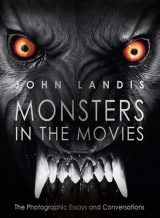
Текст книги "Monsters in the Movies "
Автор книги: Джон Лэндис
Жанр:
Ужасы
сообщить о нарушении
Текущая страница: 2 (всего у книги 15 страниц)
Introduction[ Book Contents]
The Wolf Man [George Waggner, 1941]
The Wolf Man (Lon Chaney, Jr.) about to pounce on unsuspecting Gwen Conliffe (Evelyn Ankers).

Introduction[ Book Contents]
I Was a Teenage Werewolf [Gene Fowler, Jr., 1957]
A troubled teen is exploited by an evil scientist. As we were told in school, this is where masturbation can lead. Not to mention rock‘n’roll!

Introduction[ Book Contents]
Ghosts and zombies
A ghost is the spirit or soul of someone who has died that manifests itself to the living. A zombie is one of the “living dead,” meaning that a zombie is a reanimated corpse, someone who has died but whose cadaver is still walking around. I’ve often wondered if a zombie has a soul? Or once you have killed a zombie (often by shooting him or her in the head), does the re-dead zombie beget a ghost zombie?
The entire concept of ghosts develops from our natural longing to remain in contact with a loved one once they have died. Death is the ultimate unknown, and that means man needs to create all kinds of reasons that the dead are not really dead. When a person has passed away, people want to believe they have “gone to a better place.” Or at the very least, someplace. The idea that once you die you no longer exist is just too disturbing for most of us. Hence we find tales of ghosts and zombies returning from the dead in every culture around the world.
Ghosts can be malevolent or vengeful, but sometimes they are lonely and sad. Ghosts are perhaps the most difficult of fantastic beings to show on screen and retain their reality. In two of the most frightening ghost movies ever made, The Innocents[Jack Clayton, 1961] and The Haunting[Robert Wise, 1963], no ghosts are ever seen!
The director George A. Romero is rightly crowned as the King of the Zombie Movies for his remarkable series of zombie pictures that began with the classic Night of the Living Dead[1968]. George’s “blue collar” zombies have become the standard for the living dead ever since. They stagger around in the clothing they were wearing when they died, as opposed to the funeral suits they were buried in. With glazed eyes, torn flesh, and bloody faces, Romero’s zombies are in nightgowns, dresses, jeans, T-shirts, shorts, and uniforms—the costumes of the real world. Romero has used his zombies for scathing political commentary all through his series of zombie pictures.
Voodoo used to be the main resource for zombies in movies, from White Zombie[Victor Halperin, 1932], to The Serpent and the Rainbow[Wes Craven, 1988]. In more recent films, atomic radiation or bizarre diseases create zombies. When unforeseen consequences to scientific research in radiation or germ warfare results in an outburst of the living dead, you can bet the government is doing the dastardly experimentation. The zombie has grown to be one of the most popular types of monster. All of us are going to die one day. Ghosts and zombies somehow reassure us that even death can be overcome.
Introduction[ Book Contents]
White Zombie [Victor Halperin, 1932]
Béla Lugosi as Murder Legendre, a white voodoo master on Haiti, who uses zombies as labor in his sugar cane mill. A rich plantation owner enlists Legendre’s aid to help him with a sexual conquest. This is considered to be the first feature-length zombie movie.

Introduction[ Book Contents]
The Serpent and the Rainbow [Wes Craven, 1988]
Wes went to Haiti to shoot this adaptation of the book by Wade Davis. Here, Bill Pullman suffers from chemically-induced hallucinations. The movie deals with Voodoo and zombies at their source– African and Christian rituals mixed with drugs.

Introduction[ Book Contents]
Giant monsters
The word monster can also mean big. As in REALLY BIG. Monstrous apes, lizards, insects, robots, aliens, men, women, and even children have stomped their way down the streets of our cities. Creatures of every description come in Large, Extra Large, even King-Sized.
King Kong[Merian C. Cooper, Ernest B. Schoedsack, 1933] is the prototype of the big monster creating havoc in an urban setting. And even before Kong was abducted from Skull Island and brought in chains to the island of Manhattan, the silent film version of The Lost World[Harry O. Hoyt, 1925] ended with a brontosaurus causing mayhem in London before swimming away down the Thames. Thirty-six years later another great dinosaur-like beast was brought to London, Gorgo[Eugène Lourié, 1961], only to have his mother come to rescue him and show us what BIG really means. The whole movie, Gorgo is a pretty large beast, but he is dwarfed by the enormous size of his mom. She towers over him as they make their way back down the River Thames together to go back to the sea. The truly colossal monster alien that comes from outer space to trash New York in Cloverfield[Matt Reeves, 2008] is so large that it strides through the city, taller than the tallest skyscrapers.
The advertising campaign for the American remake of Godzilla[Roland Emmerich, 1998] proclaimed “SIZE MATTERS.” The iconic poster for Attack of the 50 Ft. Woman[Nathan H. Juran, 1958] is a clear demonstration of why this statement is true.
Introduction[ Book Contents]
Attack of the 50 Ft. Woman [Nathan H. Juran, 1958]
One of the most iconic movie posters of the 1950s—Allison Hayes on the rampage in Attack of the 50 Ft. Woman.

Introduction[ Book Contents]
King Kong [Merian C. Cooper, Ernest B. Schoedsack, 1933]
The original and still the greatest giant ape movie ever made. Here is ad art from the first of its many theatrical releases.

Introduction[ Book Contents]

An excellent shot of Kong carrying Fay Wray up to his mountain lair.
Introduction[ Book Contents]

Also given here is a close-up of Kong.
“Oh no, it wasn’t the airplanes. It was Beauty killed the Beast!”
Carl Denham (Jack Armstrong), King Kong[1933]
Introduction[ Book Contents]
Cloverfield [Matt Reeves, 2008]
New York City is invaded by really huge monsters and we watch the whole thing through the video camera of one of the young people we do not care about who are trying to escape. The special effects are first-rate. Here, one of the aliens looks into the camera.

Introduction[ Book Contents]
Godzilla [Roland Emmerich, 1998]
Godzilla sniffs Matthew Broderick in this misguided remake.

Introduction[ Book Contents]
Human monsters
History has given us too many examples of political leaders who can easily be classed as monsters. Hitler and Stalin are two of the more obvious examples of men whose actions led directly to destruction and murder on a vast scale.
This guide deals with human monsters that operate on a more intimate scale of death: the serial killers, cannibals, and pathologically insane, whose exploits have inspired so many truly disquieting movies. We will meet and discuss Norman Bates, Hannibal Lecter, and many other fiends that have populated the Hollywood sound stages. Criminals have always held a fascination for the public. But these criminals’ actions are so perverse that the films about them are no longer mere crime movies—they are horror films.
A number of the cinema’s human monsters are actually physically disfigured, either maliciously or by accident of birth. Others are profoundly damaged in the way they view the world. And some may appear completely normal. As Norman Bates says in Alfred Hitchcock’s extraordinary Psycho[1960], “We all go a little mad sometimes.”
Filmmakers Tobe Hooper and John Carpenter have made some of the most visceral and scariest movies in history. I asked them what monsters scared them. Both replied, “There are no such things as monsters. Monsters don’t scare me, peoplescare me.”
My wife, Deborah, is not bothered by most of the monsters in the following pages, but she refuses to see Psycho, The Texas Chainsaw Massacre[Tobe Hooper, 1974], or The Silence of the Lambs[Jonathan Demme, 1991], because these monsters, she says, “are real.”
Vampires, werewolves, dragons, ghosts, zombies, mummies, aliens, psychopaths, and more await you inside. Have fun. And, oh yes, tonight when you’re in bed and the lights are off and you hear an odd noise just outside your window… or was it just outside your door… or even insidethe room..? Please do not even think about the monsters you’ve seen in this guide. And whatever you do… DO NOT OPEN YOUR CLOSET!
Introduction[ Book Contents]
Psycho [Alfred Hitchcock, 1960]
The real Mrs. Bates, as discovered in the basement by Lila Crane (Vera Miles)—just before Norman, wearing his mother’s dress and wig, bursts in with his knife!

Introduction[ Book Contents]
The Texas Chainsaw Massacre [Tobe Hooper, 1974]
A relentless and brilliant movie about some college students who encounter a family of cannibals. Here Leatherface (Gunnar Hansen) is swinging his chainsaw in anger and frustration at the end of the movie. For such a brutal film, there is hardly any blood or violence onscreen. With an intricate and crazy-making soundtrack. Tobe then directed a comedy sequel, The Texas Chainsaw Massacre 2[1986], starring Dennis Hopper as Lefty, a Texas Ranger.

Introduction[ Book Contents]
The Silence of the Lambs [Jonathan Demme, 1991]
Anthony Hopkins as Dr. Hannibal Lecter in this multi-Oscar winning film based on the Thomas Harris novel. The only horror film to ever win an Academy Award for Best Picture. Hopkins played Lecter twice more in uninteresting sequels.


Frances Dade as Lucy and Béla Lugosi as Count Dracula in Dracula[Tod Browning, 1931].
VAMPIRES
More films have been made featuring Dracula than almost any other fictional character. Tarzan is (forgive me) neck and neck.
Bram Stoker’s novel Draculaappeared in 1897 and was an instant success. It was influenced by J. Sheridan Le Fanu’s 1872 novel Carmilla, about a lesbian vampire who preys on young women—later the inspiration for the trilogy of Hammer films, The Vampire Lovers[Roy Ward Baker, 1970], Twins of Evil[John Hough, 1971], and Lust for a Vampire[Jimmy Sangster, 1971].
Varney the Vampire, a penny-dreadful serial by James Malcolm Rymer, preceded Le Fanu’s Carmilla. And the first notion of the vampire as an aristocrat appeared in The Vampyre[1819], written by John Polidori on a holiday with Lord Byron and the poet Percy Bysshe Shelley. On that same holiday, Shelley’s wife, Mary Shelley, wrote Frankenstein!
The first cinematic version of Stoker’s Draculawas the German silent Nosferatu[F. W. Murnau, 1922] with the unforgettable Max Schreck as “Count Orlock.” This beautiful film was, in fact, entirely ripped off from Stoker’s book and Stoker’s widow suppressed its release in the courts.
Bram Stoker’s novel was adapted into a play by Hamilton Deane that toured England for three years before it opened in London’s West End to tremendous acclaim. The play was heavily revised by John L. Balderston in 1927 for its debut on Broadway, where it was a sensation. Hungarian matinée idol Béla Lugosi played Dracula and veteran stage actor Edward Van Sloan portrayed Van Helsing. They reprised their roles in Dracula[Tod Browning, 1931], Universal Studios’ follow-up to their smash hit Frankenstein[James Whale, 1931]. Lugosi was actually offered the role of the Monster in Frankensteinon the strength of his success in the play Dracula, but he felt the role of a non-speaking brute beneath an actor of his talent. The lead in a Hollywood adaptation of Draculawas another matter, however. The movie version followed the plot of the Balderston/Deane play rather than the novel.
Sadly, Lugosi’s distinctive performance as the elegant Count typecast him for the rest of his career. Whenever movie work was scarce, Béla would go out on another theatrical tour of the play, eventually performing the role thousands of times.
Draculais an early “talkie.” Before sound dubbing, studios would often shoot different language versions of their movies on the same sets. Tod Browning shot during the day and a Spanish-language Dracula[George Melford, 1931], with Carlos Villarías as the vampire Count, shot on the same sound stages at night. Many believe this Spanish-language version to be superior to the English one.
Just as Universal capitalized on box-office powerhouse Frankensteinwith The Bride of Frankenstein[James Whale, 1935] and Son of Frankenstein[Rowland V. Lee, 1939], so they soon followed Draculawith Dracula’s Daughter[Lambert Hillyer, 1936]. Gloria Holden starred in the title role of a movie that is much better than it sounds. Keeping it in the family, the studio continued with Son of Dracula[Robert Siodmak, 1943], featuring a debonair Lon Chaney, Jr. as Count Alucard (Dracula spelled backwards).
Lugosi played a Count Dracula lookalike named Count Mora in Mark of the Vampire[1935], Tod Browning’s remake of his own London After Midnight[1927], the lost Lon Chaney silent. There is a nice twist at the end of Mark of the Vampire, which I will not spoil here.
Abbott and Costello Meet Frankensteinwas Lugosi’s last hurrah as Count Dracula for Universal. He is excellent in this well-mounted comedy. The fact that Béla ended up starring in Ed Wood movies does not dull his monumental contribution to Dracula lore.
Hammer’s first Technicolor horror film introduced the world to a new, dynamic, sexy, and powerful Count Dracula: Christopher Lee. Dracula[ Horror of Draculain the US, Terence Fisher, 1958] also brought Lee’s Dracula a worthy foe in Peter Cushing’s driven Van Helsing. Both Lee and Cushing would go on to play these roles for decades although, unlike Lugosi, their wide range of character roles continued (and for Christopher Lee, continues) for the rest of their careers.
Hundreds of Draculamovies have been produced since then, including an excellent BBC adaptation starring Louis Jourdan as the Count and Frank Finlay as Van Helsing, and two big-budget feature productions: Dracula[John Badham, 1979], with Frank Langella as the Count and Laurence Olivier as Van Helsing, and Bram Stoker’s Dracula[Francis Ford Coppola, 1992], starring Gary Oldman, with Anthony Hopkins as Van Helsing. Universal tried to milk this bat once again with the monster rally Van Helsing[Stephen Sommers, 2004], starring Hugh Jackman as an action-man Van Helsing, in an attempt to create a new franchise.
The folkloric rules of vampirism have been reinvented in almost every vampire film. Kathryn Bigelow’s terrific Near Dark[1987] brought us a motley group of vampires trying to survive in the modern American west. Anne Rice’s bestseller Interview With the Vampirewas made into a lavish film [Neil Jordan, 1994] starring Tom Cruise and Brad Pitt, with the young Kirsten Dunst playing an older woman still in the body of the child she was when bitten. Her anger and frustration with her plight is identical to the vampire boy-child Homer in Near Dark, who is played by Joshua Miller with a raging intensity. The wonderful, Swedish, Let the Right One In[Tomas Alfredson, 2008] deals with a child vampire in a stark and poetic way.
Innocent Blood[John Landis, 1992] stars Anne Parillaud as Marie, a vampire who finds herself stranded in Pittsburgh alone and hungry. She refuses to take what she calls “innocent blood,” and so must feed on criminals. Although she is careful not to create more bloodsuckers, by mistake she creates a vampire out of Sal “The Shark” Macelli (Robert Loggia), a vicious mafioso. She joins undercover cop Joe Gennaro (Anthony LaPaglia) to try and deal with a developing plague of monster mobsters. He falls in love with her, but isn’t quite sure if he can trust a vampire, let alone make love to one.
In 30 Days of Night[David Slade, 2007], a gang of vampires led by Danny Huston besiege an Alaskan town. Daybreakers[Michael and Peter Spierig, 2009] takes place in 2019, after a plague has turned the majority of the world’s population into vampires.
Vampires continue to intrigue, scare, attract, repel, and entertain us. I’d like to end with a strange request in a guide about movies: I urge you to read Stoker’s original book. The story is told through letters and diaries and it’s not only postmodern, it’s really scary!
Vampires[ Book Contents]
Varney the Vampire or The Feast of Blood [Malcolm Rymer, 1847]
An illustration from the 1847 “penny dreadful” pamphlet edition of James Malcolm Rymer’s gothic vampire story. Many persistent vampire behaviors originated here.

Vampires[ Book Contents]
Dracula Has Risen From the Grave [Freddie Francis, 1968]
Christopher Lee as the bloodthirsty Count.

Vampires[ Book Contents]
Dracula [George Melford, 1931]
Carlos Villarías as “Conde Dracula” and Lupita Tovar as “Eva Stewart” in the Spanish language Dracula, shot at night on the same sets as Browning’s version.

Vampires[ Book Contents]
Interview With the Vampire [Neil Jordan, 1994]
Brad Pitt as Louis de Pointe du Lac, the vampire in Neil Jordan’s 1994 film of Anne Rice’s novel Interview With the Vampire.

Vampires[ Book Contents]
30 Days of Night [David Slade, 2007]
Andrew Stehlin as Arvin, one of the vampires laying siege to an Alaskan town in 30 Days of Night.

Vampires[ Book Contents]
Dracula’s Daughter [Lambert Hillyer, 1936]
Gloria Holden as Countess Marya Zaleska in Dracula’s Daughter, seen here burning her father’s body in the hope that this will free her from the curse of vampirism.

Vampires[ Book Contents]
Nosferatu [F. W. Murnau, 1922]
Max Schreck as Nosferatu in this, the first (and unauthorized) screen version of Bram Stoker’s novel Dracula. This German expressionistic silent was remade as Nosferatu the Vampyreby Werner Herzog in 1979.

Vampires[ Book Contents]

Max Schreck in the title role arrives in Wisborg; everyone else on board the ship is dead, apparently killed by a plague that leaves strange marks on the necks of victims.
Vampires[ Book Contents]
Nosferatu the Vampyre [Werner Herzog, 1979]
Klaus Kinski, in make-up based on Schreck’s in Murnau’s silent original, realizes too late that the sun is coming up. The beautiful Isabelle Adjani is Lucy Harker.

Vampires[ Book Contents]
London After Midnight [Tod Browning, 1927]
In this movie mystery, the “vampires” are a red herring used to trap the real culprits. One of the most sought-after “lost films,” mainly because of Lon Chaney’s extraordinary make-up. Remade as Mark of the Vampire[Tod Browning, 1935] with Béla Lugosi as the “vampire.”

Vampires[ Book Contents]
Dracula [Tod Browning, 1931]
Béla Lugosi as Count Dracula about to bite Frances Dade as Lucy in the film that forever typecast the Hungarian actor as the vampire. Lugosi never wore fangs as Dracula.

Vampires[ Book Contents]

Lugosi’s entrance: “I am Dracula. I bid you welcome.”
Vampires[ Book Contents]

Some publicity person painted blood coming from the wounds on Frances Dade’s neck from Lugosi’s bite. The movie itself is entirely bloodless.
“My, what a big bat!”
John Harker (David Manners), Dracula[1931]
Vampires[ Book Contents]
Mark of the Vampire [Tod Browning, 1935]
Carroll Borland as Luna and Béla Lugosi as Count Mora, her father, in this remake of London After Midnight[1927]. In the original, Lon Chaney played both the “vampire” and the Inspector from Scotland Yard. Lionel Atwill portrays the Inspector in this remake.

Vampires[ Book Contents]
Dracula’s Daughter [Lambert Hillyer, 1936]
Universal Studios’ first sequel to Dracula[Tod Browning, 1931] begins with Edward Van Sloan as Professor Abraham Van Helsing being taken to Scotland Yard and accused of Count Dracula’s murder!

“You’re not in London now, Dr. Garth, with your police. You’re in Transylvania, in my castle!”
Countess Marya Zaleska (Gloria Holden), Dracula’s Daughter
Vampires[ Book Contents]
Son of Dracula [Robert Siodmak, 1943]
Lon Chaney, Jr. as Count Alucard holds Louise Allbritton as Katherine Caldwell in his power in this story, which brings the Transylvanian Count to New Orleans long before author Anne Rice had a similar idea.

Vampires[ Book Contents]
Abbott and Costello Meet Frankenstein [Charles Barton, 1948]
The last gasp of the classic Universal monsters: The studio threw Dracula (Béla Lugosi), the Frankenstein monster (Glenn Strange), and the Invisible Man (Vincent Price) into the pot. Here, Larry Talbot (Lon Chaney, Jr.) approaches the oblivious Lou Costello. Surprisingly, this was a handsome production that treated the monsters with respect.