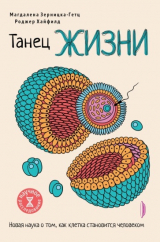
Текст книги "Танец жизни. Новая наука о том, как клетка становится человеком"
Автор книги: Роджер Хайфилд
Соавторы: Магдалена Зерницка-Гетц
сообщить о нарушении
Текущая страница: 15 (всего у книги 17 страниц)
На протяжении многих лет рядом с ней работали многие энергичные и прилежные женщины и мужчины, чье разнообразное прошлое, личные качества и профессиональные навыки повлияли на развитие этой истории: Анна Айдук, Джан Амадей, Фран Антоника, Иван Беджов, Моника Белецкая, Алекс Брюс, Ли Карпентер, Неофит Кристодулу, Паула Коэльо, Энди Кокс, Стивен Франкенберг, Мубин Гулам, Джоанна Грабарек, Сара Грэм, Дионн Грей, Сима Гревол, Шарлотта Хэндфорд, Сейки Харагути, Сара Харрисон, Анна Хупаловска, Агнешка Едрусик, Кристос Киприану, Рози Лартер, Сай Леунг, Карин Ликке-Андерсен, Кирсти Макинлей, Руи Мартинс, Сиголен Мейлхак, Даниэль Меснард, Маттео Моул, Кэтрин Мур, Саманта Моррис, Джи На, Лоренцо Ориетти, Марина Панамарова, Эмлин Парфитт, Каролина Пиотровска-Нитше, Береника Плюса, Гаэль Речер, Люси Ричардсон, Марта Шахбази, Ханна Шарплин, Шрути Сингла, Мария Скамагки, Мигель Соарес, Берна Созен, Бернхард Штраус, Рой Тео, Мария-Елена Торрес-Падилья, Джульетта Тиндаль, Санна Вуористо, Роберта Вебер, Антония Веберлинг, Флоренс Винни, Кшиштоф Вичер, Цян By и Мэн Чжу.
Без сотрудничества наука не была бы такой веселой, полезной для общества или вообще осуществимой, и Магда хотела бы поблагодарить своих многочисленных замечательных сотрудников, с которыми работала все эти годы. Список может быть длинным, но в контексте этой книги мы хотели бы выделить клиники ЭКО, которые внесли свой вклад в ее работу. В частности, мы благодарим Саймона Фишеля, Элисон Кэмпбелл и их коллег из CARE Fertility, а также Карлоса Саймона, Эмре Сели и Ричарда Скотта из клиники IVI-RMA вместе с их коллегами, а также всех родителей, которые решили пожертвовать свои эмбрионы для этого исследования. Мы и будущие поколения в долгу перед вами.
Мы также хотели бы поблагодарить соответствующие учреждения образования за созданную ими благоприятную творческую среду. Магда благодарна университетам, в которых является профессором, а также своим коллегам в каждом из них: кафедре физиологии, биологии развития и нейробиологии Кембриджского университета, особенно Биллу Харрису, Грэму Бертону, Саре Брей и Биллу Колледжу; и Калифорнийскому технологическому институту, особенно Стивену Майо, Марианне Броннер и Карлосу Лоису. Магда также благодарна Сидни-Сассекс-колледжу, где она стипендиат. Роджер благодарит группу Музея науки, в частности Яна Блатчфорда, Джонатана Ньюби, Пита Дикинсона и Джессику Ллойд-Райт, а также Конни Орбах и Линг Ли, кураторов выставки Музея науки «ЭКО: шесть миллионов детей спустя». Он также благодарен Школе патологии сэра Уильяма Данна Оксфордского университета и кафедре химии Лондонского университетского колледжа, где он является приглашенным профессором.
Наши друзья оказали нам большую поддержку, начиная от советов и заканчивая неформальной терапией. Магда хотела бы поблагодарить Дороту Берент, Эву Борсук, Марианну Броннер, Джуд Браун и Умара Салама, Ци Чен, Аню Цемерыч-Литвиненко, Мари-Лора и Жана-Франсуа де Клермон-Тоннер, Джерри Крэбтри, Агнешку де Рулак, Мачека Дунайского, Тони Кузаридиса, Яцека Кубяка, Рона Ласки, Питера Лоуренса, Эву Леванович, Бренду Майо, Алана Мидцлбрука, Джинни Папайоану и Саймона Шама, Доминику Пщолковска и Тадеуша Москицки, Беату Ромашко, Ханну Сидорович, Лилу Сольница-Крезель, Фила и Вальдо Сориано, Ольгу Токарчук, Петра Вегленского, Лиз Винтер, Еву Заневскую, Терезу и Йолу Зерницких. Роджер хотел бы поблагодарить Самиру Ахмед, Энн, Джейн и Джорджа Блумбертов, Ричарда и Леа Брукс, Нила Бакли, Фрэн Кордейро, Эвана Дэвиса, Кристин Дерретт, Джонатана Дорфмана, Грэма Фармело, Пола Франклина, Кэрол Гэннон, Хизер Гизинг, Маргарет Гилмор, Марка Глэнвилла, Мартина Годфри, Фила Килро, Джима Лори, Джеймса Лайла, Майкла Махони, Имона Мэтьюза, Кристин Макки, Раджа Персо, Дэвида и Фиону Сандерсон, Марка Седлера, Тома Стэндидж, Лизу Таннер, Марка Томпсона, Мартина и Кэролайн Уинн.
Наконец, мы хотели бы поблагодарить наши семьи за их невероятное терпение и терпимость во время нашего долгого совместного писательского путешествия, которое, хотя и было вдохновляющим, однако вынуждало вставать рано и засиживаться до глубокой ночи. Магда хотела бы выразить свою сердечную благодарность и любовь Дэвиду, Наташе и Саймону, а Роджер – Джулии, Холли и Рори.
Мы приветствуем их всех, наших партнеров в танце жизни.
Магдалена Зерницка-Гетц, профессор биологии развития млекопитающих и биологии стволовых клеток в Кембриджском университете, руководитель лаборатории на кафедре физиологии, биологии развития и нейробиологии; Бреновский профессор биологии и биоинженерии в Калифорнийском технологическом институте, где она открыла собственную лабораторию в сентябре 2019 года; стипендиат Сидни-Сассекс-колледжа и фонда Wellcome Trust (стипендия старшего научного сотрудника); владелец нескольких патентов, касающихся диагностики и лечения, автор порядка ста пятидесяти научных статей и книжных глав в таких престижных журналах, как Nature, Science и Cell. Живет в Кембридже, Великобритания, и в Лос-Анджелесе, штат Калифорния, США.
Роджер Хайфилд, писатель, журналист, телеведущий и научный директор Ассоциации британских музеев; приглашенный профессор по связям с общественностью в Оксфордском университете и Университетском колледже Лондона. До работы в Ассоциации британских музеев был редактором New Scientist и научным редактором Daily Telegraph. Является автором и соавтором восьми научно-популярных книг и редактором двух книг Дж. Крейга Вентера, особенно «А Life Decoded» (Allen Lane / Viking, 2007), которая была номинирована на премию Science Book Prize Королевского научного общества. Живет в Лондоне.
Ссылки
Введение. Концепция
[1] Eva Bianconi, Allison Piovesan, Federica Facchin, Alina Beraudi, Raffaella Casadei, Flavia Frabetti, Lorenza Vitale, Maria Chiara Pelleri, Simone Tassani, Francesco Piva, Soledad Perez-Amodio, Pierluigi Strippoli, Silvia Canaider. An Estimation of the Number of Cells in the Human Body. Annals of Fluman Biology 40. No. 6 (2013): 463-471. Doi: 10.3109/03014460.2013.807878. Elizabeth Howell. How Many Stars Are in the Milky mTy7Space.com, March 30. 2018. URL: www.space.com/25959-how-many-stars-are-in-the-milky-way. html.
[2] Human Cell Atlas. URL: www.humancellatlas.org. Дата обращения: 04.04.2019.
[3] Eleftheria Pervolaraki, James Dachtler, Richard A. Anderson, Arun V. Holden. Ventricular Myocardium Development and the Role of Connexins in the Human Fetal Heart. Scientific Reports 7 (2017), article 12272. Doi: 10.1038/s41598-017-11129-9.
[4] К. E. Garcia, E. C. Robinson, D. Alexopoulos, D. L. Dierker, M. F. Glasser, T. S. Coalson, С. M. Ortinau, D. Rueckert, L. A. Taber, D. C. Van Essen, С. E. Rogers, C. D. Smyser, P. V. Bayly. Dynamic Patterns of Cortical Expansion During Folding of the Preterm Human Brain. Proceedings of the National Academy of Sciences 115. No. 12 (2018): 3156-3161. Doi: 10.1073/pnas. 1715451115.
[5] A. J. De Casper, W. P. Fifer. Of Human Bonding: Newborns Prefer Their Mothers’ Voices. Science 208. No. 4448 (1980): 1174—1176. Doi:10.1126/science.7375928; S. Zoia, L. Blason, G. D’Ottavio, M. Bulgheroni, E. Pezzetta, A. Scabar, U. Castiello. Evidence of Early Development of Action Planning in the Human Fetus: A Kinematic Study. Experimental Brain Research 176 (2006): 217—226. Doi:10.1007/ s00221-006-0607-3; Martin Witt, Klaus Reutter. Embryonic and Early Fetal Development of Human Taste Buds: A Transmission Electron Microscopical Study. Anatomical Record 246 (1996): 507—523. Doi: 10.1007/s004180050228.
[6] Eva Bianconi et al. An Estimation of the Number of Cells in the Human Body, 463—471.
[7] S. J. Smartt, T.-W. Chen, A. Jerkstrand, M. Coughlin, E. Kankare, S. Sim, M. Fraser, C. Inserra, K. Maguire, К. C. Chambers, M. E. Huber, T. Kruhler, G. Leloudas, M. Magee, L. J. Shingles, K. W. Smith, D. R. Young, J. Tonry, R. Kotak, A. Gal-Yam, J. D. Lyman, D. S. Homan, C. Agliozzo, J. P. Anderson, C. R. Angus, C. Ashall, C. Barbarino, F. E. Bauer, M. Berton, M. T. Botticella, M. Bulla, J. Bulger, G. Cannizzaro, Z. Cano, R. Cartier, A. Cikota, P. Clark, A. De Cia, M. Della Valle, L. Denneau, M. Dennefeld, L. Dessart, G. Dimitriadis, N. Elias-Rosa, R. E. Firth, H. Flewelling, A. Flors, A. Franckowiak, C. Frohmaier, L. Galbany, S. Gonzalez-Gaitan, J. Greiner, M. Gromadzki, A. N. Guelbenzu, С. P. Gutierrez, A. Hamanowicz, L. Hanlon, J. Harmanen, К. E. Heintz, A. Heinze, M. Hernandez, S. T. Hodgkin, I. M. Hook, L. Izzo, P. A. James, P. G. Jonker, W. E. Kerzendorf, S. Klose, Z. Kostrzewa– Rutkow-ska, M. Kowalski, M. Kromer, H. Kuncarayakti, A. Lawrence, T. B. Lowe, E. A. Magnier, I. Manulis, A. Martin-Carrillo, S. Mattila, O. McBrien, A. Muller, J. Nordin, D. O’Neill, F. Onori, J. T. Palmerio, A. Pastorello, F. Patat, G. Pignata, P. Podsiadlowski, M. L. Pumo, S. J. Prentice, A. Rau, A. Razza, A. Rest, T. Reynolds, R. Roy, A. J. Ruiter, K. A. Rybicki, L. Salmon, P. Schady, A. S. B. Schultz, T. Schweyer, I. R. Seitenzahl, M. Smith, J. Sollerman, B. Stalder, C. W. Stubbs, M. Sullivan, H. Szegedi, F. Taddia, S. Taubenberger, G. Terreran, B.van Soelen, J. Vos, R. Wainscoat, N. A. Walton, C. Waters, H. Weiland, M. Willman, P. Wiseman, D. E. Wright, L.Wyrzykowski, O. Yaron. A Kilonova as the Electromagnetic Counterpart to a Gravitational-WaveSource. Nature 551 (2017): 75—79. URL: https://doi.org/10.1038/nature24303.
[8] Philip Ball. Schrodinger’s Cat Among Biology’s Pigeons: 75 Years of What Is L//fe?Nature 560 (2018): 548—550. URL: www.nature.com/articles/ d41586-018-06034-8; for Max Pemtz’s criticisms, see: MaxPerutz. ‘What Is Life?’ Fiction, Not Science. The Scientist. April 6, 1987. URL: www.the-cientist.com/books-etc-/what-is-life-fiction-not-science-63885.
[9] Джим Уотсон, интервью с Роджером Хайфилдом; январь 2018.
[10] Nick Lane, William F. Martin. The Origin of Membrane Bioenergetics. Cell 151 (2012): 1406-1416. URL: https://doi.Org/10.1016/j. cell.2012.11.050; Benedicte Menez, Celine Pisapia, Muriel Andre -ani, Frederic Jamme, Quentin P. Vanbellingen, Alain Brunelle, Laurent Richard, Paul Dumas, Matthieu Refregiers. Abiotic Synthesis of Amino Acids in the Recesses of the Oceanic Lithosphere. Nature 564 (2018): 59—63. URL: www.nature.com/articles/s41586-018-0684-z.
[11] Samuel Taylor Coleridge. The Complete Works of Samuel Taylor Coleridge: Poems, Plays, Lectures, Autobiography & Personal Letters (Musaicum Books, 2017), sec. 39.
[12] Мартин Джон Рис, лорд Рис из Лудлоу, астроном Ее величества; электронное письмо Роджеру Хайфилду, 28 января 2019 года.
Глава 2. Случай и судьба
[1] Andrzej К. Tarkowski. Experiments on the Development of Isolated Blastomeres of Mouse Eggs. Nature 184 (1959): 1286—1287. URL: www.nature.com/articles/1841286a0.
[2] Magdalena Zernicka-Goetz. Activation of Embryonic Genes During Preimplantation Rat Development. Molecular Reproduction and Development 38. No. 1 (1994): 30-35. Doi:10.1002/mrd. 1080380106.
[3] Scott F. Gilbert. Rearrangement of the Egg Cytoplasm. Developmental Biology. 6th ed. Sunderland, MA: Sinauer Associates, 2000.
[4] Daniel J. Marston, Bob Goldstein. Symmetry Breaking in C. elegans: Another Gift from the Sperm. Developmental Cell 11. No. 3 (2006): 273-274. Doi: 10.1016/j.devcel.2006.08.007.
[5] Martin H. Johnson, Carol Ann Ziomek. The Foundation of Two Distinct Cell Lineages Within the Mouse Morula. Cell 24. No. 1 (1981): 71-80. Doi.org/10.1016/0092-8674(81)90502-X.
[6] Berenika Plusa, Stephen Frankenberg, Andrew Chalmers, Anna-Katerina Hadjantonakis, Catherine A. Moore, Nancy Papalopulu, Virginia E. Papaioannou, David M. Glover, Magdalena Zernicka-Goetz. Downregulation of Par3 and aPKC Function Directs Cells Toward the ICMin the Preimplantation Mouse Embryo. Journal of Cell Science 118 (2005): 505-515. Doi:10.1242/jcs.01666.
[7] A. M. Dalcq. Introduction to General Embryology. London: Oxford University Press, 1957.
Глава 3. Раскрашивая клетки
[1] О. Shimomura. The Discovery of Aequorin and Green Fluorescent Protein. Journal of Microscopy 217. No. 1 (2005): 3—15. Doi: 10.1111/j.0022-2720.2005.01441 .x.
[2] Jean Livet, Tamily A. Weissman, Hyuno Kang, Ryan W. Draft, Ju Lu, Robyn A. Bennis, Joshua R. Sanes, JeffW. Lichtman. Transgenic Strategies for Combinatorial Expression of Fluorescent Proteins in the Nervous System. Nature 450 (2007): 56—62. Doi:10.1038/nature06293.
[3] Martin Chalfie, Yuan Tu, Ghia Euskirchen, William W. Ward, Douglas C. Prasher. Green Fluorescent Protein as a Marker for Gene Expression. Science 263. No. 5148 (1994): 802—805. Doi: 10.1126/ science.8303295.
[4] Alan M. Turing. On Computable Numbers, with an Application to the Entscheidungsproblem. Proceedings of the London Mathematical Society 2-42. No. 1 (1937): 230-265. URL: https://doi.Org/10.l 112/ plms/s2-42.1.230.
[5] John B. Gurdon. The Egg and the Nucleus: A Battle for Supremacy. Nobel Lecture, December 7,2012. URL: www.nobelprize.org/prizes/ medicine/2012/gurdon/lecture.
[6] lan Wilmut, Roger Highfield. After Dolly: The Uses and Misuses of Human Cloning. New York: Norton, 2006, 67.
[7] Stefan Wyszyn'ski. Polish prelate of the Roman Catholic Church. September 26, 1982. URL: https://en.wikiquote.org/wiki/Poland.
[8] M. Zernicka-Goetz, J. Pines, K. Ryan, K. R. Siemering, J. Haseloff, M. J. Evans, J. B. Gurdon. An Indelible Lineage Marker for Xenopus Using a Mutated Green Fluorescent Protein. Development 122 (1996): 3719—3724. URL: http://dev.biologists.org/content/122/12/3719.
[9] Rosario Rizzuto, Marisa Brini, Paolo Pizzo, Marta Murgia, Tullo Pozzan. Chimeric Green Fluorescent Protein as a Toolfor Visualizing Subcellular Organelles in Living Cells. Current Biology 5 (1995): 635-642. URL: https://d0i.0rg/l0.1016/S0960-9822(95)00128-X; S. R. Kain, M. Adams, A. Kondepudi, T. T. Yang, W. W. Ward, P. Kitts. Green Fluorescent Protein as a Reporter of Gene Expression and Protein Localization. Biotechniques 19. No. 4 (1995): 650—655.
[10] M. Zernicka-Goetz, J. Pines, S. McLean Hunter, J. P. Dixon, K. R. Siemering, J. Haselhoff, M. J. Evans. Following Cell Fate in the Living Mouse Embryo. Development 124(1997): 1133—1137.
[11] Samuel Schmerler, Gary M. Wessel. Polar Bodies – More a Lack of Understanding Than a Lack of Respect. Molecular Reproduction and Development 78. No. 1 (2010): 3—8. Doi:10.1002/mrd.21266.
[12] Y. Verlinsky, S. Rechitsky, J. Cieslak, V. Ivakhnenko, G. Wolf, A. Lifchez, B. Kaplan, J. Moise, J. Walle, M. White, N. Ginsberg, C. Strom, A. Kuliev. Preimplantation Diagnosis of Single Gene Disorders by Two-Step Oocyte Genetic Analysis Using First and Second Polar Body. Biochemical and Molecular Medicine 62 (1997): 182-187.
[13] John Biggers. Obituary: Dame Anne McLaren. Guardian, July 10,2007. URL: www.theguardian.eom/science/2007/jul/10/uk.obituaries.
[14] Dame Anne McLaren. University of Cambridge Department of Zoology, accessed April 4,2019. URL: www.zoo.cam.ac.uk/alumni/ biographies-of-zoologists/dame-anne-mclaren.
[15] Lewis Wolpert. Triumph of the Embryo. Oxford, UK: Oxford University Press, 1991, 12.
[16] R. L. Gardner. The Early Blastocyst Is Bilaterally Symmetrical and Its Axis of Symmetry Is Aligned with the Animal-Vegetal Axis of the Zygote in the Mouse. Development 124 (1997): 289—301.
[17] R. J. Weber, R. A. Pedersen, F. Wianny, M. J. Evans, M. Zernicka-Goetz. Polarity of the Mouse Embryo Is Anticipated Before Implantation. Development 126 (1999): 5591-5598.
Глава 4. Нарушая симметрию
[1] Scott Pitnick, Greg S. Spicer, Therese A. Markow. How Long Is a Giant Sperm?Nature 375 (1995): 109.
[2] V. Grandjean, S. Fourre, D. A. F. De Abreu, M.-A. Derieppe, J.-J. Remy, M. Rassoulzadegan. RNA-Mediated Paternal Heredity of Diet-Induced Obesity and Metabolic Disorders. Scientific Reports 5 (2015): 18193. Doi: 10.1038/srep 18193; Q. Chen, M. Yan, Z. Cao, X. Li, Y. Zhang, J. Shi, G. H. Feng, H. Peng, X. Zhang, Y. Zhang, J. Qian, E. Duan, Q. Zhai, Q. Zhou. Sperm tsRNAs Contribute to Intergenerational Inheritance of an Acquired Metabolic Disorder. Science 351 (2016): 397-400. Doi: 10.1126/science.aad7977.
[3] R. L. Gardner. The Early Blastocyst Is Bilaterally Symmetrical and Its Axis of Symmetry Is Aligned with the Animal-Vegetal Axis of the Zygote in the Mouse. Development 124 (1997): 289-301.
[41 Alan M. Turing. The Chemical Basis of Morphogenesis. Philosophical Transactions of the Royal Society В 237. No. 641 (1952). URL: https://d0i.0rg/l 0.1098/rstb. 1952.0012.
[5] J. M. Dreiling, T. J. Gay. Chirally Sensitive Electron-Induced Molecular Breakup and the Vester– Ulbricht Hypothesis. Physical Review Letters 113. No. 11 (2014): 118103. Doi: 10.1103/PhysRev-Lett.113.118103.
[6] R. T. Liu, S. S. Liaw, P. K. Maini. Two-Stage Turing Modelfor Generating Pigment Patterns on the Leopard and the Jaguar. Physical Review E 74 (2006): 011914. Doi: 10.1103/PhysRevE.74.011914.
[7] Stefanie Sick, Stefan Reinker, Jens Timmer, Thomas Schlake. IVNT and DKK Determine Hair Follicle Spacing Through a Reaction-Diffusion Mechanism. Science 314 (2006): 1447-1450. Doi: 10.1126/ science. 1130088.
[8] Xavier Diego, Lucaiao Marcon, Patrick Muller, James Sharpe. Key Features of Turing Systems Are Determined Purely by Network Topology. Physical ReviewX8. No. 2 (2018): 021071. Doi:10.1103/ PhysRevX.8.021071; H. Hamada. In Search of Turing In Vivo: Understanding Nodal and Lefty Behavior. Developmental Cell 22 (2012): 911-912. Doi: 10.1016/j.devcel.2012.05.003.
[9] K. Piotrowska, F. Wianny, R. A. Pedersen, M. Zernicka-Goetz. Blas-tomeres Arising from the First Cleavage Division Have Distinguishable Fates in Normal Mouse Development. Development 128. No 19 (2001): 3739-3748.
[10] Ernest Just. The Relation of the First Cleavage Plane to the Entrance Point of the Sperm. Biological Bulletin 22. No. 4 (1912): 239—252. Doi: 10.2307/1535889.
[11] Y. Tsunoda, A. S. McLaren. Effect of Various Procedures on the Viability of Mouse Embryos Containing Half the Normal Number of Blas-tomeres. Journal of Reproduction and Fertility 69 (1983): 315—322. Doi: 10.1530/jrf.0.0690315.
[12] V. E. Papaioannou, К. M. Ebert. Mouse Half Embiyos: Viability and Allocation of Cells in the Blastocyst. Developmental Dynamics 203 (1995): 393-398. Doi: 10.1002/aja. 1002030402.
[13] R. L. Gardner. The Early Blastocyst Is Bilaterally Symmetrical and Its Axis of Symmetry Is Aligned with the Animal– Vegetal Axis of the Zygote in the Mouse. Development 124 (1997): 289—301.
[14] K. Piotrowska, M. Zernicka-Goetz. Role for Sperm in Spatial Patterning of the Early Mouse Embryo. Nature 409 (2001): 517—521. Doi: 10.1038/35054069.
[15] K. Piotrowska, F. Wianny, R. A. Pedersen, M. Zernicka-Goetz. Blas-tomeres Arising from the First Cleavage Division Have Distinguishable Fates in Normal Mouse Development. Development 128. No 19 (2001): 3739-3748.
[16] B. Plusa, K. Piotrowska, M. Zernicka-Goetz. Sperm Entry Position Provides a Surface Marker for the First Cleavage Plane of the Mouse Zygote. Genesis 32. No. 3 (2002): 193—198.
[17] Roger Highfield, Ian Wilmut. After Dolly. New York: Norton, 2006, 82.
[18] Takashi Hiiragi, Davor Solter. First Cleavage Plane of the Mouse Egg Is Not Predetermined but Defined by the Topology of the Two Apposing Pronuclei. Nature 430 (2004): 360—364.
[19] B. Plusa, A.-K. Hadjantonakis, D. Gray, K. Piotrowska-Nitsche, A. Jedrusik, V. E. Papaioannou, D. M. Glover, M. Zernicka-Goetz. Does Prepatterning Occur in the Mouse Egg? (Reply). Nature 442 (2006): E4.
[20] T. Hiiragi, V. B. Alarcon, T. Fujimori, S. Louvet-Vallee, M. Malesze-wski, Y. Marikawa, B. Maro, D. Solter. Where Do We Stand Now? Mouse Early Embryo Patterning Meeting in Freiburg, Germany (2005). International Journal of Developmental Biology 50 (2006): 581-586, discussion 586-587. Doi: 10.1387/ijdb.062181th.
[21] David M. Glover. Unfair Debate. Internationa] Journal of Developmental Biology 50 (2006): 587. Doi: 10.1387/ijdb.062181 dg.
[22] Jerzy Kosin ski. The Painted Bird. Boston: Houghton Mifflin, 1965. На русском языке: Ежи Косинский. Раскрашенная птица (фрагменты) // Искусство кино. 1994. № 10—11.
[23] D. Gray, В. Plusa, К. Piotrowska, J. Na, В. Tom, D. М. Glover, М. Zernicka-Goetz. First Cleavage of the Mouse Embryo Responds to Change in Egg Shape at Fertilization. Current Biology 14 (2004): 397-405.
[24] Plusa et al. The First Cleavage Plane of the Mouse Zygote, 391-395; Gray et al. First Cleavage of the Mouse Embryo, 397-405.
[25] Q. Chen, J. Shi, Y. Tao, M. Zernicka-Goetz. Tracing the Origin of Heterogeneity and Symmetry Breaking in the Early Mammalian Embryo. Nature Communications 9 (2018): 1819.
[26] Anna Hupalowska, Agnieszka Jedrusik, Meng Zhu, Mark T. Bedford, David M. Glover, Magdalena Zernicka-Goetz. CARM1 and Paraspeckles Regulate Pre-implantation Mouse Embryo Development. Cell 175 (2018): 1902—1916, el3, URL: www.ncbi.nlm.nih.gov/pmc/ articles/PMC6292842.
[27] Ibid.
Глава 5. Рождение плана тела
[1] D. Mesnard, M. Filipe, J. A. Belo, M. Zernicka-Goetz. The Anterior-Posterior Axis Emerges Respecting the Morphology of the Mouse Embryo That Changes and Aligns with the Uterus Before Gastrulation. Current Biology 14(2004): 184-196. Doi: 10.1016/j.cub.2004.01.026; S. A. Morris, Y. Guo, M. Zernicka-Goetz. Developmental Plasticity Is Bound by Pluripotency and the Fgf and Wnt Signaling Pathways. Cell Reports 2. No. 4 (2012): 756-765.
[2] Homer. The Iliad, trans. Samuel Butler, Internet Classics Archive. URL: http://classics.mit.edu/Homer/iliad.mb.txt. На русском языке см., напр., в переводе Н. И. Гнедича: Гомер. Илиада. Одиссея. М.: Художественная литература, 1967. URL: https://facetia.ru/node/3388.
[3] David Alvarez-Ponce, James О. Mclnerney. The Human Genome Retains Relics of Its Prokaryotic Ancestry: Human Genes of Archae-bacterial and Eubacterial Origin Exhibit Remarkable Differences. Genome Biology and Evolution 3 (2011): 782—790. URL: https:// doi.org/10.1093/gbe/evr073.
Хотя сегодня этот взгляд ставится под сомнение, см.: Joran Martijn, Julian Vosseberg, Lionel Guy, Pierre Offre, T. J. G. Ettema. Deep Mitochondrial Origin Outside the Sampled Alphaproteobacterial. Nature 557 (2018): 101-105. Doi: 10.1038/s41586-018-0059-5.
[4] A. K. Tarkowski. Mouse Chimaeras Revisited: Recollections and Reflections. International Journal of Developmental Biology 42 (1998): 903-908.
[5] Ibid: 903-908.
[6] A. K. Tarkowski. Mouse Chimaeras Developedfrom Fused Eggs. Nature 190(1961):857-860.
[7] M. Maleszewski. Early Mammalian Embryo: My Love. An Interview with Andrzej K. Tarkowski. International Journal of Developmental Biology 52. Nos. 2—3 (2008): 163—169. Doi: 10.1387/ijdb.072377mm.
[8] R. Gardner. Chimaeric Mice on the Road Towards Stem Cells. Nature 414 (2001): 393. Doi: 10.1038/35106720.
[9] Anne McLaren. Mammalian Chimaeras. Cambridge: Cambridge University Press, 1976.
[10] N. M. Le Douarin, F. V. Jotereau. Tracing of Cells of the Avian Thymus Through Embryonic Life in Interspecific Chimeras. Journal of Experimental Medicine 142 (1975): 17—40.
[11] С. B. Fehilly, S. M. Willadsen, E. M. Tucker. Interspecific Chimaerism Between Sheep and Goat. Nature 307 (1984): 634—636.
[12] The Nobel Prize in Physiology or Medicine 2007. NobelPrize.org, accessed April 3, 2019. www.nobelprize.org/prizes/medicine/2007/ summary.
[13] J. Wu, A. Platero-Luengo, М. Sakurai, A. Sugawara, М. A. Gil, Т. Ya-mauchi, К. Suzuki, Y. S. Bogliotti, C. Cuello, M. Morales Valencia, D. Okumura, J. Luo, M. Vilarino, 1. Parrilla, D. A. Soto, C. A. Martinez, T. Hishida, S. Sanchez-Bautista, M. L. Martinez-Martinez, H. Wang, A. Nohalez, E. Aizawa, P. Martinez-Redondo, A. Ocampo, P. Reddy, J. Roca, E. A. Maga, C. R. Esteban, W. T. Beiggren, E. Nunez Delicado, J. Lajara, I. Guillen, P. Guillen, J. M. Campistol, E. A. Martinez, P. J. Ross, J. C. Izpisua Belmonte. Interspecies Chimerism with Mammalian Pluripotent Stem Cells. Cell 168 (2017): 473-486, el5. Doi: 10.1016/j.cell.2016.12.036; G. Almeida-Porada, C. D. Porada, J. Chamberlain, A. Torabi, E. D. Zanjani. Formation of Human Hepato-cytes by Human Hematopoietic Stem Cells in Sheep. Blood 104 (2004): 2582-2590. Doi: 10.1182/blood-2004-01-0259; X. Han, M. Chen, F. Wang, M. Windrem, S. Wang, S. Shanz, Q. Xu, N. A. Oberheim, N. L. Bekar, S. Betstadt, A. J. Silva, T. Takano, S. A. Goldman, M. Nedergaard. Forebrain Engraftment by Human Glial Progenitor Cells Enhances Synaptic Plasticity and Learning in Adult Mice. Cell Stem Cell 12 (2013): 342-353. Doi: 10.1016/j.stem.2012.12.015; M. S. Windrem, S. J. Schanz, C. Morrow, J. Munir, D. Chandler-Militello, S. Wang, S. A. Goldman. A Competitive Advantage by Neonatally Engrafted Human Glial Progenitors Yields Mice Whose Brains Are Chimeric for Human Glia. Journal of Neuroscience 34 (2014): 16153-16161. URL: www. jneurosci.org/content/34/48/16153.
[14] K. Piotrowska-Nitsche, A. Perea-Gomez, S. Haraguchi, M. Zer-nicka-Goetz. Four-cell Stage Mouse Blastomeres Have Different Developmental Properties. Development 132 (2005): 479—490.
[15] K. Piotrowska-Nitsche, A. Perea-Gomez, S. Haraguchi, M. Zer-nicka-Goetz. Four-cell Stage Mouse Blastomeres Have Different Developmental Properties. Development 132 (2005): 479-490; K. Piotrowska-Nitsche, M. Zernicka-Goetz. Spatial Arrangement of Individual 4-cell Stage Blastomeres and the Order in Which They Are Generated Correlate with Blastocyst Pattern in the Mouse Embryo. Mechanisms of Development 122. No. 4 (2005): 487-500. Doi:10.1016/j.mod.2004.11.014.
[16] Piotrowska-Nitsche et al. Four-cell Stage Mouse Blastomeres, 479– 490; Morris et al. Developmental Plasticity Is Bound by Pluripotency, 756-765.
[17] Piotrowska-Nitsche, Zernicka-Goetz. Spatial Arrangement of Individual 4-Cell Stage Blastomeres, 487—500.
[18] Y. Kurotaki, K. Hatta, K. Nakao, Y. Nabeshima, T. Fujimori. Blastocyst Axis Is Specified Independently of Early Cell Lineage but Aligns with the ZP Shape. Science 316 (2007): 719—723. Doi: 10.1126/ science. 1138591.
[19] Richard L. Gardner. The Axis of Polarity of the Mouse Blastocyst Is Specified Before Blastulation and Independently of the Zona Pellucida. Human Reproduction 22. No. 3 (2007): 798—806. Doi: 10.1093/ humrep/del424.
[20] M. Bischoff, D.-E. Parfitt, M. Zernicka-Goetz. Formation of the Embryonic-Abembryonic Axis of the Mouse Blastocyst: Relationships Between Orientation of Early Cleavage Divisions and Pattern of Symmetric/Asymmetric Divisions. Development 135 (2008): 953—962. Doi:10.1242/dev.014316.
[21] M. E. Torres-Padilla, D. E. Parfitt, T. Kouzarides, M. Zernicka-Goetz. Histone Arginine Methylation Regulates Plan potency in the Early Mouse Embryo. Nature 445. No 7124 (2007): 214—218. Doi:10.1038/nature05458.
[22] Ibid.
[23] Fernando H. Biase, Xiaoyi Cao, Sheng Zhong. Cell Fate Inclination Within 2-Cell and 4-Cell Mouse Embryos Revealed by Single-Cell RNA Sequencing. Genome Research 24. No. 11 (2014): 1787—1796. Doi: 10.1101/gr. 177725.114; Junchao Shi, Qi Chen, Xin Li, Xiu-deng Zheng, Ying Zhang, Jie Qiao, Fuchou Tang, Yi Tao, Qi Zhou, Enkui Duan. Dynamic Transcriptional Symmetry-Breaking in Pre-implantation Mammalian Embryo Development Revealed by Single-Cell RNA-Seq. Development 142 (2015): 3468—3477. Doi:10.1242/ dev. 123950.
[24] Мубин Гулам, электронное письмо Роджеру Хайфилду, 17 сентября 2018 года; Мубин Гулам, интервью с Роджером Хайфилдом, 23 августа 2018 года.
[25] М. Goolam, A. Scialdone, S. J. L. Graham, I. С. Macaulay, A. Jedrusik, A. Hupalowska, Т. Voet, J. C. Marioni, M. Zernicka-Goetz. Heterogeneity in Oct4 and Sox2 Targets Biases Cell Fate in 4-Cell Mouse Embryos. Cell 165 (2016): 61-74. Dor 10 1016/i cell.2016.01.047.
[26] A. Jedrusik, D.-E. Parfitt, G. Guo, M. Skamagki, J. B. Grabarek, M. H. Johnson, P. Robson, M. Zernicka-Goetz. Role ofCdx2and Cell Polarity in Cell Allocation and Specification of Trophectoderm and Inner Cell Mass in the Mouse Embryo. Genes and Development 22 (2008): 2692-2706. Doi: 10.1101 /gad.486108.
[27] Goolam et al. Heterogeneity in Oct4andSox2 Targets, 61-74.
[28] M D. White, J. F. Angiolini, Y. D. Alvarez, G. Kaur, Z. W. Zhao, E. Mocskos, L. Bruno, S. Bissiere, V. Levi, N. Plachta. Long-Lived Binding of Sox2 to DNA Predicts Cell Fate in the Four-Cell Mouse Embryo. Cell 165 (2016): 75-87. Doi: 10.1016/j.cell.2016.02.032.
[29] Ibid.
[30] S. A. Morris, Y. Guo, M. Zernicka-Goetz. Developmental Plasticity Is Bound by Pluripotency and the Fgfand Wnt Signaling Pathways. Cell Reports 2. No. 4 (2012): 756-765.
[31] N. Plachta, T. Bollenbach, S. Pease, S. E. Fraser, P. Pantazis. Oct4 Kinetics Predict Cell Lineage Patterning in the Early Mammalian Embryo. Nature Cell Biology 13 (2011): 117-123. Doi: 10.1038/ncb2154.
[32] White et al. Long-Lived Binding of Sox2 to DNA, 75-87.
[33] 1. Tabansky, A. Lenarcic, R. W. Draft, K. Loulier, D. B. Keskin, J. Rosains, J. Rivera-Feliciano, J. W. Lichtman, J. Livet, J. N. Stern, J. R. Sanes, K. Eggan. Developmental Bias in Cleavage-Stage Mouse Blastomeres. Current Biology 23 (2013): 21-31. Doi: 10.1016/j cub.2012.10.054.
[34] Ibid.
Глава 6. Вскрытие черного ящика
[1] J. W. Lichtman, S. E. Fraser. The Neuronal Naturalist: Watching Neurons in Their Native Habitat. Nature Neuroscience 4 (2001): 1215-1220. Doi:10.1038/nn754.
[2] Insoo Hyun, Amy Wilkerson, Josephine Johnston. Embryology Policy: Revisit the 14-Day Rule. Nature 533 (2016): 169-171. URL: www. nature.com/news/embryology-policy-revisitthe– 14-day-rule-1.19838.
[3] J. Carver, К. Martin, I. Spyropoulou, D. Barlow, I. Sargent, H. Mar-don. An In-Vitro Model for Stromal Invasion During Implantation of the Human Blastocyst. Human Reproduction 18 (2003): 283-290.
[4] William Richard Rice. The High Abortion Cost of Human Reproduction. bioRxiv (2018): 372193.
[5] A. T. Hertig, J. Rock, E. C. Adams. A Description of 34 Human Ova Within the First 17 Days of Development. American Journal of Anatomy 98. No. 31 (1956): 435-493. URL: https://doi.org/10.1002/ aja. 1000980306.
[6] Ibid.
[7] B. Fu, Y. Zhou, X. Ni, X. Tong, X. Xu, Z. Dong, R. Sun, Z. Tian, H. Wei. Natural Killer Cells Promote Fetal Development Through the Secretion of Growth-Promoting Factors. Immunity 47 (2017): 1100-1113. Doi: 10.1016/j.immuni.2017.11.018.
[8] R. Vento-Tormo, M. Efremova, R. A. Botting, M. Y. Turco, M. Ven-to-Tormo, К. B. Meyer, J. E. Park, E. Stephenson, K. Polaski, A. Goncalves, L. Gardner, S. Holmqvist, J. Henriksson, A. Zou, A. M. Sharkey, B. Millar, B. Innes, L. Wood, A. Wilbrey-Clark, R. P. Payne, M. A. Ivarsson, S. Lisgo, A. Filby, D. H. Rowitch, J. N. Bulmer, G. J. Wright, M. J. T. Stubbington, M. Haniffa, A. Moffett, S. A. Teichmann. Single-Cell Reconstruction of the Early Maternal-Fetal Interface in Humans. Nature 563 (2018): 347-353. Doi: 10.1038/s41586-018-0698-6.