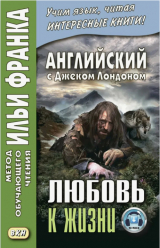
Текст книги "Английский язык с Дж. Лондоном. Любовь к жизни (рассказы)"
Автор книги: Джек Лондон
Соавторы: Илья Франк
Жанр:
Зарубежная классика
сообщить о нарушении
Текущая страница: 30 (всего у книги 33 страниц) [доступный отрывок для чтения: 12 страниц]
A most unsociable dog he proved to be, resenting all their advances, refusing to let them lay hands on him, menacing them with bared fangs and bristling hair. Nevertheless he remained, sleeping and resting by the spring, and eating the food they gave him after they set it down at a safe distance and retreated. His wretched physical condition explained why he lingered; and when he had recuperated, after several days' sojourn, he disappeared.
And this would have been the end of him (и это было бы развязкой /истории/ о нем; end – конец; развязка), so far as Irvine and his wife were concerned (насколько это касалось Ирвина и его жены), had not Irvine at that particular time been called away into the northern part of the state (если бы Ирвина в это конкретное время = как раз в это время не отозвали в северную часть штата). Riding along on the train (когда он ехал в поезде), near to the line between California and Oregon (возле границы между Калифорнией и Орегоном), he chanced to look out of the window (он случайно выглянул в окошко; to chance – происходить, случаться) and saw his unsociable guest sliding along the wagon road (и увидел своего нелюдимого гостя, плавно скользящего вдоль железнодорожных путей), brown and wolfish (бурого и похожего на волка), tired yet tireless (усталого и все же неутомимого), dust-covered and soiled with two hundred miles of travel (покрытого пылью и грязного от двухсот миль пути).
And this would have been the end of him, so far as Irvine and his wife were concerned, had not Irvine at that particular time been called away into the northern part of the state. Riding along on the train, near to the line between California and Oregon, he chanced to look out of the window and saw his unsociable guest sliding along the wagon road, brown and wolfish, tired yet tireless, dust-covered and soiled with two hundred miles of travel.
Now Irvine was a man of impulse, a poet (но Ирвин был импульсивным человеком, поэтом; now – сейчас; тогда; так вот). He got off the train at the next station (он сошел с поезда на следующей станции; to get off – сойти, слезть), bought a piece of meat at a butcher shop (купил кусок мяса в мясной лавке; to buy – купить), and captured the vagrant on the outskirts of the town (и захватил бродягу на окраине города; to capture – захватывать силой; брать в плен). The return trip was made in the baggage car (поездка обратно была совершена в багажном вагоне), and so Wolf came a second time to the mountain cottage (и так Волк во второй раз попал в коттедж в горах). Here he was tied up for a week (здесь его привязали на неделю) and made love to by the man and woman (и мужчина и женщина ухаживали за ним; to make love to – ухаживать /за любимой женщиной/). But it was very circumspect love-making (но это было очень осмотрительное ухаживание). Remote and alien as a traveller from another planet (далекий и чужой, как путешественник с другой планеты), he snarled down their soft-spoken love-words (он рычал на их нежно произносимые слова любви). He never barked (он никогда не лаял). In all the time they had him he was never known to bark (за все время, что он был у них, никогда не слышали, чтобы он лаял; to know – знать, иметь представление).
Now Irvine was a man of impulse, a poet. He got off the train at the next station, bought a piece of meat at a butcher shop, and captured the vagrant on the outskirts of the town. The return trip was made in the baggage car, and so Wolf came a second time to the mountain cottage. Here he was tied up for a week and made love to by the man and woman. But it was very circumspect love-making. Remote and alien as a traveller from another planet, he snarled down their soft-spoken love-words. He never barked. In all the time they had him he was never known to bark.
To win him became a problem (завоевать его /расположение/ стало трудной задачей; problem – проблема, задача; сложная ситуация, трудный случай; трудность, затруднение). Irvine liked problems (Ирвин любил трудности). He had a metal plate made (он заказал металлическую пластинку; to have smth. + причастие прошедшего времени – попросить сделать что-либо), on which was stamped (на которой было выбито; to stamp – штамповать, штемпелевать; клеймить, чеканить, отпечатывать): RETURN TO WALT IRVINE, GLEN ELLEN, SONOMA COUNTY, CALIFORNIA (верните Уолту Ирвину, долина Эллен, округ Сонома, Калифорния). This was riveted to a collar and strapped about the dog's neck (это = пластинка была приклепана к ошейнику, а /тот был/ застегнут на шее пса; to strap – стягивать ремнем). Then he was turned loose (затем его отвязали; to turn loose – спускать /животное/ с цепи; освобождать), and promptly he disappeared (и он сразу исчез). A day later came a telegram from Mendocino County (днем позже пришла телеграмма из округа Мендосино). In twenty hours he had made over a hundred miles to the north (за двадцать часов он преодолел сотню миль на север), and was still going when captured (и все еще бежал, когда его поймали).
To win him became a problem. Irvine liked problems. He had a metal plate made, on which was stamped: RETURN TO WALT IRVINE, GLEN ELLEN, SONOMA COUNTY, CALIFORNIA. This was riveted to a collar and strapped about the dog's neck. Then he was turned loose, and promptly he disappeared. A day later came a telegram from Mendocino County. In twenty hours he had made over a hundred miles to the north, and was still going when captured.
He came back by Wells Fargo Express (он вернулся посредством /транспортной компании/ «Уэллс Фарго Экспресс»), was tied up three days (был привязан три дня), and was loosed on the fourth and lost (на четвертый день его отвязали, и он пропал: «был потерян»; to lose – терять). This time he gained southern Oregon (на этот раз он добрался до Орегона) before he was caught and returned (прежде чем его поймали и вернули: «был пойман и возвращен»). Always, as soon as he received his liberty (всегда, как только он получал свободу), he fled away, and always he fled north (он убегал, и всегда убегал на север; to flee away – убегать, спасаться бегством). He was possessed of an obsession (он был одержим навязчивой мыслью; possessed – одержимый чем-либо) that drove him north (которая гнала его на север; to drive – гнать). The homing instinct, Irvine called it («инстинктом возвращения домой» назвал это Ирвин), after he had expended the selling price of a sonnet in getting the animal back from northern Oregon (после того как он потратил деньги, вырученные за продажу сонета, на возвращение животного из северного Орегона; selling price – реализационная цена, отпускная цена, цена продажи).
He came back by Wells Fargo Express, was tied up three days, and was loosed on the fourth and lost. This time he gained southern Oregon before he was caught and returned. Always, as soon as he received his liberty, he fled away, and always he fled north. He was possessed of an obsession that drove him north. The homing instinct, Irvine called it, after he had expended the selling price of a sonnet in getting the animal back from northern Oregon.
Another time the brown wanderer succeeded in traversing half the length of California (в другой раз бурому страннику удалось пересечь половину длины Калифорнии), all of Oregon, and most of Washington (весь Орегон и большую часть Вашингтона[29]), before he was picked up and returned "Collect (прежде чем его арестовали и вернули «наложенным платежом»; collect – «оплата при доставке», с оплатой получателем; наложенным платежом)." A remarkable thing was the speed with which he travelled (поразительным фактом была скорость, с которой он путешествовал). Fed up and rested (откормленный и отдохнувший; to feed up – откармливать, усиленно питать), as soon as he was loosed (как только его отвязывали) he devoted all his energy to getting over the ground (он посвящал всю свою энергию тому, чтобы продвинуться вперед; to get over – преодолеть, пройти /расстояние/; to get ground – продвигаться вперед, делать успехи). On the first day's run he was known to cover as high as a hundred and fifty miles (известно было, что пробег за первый день был = составлял целых сто пятьдесят миль), and after that he would average a hundred miles a day until caught (а после этого он обычно проходил в среднем сотню миль в день, пока его не ловили; to average – в среднем равняться, составлять). He always arrived back lean and hungry and savage (он всегда возвращался тощим, голодным и разгневанным; savage – дикий; взбешенный, разгневанный), and always departed fresh and vigorous (а отправлялся свежим и сильным; vigor – сила, энергия), cleaving his way northward in response to some prompting of his being (прокладывая путь на север в ответ на какое-то побуждение его жизни; to cleave – раскалывать; прокладывать себе путь, пробиваться через что-либо; being – бытие, жизнь, существование) that no one could understand (которое никто не мог понять).
Another time the brown wanderer succeeded in traversing half the length of California, all of Oregon, and most of Washington, before he was picked up and returned «Collect.» A remarkable thing was the speed with which he travelled. Fed up and rested, as soon as he was loosed he devoted all his energy to getting over the ground. On the first day's run he was known to cover as high as a hundred and fifty miles, and after that he would average a hundred miles a day until caught. He always arrived back lean and hungry and savage, and always departed fresh and vigorous, cleaving his way northward in response to some prompting of his being that no one could understand.
But at last, after a futile year of flight (но наконец, после года тщетных побегов), he accepted the inevitable and elected to remain at the cottage (он принял неизбежное и предпочел остаться у коттеджа) where first he had killed the rabbit and slept by the spring (где он поначалу убил кролика и заснул у источника). Even after that, a long time elapsed (даже после этого прошло долгое время) before the man and woman succeeded in patting him (прежде чем мужчине и женщине удалось похлопать его; to succeed – преуспевать; иметь успех). It was a great victory (это была великая победа), for they alone were allowed to put hands on him (ибо только им разрешалось возлагать на него руки). He was fastidiously exclusive (он был надменно недоступен), and no guest at the cottage ever succeeded in making up to him (и ни один гость коттеджа никогда не преуспел в том, чтобы приблизиться к нему; to make up to smb. – подходить, приближаться). A low growl greeted such approach (низкое рычание встречало такое приближение); if any one had the hardihood to come nearer (если у кого-то доставало отваги подойти ближе), the lips lifted (поднимались губы), the naked fangs appeared (появлялись обнаженные клыки), and the growl became a snarl (и рычание становилось рыком) – a snarl so terrible and malignant (рыком таким страшным и злобным) that it awed the stoutest of them (что он ужасал самых храбрых из них), as it likewise awed the farmers' dogs (как он ужасал и фермерских собак) that knew ordinary dog-snarling (которые знали = которые были знакомы с обычным собачьим рычанием), but had never seen wolf-snarling before (но которые никогда прежде не встречались с волчьим рыком; to see – видеться, видаться, встречаться).
But at last, after a futile year of flight, he accepted the inevitable and elected to remain at the cottage where first he had killed the rabbit and slept by the spring. Even after that, a long time elapsed before the man and woman succeeded in patting him. It was a great victory, for they alone were allowed to put hands on him. He was fastidiously exclusive, and no guest at the cottage ever succeeded in making up to him. A low growl greeted such approach; if any one had the hardihood to come nearer, the lips lifted, the naked fangs appeared, and the growl became a snarl – a snarl so terrible and malignant that it awed the stoutest of them, as it likewise awed the farmers' dogs that knew ordinary dog-snarling, but had never seen wolf-snarling before.
He was without antecedents (у него не было прошлого; antecedents – прошлое /происхождение/). His history began with Walt and Madge (его история началась с Уолта и Мэдж). He had come up from the south (он появился с юга), but never a clew did they get of the owner (но никогда у них не было ключа /к разгадке того кто был его/ владельцем) from whom he had evidently fled (от которого он, очевидно, сбежал; to flee). Mrs. Johnson, their nearest neighbor and the one who supplied them with milk (миссис Джонсон, их ближайшая соседка и человек, который снабжал их молоком), proclaimed him a Klondike dog (заявила, что он пес с Клондайка). Her brother was burrowing for frozen pay-streaks in that far country (ее брат копался в поисках перспективных жил в том далеком краю), and so she constituted herself an authority on the subject (и поэтому она сделалась авторитетом в этой области; to constitute – сделать/произвести официальное назначение, назначить; subject – тема, предмет разговора; дело, занятие, сфера профессиональных интересов).
He was without antecedents. His history began with Walt and Madge. He had come up from the south, but never a clew did they get of the owner from whom he had evidently fled. Mrs. Johnson, their nearest neighbor and the one who supplied them with milk, proclaimed him a Klondike dog. Her brother was burrowing for frozen pay-streaks in that far country, and so she constituted herself an authority on the subject.
But they did not dispute her (но они не оспаривали ее). There were the tips of Wolf's ears (у Волка были кончики ушей), obviously so severely frozen at some time (очевидно так сильно обмороженные когда-то) that they would never quite heal again (что они никогда полностью не заживут больше). Besides, he looked like the photographs of the Alaskan dogs (кроме того, он был похож на фотографии аляскинских собак) they saw published in magazines and newspapers (которые они видели /опубликованными/ в журналах и газетах). They often speculated over his past, and tried to conjure up (они часто размышляли о его прошлом и пытались представить; to conjure up – вызывать в воображении; to conjure – вызывать, заклинать /духов/) (from what they had read and heard (исходя из того, что они читали и слышали)) what his northland life had been (какова была его жизнь на севере). That the northland still drew him, they knew (они знали, что север все еще притягивает его; to draw – тянуть; притягивать); for at night they sometimes heard him crying softly (ибо ночью они иногда слышали, как он тихо скулит; to cry – кричать, вопить; плакать; выть, лаять; издавать характерный звук /о животном/); and when the north wind blew and the bite of frost was in the air (а когда дул северный ветер, и в воздухе пощипывал мороз; bite – укус; to bite – кусать; щипать /о морозе/), a great restlessness would come upon him (его охватывало сильное беспокойство; to come upon – охватывать кого-либо, случаться с кем-либо) and he would lift a mournful lament which they knew to be the long wolf-howl (и он поднимал = выводил унылое завывание, которое, они знали, и есть протяжный волчий вой; to lift – поднимать, повышать, возвышать /голос/). Yet he never barked (однако он никогда не лаял). No provocation was great enough to draw from him that canine cry (никакая провокация не была достаточно велика = ничем нельзя было исторгнуть из него этот собачий звук; provocation – подстрекательство, провокация; стимул; раздражение, причина недовольства, источник раздражения; to draw – выдергивать, вырывать).
But they did not dispute her. There were the tips of Wolf's ears, obviously so severely frozen at some time that they would never quite heal again. Besides, he looked like the photographs of the Alaskan dogs they saw published in magazines and newspapers. They often speculated over his past, and tried to conjure up (from what they had read and heard) what his northland life had been. That the northland still drew him, they knew; for at night they sometimes heard him crying softly; and when the north wind blew and the bite of frost was in the air, a great restlessness would come upon him and he would lift a mournful lament which they knew to be the long wolf-howl. Yet he never barked. No provocation was great enough to draw from him that canine cry.
Long discussion they had (у них была долгая дискуссия), during the time of winning him (во время завоевания его /доверия/), as to whose dog he was (по поводу того, чей пес это был). Each claimed him (каждый /из них/ заявлял свои права на него), and each proclaimed loudly any expression of affection made by him (и каждый шумно указывал на любое выражение = проявление любви, сделанное им = с его стороны). But the man had the better of it at first (но мужчина сначала выигрывал; to have the better of smth. – выигрывать, брать верх в чем-либо), chiefly because he was a man (главным образом, потому что он был мужчина). It was patent that Wolf had had no experience with women (явно было, что у Волка не было опыта /общения/ с женщинами; patent – очевидный, явный). He did not understand women (он не понимал женщин). Madge's skirts were something he never quite accepted (юбки Мэдж были чем-то, с чем он полностью так и не примирился; to accept – принимать, мириться). The swish of them was enough to set him a-bristle with suspicion (их шуршания было достаточно, чтобы он ощетинился от подозрения; to set – приводить /в какое-либо состояние/, помещать /в какое-либо положение/; в этом значении употребляется с прилагательными в роли комплемента; to bristle – ощетиниться), and on a windy day she could not approach him at all (а в ветреный день она не могла вообще приблизиться к нему).
Long discussion they had, during the time of winning him, as to whose dog he was. Each claimed him, and each proclaimed loudly any expression of affection made by him. But the man had the better of it at first, chiefly because he was a man. It was patent that Wolf had had no experience with women. He did not understand women. Madge's skirts were something he never quite accepted. The swish of them was enough to set him a-bristle with suspicion, and on a windy day she could not approach him at all.
On the other hand, it was Madge who fed him (с другой стороны, именно Мэдж кормила его; to feed); also it was she who ruled the kitchen (и к тому же именно она руководила кухней), and it was by her favor, and her favor alone (и именно по ее благосклонности и только по ее благосклонности), that he was permitted to come within that sacred precinct (ему позволяли входить в пределы этой священной территории). It was because of these things that she bade fair to overcome the handicap of her garments (как раз из-за этого она, скорее всего, и преодолела недостаток своих одеяний; to bid fair – казаться вероятным). Then it was that Walt put forth special effort (потом особое усилие приложил Уолт; to put forth – напрягать /силы/; прилагать усилия), making it a practice to have Wolf lie at his feet (взяв за привычку разрешать Волку лежать у его ног; to make a practice of smth. – взять что-либо за правило; to have – терпеть, разрешать, позволять, допускать) while he wrote (когда он писал), and, between petting and talking (и между поглаживанием и разговорами = и то поглаживая, то разговаривая /с ним/), losing much time from his work (терял много времени от работы). Walt won in the end (в итоге Уолт победил; to win), and his victory was most probably due to the fact that he was a man (и своей победой он, вероятнее всего, был обязан тому, что был мужчиной), though Madge averred (хотя Мэдж заявила) that they would have had another quarter of a mile of gurgling brook (что они приобрели бы еще четверть мили журчащего ручья), and at least two west winds sighing through their redwoods (и, по меньшей мере, два западных ветра вздыхали бы сквозь их красные деревья), had Walt properly devoted his energies to song-transmutation (если бы Уолт надлежащим образом посвящал свою энергию песенным превращениям) and left Wolf alone to exercise a natural taste and an unbiassed judgment (и оставил Волка в покое, чтобы тот развивал природное чувство вкуса и беспристрастное суждение; bias – наклон; предвзятость).
On the other hand, it was Madge who fed him; also it was she who ruled the kitchen, and it was by her favor, and her favor alone, that he was permitted to come within that sacred precinct. It was because of these things that she bade fair to overcome the handicap of her garments. Then it was that Walt put forth special effort, making it a practice to have Wolf lie at his feet while he wrote, and, between petting and talking, losing much time from his work. Walt won in the end, and his victory was most probably due to the fact that he was a man, though Madge averred that they would have had another quarter of a mile of gurgling brook, and at least two west winds sighing through their redwoods, had Walt properly devoted his energies to song-transmutation and left Wolf alone to exercise a natural taste and an unbiassed judgment.
"It's about time I heard from those triolets (пора уже получить весточку от тех триолетов[30]; to hear from smb. – получать известие от кого-либо)", Walt said, after a silence of five minutes (после пятиминутного молчания), during which they had swung steadily down the trail (во время которого они ровным шагом спустились по тропе; to swing – идти мерным шагом; steady – равномерный, ровный). "There'll be a check at the post-office, I know (я знаю, на почте будет чек), and we'll transmute it into beautiful buckwheat flour (и мы превратим его в превосходную гречневую муку), a gallon of maple syrup (галлон[31] кленового сиропа), and a new pair of overshoes for you (и новую пару галош для тебя)."
"And into beautiful milk from Mrs. Johnson's beautiful cow (и в прекрасное молоко от прекрасной коровы миссис Джонсон)," Madge added (добавила Мэдж). "To-morrow's the first of the month, you know (знаешь, завтра первое число месяца)."
Walt scowled unconsciously (Уолт невольно нахмурился; unconsciously – бессознательно); then his face brightened (потом его лицо наполнилось радостью; to brighten – очищать; наполнять радостью, радовать; bright – яркий), and he clapped his hand to his breast pocket (и он хлопнул рукой по нагрудном карману).
«It's about time I heard from those triolets», Walt said, after a silence of five minutes, during which they had swung steadily down the trail. «There'll be a check at the post-office, I know, and we'll transmute it into beautiful buckwheat flour, a gallon of maple syrup, and a new pair of overshoes for you.»
"And into beautiful milk from Mrs. Johnson's beautiful cow," Madge added. "To-morrow's the first of the month, you know."
Walt scowled unconsciously; then his face brightened, and he clapped his hand to his breast pocket.
"Never mind (не беда; never mind – ничего, неважно, не беспокойтесь, не беда). I have here a nice beautiful new cow (у меня тут есть славная прекрасная новая коровка), the best milker in California (лучшая молочная корова в Калифорнии)."
"When did you write it (когда ты написал его[32])?" she demanded eagerly (горячо спросила она). Then, reproachfully (потом с укором; reproach – упрек, укор), «And you never showed it to me (а ты так и не показал его мне).»
"I saved it to read to you on the way to the post-office (я сберег его, чтобы прочесть тебе по дороге на почту), in a spot remarkably like this one (в месте, удивительно похожем на это)," he answered (ответил он), indicating, with a wave of his hand (указывая взмахом руки), a dry log on which to sit (на сухое бревно, на котором можно посидеть).
A tiny stream flowed out of a dense fern-brake (крошечный ручеек вытекал из густой папоротниковой чащи), slipped down a mossy-lipped stone (проскальзывал вниз по камню со мшистыми краями; lip – губа; край, выступ), and ran across the path at their feet (и перебегал дорожку у их ног). From the valley arose the mellow song of meadow-larks (из долины раздавалось веселое пение луговых жаворонков; to arise – раздаваться, подниматься), while about them, in and out, through sunshine and shadow, fluttered great yellow butterflies (в то время как вокруг них, то /залетая/ между ними, то /облетая их/ снаружи, порхали огромные желтые бабочки; in and out – то внутрь, то наружу; снаружи и внутри).
«Never mind. I have here a nice beautiful new cow, the best milker in California.»
"When did you write it?" she demanded eagerly. Then, reproachfully, "And you never showed it to me."
"I saved it to read to you on the way to the post-office, in a spot remarkably like this one," he answered, indicating, with a wave of his hand, a dry log on which to sit.
A tiny stream flowed out of a dense fern-brake, slipped down a mossy-lipped stone, and ran across the path at their feet. From the valley arose the mellow song of meadow-larks, while about them, in and out, through sunshine and shadow, fluttered great yellow butterflies.
Up from below came another sound (вверх снизу донесся другой звук) that broke in upon Walt reading softly from his manuscript (который прервал Уолта, читавшего тихо свою рукопись; to break in on – прерывать). It was a crunching of heavy feet (это был хруст тяжелых шагов), punctuated now and again by the clattering of a displaced stone (перемежавшийся время от времени стуком отброшенного камня). As Walt finished and looked to his wife for approval (когда Уолт закончил и посмотрел на жену для одобрения = в ожидании одобрения), a man came into view around the turn of the trail (за поворотом тропы показался мужчина; to come into view – появляться; view – вид; видимость). He was bare-headed and sweaty (он был с непокрытой головой и потный; bare – голый; непокрытый; sweat – пот). With a handkerchief in one hand he mopped his face (носовым платком в одной руке он вытирал лицо; to mop – мыть; вытирать), while in the other hand he carried a new hat and a wilted starched collar (тогда как в другой руке он нес новую шляпу и поникший накрахмаленный воротничок) which he had removed from his neck (который он снял с шеи; to remove – удалять). He was a well-built man (он = это был хорошо сложенный мужчина), and his muscles seemed on the point of bursting out of the painfully new and ready-made black clothes he wore (и его мускулы, казалось, вот-вот вырвутся из очень новой готовой одежды черного цвета, которая была на нем; to be on the point of doing smth. – собираться сделать что-либо немедленно; painfully – болезненно, мучительно; крайне, очень; ready-made clothes – готовое платье; to wear – носить /об одежде/).
Up from below came another sound that broke in upon Walt reading softly from his manuscript. It was a crunching of heavy feet, punctuated now and again by the clattering of a displaced stone. As Walt finished and looked to his wife for approval, a man came into view around the turn of the trail. He was bare-headed and sweaty. With a handkerchief in one hand he mopped his face, while in the other hand he carried a new hat and a wilted starched collar which he had removed from his neck. He was a well-built man, and his muscles seemed on the point of bursting out of the painfully new and ready-made black clothes he wore.
«Warm day (теплый денек),» Walt greeted him (поприветствовал его Уолт). Walt believed in country democracy (Уолт верил в деревенскую демократию), and never missed an opportunity to practise it (и никогда не упускал возможности поупражняться в ней).
The man paused and nodded (мужчина остановился и кивнул).
"I guess I ain't used much to the warm (мне кажется, я не очень привыкший к теплу)," he vouchsafed half apologetically (снизошел он наполовину извиняющимся тоном). "I'm more accustomed to zero weather (я более привычен к нулевой погоде = нулевой температуре)."
"You don't find any of that in this country (вы не найдете ее в этих краях)," Walt laughed (засмеялся Уолт).
"Should say not (я бы сказал, что нет = я бы так и сказал)," the man answered (ответил мужчина). "An' I ain't here a-lookin' for it neither (да я ее здесь и не ищу). I'm tryin' to find my sister (я пытаюсь найти свою сестру). Mebbe you know where she lives (может, вы знаете, где она живет). Her name's Johnson (ее фамилия Джонсон), Mrs. William Johnson (миссис Уильям Джонсон[33])."
«Warm day,» Walt greeted him. Walt believed in country democracy, and never missed an opportunity to practise it.
The man paused and nodded.
"I guess I ain't used much to the warm," he vouchsafed half apologetically. "I'm more accustomed to zero weather."
"You don't find any of that in this country," Walt laughed.
"Should say not," the man answered. "An' I ain't here a-lookin' for it neither. I'm tryin' to find my sister. Mebbe you know where she lives. Her name's Johnson, Mrs. William Johnson."
«You're not her Klondike brother (уж не ее ли вы брат с Клондайка)!» Madge cried (воскликнула Мэдж), her eyes bright with interest (/со/ сверкающими от интереса глазами), «about whom we've heard so much (о котором мы столько слыхали)?»
"Yes'm, that's me (да, мэм, это я)," he answered modestly (скромно ответил он). "My name's Miller, Skiff Miller (моя фамилия Миллер, Скиф Миллер). I just thought I'd s'prise her (я как раз думал, что удивлю ее)."
"You are on the right track then (тогда вы на правильном пути). Only you've come by the footpath (только вы прошли мимо тропинки; footpath – пешеходная дорожка; тротуар)." Madge stood up to direct him (Мэдж встала, чтобы указать ему дорогу; to direct – указывать дорогу), pointing up the canyon a quarter of a mile (показывая вверх на каньон). "You see that blasted redwood (вы видите то разрушенное молнией красное дерево; blasted – разрушенный /пораженный молнией, иссушенный ветром и т.п.: подвергшийся действию природных явлений/)? Take the little trail turning off to the right (идите по маленькой тропинке, ответвляющейся направо). It's the short cut to her house (это путь прямиком к ее дому; short cut – кратчайшее расстояние; путь напрямик; to cut – резать; срезать). You can't miss it (вы не можете пройти = не пройдете мимо; to miss – пропустить, пройти мимо)."