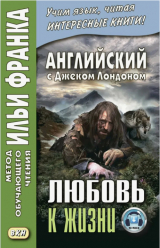
Текст книги "Английский язык с Дж. Лондоном. Любовь к жизни (рассказы)"
Автор книги: Джек Лондон
Соавторы: Илья Франк
Жанр:
Зарубежная классика
сообщить о нарушении
Текущая страница: 5 (всего у книги 33 страниц) [доступный отрывок для чтения: 14 страниц]
After he had drunk a quart of hot water the man found he was able to stand, and even to walk as well as a dying man might be supposed to walk. Every minute or so he was compelled to rest. His steps were feeble and uncertain, just as the wolf's that trailed him were feeble and uncertain; and that night, when the shining sea was blotted out by blackness, he knew he was nearer to it by no more than four miles.
Throughout the night he heard the cough of the sick wolf (на протяжении всей ночи он слышал кашель больного волка), and now and then the squawking of the caribou calves (и время от времени крики оленят; to squawk – вопить, пронзительно кричать). There was life all around him (повсюду вокруг него была жизнь), but it was strong life (но это была сильная жизнь), very much alive and well (очень бодрая и здоровая), and he knew the sick wolf clung to the sick man's trail in the hope (и он понял, что больной волк держался следа больного человека в надежде; to cling – цепляться; прилипать; крепко держаться /чего-либо/) that the man would die first (что человек умрет первым). In the morning, on opening his eyes (утром, открыв глаза), he beheld it regarding him with a wistful and hungry stare (он увидел его, глядящего на него томящимся и голодным взглядом). It stood crouched (он стоял, согнувшись), with tail between its legs (с хвостом между ног), like a miserable and woe-begone dog (как несчастная и печальная собака; woebegone – мрачный, горестный, печальный: «отягченный скорбью»; woe – горе, скорбь; бедствие). It shivered in the chill morning wind (он трясся на холодном утреннем ветру), and grinned dispiritedly (и уныло оскалился) when the man spoke to it in a voice (когда человек заговорил с ним голосом) that achieved no more than a hoarse whisper (который достиг = возвысился не более, чем до сиплого шепота; to achieve – добиваться, достигать).
Throughout the night he heard the cough of the sick wolf, and now and then the squawking of the caribou calves. There was life all around him, but it was strong life, very much alive and well, and he knew the sick wolf clung to the sick man's trail in the hope that the man would die first. In the morning, on opening his eyes, he beheld it regarding him with a wistful and hungry stare. It stood crouched, with tail between its legs, like a miserable and woe-begone dog. It shivered in the chill morning wind, and grinned dispiritedly when the man spoke to it in a voice that achieved no more than a hoarse whisper.
The sun rose brightly (ярко взошло солнце), and all morning the man tottered and fell toward the ship on the shining sea (и все утро человек ковылял и падал в сторону корабля на сверкающей /глади/ моря). The weather was perfect (погода была превосходная). It was the brief Indian Summer of the high latitudes (это было короткое бабье лето высоких широт; Indian Summer – золотая осень, бабье лето /теплые дни в начале осени/). It might last a week (возможно, оно продлится неделю). To-morrow or next day it might be gone (/а/ может, завтра или на следующий день оно кончится).
In the afternoon the man came upon a trail (после полудня человек наткнулся на след). It was of another man (это был /след/ другого человека), who did not walk (который не шел), but who dragged himself on all fours (а который тащился вперед на четвереньках). The man thought it might be Bill (человек подумал, что это мог быть Билл), but he thought in a dull, uninterested way (но он подумал вяло, незаинтересованно: «в вялой, незаинтересованной манере»; way – способ, манера; образ действий). He had no curiosity (у него не было любопытства = пропало любопытство). In fact, sensation and emotion had left him (на самом деле ощущения и эмоции покинули его; to leave – покидать, оставлять). He was no longer susceptible to pain (он был больше невосприимчив к боли = он больше не воспринимал боль). Stomach and nerves had gone to sleep (желудок и нервы уснули). Yet the life that was in him drove him on (тем не менее, жизнь, которая была = оставалась в нем, толкала его вперед). He was very weary (он очень устал), but it refused to die (но она = жизнь отказывалась умирать). It was because it refused to die (именно потому, что она отказывалась умирать) that he still ate muskeg berries and minnows (он все еще ел болотные ягоды и гольянов), drank his hot water (пил кипяток), and kept a wary eye on the sick wolf (и наблюдал подозрительно за больным волком; to keep an eye on smth. – наблюдать за чем-либо; wary – подозрительный; настороженный).
The sun rose brightly, and all morning the man tottered and fell toward the ship on the shining sea. The weather was perfect. It was the brief Indian Summer of the high latitudes. It might last a week. To-morrow or next day it might be gone.
In the afternoon the man came upon a trail. It was of another man, who did not walk, but who dragged himself on all fours. The man thought it might be Bill, but he thought in a dull, uninterested way. He had no curiosity. In fact, sensation and emotion had left him. He was no longer susceptible to pain. Stomach and nerves had gone to sleep. Yet the life that was in him drove him on. He was very weary, but it refused to die. It was because it refused to die that he still ate muskeg berries and minnows, drank his hot water, and kept a wary eye on the sick wolf.
He followed the trail of the other man who dragged himself along (он пошел по следу другого человека, который тащился вперед), and soon came to the end of it (и вскоре пришел к его концу) – a few fresh-picked bones (несколько недавно обглоданных костей /там/) where the soggy moss was marked by the foot-pads of many wolves (где сырой мох был отмечен следами лап многих волков). He saw a squat moose-hide sack (он увидел короткий и толстый мешочек из лосиной кожи), mate to his own (товарищ его собственному), which had been torn by sharp teeth (который был разорван острыми зубами). He picked it up (он поднял его), though its weight was almost too much for his feeble fingers (хотя его вес был слишком велик для его немощных пальцев). Bill had carried it to the last (Билл нес его до последнего). Ha! ha (ха-ха)! He would have the laugh on Bill (он посмеется над Биллом; to have the laugh on smb. – посмеяться над кем-либо). He would survive and carry it to the ship in the shining sea (он выживет и донесет его до корабля в сверкающем море). His mirth was hoarse and ghastly (его веселье = ликование было сиплым и неприятным), like a raven's croak (как карканье ворона), and the sick wolf joined him (и больной волк присоединился к нему), howling lugubriously (скорбно завывая; lugubrious – скорбный, печальный, мрачный; траурный). The man ceased suddenly (человек вдруг перестал). How could he have the laugh on Bill if that were Bill (как он мог посмеяться над Биллом, если это был Билл); if those bones, so pinky-white and clean, were Bill (если эти кости, такие розово-белые и чистые, были Биллом)?
He followed the trail of the other man who dragged himself along, and soon came to the end of it – a few fresh-picked bones where the soggy moss was marked by the foot-pads of many wolves. He saw a squat moose-hide sack, mate to his own, which had been torn by sharp teeth. He picked it up, though its weight was almost too much for his feeble fingers. Bill had carried it to the last. Ha! ha! He would have the laugh on Bill. He would survive and carry it to the ship in the shining sea. His mirth was hoarse and ghastly, like a raven's croak, and the sick wolf joined him, howling lugubriously. The man ceased suddenly. How could he have the laugh on Bill if that were Bill; if those bones, so pinky-white and clean, were Bill?
He turned away (он отвернулся). Well, Bill had deserted him (ну, Билл бросил его); but he would not take the gold (но он не возьмет ни золото), nor would he suck Bill's bones (и не будет обсасывать кости Билла). Bill would have, though (хотя Билл и поступил бы так), had it been the other way around (если бы это было наоборот; the other way around – наоборот), he mused as he staggered on (размышлял он, идя, шатаясь, вперед; to stagger – шататься; идти шатаясь). He came to a pool of water (он подошел к луже воды). Stooping over in quest of minnows (наклонившись над ней в поисках гольянов), he jerked his head back as though he had been stung (он отдернул голову назад, словно его ужалили; to sting – жалить). He had caught sight of his reflected face (он увидел свое отраженное лицо = отражение своего лица; to catch sight of – заметить). So horrible was it (оно было так ужасно) that sensibility awoke long enough to be shocked (что чувствительность проснулась до достаточной степени: «достаточно далеко», чтобы оказаться потрясенной; to shock – производить сильное впечатление, поражать, потрясать; to awake). There were three minnows in the pool (было три гольяна в луже), which was too large to drain (которая была слишком велика, чтобы ее осушить = вычерпать; to drain – осушать, отводить воду); and after several ineffectual attempts to catch them in the tin bucket he forbore (и после нескольких безрезультатных попыток поймать их в оловянное ведро, он воздержался = прекратил; to forbear – сдерживаться, воздерживаться). He was afraid (он боялся), because of his great weakness (из-за своей большой слабости), that he might fall in and drown (что он может упасть в воду и утонуть). It was for this reason that he did not trust himself to the river astride one of the many drift-logs (именно по этой причине он не доверил себя реке, /чтобы плыть/ верхом на одном из многих плавучих бревен) which lined its sand-spits (которые выстроились вдоль ее длинных песчаных отмелей; to line – выстраиваться, тянуться вдоль; spit – длинная отмель; намывная коса).
He turned away. Well, Bill had deserted him; but he would not take the gold, nor would he suck Bill's bones. Bill would have, though, had it been the other way around, he mused as he staggered on. He came to a pool of water. Stooping over in quest of minnows, he jerked his head back as though he had been stung. He had caught sight of his reflected face. So horrible was it that sensibility awoke long enough to be shocked. There were three minnows in the pool, which was too large to drain; and after several ineffectual attempts to catch them in the tin bucket he forbore. He was afraid, because of his great weakness, that he might fall in and drown. It was for this reason that he did not trust himself to the river astride one of the many drift-logs which lined its sand-spits.
That day he decreased the distance between him and the ship by three miles (в тот день он уменьшил расстояние между ним и кораблем на три мили); the next day by two (в следующий день на две) – for he was crawling now as Bill had crawled (ибо теперь он полз, как полз Билл); and the end of the fifth day found the ship still seven miles away and him unable to make even a mile a day (а конец пятого дня застал корабль все еще в семи милях от него, а он был не в состоянии проходить даже милю в день). Still the Indian Summer held on (все еще стояло бабье лето; to hold on – продолжать делать что-либо, упорствовать в чем-либо), and he continued to crawl and faint (а он продолжал ползти и терять сознание), turn and turn about (попеременно /то полз, то терял сознание/; turn and turn about – попеременно); and ever the sick wolf coughed and wheezed at his heels (и постоянно больной волк кашлял и хрипел следом за ним; at smb.'s heels – по пятам, следом за кем-либо). His knees had become raw meat like his feet (его колени стали сырым мясом, как его ступни), and though he padded them with the shirt from his back (и хотя он обмотал их рубахой со спины; to pad – подбивать/набивать волосом или ватой; подкладывать что-либо мягкое) it was a red track he left behind him on the moss and stones (на мху и камнях за собой он оставлял окровавленный след; red – красный; окровавленный, запачканный кровью). Once, glancing back (однажды, оглянувшись), he saw the wolf licking hungrily his bleeding trail (он увидел, как волк жадно лижет его кровавый след), and he saw sharply what his own end might be (и он внезапно понял, каким может стать его собственный конец) – unless – unless he could get the wolf (если – если он не сможет достать = убить волка). Then began as grim a tragedy of existence as was ever played (тогда началась та беспощадная трагедия жизни = трагическая борьба за жизнь, какая только когда-нибудь разыгрывалась; ever – всегда; когда-либо; хотя бы, только) – a sick man that crawled (больной человек, который полз = ползущий больной человек), a sick wolf that limped (больной волк, который хромал = хромающий больной волк), two creatures dragging their dying carcasses across the desolation and hunting each other's lives (два существа, волочащие свои умирающие оболочки через пустошь и охотящиеся за жизнью друг друга; carcass – туша; оболочка; каркас, остов).
That day he decreased the distance between him and the ship by three miles; the next day by two – for he was crawling now as Bill had crawled; and the end of the fifth day found the ship still seven miles away and him unable to make even a mile a day. Still the Indian Summer held on, and he continued to crawl and faint, turn and turn about; and ever the sick wolf coughed and wheezed at his heels. His knees had become raw meat like his feet, and though he padded them with the shirt from his back it was a red track he left behind him on the moss and stones. Once, glancing back, he saw the wolf licking hungrily his bleeding trail, and he saw sharply what his own end might be – unless – unless he could get the wolf. Then began as grim a tragedy of existence as was ever played – a sick man that crawled, a sick wolf that limped, two creatures dragging their dying carcasses across the desolation and hunting each other's lives.
Had it been a well wolf (если бы это был здоровый волк), it would not have mattered so much to the man (это не имело бы такого значения для человека); but the thought of going to feed the maw of that loathsome and all but dead thing was repugnant to him (но мысль о том, чтобы накормить брюхо этого омерзительной и почти мертвой твари, была невыносима для него; all but – почти, едва не). He was finicky (он был разборчив; finicky – изощренный, разборчивый). His mind had begun to wander again (его разум снова начал блуждать), and to be perplexed by hallucinations (и сбиваться с толку галлюцинациями; perplexed – озадаченный, сбитый с толку, растерянный, ошеломленный), while his lucid intervals grew rarer and shorter (в то время как его промежутки здравомыслия становились реже и короче).
Had it been a well wolf, it would not have mattered so much to the man; but the thought of going to feed the maw of that loathsome and all but dead thing was repugnant to him. He was finicky. His mind had begun to wander again, and to be perplexed by hallucinations, while his lucid intervals grew rarer and shorter.
He was awakened once from a faint by a wheeze close in his ear (однажды его от обморока пробудила одышка возле самого уха). The wolf leaped lamely back (волк, спотыкаясь, отскочил назад), losing its footing and falling in its weakness (теряя опору для ног и падая от слабости). It was ludicrous (это было смешно), but he was not amused (но его это не позабавило). Nor was he even afraid (он даже не боялся). He was too far gone for that (он слишком далеко зашел для этого). But his mind was for the moment clear (но его разум на минуту прояснился), and he lay and considered (и он лег и подумал). The ship was no more than four miles away (корабль был не более, чем в четырех милях прочь = от него). He could see it quite distinctly (он видел его совершенно отчетливо) when he rubbed the mists out of his eyes (когда вытирал туман из глаз), and he could see the white sail of a small boat cutting the water of the shining sea (и он видел белый парус маленькой лодки, разрезающей воду сверкающего моря). But he could never crawl those four miles (но он никогда бы не смог проползти эти четыре мили). He knew that, and was very calm in the knowledge (он знал это и был очень спокоен в этом знании = сознавая это). He knew that he could not crawl half a mile (он знал, что не может проползти полмили). And yet he wanted to live (и, тем не менее, он хотел жить). It was unreasonable that he should die after all he had undergone (было неразумно, чтобы он умер после всего, что он перенес; to undergo – испытывать, переносить). Fate asked too much of him (судьба слишком много требовала от него). And, dying, he declined to die (и умирая, он отказался умирать). It was stark madness, perhaps (возможно, это было полнейшее безумие; stark – голый, нагой; абсолютный, полный, совершенный, полнейший), but in the very grip of Death he defied Death and refused to die (но именно /будучи/ в хватке Смерти он бросил вызов Смерти и отказался умирать; to defy – вызывать, бросать вызов; противостоять, сопротивляться).
He was awakened once from a faint by a wheeze close in his ear. The wolf leaped lamely back, losing its footing and falling in its weakness. It was ludicrous, but he was not amused. Nor was he even afraid. He was too far gone for that. But his mind was for the moment clear, and he lay and considered. The ship was no more than four miles away. He could see it quite distinctly when he rubbed the mists out of his eyes, and he could see the white sail of a small boat cutting the water of the shining sea. But he could never crawl those four miles. He knew that, and was very calm in the knowledge. He knew that he could not crawl half a mile. And yet he wanted to live. It was unreasonable that he should die after all he had undergone. Fate asked too much of him. And, dying, he declined to die. It was stark madness, perhaps, but in the very grip of Death he defied Death and refused to die.
He closed his eyes and composed himself with infinite precaution (он закрыл глаза и с безмерной предосторожностью успокоил себя/взял себя в руки; to compose – улаживать, успокаивать). He steeled himself to keep above the suffocating languor (он превратил себя в сталь/преисполнился решимости, чтобы удержаться над удушающей слабостью; to steel – преобразовать в сталь /о железе/; придавать силу, решимость) that lapped like a rising tide through all the wells of his being (которая плескалась, как поднимающийся прилив, через все источники/родники его бытия). It was very like a sea, this deadly languor (она была очень похожа на море, эта смертельная слабость), that rose and rose and drowned his consciousness (которая поднималась и поднималась, и мало-помалу затапливала его сознание; bit by bit – мало-помалу, понемногу, постепенно). Sometimes he was all but submerged (иногда он почти тонул: «оказывался затопленным, погруженным под воду»; to submerge – окунать; опускать, погружать под воду; затоплять), swimming through oblivion with a faltering stroke (плывя сквозь забвение неуверенными взмахами); and again, by some strange alchemy of soul (и опять, по какой-то странной алхимии души), he would find another shred of will and strike out more strongly (он находил еще одну крупицу воли и бросался вперед более энергично; shred – клочок, кусочек, обрывок; капля, крупица, частица /о чем-либо нематериальном/; to strike – ударять; пробивать, проникать сквозь что-либо; strongly – интенсивно; энергично, решительно; to strike out – направляться; атаковать; бросаться).
He closed his eyes and composed himself with infinite precaution. He steeled himself to keep above the suffocating languor that lapped like a rising tide through all the wells of his being. It was very like a sea, this deadly languor, that rose and rose and drowned his consciousness bit by bit. Sometimes he was all but submerged, swimming through oblivion with a faltering stroke; and again, by some strange alchemy of soul, he would find another shred of will and strike out more strongly.
Without movement he lay on his back (неподвижно он лежал на спине), and he could hear (и слышал), slowly drawing near and nearer (медленно приближающееся ближе и ближе; to draw near – подходить, приближаться), the wheezing intake and output of the sick wolf's breath (свистящие вдохи и выдохи /дыхания/ больного волка). It drew closer, ever closer (он приблизился ближе, еще ближе), through an infinitude of time (сквозь бесконечность времени), and he did not move (а он не двигался). It was at his ear (он был у его уха). The harsh dry tongue grated like sandpaper against his cheek (шершавый сухой язык потерся, как наждачная бумага, о его щеку). His hands shot out (его руки вылетели = он выбросил вперед руки; to shoot out – выскакивать, вылетать) – or at least he willed them to shoot out (или, по крайней мере, он пожелал, чтобы они вылетели). The fingers were curved like talons (пальцы были изогнуты, как когти), but they closed on empty air (но они сомкнулись на пустом воздухе). Swiftness and certitude require strength (стремительность и уверенность требуют силы), and the man had not this strength (а у человека не было этой силы).
Without movement he lay on his back, and he could hear, slowly drawing near and nearer, the wheezing intake and output of the sick wolf's breath. It drew closer, ever closer, through an infinitude of time, and he did not move. It was at his ear. The harsh dry tongue grated like sandpaper against his cheek. His hands shot out – or at least he willed them to shoot out. The fingers were curved like talons, but they closed on empty air. Swiftness and certitude require strength, and the man had not this strength.
The patience of the wolf was terrible (терпение волка было громадным; terrible – внушающий страх, ужас; страшный, ужасный; громадный). The man's patience was no less terrible (терпение человека было не менее громадным). For half a day he lay motionless (полдня он лежал неподвижно), fighting off unconsciousness and waiting for the thing that was to feed upon him (отбиваясь от потери сознания и ожидая тварь, которая должна была съесть его; unconsciousness – патологическое оцепенение, бессознательное состояние; to feed upon – питаться чем-либо) and upon which he wished to feed (и которую желал съесть он). Sometimes the languid sea rose over him and he dreamed long dreams (иногда море апатии накатывало на него, и ему снились долгие сны; languid – слабый, ослабевший; вялый; апатичный, бездеятельный); but ever through it all, waking and dreaming (но постоянно на протяжении всего этого, бодрствующий и грезящий), he waited for the wheezing breath and the harsh caress of the tongue (он ожидал свистящего дыхания и шероховатой ласки языка).
The patience of the wolf was terrible. The man's patience was no less terrible. For half a day he lay motionless, fighting off unconsciousness and waiting for the thing that was to feed upon him and upon which he wished to feed. Sometimes the languid sea rose over him and he dreamed long dreams; but ever through it all, waking and dreaming, he waited for the wheezing breath and the harsh caress of the tongue.
He did not hear the breath (он не услышал дыхания), and he slipped slowly from some dream to the feel of the tongue along his hand (и он медленно и плавно перешел от какого-то сна к ощущению прикосновения языка на руке; to slip – скользить; плавно переходить /из одного состояния в другое, от одного к другому/; feel – ощущение от прикосновения). He waited (он подождал). The fangs pressed softly (клыки мягко нажали); the pressure increased (давление увеличилось); the wolf was exerting its last strength in an effort to sink teeth in the food (волк напрягал свои последние силы в попытке погрузить зубы в пищу) for which it had waited so long (которой он так долго дожидался). But the man had waited long (но человек долго дожидался /этого момента/), and the lacerated hand closed on the jaw (и истерзанная рука сомкнулась на челюсти). Slowly, while the wolf struggled feebly and the hand clutched feebly (медленно, пока волк слабо боролся, а рука слабо сжимала), the other hand crept across to a grip (другая рука подкралась к хватке = чтобы схватить; to creep – ползти). Five minutes later the whole weight of the man's body was on top of the wolf (пять минут спустя весь вес тела человека был = лежал поверх волка; on top of – поверх). The hands had not sufficient strength to choke the wolf (руки не имели = в руках не было достаточно силы, чтобы задушить волка), but the face of the man was pressed close to the throat of the wolf (но лицо человека было прижато близко = вплотную к горлу волка) and the mouth of the man was full of hair (и рот человека был полон шерсти). At the end of half an hour the man was aware of a warm trickle in his throat (по истечении получаса человек ощутил теплую струйку в горле). It was not pleasant (она была неприятной). It was like molten lead being forced into his stomach (она была словно расплавленный свинец, вливаемый ему в желудок; to melt – таять; плавить/ся/; to force – оказывать давление, заставлять, принуждать, запихивать, заталкивать; force – сила; насилие), and it was forced by his will alone (и ее вливали лишь по его воле). Later the man rolled over on his back and slept (позже мужчина перевернулся на спину и заснул).
He did not hear the breath, and he slipped slowly from some dream to the feel of the tongue along his hand. He waited. The fangs pressed softly; the pressure increased; the wolf was exerting its last strength in an effort to sink teeth in the food for which it had waited so long. But the man had waited long, and the lacerated hand closed on the jaw. Slowly, while the wolf struggled feebly and the hand clutched feebly, the other hand crept across to a grip. Five minutes later the whole weight of the man's body was on top of the wolf. The hands had not sufficient strength to choke the wolf, but the face of the man was pressed close to the throat of the wolf and the mouth of the man was full of hair. At the end of half an hour the man was aware of a warm trickle in his throat. It was not pleasant. It was like molten lead being forced into his stomach, and it was forced by his will alone. Later the man rolled over on his back and slept.
* * *
There were some members of a scientific expedition on the whale-ship Bedford (на китобойном судне «Бедфорд» было несколько членов научной экспедиции). From the deck they remarked a strange object on the shore (с палубы они заметили странный предмет на берегу). It was moving down the beach toward the water (он двигался вниз по берегу к воде). They were unable to classify it (они не смогли классифицировать его), and, being scientific men (и будучи учеными), they climbed into the whale-boat alongside and went ashore to see (они забрались в вельбот у борта и отправились на берег выяснить). And they saw something that was alive (и они увидели нечто, которое было живым = нечто живое) but which could hardly be called a man (но что едва ли можно было назвать человеком). It was blind, unconscious (оно было незрячим, без сознания). It squirmed along the ground like some monstrous worm (оно двигалось, извиваясь по земле, как какой-то гигантский червь). Most of its efforts were ineffectual (большинство его усилий были бесплодны), but it was persistent (но оно было настойчивым; to persist – настаивать), and it writhed and twisted and went ahead perhaps a score of feet an hour (и оно корчилось, и изгибалось, и двигалось вперед, возможно, /со скоростью/ двадцати футов в час).
There were some members of a scientific expedition on the whale-ship Bedford. From the deck they remarked a strange object on the shore. It was moving down the beach toward the water. They were unable to classify it, and, being scientific men, they climbed into the whale-boat alongside and went ashore to see. And they saw something that was alive but which could hardly be called a man. It was blind, unconscious. It squirmed along the ground like some monstrous worm. Most of its efforts were ineffectual, but it was persistent, and it writhed and twisted and went ahead perhaps a score of feet an hour.
* * *
Three weeks afterward the man lay in a bunk on the whale-ship Bedford (три недели спустя человек лежал в койке на китобойном судне «Бедфорд»), and with tears streaming down his wasted cheeks told (и со слезами, стекающими по его исхудавшим щекам, рассказал) who he was and what he had undergone (кто он, и что он испытал; to undergo – испытывать, переносить). He also babbled incoherently of his mother (он также бессвязно бормотал о своей матери), of sunny Southern California (о солнечной Южной Калифорнии), and a home among the orange groves and flowers (и доме среди апельсиновых рощ и цветов).
The days were not many after that when he sat at table with the scientific men and ship's officers (было = прошло немного = несколько дней после этого, когда он /уже/ сидел за столом с учеными и офицерами корабля). He gloated over the spectacle of so much food (он пожирал глазами зрелище такого большого количества пищи; to gloat over – пожирать глазами), watching it anxiously as it went into the mouths of others (наблюдая за ней тревожно/с беспокойством, когда она отправлялась во рты других). With the disappearance of each mouthful an expression of deep regret came into his eyes (с исчезновением каждого куска в его глазах появлялось выражение глубокого сожаления). He was quite sane (он был совершенно в здравом уме; sane – нормальный, в своем уме, в здравом уме), yet he hated those men at meal-time (тем не менее, он ненавидел этих людей во время еды). He was haunted by a fear that the food would not last (его мучил страх, что еды не хватит; to haunt – мучить; не давать покоя; to last – продолжаться, длиться; хватать, быть достаточным). He inquired of the cook, the cabin-boy, the captain, concerning the food stores (он расспрашивал кока, юнгу, капитана о запасах еды). They reassured him countless times (бессчетное число раз они успокаивали его); but he could not believe them (но он не мог им поверить), and pried cunningly about the lazarette to see with his own eyes (и хитро с любопытством разглядывал кладовую, чтобы убедиться собственными глазами; to pry about – высматривать; с любопытством разглядывать; lazaretto – складское помещение /между палубами на судне/, кладовая).