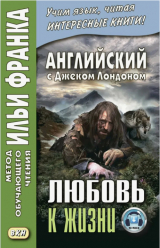
Текст книги "Английский язык с Дж. Лондоном. Любовь к жизни (рассказы)"
Автор книги: Джек Лондон
Соавторы: Илья Франк
Жанр:
Зарубежная классика
сообщить о нарушении
Текущая страница: 11 (всего у книги 33 страниц) [доступный отрывок для чтения: 14 страниц]
No hope; nothing to be done. The pitiless night crept slowly by, – Ruth's portion, the despairing stoicism of her race, and Malemute Kid adding new lines to his face of bronze. In fact, Mason suffered least of all, for he spent his time in Eastern Tennessee, in the Great Smoky Mountains, living over the scenes of his childhood. And most pathetic was the melody of his long-forgotten Southern vernacular, as he raved of swimming-holes and coon-hunts and watermelon raids. It was as Greek to Ruth, but the Kid understood and felt, – felt as only one can feel who has been shut out for years from all that civilization means.
Morning brought consciousness to the stricken man (утро принесло сознание раненому мужчине = утром раненый мужчина пришел в сознание), and Malemute Kid bent closer to catch his whispers (и Малыш Мейлмьют наклонился ближе, чтобы уловить его шепот).
"You remember when we foregathered on the Tanana (ты помнишь, как мы встретились на Танане), four years come next ice-run (в следующий ледоход будет четыре года; to run – бежать; плавиться, таять, течь /в результате таяния/)? I didn't care so much for her then (я не любил ее так сильно тогда; to care for – нравиться, любить). It was more like she was pretty (скорее, она была хорошенькая), and there was a smack of excitement about it, think (и в этом, мне кажется, был волнующий момент; smack – привкус, след, налет; признак; намек). But d'ye[6] know (но знаешь), I've come to think a heap of her (я стал очень высоко ценить ее; heap – куча, груда; /разг./ масса, уйма, много; to think a heap of smb. – быть высокого мнения о ком-либо, души не чаять в ком-либо, любить кого-либо, высоко ценить кого-либо). She's been a good wife to me (она была мне хорошей женой), always at my shoulder in the pinch (в трудной ситуации всегда у моего плеча; pinch – щипок; сжатие; крайняя нужда; стесненное положение; трудности, неприятности, невзгоды). And when it comes to trading, you know there isn't her equal (а что касается торговли, ты знаешь, что ей нет равных).
Morning brought consciousness to the stricken man, and Malemute Kid bent closer to catch his whispers.
"You remember when we foregathered on the Tanana, four years come next ice-run? I didn't care so much for her then. It was more like she was pretty, and there was a smack of excitement about it, think. But d' ye know, I've come to think a heap of her. She's been a good wife to me, always at my shoulder in the pinch. And when it comes to trading, you know there isn't her equal.
D'ye recollect the time she shot the Moosehorn Rapids to pull you and me off that rock (ты помнишь то время, /когда/ она неслась по стремнине /на реке/ Мусхорн[7], чтобы снять тебя и меня с той скалы; to shoot rapids – нестись по стремнине), the bullets whipping the water like hailstones (/и при этом/ пули лупили по воде, как град)? – and the time of the famine at Nuklukyeto (а голодное время: «время голода» в Нуклукето)? – or when she raced the ice-run to bring the news (или когда она мчалась по ледоходу, чтобы доставить новости)? Yes, she's been a good wife to me (да, она была мне хорошей женой), better 'n that other one (лучше той другой; 'n = than – чем). Didn't know I'd been there (/ты/ не знал, /что/ я /уже/ был /женат/; there – там; туда; здесь, тут, в этом отношении)? Never told you, eh (никогда не говорил тебе, да)? Well, I tried it once, down in the States (ну, я попробовал разок, /там/ на юге, в Штатах; down – вниз; к югу, на юг). That 's why I 'm here (вот почему я здесь). Been raised together, too (мы и выросли вместе; too – тоже, к тому же). I came away to give her a chance for divorce (я уехал /сюда/, чтобы дать ей шанс для развода). She got it (она получила его).
D'ye recollect the time she shot the Moosehorn Rapids to pull you and me off that rock, the bullets whipping the water like hailstones? – and the time of the famine at Nuklukyeto? – or when she raced the ice-run to bring the news? Yes, she's been a good wife to me, better 'n that other one. Didn't know I'd been there? Never told you, eh? Well, I tried it once, down in the States. That 's why I 'm here. Been raised together, too. I came away to give her a chance for divorce. She got it.
"But that's got nothing to do with Ruth (но это не имеет никакого отношения к Руфи). I had thought of cleaning up and pulling for the Outside next year (я собирался уладить /тут/ все дела и двинуть на Большую Землю в следующем году; to think of – намереваться; замышлять; to clean up – приводить в порядок; заканчивать начатую работу), – her and I (она и я), – but it's too late (но слишком поздно). Don't send her back to her people (не отправляй ее обратно к ее народу), Kid (Малыш). It's beastly hard for a woman to go back (женщине ужасно: «зверски» тяжело возвращаться). Think of it (только подумай)! – nearly four years on our bacon and beans and flour and dried fruit (почти четыре года на нашем беконе, бобах, муке и сухофруктах), and then to go back to her fish and caribou (а потом вернуться к рыбе и оленине; caribou – карибу /северный канадский олень, чье мясо маринуют/). It's not good for her to have tried our ways (не годится ей /сначала/ попробовать наши обычаи), to come to know they're better 'n her people's (узнать, что они лучше, чем у ее народа), and then return to them (а потом вернуться к ним = к своим). Take care of her, Kid (позаботься о ней, Малыш; to take care of – заботиться), – why don't you (почему бы тебе), – but no, you always fought shy of them (но нет, ты всегда избегал их; to fight shy of – избегать; shy – пугливый; застенчивый, робкий), – and you never told me why you came to this country (и ты никогда не рассказывал мне, почему ты приехал в этот край). Be kind to her (будь добр к ней), and send her back to the States as soon as you can (и отправь ее обратно в Штаты, как только сможешь). But fix it so as she can come back (но устрой так, чтобы она могла вернуться; to fix – устраивать; улаживать), – liable to get homesick, you know (знаешь, /мы все/ склонны к тоске по родине; liable – подверженный, склонный; уязвимый; to get – получать; становиться, делаться; homesick – тоскующий по дому, по родине).
"But that's got nothing to do with Ruth. I had thought of cleaning up and pulling for the Outside next year, – her and I, – but it's too late. Don't send her back to her people, Kid. It's beastly hard for a woman to go back. Think of it! – nearly four years on our bacon and beans and flour and dried fruit, and then to go back to her fish and cariboo. It's not good for her to have tried our ways, to come to know they're better 'n her people's, and then return to them. Take care of her, Kid, – why don't you, – but no, you always fought shy of them, – and you never told me why you came to this country. Be kind to her, and send her back to the States as soon as you can. But fix it so as she can come back, – liable to get homesick, you know.
"And the youngster (а ребенок; youngster – ребенок; подросток) – it's drawn us closer, Kid (он сблизил нас еще больше, Малыш; to draw close – сближать). I only hope it is a boy (я только надеюсь, что это мальчик). Think of it (только подумай)! – flesh of my flesh, Kid (Малыш, плоть от моей плоти). He mustn't stop in this country (он не должен оставаться здесь: «в этой стране»). And if it's a girl, why, she can't (а если это девочка, то тем более: «ох, она не может»). Sell my furs (продай мои меха); they'll fetch at least five thousand (они принесут, по меньшей мере, пять тысяч; to fetch – приносить; выручать, получать, зарабатывать /о продающемся товаре/), and I've got as much more with the company (и у меня столько же еще у компании = и столько же еще должна Компания; as much – столько же; more – больше, еще). And handle my interests with yours (и управляй моими капиталами /вместе/ с твоими; to handle – обходиться, обращаться; управляться, справляться с кем-либо, чем-либо; interest – интерес; доля в бизнесе; капиталовложения; проценты, доход). I think that bench claim will show up (я думаю, тот горный участок /еще/ покажет себя; bench – скамья; берма, терраса, рабочая площадка уступа /на открытых горных работах/; claim – требование; участок земли, отведенный под разработку недр; заявка на отвод участка; to show up – выявляться, проявиться /о недостатках или преимуществах/). See that he gets a good schooling (присмотри /за тем/, чтобы он получил хорошее образование); and Kid, above all, don't let him come back (и, Малыш, самое главное, не позволяй ему возвращаться; above all – прежде всего, главным образом, в основном; больше всего). This country was not made for white men (эта страна не была создана = это место не подходит для белых людей). I'm a gone man, Kid (я конченый человек, Малыш; gone – пропащий, потерянный; умерший). Three or four sleeps at the best (в лучшем случае три или четыре ночевки). You've got to go on (тебе нужно двигаться вперед). You must go on (ты должен ехать дальше)! Remember, it's my wife, it's my boy (помни, это моя жена, это мой мальчик), – O God (о Боже)! I hope it's a boy (я надеюсь, это мальчик)! You can't stay by me (ты не можешь оставаться со мной; by – у, при, около, возле, рядом с), – and charge you, a dying man, to pull on (и /я/, умирающий человек, приказываю тебе двигаться дальше; to charge – нагружать; приказывать, требовать)."
«And the youngster – it's drawn us closer, Kid. I only hope it is a boy. Think of it! – flesh of my flesh, Kid. He mustn't stop in this country. And if it's a girl, why, she can't. Sell my furs; they'll fetch at least five thousand, and I've got as much more with the company. And handle my interests with yours. I think that bench claim will show up. See that he gets a good schooling; and Kid, above all, don't let him come back. This country was not made for white men. I'm a gone man, Kid. Three or four sleeps at the best. You've got to go on. You must go on! Remember, it's my wife, it's my boy, – O God! I hope it's a boy! You can't stay by me, – and charge you, a dying man, to pull on.»
«Give me three days (дай мне три дня),» pleaded Malemute Kid (умолял Малыш Мейлмьют). "You may change for the better (возможно, тебе станет лучше; to change for the better – изменяться к лучшему); something may turn up (может, все образуется: «возможно, что-нибудь подвернется»; to turn up – загибать; внезапно появляться; подвернуться; случаться; turn-up – отворот; счастливый случай, удача; неожиданность)."
"No (нет)."
"Just three days (только три дня)."
"You must pull on (ты должен ехать дальше)."
"Two days (два дня)."
"It's my wife and my boy, Kid (это моя жена и мой мальчик). You would not ask it (не проси)."
"One day (один день)."
"No, no (нет, нет)! I charge (я требую)" —
«Give me three days,» pleaded Malemute Kid. «You may change for the better; something may turn up.»
"No."
"Just three days."
"You must pull on."
"Two days."
"It's my wife and my boy, Kid. You would not ask it."
"One day."
"No, no! I charge" —
"Only one day (всего лишь один день). We can shave it through on the grub (мы можем растянуть еду; to shave – брить/ся/; урезать, сокращать; through – через; в течение, на протяжении /всего промежутка времени/), and might knock over a moose (и, может, завалим лося; to knock over – сбивать)."
"No, – all right (нет, – ладно); one day (один день), but not a minute more (но ни минутой больше). And Kid, don't – don't leave me to face it alone (и, Малыш, не – не оставляй меня столкнуться с этим одному = не оставляй меня одного перед лицом смерти; to face – смотреть в лицо, в глаза). Just a shot, one pull on the trigger (только один выстрел, одно нажатие на курок). You understand (ты понимаешь). Think of it (только подумай)! Think of it! Flesh of my flesh (плоть от моей плоти), and I'll never live to see him (а я никогда = ни за что не доживу, чтобы увидеть его)!
«Only one day. We can shave it through on the grub, and might knock over a moose.»
"No, – all right; one day, but not a minute more. And Kid, don't – don't leave me to face it alone. Just a shot, one pull on the trigger. You understand. Think of it! Think of it! Flesh of my flesh, and I'll never live to see him!
"Send Ruth here (пришли сюда Руфь). I want to say good-by and tell her (я хочу попрощаться с ней и сказать ей) that she must think of the boy and not wait till I'm dead (что она должна думать о мальчике и не ждать, пока я умру; to think of – заботиться, беспокоиться). She might refuse to go with you if I didn't (она могла бы и отказаться идти с тобой, если бы я не /сказал/). Good-by, old man; good-by (прощай, старина, прощай).
"Kid (Малыш)! I say (послушай) – a – sink a hole above the pup (выкопай яму над половинкой кирпича; to sink – опускаться; выкапывать, копать; pup – щенок; продольная половинка кирпича), next to the slide (рядом с желобом). I panned out forty cents on my shovel there (я намывал там сорок центов на лопату; to pan out – намывать, давать золото /о песке/; shovel – лопата, совок).
"And Kid (и, Малыш)!" he stooped lower to catch the last faint words (он наклонился ниже, чтобы уловить последние едва различимые слова; faint – слабый; недостаточный для физического или умственного восприятия), the dying man's surrender of his pride (отказ умирающего человека от своей гордыни; surrender – отказ /от чего-либо/). «I'm sorry – for – you know – Carmen (прости, ты знаешь, за Кармен).»
"Send Ruth here. I want to say good-by and tell her that she must think of the boy and not wait till I'm dead. She might refuse to go with you if I didn't. Good-by, old man; good-by.
"Kid! I say – a – sink a hole above the pup, next to the slide. I panned out forty cents on my shovel there.
"And Kid!" he stooped lower to catch the last faint words, the dying man's surrender of his pride. "I'm sorry – for – you know – Carmen."
Leaving the girl crying softly over her man (оставив девушку тихо плакать над своим мужем), Malemute Kid slipped into his parka and snowshoes (Малыш Мейлмьют быстро надел свою куртку и снегоступы; to slip into – быстро одеться; parka – парка /длинная куртка с капюшоном/), tucked his rifle under his arm (засунул ружье под мышку), and crept away into the forest (и отправился в лес; to creep – ползать; красться; медленно двигаться; away – прочь). He was no tyro in the stern sorrows of the Northland (он был не новичок в = в борьбе с суровыми невзгодами Севера), but never had he faced so stiff a problem as this (но никогда перед ним не вставала такая серьезная проблема, как эта; to face – стоять перед кем-либо /о задаче, проблеме/; a stiff problem – серьезная проблема; stiff – тугой, негибкий, неэластичный, жесткий). In the abstract, it was a plain, mathematical proposition (теоретически, это была простая математическая задача; in the abstract – отвлеченно, абстрактно; теоретически; proposition – предложение; заявление; дело, проблема), – three possible lives as against one doomed one (три возможных жизни против одной обреченной; to doom – предназначать, обрекать, предопределять; doom – рок, судьба, фатум). But now he hesitated (но теперь он заколебался). For five years, shoulder to shoulder (пять лет, плечом к плечу), on the rivers and trails (на реках и тропах), in the camps and mines (в лагерях и на приисках), facing death by field and flood and famine (глядя в глаза смерти в бою, при паводках и голоде; field – поле; поле сражения, поле боя; битва, сражение), had they knitted the bonds of their comradeship (крепили они узы своей дружбы: «товарищества»; to knit – вязать; соединять, скреплять). So close was the tie (так прочна была эта связь; close – близкий; неразлучный), that he had often been conscious of a vague jealousy of Ruth (что он часто ощущал смутную ревность к Руфи; conscious – ощущающий), from the first time she had come between (с первого раза = с первой минуты, как она встала между ними). And now it must be severed by his own hand (а теперь нужно эту связь: «ее» разорвать его же собственной рукой).
Leaving the girl crying softly over her man, Malemute Kid slipped into his parka and snowshoes, tucked his rifle under his arm, and crept away into the forest. He was no tyro in the stern sorrows of the Northland, but never had he faced so stiff a problem as this. In the abstract, it was a plain, mathematical proposition, – three possible lives as against one doomed one. But now he hesitated. For five years, shoulder to shoulder, on the rivers and trails, in the camps and mines, facing death by field and flood and famine, had they knitted the bonds of their comradeship. So close was the tie, that he had often been conscious of a vague jealousy of Ruth, from the first time she had come between. And now it must be severed by his own hand.
Though he prayed for a moose (хотя он молился о лосе), just one moose (лишь об одном лосе), all game seemed to have deserted the land (вся дичь, казалось, покинула эти земли), and nightfall found the exhausted man crawling into camp (и сумерки застали обессиленного мужчину медленно идущим на место привала; camp – лагерь; место привала, ночевки /часто на открытом воздухе/), light-handed, heavy-hearted (с легкими = пустыми руками и тяжелым сердцем = с легкостью в руках и с тяжестью на сердце). An uproar from the dogs and shrill cries from Ruth hastened him (шум = лай собак и пронзительные крики Руфи поторопили его; uproar – гам, гудение, гул, шум).
Though he prayed for a moose, just one moose, all game seemed to have deserted the land, and nightfall found the exhausted man crawling into camp, light-handed, heavy-hearted. An uproar from the dogs and shrill cries from Ruth hastened him.
Bursting into the camp (ворвавшись в лагерь), he saw the girl in the midst of the snarling pack (он увидел девушку среди рычащей своры), laying about her with an axe (наносящую удары топором направо и налево; to lay about one – наносить удары направо и налево). The dogs had broken the iron rule of their masters and were rushing the grub (собаки нарушили железное правило хозяев и набросились на жратву; to rush – набрасываться; стремительно тащить; брать штурмом, стремительным натиском). He joined the issue with his rifle reversed (он присоединился /к разрешению/ проблемы, перевернув ружье = взяв ружье за ствол; issue – выход; выпуск; проблема, спорный вопрос; предмет тяжбы), and the hoary game of natural selection was played out with all the ruthlessness of its primeval environment (и со всей беспощадностью первозданного окружения разыгралась древняя игра в естественный отбор; hoary – древний; освященный веками). Rifle and axe went up and down (поднимались и опускались ружье и топор), hit or missed with monotonous regularity (попадая или промахиваясь с монотонной регулярностью); lithe bodies flashed, with wild eyes and dripping fangs (мелькали гибкие тела с дикими глазами и влажными клыками); and man and beast fought for supremacy to the bitterest conclusion (а человек и зверь бились за превосходство до мучительного исхода; bitter – горький, мучительный; conclusion – конец, финал, завершение). Then the beaten brutes crept to the edge of the firelight (потом избитые твари отползли к краю света от костра), licking their wounds (зализывая раны), voicing their misery to the stars (высказывая свое страдание звездам).
Bursting into the camp, he saw the girl in the midst of the snarling pack, laying about her with an axe. The dogs had broken the iron rule of their masters and were rushing the grub. He joined the issue with his rifle reversed, and the hoary game of natural selection was played out with all the ruthlessness of its primeval environment. Rifle and axe went up and down, hit or missed with monotonous regularity; lithe bodies flashed, with wild eyes and dripping fangs; and man and beast fought for supremacy to the bitterest conclusion. Then the beaten brutes crept to the edge of the firelight, licking their wounds, voicing their misery to the stars.
The whole stock of dried salmon had been devoured (весь запас вяленой лососины был уничтожен; to devour – пожирать; поглощать; уничтожать), and perhaps five pounds of flour remained (и осталось, может, пять фунтов муки) to tide them over two hundred miles of wilderness (чтобы они продержались = на преодоление двухсот миль пустынной местности; to tide over – преодолеть; продержаться, пережить временные финансовые трудности). Ruth returned to her husband (Руфь вернулась к мужу), while Malemute Kid cut up the warm body of one of the dogs (тогда как Малыш Мейлмьют разрубил на куски /еще/ теплое тело одной из собак; to cut up – разрубать, разрезать на куски), the skull of which had been crushed by the axe (череп которой был раздроблен топором). Every portion was carefully put away (каждый кусок был аккуратно убран; portion – доза, порция, часть; to put away – убирать, прятать), save the hide and offal (кроме шкуры и требухи), which were cast to his fellows of the moment before (которые были брошены его прежним товарищам; to cast – бросать; moment – момент, минута; before – перед; до, раньше).
The whole stock of dried salmon had been devoured, and perhaps five pounds of flour remained to tide them over two hundred miles of wilderness. Ruth returned to her husband, while Malemute Kid cut up the warm body of one of the dogs, the skull of which had been crushed by the axe. Every portion was carefully put away, save the hide and offal, which were cast to his fellows of the moment before.
Morning brought fresh trouble (утро принесло новую беду). The animals were turning on each other (собаки бросались друг на друга). Carmen, who still clung to her slender thread of life (на Кармен, которая все еще цеплялась за свою тонкую ниточку жизни), was downed by the pack (накинулась свора; to down – опускать; кончать с чем-либо, разделываться; набрасываться, накидываться /на кого-либо/). The lash fell among them unheeded (хлыст опустился среди них незамеченным). They cringed and cried under the blows (они съеживались и скулили под ударами), but refused to scatter (но отказывались разбегаться; to scatter – разбрасывать; рассеиваться; бросаться врассыпную) till the last wretched bit had disappeared (пока не исчез последний жалкий кусок), – bones, hide, hair, everything (все – кости, шкура, шерсть).
Malemute Kid went about his work (Малыш Мейлмьют принялся за работу), listening to Mason (прислушиваясь к Мейсону), who was back in Tennessee (который был снова в Теннеси; back – назад, обратно), delivering tangled discourses and wild exhortations to his brethren of other days (произнося трудные для понимания речи и бурные проповеди своим собратьям прежних: «иных» дней; tangled – запутанный, сложный; замысловатый; трудный для понимания; to tangle – запутывать/ся/).
Morning brought fresh trouble. The animals were turning on each other. Carmen, who still clung to her slender thread of life, was downed by the pack. The lash fell among them unheeded. They cringed and cried under the blows, but refused to scatter till the last wretched bit had disappeared, – bones, hide, hair, everything.
Malemute Kid went about his work, listening to Mason, who was back in Tennessee, delivering tangled discourses and wild exhortations to his brethren of other days.
Taking advantage of neighboring pines (воспользовавшись соседними соснами), he worked rapidly (он быстро работал), and Ruth watched him make a cache (а Руфь наблюдала /за тем, как/ он делает тайник) similar to those sometimes used by hunters to preserve their meat from the wolverines and dogs (похожий на те, которые иногда используют охотники, чтобы уберечь мясо от росомах и собак). One after the other, he bent the tops of two small pines toward each other and nearly to the ground (одну за другой он наклонил верхушки двух маленьких сосен друг к другу и почти до земли), making them fast with thongs of moosehide (закрепив их ремешками из лосиной кожи). Then he beat the dogs into submission and harnessed them to two of the sleds (затем он ударами подчинил псов и запряг их в двое нарт; to beat – бить; submission – подчинение; повиновение, покорность), loading the same with everything but the furs which enveloped Mason (нагрузив их всем кроме мехов, которые укутывали Мейсона). These he wrapped and lashed tightly about him (их он обмотал и прочно завязал вокруг него), fastening either end of the robes to the bent pines (прикрепив оба конца мехов к согнутым соснам; either – один из двух; и тот и другой; robe – халат; мантия; меховая полость /саней/; кусок меха или ткани, используемый как одеяло, покрывало или плед). A single stroke of his hunting knife would release them and send the body high in the air (один удар охотничьего ножа разогнул: «отпустил» бы их и подбросил тело высоко в воздух).
Taking advantage of neighboring pines, he worked rapidly, and Ruth watched him make a cache similar to those sometimes used by hunters to preserve their meat from the wolverines and dogs. One after the other, he bent the tops of two small pines toward each other and nearly to the ground, making them fast with thongs of moosehide. Then he beat the dogs into submission and harnessed them to two of the sleds, loading the same with everything but the furs which enveloped Mason. These he wrapped and lashed tightly about him, fastening either end of the robes to the bent pines. A single stroke of his hunting knife would release them and send the body high in the air.
Ruth had received her husband's last wishes and made no struggle (Руфь выслушала: «получила» последние пожелания мужа и не сопротивлялась; struggle – борьба; напряжение, усилие). Poor girl, she had learned the lesson of obedience well (бедная девушка, она хорошо усвоила урок покорности; to learn – учить, узнавать). From a child, she had bowed (с детских лет она подчинялась; to bow – сгибать/ся/; подчиняться, преклоняться), and seen all women bow (и видела, /как/ подчиняются все женщины), to the lords of creation (сильному полу; lords of creation – род человеческий; /шутл./ мужчины, сильный пол), and it did not seem in the nature of things for woman to resist (и, казалось, не в природе вещей женщине противиться). The Kid permitted her one outburst of grief (Малыш позволил ей одну вспышку горя), as she kissed her husband (когда она целовала мужа) – her own people had no such custom (у ее собственного народа не было такого обычая) – then led her to the foremost sled and helped her into her snowshoes (потом отвел ее к передним нартам и помог ей надеть ее снегоступы; to help into – помочь войти; помочь надеть, подать). Blindly, instinctively (ничего не видя, инстинктивно), she took the gee pole and whip (она взяла управляющий шест и хлыст), and «mushed» the dogs out on the trail (и, крикнув «пошли», вывела собак на дорогу; mush – но!, пошли!). Then he returned to Mason (потом он вернулся к Мейсону), who had fallen into a coma (который впал в кому), and long after she was out of sight (и долго, после того как она скрылась из виду) crouched by the fire, waiting, hoping (сидел, сгорбившись у костра, ожидая, надеясь; to crouch – припадать к земле; согнуться, сжаться), praying for his comrade to die (моля о смерти своего товарища).
Ruth had received her husband's last wishes and made no struggle. Poor girl, she had learned the lesson of obedience well. From a child, she had bowed, and seen all women bow, to the lords of creation, and it did not seem in the nature of things for woman to resist. The Kid permitted her one outburst of grief, as she kissed her husband – her own people had no such custom – then led her to the foremost sled and helped her into her snowshoes. Blindly, instinctively, she took the gee pole and whip, and «mushed» the dogs out on the trail. Then he returned to Mason, who had fallen into a coma, and long after she was out of sight crouched by the fire, waiting, hoping, praying for his comrade to die.
It is not pleasant to be alone with painful thoughts in the White Silence (/нет ничего/ приятного /в том, чтобы/ быть наедине с мучительными мыслями в Белом Безмолвии). The silence of gloom is merciful (безмолвие мрака милосердно), shrouding one as with protection and breathing a thousand intangible sympathies (/оно/ обволакивает человека как будто покровительственно и нашептывает тысячу неуловимых сочувствий = тысячу неуловимых слов сочувствия); but the bright White Silence (а блестящее/светлое Белое Безмолвие), clear and cold (ясное и холодное), under steely skies, is pitiless (под стальными небесами, безжалостно).
An hour passed (прошел час) – two hours (два часа) – but the man would not die (но человек не умирал). At high noon the sun, without raising its rim above the southern horizon (в самый полдень солнце, не поднимая своего обода/края = не показываясь над южным горизонтом; at high noon – точно в полдень), threw a suggestion of fire athwart the heavens (отбросило огненный отсвет через небеса; suggestion – предложение, совет; намек, указание; athwart – сквозь, поперек; через), then quickly drew it back (потом быстро отдернуло его назад; to draw back – отдергивать). Malemute Kid roused and dragged himself to his comrade's side (Малыш Мейлмьют очнулся и медленно подошел к товарищу; to rouse – будить; пробуждаться; side – сторона; бок, край). He cast one glance about him (он бросил один взгляд вокруг себя = он огляделся). The White Silence seemed to sneer (Белое Безмолвие, казалось, усмехается), and a great fear came upon him (и великий страх овладел им). There was a sharp report (раздалось громкое звенящее эхо /выстрела/; sharp – острый; громкий, пронзительный, резкий /о звуке/; report – звенящее эхо /обычно от звука взрыва, выстрела/); Mason swung into his aerial sepulcher (Мейсон взмыл в свою воздушную гробницу; to swing – качать/ся/, размахивать; вешать; вскидывать, поднимать), and Malemute Kid lashed the dogs into a wild gallop as he fled across the snow (а Малыш Мейлмьют ударами хлыста погнал псов бешеным галопом, уносясь по снегу /прочь отсюда/; to lash – хлестать, стегать, сильно ударять; as – когда; пока; в то время как; to flee – убегать, спасаться бегством; двигаться поспешно, мчаться; исчезать, пропадать; across – через; поперек, по).