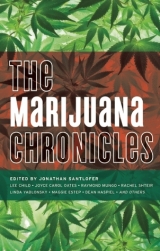
Текст книги "The Marijuana Chronicles"
Автор книги: Jonathan Santlofer
сообщить о нарушении
Текущая страница: 9 (всего у книги 13 страниц)
I was flattered he thought we’d still be friends in four years, but I was also terrified. I was more afraid of sex than I was of death. What was I going to do in four years? How was I possibly going to get out of that? Short of cutting him off forever, I hoped four years was long enough to strategize a master plan.
We spent the next four years inseparable, and the catalog of unacceptable behavior started to feel acceptable, but the closer I got to eighteen, and the more he reminded me about what was going to happen when I got there, the more panicked I grew. The day I graduated from high school, I stopped going to the acting school, and I stopped returning his phone calls. I never spoke to him again. He’s tried contacting me twice. The last time was a few months ago, through my website. Here is the letter he sent me:
From: IAN
Subject: Hello Old Friend
Hello Amanda, Wow What a trip to see how great your career is going. how are you? Just thought It’s been a long time since I saw you last, a lifetime really. Just wanted to say Hi and maybe we can catch up on life
.
I’m very proud and quite impressed with your accomplishments. I hope to hear from you soon
.
p.s. Don’t freak out about this. Always your friend, Ian
One last thing. After a treacherous few months when I was twenty-seven, I was finally diagnosed. Turns out things did happen to me that didn’t usually happen to others. I had panic disorder and there were drugs, that were not cocaine, to treat it. While I seldom have panic attacks anymore, I still feel a tugging anxiety at the sight of preteen girls and the men who pay attention to them. It’s only now, when I look at those full, baby-fat faces that I have perspective and can see with objectivity how morally despicable Ian was to prey on me. I feel sad for Caroline and I even feel sad for Ian, but I feel sadder still for their baby girl, born fourteen years ago, and the age now that I was when I met him.

J
AN
H
ELLER
L
EVI
is the author of
Once I Gazed at You in Wonder
, which won the Walt Whitman Award of the Academy of American Poets. “Eve Speaks,” included in her second collection,
Skyspeak
, won the
Writer Magazine
/Emily Dickinson Award of the Poetry Society of America. Her next book,
Orphan
, will be published in 2014 by Alice James Books. Levi is also the editor of
A Muriel Rukeyser Reader;
served as consulting editor for the new edition of Rukeyser’s
Collected Poems
, and is currently working on a biography of Rukeyser. With Sara Miles, she coedited
Directed by Desire: The Collected Poems of June Jordan
.
ethics class, 1971
by jan heller levi
Don’t be frightened, Mr. Bliss said, we’ve got
to talk about these things. You can be honest—
how many of you have experimented
with drugs? Mr. Bliss was cool. So, okay,
about half of us, shifting in our seats, sneaking
looks at one another, slowly raised our hands.
An hour’s discussion ensued about pros and cons,
and sure, the moral issue. Yes, it’s true, Mr. Bliss
agreed, Thoreau said you
should
break a law
you don’t believe in, but didn’t he also say the body
is a temple, that the gift nature gives us is
to be shown matter, to come in contact
with rocks, trees, wind on our cheeks!
the
solid
earth! the
actual
world! There were
half-decent questions asked, and answers
none of us took too seriously. And when the hand-raisers
got home that afternoon, we’d each been nailed
by a phone call from school. It wasn’t so bad
for me, my parents already knew I was rotten.
But Jamie got the shit beaten out of her,
Stan’s parents shipped him off to military school.
Wesley gave up pot for drinking; in April he drove
himself into a tree. Through the rest of the year,
Mr. Bliss continued to pose interesting questions—
If a baby and a ninety-year-old both fell off a ship and you
could only save one, which would it be? Your mother’s
sick, you have no money for her medicine,
Would it be wrong to break into the pharmacy
and “borrow” it? What about risking
the life of one to save the lives of many?
For our final—stoned on some primo hash,
I wrote a B– essay on honesty.

J
OSH
G
ILBERT
is a documentary filmmaker and writer. He currently resides in New York City with his girlfriend and their son Henry.
the devil smokes ganja
by josh gilbert
It was in the mid-1990s when the famous Godfrey Jackson walked into my office wearing his vintage dreads and Birkenstocks and asked me if I could help his daughter Gladys land a job in the film industry. It wasn’t as if Jackson didn’t have the connections necessary to help her find a job—he surely did—but he didn’t want to call in a favor and risk rejection based on some old industry beef or an unpredictable blindside. As Jackson spoke, he slouched down into his chair across the desk from me, and being the ever-sycophantic aspiring junior executive that I was, I eased into a slouch to mirror his and begged him to please continue.
He told me Gladys had just returned to the US from Russia where she’d been studying existential Russian poetry at the University of Kiev and was lost back in Los Angeles and always had been. Being the daughter of a celebrity was never easy, and Gladys had turned her Freudian angst into sexual promiscuity, while her brother Munsey had developed a nasty mean streak and an unruly belligerence.
I was relatively new to the business at the time, a recent film school graduate, driving around town in an old wreck of a BMW with no money to fix it—your typical big-hat-no-cattle film industry hack with a total of three midlevel connections that I milked for everything they were worth. With a cocky reassuring nod, I told Jackson I’d see what I could do.
“Thanks, mon,” Jackson said, “I’ll have Gladys give you a call.” He ambled out of my office, leaving me slouched in my chair, wheels churning about how to find the girl a job.
Jackson had been directing, starring in, and producing a self-financed film that our production company was line-producing called You Best Shut Up! about an unemployed bicycle mechanic with the IQ of a cabbage, who rides off on a journey in search of Life’s Greater Meaning. Like most of Pepperpot and Jackson’s comedies from back in the day, the flimsy story line did little more than serve as an excuse for audiences to laugh at the mishaps of a pot-addled idiot while smoking themselves into oblivion.
I’d been a huge fan of Pepperpot and Jackson comedies since I was a kid and was starstruck from the moment Jackson had walked into my office. Now, don’t get me wrong, I’m no celebrity ass-kisser. Far from it. I grew up in one of LA’s storied canyon communities, lousy with big-name entertainment industry icons, all milling about at the local food mart. But Pepperpot and Jackson had that seminal impact on me as a kid that wields the ultimate influence on any fan—a history of preadolescent enthusiasm bordering on obsession. And while Jackson’s fortunes were way down at this point in his career, during their heyday, the comedy team had amassed a monumental following of ticket-buying enthusiasts and potheads.
Several days later, Jackson’s daughter Gladys called me, and for the next few weeks we wound up spending many late nights together, sometimes wearing clothes but mostly naked, with me giving her pointers on script analysis, and after several Bacchanalian all-nighters, I became unequivocally convinced she had what it took to truly succeed in Hollywood, and with a concerted effort and a little luck I managed to land her a job interview with Cecil B. Glazer’s production company. It was a relatively easy thing to do because Gladys was bright, beautiful, and sexually uninhibited, and Cecil was the cad son of a billionaire with a weakness for nymphomaniacs. When Gladys got the job, Godfrey Jackson was thrilled.
It was at this time that Jackson was becoming totally obsessed with catching up to his former partner and arch nemesis, Aaron Pepperpot, who had leveraged his post–Pepperpot and Jackson comedy career into a solo one by starring in a series of hit films and prime-time television shows. As Pepperpot’s stock rose and Jackson’s fell, people in the industry openly opined to Jackson’s face that Pepperpot had always been “the funny one.”
When my company organized a screening of Jackson’s You Best Shut Up! at a prestigious theater on Hollywood’s Walk of Fame, the venue was filled with studio heavies, a smattering of Blist celebrities, and his former sidekick Pepperpot, who had played a bit part in the movie as a professional courtesy to Jackson. Jackson had made a lot of people a lot of money over the course of his career and even though the chances were slim he’d do the same thing on his own, this savvy crowd knew the possibility existed, however remote, that he could be the next big Hollywood rebound story.
But not this time. Each bad joke on screen elicited a groan from the audience, soon followed by the disruptive rustling of people heading toward the exits. As the theater emptied out, it became painfully obvious that redemption had once again eluded Godfrey Jackson. When the curtain closed and the lights came up, Pepperpot gave Jackson a condescending pat on the back, said, “That’s show biz!” and walked out of the theater with a look on his face that could only be described as schadenfreude.
Several months later, with the corpse of You Best Shut Up! still warm, Jackson was back in my office once again, this time proposing that we cowrite his next screenplay. His wife Leona, who called all the financial shots in the family, agreed to pay me a small per diem, which would be deducted off the top of the sale price when the script sold. And it would sell. Jackson was certain.
At the time, I was on a corporate career path, and not enthusiastic about the prospect of living an untethered existence, sipping lattes at the local coffee shop, cooking up the next shortcut to greatness; Jackson was offering me a life of creative self-direction. This wasn’t a devil-may-care date with destiny. This was a calculated risk and I actually believed in Godfrey Jackson’s talent and ability, that he could tap into a gigantic audience with the right creative content. And that’s where I came in.
Even though it had been years since any of Jackson’s solo efforts had shown a profit, he was still convinced a studio would give him twenty million dollars to make our movie, as long as it was mainstream enough to capture the hearts and minds of the next generation of twelve-to-eighteen-year-olds. And so, with this core demographic as our Holy Grail we developed an outline for a comedic screenplay about a black guy named Delray Johnson—a character we specifically wrote for Eddie Murphy—a crass, street-smart con man who is mistaken for Asian when he smokes pot and gets tangled up with a bunch of weed smugglers from Hong Kong. Antics ensue.
Initially, I found the entire premise offensive and racist, but Jackson said my “politically correct” resistance was proof positive that I was a closet racist, because any comedian with an ounce of credibility knows that racism is a reality on the street and that comedy isn’t funny unless it’s real.
We called the screenplay Hong Kong Bong Song.
I was totally committed to writing a saleable screenplay, putting the legendary Godfrey Jackson back on the map, and getting on the map with him. He may have been a block of ice in Hollywood, but to me he was still the coolest guy who’d ever lived and I couldn’t get enough of his Horatio Alger rags-to-riches stories. He told me all about his early days growing up dirt poor in the mixed-race, working-class Pittsburgh suburb of Homestead, raised by a heroin-addicted hooker grandmother who rode with a biker gang and was famous around town for giving the best toothless BJs in the history of whoring. Jackson also gave me endless dish about Pepperpot, the son and grandson of executioners at a state penitentiary in Georgia—not your typical Pepperpot and Jackson audience members. And that “Pepperpot” had grown up as “Aaron Buckley Montgomery” in a middle-class suburb and had never even seen marijuana, let alone smoked it, before meeting Jackson, the true root-ball of their successful nine-year pot-fueled run.
Yet no one in the Hollywood mainstream really gave a shit about truth or authenticity. To the industry, where perception is everything, Pepperpot was the winner and Jackson was the loser, one notch above your average one-hit wonder.
The more time I spent with Jackson, the more I realized how lost and hopeless he was, and I began to focus all of my creative energies and professional ambitions on propping him up and convincing him he had the goods to make his way back onto the big-dog grid. Pepperpot and Jackson movies and records had made their distributors boatloads of money. With the right property, I was certain these same shark operators would welcome Jackson back into the tent with open arms. As for his low-trading stock as a comedic actor, there was no denying his legendary history as a performer. The same thing had happened to Frank Sinatra, had it not, and Elvis? Former megastars who had crashed and burned and were all but forgotten before rising out of the ashes and achieving new heights. No question, Jackson was just one project away from celebrity redemption!
After several weeks of slogging our way through the first draft of our screenplay, Jackson noticed I didn’t seem the least bit interested in smoking pot—and the thing people talked about when they met Godfrey Jackson was pot. They’d launch into their “unique” stories about how the first time they ever smoked marijuana was listening to How High Are Ya?? or watching Big Beef Bong-O in their big brother’s bedroom. To fans, Godfrey Jackson was the human embodiment of pot.
This added to my appreciation of his underdog comedic legacy; but in truth, pot didn’t interest me. I was too “uptight,” he said, and frankly, I was getting on his nerves with all of my talk about Sid Field and Aristotle.
I’d smoked pot a couple of times in college, though it wasn’t something I ever really thought about. But when Jackson decided I needed to get high to free up creatively and invited me to join him in a toke, I consented.
Jackson took a small stash box out of his cabinet, plucked out a choice bud, and packed it into the glass bowl of his bong. It was dark, almost black ganja, which I later learned was the legendary “Lamb’s Bread” from Jamaica—the all-natural gold standard of the outdoor, pre-Kush, genetically enhanced, hydroponically produced seed varietals.
Jackson smiled impishly at me as he lit the bowl and took an epic hit, keeping the smoke in his lungs with several short sucks of air for what seemed an eternity. Just when I thought he couldn’t possibly hold the smoke any longer, he sucked it back down into his lungs again and held in a cough with a grunting, sipping sound, waited for several seconds, and then finally blew the smoke out, nodding sagely my way, eyebrows raised. Then he handed me the bong. I held it apprehensively and watched the glowing red bowl of burning black bud from across the upper lip of the water pipe, and with Jackson watching, I slowly inserted my face into the bong hole, lips first, hit the Bic for good measure, waved it lightly across the already burning bud embers, and sucked in an enormous, seemingly endless quantity of gray THC-laden fumes. Then, following Jackson’s lead, I held it in my lungs for as long as I could, which in my case was about two seconds, tried to suck it back down again but couldn’t handle the pressure in my lungs, and coughed spasmodically, sending a prodigious plume of smoke into the room. I gasped for several seconds and then coughed and coughed and coughed before finally regaining my composure and realizing, almost instantly, that I was extremely high.
Jackson smiled knowingly as he shelved the bong, and without a moment’s hesitation began to riff mad comedy off the cuff with giddy, inebriated abandon as I typed away. As usual, I had no idea what he was talking about, but whereas before I might have resisted his humorous impulses as tedious or unfunny or just downright lame, now his goofy humor sounded like the funniest shit I’d ever heard in my life! I laughed and laughed as his hairy face lit up and he said, “We’re going to hit the jackpot with this one, mon!”
When I went home that night I was still high. The next morning, as I spent an hour spreading peanut butter on a piece of toast, I realized I was still high. I know it sounds implausible, but I was high for an entire week. I went to sleep high. I woke up high. Each day I drove from my little house in Venice, California, up along Pacific Street and down California Street, onto the Pacific Coast Highway and up the winding coastline to Topanga Canyon, then up the mountain pass to Jackson’s house, nestled behind a gigantic grove of big bamboo, all the while high as a goose.
Meantime, Jackson was right. For the final stretch of our writing effort, the pot loosened me up. It probably didn’t make the script any better but it certainly made me think it was funnier, and soon we had finished Hong Kong Bong Song.
We were both confident the script had turned out well, so we organized a reading with ten of our friends, mostly mine, put joints around the room next to a plate of pot brownies, and laughed our asses off from fade-in to fade-out. After securing the rabid enthusiasm of our core demographic—the incredibly high—we went to market with a pot comedy disguised as a mainstream comedy.
Jackson called some of the most powerful decision-making executives across the painted hills of Hollywood and gave them “the opportunity” to read our script, but after several weeks of deafening silence it became clear that no one was going to give us twenty million dollars to make it. In fact, no one showed even the slightest interest in optioning the script, which is pretty funny (and still available). But the experience solidified our friendship—and I developed a lifelong affinity for good bud.
Years later I was living in New York City, where I’d moved to become a “serious writer,” which is to say a seriously unemployed writer. It was a year after 9/11 and the world as we Americans knew it had changed forever. The Patriot Act had just passed through Congress and was signed into law by the Bush administration; the terrorist threat facing the nation was quantified daily by degrees of color on charts and graphs; neighbors who you’d never met suddenly wanted a peek up your ass crack to see if you were packing a dirty bomb. New York City’s social anonymity suddenly became a thing of the past, with the harsh light of fear-driven paranoia casting ugly shadows in every direction.
It was against this backdrop that I sat down one morning to enjoy my daily ritual of black coffee, a toasted bialy, and the New York Times, when I noticed an article above the fold on the front page announcing the arrest and deportation of Godfrey Jackson. The story reported that Jackson had been apprehended in his Topanga Canyon home by federal agents and immediately deported to the storied detention camp in Guantánamo Bay, Cuba, for being a “Drug War terrorist,” an “enemy combatant,” and for being, most critically, an “illegal alien” (which qualified him for his stint in Guantánamo).
The newspaper story gave the details of the government’s preposterous assault, which featured several hundred armed agents descending on Jackson’s hillside Topanga mansion wielding assault rifles, billy clubs, and stun guns. Apparently, when Jackson confronted the commandos, demanding to know the charges, they zapped him in the groin with a stun gun, threw him twitching into a large burlap sack, and flew him straight to Guantánamo.
The federal agents informed his flustered wife Leona and their belligerent son Munsey that Godfrey Jackson had spent his life promoting the use of marijuana and by doing so had been identified by the office of the attorney general as an “illegal terrorist alien”—and because he was not a citizen of the United States he would be held in a steel mesh cage, exposed to the elements for “as long as it takes,” and all the while surrounded by “towel heads” with an affinity for “back-door action.”
Sending Jackson to Guantánamo for being an illegal alien was an outlandish act, perpetrated by a too-big-for-her-boots US attorney who, like most US attorneys in the history of US judicial overkill, was solely intent on making a name for herself, in this case during the nation’s heightened War on Terror, by getting Jackson to do a “perp walk.”
There was just one catch in the brilliant US attorney’s otherwise flawless prosecution: Jackson was not an illegal alien. He was born in Homestead, Pennsylvania, in the Jewish suburb of Squirrel Hill; he was a US citizen, and could prove it. His grandmother and parental guardian may have been a scandalous, toothless hooker, but she was also born in Pittsburgh and she had the paperwork to prove it.
Initially, these facts didn’t make a difference to the US attorney, who had pursued Jackson’s prosecution with a relentless, feverish intensity for the better part of two years, spending a whopping $136 million of government funds in the process. She and her team had acted “well within the law,” she announced during her makeshift press conference in the Guantánamo Bay rec room to a smattering of press corps. Besides, the government’s action was by its very nature de facto “extrajudicial,” ergo she could do whatever she damn well pleased and if anyone had a problem with that they could join Jackson in his tiger cage for a friendly game of hide-the-salami.
I watched the media circus unfolding on the evening news, bewildered as hell and high as fuck, while Jackson sat behind the prosecutor’s podium with a large, growling attack dog situated inches away from his terrified face.
When the US attorney brazenly overstepped the law to bag her “illegal terrorist alien,” she failed to consider yet another hard fact: a law stating that 25,000 signatures petitioning for the review of a US attorney’s reckless prosecutorial actions elicits mandatory congressional oversight, and this can potentially lead to the prosecutor’s removal from office. And for that to happen, all it takes is a little publicity.
Upon learning about this law from my politically radical next-door neighbor Plotkin, I flew out to California, picked up a video camera, and hit the streets. Over the next several months, I conducted several hundred man-on-the-street interviews, focusing on a US attorney’s office run amok. I also conducted several celebrity interviews, including Pepperpot, Noam Chomsky, and an unexpectedly passionate and angry Rosie O’Donnell. Then, with some help from an editor friend, I stitched together these interviews with archival footage from the Guantánamo press conference and a few news shows and sundry bits, and created a polemical documentary structured to touch the hearts and minds of enough clear-thinking citizens to force the review of the US attorney’s “Jackson Action.”
I sent the cut to the The Daily Show and crossed my fingers. Two days later, Jon Stewart introduced an edited version of my call-to-arms, and within three days my petition had swelled to over 250,000 signatures!
Several days later, with no explanation whatsoever from the US attorney’s office, Jackson was transferred out of Guantánamo and sent to the LA County jail for possession of an undisclosed quantity of hashish. While no formal charges had ever been brought against Jackson for hash possession, and while the review of the US attorney’s office as mandated by our ample signatures was never mounted, Jackson was back on American soil (albeit in prison), where due process plays a part in prosecutions, however minimally.
Jackson languished behind bars for the better part of a year while the dust settled and the government covered its tracks. Meanwhile, I continued to film Jackson’s journey, and by the time Leona, Munsey, and I picked him up from jail, I was ready to rumble.
Three months later, The Incarceration of Godfrey Jackson was accepted to the Sundance Film Festival.
We arrived at the premiere in a half-ton pickup truck with Jackson tied to a stake, atop a bed of kindling, ready to be burned like a witch in Salem. The theater was packed and the screening ended in a several-minute standing ovation. As Jackson and I looked around the room at the cheering crowd, it became immediately clear to us that we’d finally achieved the goal we’d set out to achieve fifteen years prior: Jackson was back on the map and I was on it with him!
Trays of pot brownies were served at the premiere party. The Artist Formerly Known As Prince showed up to join in the celebration. People danced into the wee hours to the bumping beats of a live band. Robert Redford himself danced on the bar with a Native American chief, who gave me the nickname “Young Sunrise.” It was the high point of my life—but it didn’t last long.
FabFilms was quick to come to the table, intent on acquiring worldwide rights for a whopping six million dollars. But when I crunched the numbers, after taking into account the money I had already spent and how much I’d have to lay out to meet the distributor’s delivery requirements, I’d owe them money! Jackson agreed with my reasoning; he’d spent his entire career getting bamboozled by the bean counters. The only problem was, my agent adamantly refused to negotiate our deal and simply wouldn’t take no for an answer. On the last day of the festival, the deal I turned down was announced in all the trades. Everybody I’d ever known called to congratulate me for winning the jackpot and was subjected to my story about the corrupt realities of media distribution and accounting practices. But none of this ultimately mattered because Jackson and I were a unified front. We organized an impromptu press conference at the Salt Lake City airport, where we announced to the press and a random assemblage of UGG-booted film industry nitwits that we were going to show the next wave of independent filmmakers how to distribute a film without giving in to the corrupt Hollywood suits. We’d taken on the government and Hollywood was next!
Two months later, The Incarceration of Godfrey Jackson opened the intellectually rigorous True/False Film Fest in Columbia, Missouri. After our screening, we were scheduled to speak on a panel of legal scholars including Alan Dershowitz, Cornel West, and Camille Paglia about state vs. federal law in the drive to reform marijuana legislation. The show sold out immediately. But I sensed trouble. In the intervening weeks since our independent film distribution grandstanding at Sundance, Jackson’s dedication to the master plan had begun to waver. For reasons I couldn’t yet grasp, Leona and the ever-pugnacious Munsey had been lobbying violently against me.
I’d been waiting in the lobby of the Holiday Inn for two hours when Jackson finally arrived with a motley group of newly minted sycophantic fans in tow, clamoring for an autograph and the chance to take a picture with him. Afterward, he walked over and sat down next to me, slouching into the couch cushions.
This time, I remained upright, stiff-backed, bracing myself. He apologized for being late and said he’d been busy doing a radio interview with Leona about his film and had lost track of time. Then he casually reached into his beaded suede Navajo notebook organizer and extracted a legal document.
“Before I forget,” he said, “Leona asked that you sign this before tonight’s screening. Otherwise we won’t be able to stick around for it.”
I stared at the ten-page document he held out in front of me.
“It’s just a formality,” Jackson added, reaching back into his notebook and taking out a pen as I scanned page after page of legal jargon about copyrights and distribution rights all belonging to him and Leona.
“It looks like more than a formality to me,” I responded. “It looks like you’re asking me to assign you all rights to my film.”
“Hey, mon, you did a great job. You made an amazing film. But it’s time to let your baby go and move on. We’ve got important work to do on our next film. Let’s let Leona take it from here.” Jackson picked up the pen and held it out toward me. I stared back into his beady, bloodshot eyes. I’d always suspected there might be a killer behind the mask of goofy, pot-induced innocence and benevolent idiocy, but now I realized it wasn’t about him being a killer and it wasn’t about him being good or evil. After all was said and done, Godfrey Jackson wasn’t the human embodiment of pot, he was the human embodiment of pussy-whipped.
Several weeks later, standing under the marquee of the Alamo Drafthouse in Austin, Texas, announcing the theatrical release of The Incarceration of Godfrey Jackson, a pleasant-looking man walked up to me and handed me an envelope. I opened it to read that I’d been served with a lawsuit. Jackson was claiming I had stolen the rights to his film and was demanding I give them back or pay him $500,000.
Even after the film’s failed initial theatrical run and the serving of the lawsuit, I continued to shill for The Cause, telling the world after each screening and during countless radio interviews that Godfrey Jackson was comedy’s equivalent to serious drama’s Marlon Brando, martyred by the US attorney’s office, a.k.a. the most onerous legal establishment since the Inquisition. All the while living through the unrelenting agony of an obstructionist lawsuit brought against me by the very person I’d fought on behalf of with unflinching love and loyalty. A bitter irony.
As the weeks wore on, my exhaustion intensified, and so with few options left and unable to defend myself in court any longer, I scraped together $10,000 to retain a bad-ass Hollywood litigator to step into the ring and brawl on my behalf. I felt a sudden swell of elation. Sure, I’d literally bought my way onto the corporate grid, which I despised, but maybe that’s what it took to survive in a fundamentally corrupt legal justice system. Yet my momentary happiness dissolved when the lawyer realized I had no resources beyond my retainer to pursue a $100,000 litigation and steered me straight into a binding settlement. By the end of the day, I agreed to a term of three months to either raise the money to pay Jackson off or give him and his wife (and Munsey) the rights to the film I’d made in his defense.