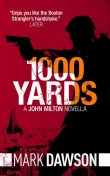
Текст книги "The Cleaner"
Автор книги: Mark Dawson
Жанры:
Шпионские детективы
,сообщить о нарушении
Текущая страница: 9 (всего у книги 19 страниц)
25
Milton was not alone in the waiting room. A portly middle-aged woman was slumped into one of the plastic seats, her expression bearing the marks of frustration, helplessness and anger. Her eyes followed Milton as he sat down on one of the chairs opposite her but she did not speak. The police station smelt the same as all the others he had visited, all around the world: the same mixture of scrubbing soap, disinfectant and body odour. It had the same weary atmosphere, the sense of a heavy relentlessness. He gazed at the posters tacked onto a corkboard that hung from the wall; young black men staring into police cameras with expressions of dull, lazy violence. The crimes they were alleged to have committed were depressingly similar: an assault with a knife; an armed robbery at a betting shop; a shooting. There were two murders with the same police task force – Trident – dealing with them both. Black on black. A poster showed a young boy staring out from behind a lattice of bars, the message warning that this was the inevitable destination for those who got caught up with gangs. The boy in the poster was young, in his middle teens. The same age as Elijah. He looked small, vulnerable and helpless.
Milton looked at the clock on the wall for the hundredth time: it was five minutes past three in the morning.
“Who you here for?” the woman said.
“The son of a friend,” Milton said.
“What’ve they got him in for?”
“I’m not sure.”
“Won’t matter,” she declaimed. “Won’t matter if he did it or not, neither. They need to get something cleared up, they’ll say he did it and that’ll be that. Look at my boy. He ain’t perfect, God knows he ain’t, but he didn’t do half the things they said he’s done. It’s because he’s black, from the wrong ends, in the wrong place at the wrong time. The police are racist pigs.”
Milton said nothing. He was not disposed to have a conversation with her and, after a long moment of silence, she realised that. She clucked her tongue against her teeth, shook her head, and went back to staring dully at the posters on the wall.
Sharon had called Milton just after midnight. She explained that the police had visited the flat and arrested Elijah. She had heard him coming back late. She only had vague details: the police had said something about a fight at a club, a man beaten halfway to death. Elijah was supposed to have been identified as a witness. Sharon didn’t know what to do and sounded at the end of her tether. Milton had said he would deal with it.
“Is anyone here for Elijah Warriner?”
The policeman was middle-aged, a little overweight, and with wispy fronds of white hair arranged around a bald crown. He looked tired.
“I am,” Milton said.
The officer opened the door and indicated inside. “Would you step in here for a moment, sir.”
“What about my boy?” the woman squawked. “You’ve had him in there for hours.”
The sergeant regarded her with a tired shrug. “They’re just finishing up with him, Brenda.”
“You charging him?”
“He’s said he did it.”
“Bail?”
“I expect so. Just wait there, we’ll get to you as soon as we can.” He turned back to Milton. “Sir?”
Milton did as he was asked. The room beyond was small, with a table and two plastic chairs. The surface of the table had been scarified with carved graffiti, the letters LFB repeated several times. The policeman shut the door and indicated that Milton should sit. He did, the policeman taking the other chair.
“Who are you?” the policeman asked him.
“I’m a friend of Elijah’s mother. And you?”
“Detective sergeant Shaw.”
“What are you holding him for?”
“There was a serious assault at a party yesterday evening. A lad from Camden was beaten. GBH, pretty serious. Elijah was there when it happened.”
“Is he a suspect?”
“I don’t know yet. Probably not. But he was definitely a witness. He’s admitted he was there. Save that, he won’t talk. Not that I’m surprised, they never do.” He sighed and took a packet of cigarettes from his pocket. There were no smoking signs on the wall but he ignored them, taking a cigarette and lighting it. He offered one to Milton, who declined. Shaw drew deeply on the cigarette, taking the smoke into his lungs and then exhaling it in a second, longer sigh. “Look – Mr Milton – I’m not sure what’s going to happen to him, but let me make a prediction. Elijah’s in a dangerous position. Chances are, he’s going to get away with whatever happened this time. But that doesn’t mean he’s going to be alright. He’s not right in the gang yet but he’s on the edge. It won’t take much to tip him over, and if that happens, he’ll definitely be back here again and then he’ll get nicked. He might get community service for whatever he ends up doing, but that won’t straighten him out. The time after that he’ll get prison. And that’s if he’s lucky to live that long. Plenty of them don’t. I’ve seen it dozens of times.”
“These other lads he’s been messing around with – the gang? Who are they?”
“The London Field Boys?”
“I don’t know very much about them.”
“Let me give you a little history, Mr Milton. I’ve been a policeman around here for the best part of twenty years. That’s a long time to work in one place, but it means I’ve got a better idea of this borough than most. I’ll be honest with you – Hackney’s never been a particular nice manor. It’s always been poor, there’ve never been enough jobs to go around and there’s never been enough for kids to do. You take a situation like that, it’s normal that you’re going to get a problem with crime. It’s not the easiest place in the world to be a copper but, for most of those years, it’s been manageable. You’d get the odd blagging, drunken lads getting into scraps after too many bevvies on a Friday night, chaps going home after the pub and slapping their women around. You’d always have a GBH on the go and there’d be the odd murder now and again. Not the best place in the world, lots of problems, but by and large we kept a lid on it. Now, you look at the last five years and things have changed so much I hardly recognise it sometimes. We’ve always had gangs of young lads and they’ve always gotten into scrapes. Petty stuff – fights, nicking things, just making a nuisance of themselves. But then they all started getting tooled up. They’re all carrying knives. Some of them have guns. You add that to the mix, then you have a gang from another borough coming in here looking for trouble, things get serious very quickly. When I was a lad, we used to play at cops and robbers. These days, they’re not playing. They’re all tooled up, one way or another, and it’s not all for show. The guns are real, and they don’t care if they use them or not. I don’t know if he’ll listen to you more than he’s listened to me, but you’ve got to get some sense into him. If you don’t…” He let the words drift away before picking it up again. “If you don’t, Mr Milton, then he’s not going to have very much of a life.”
26
Milton walked out of the police station with Elijah behind him. He looked out into the street. It was a hot night, broiling, and even though it was coming around to four in the morning there were still people about. The atmosphere was drunken and aggressive. Men looked at them as they passed, assuming that a white man on the steps of a police station must be a detective. There was contempt in their faces, violence behind their sleepy, hooded eyes. Milton had called a taxi while he was waiting for Elijah to be processed and it was waiting for them by the kerb. He opened the rear door for Elijah and then slid in next to him. He gave the driver the address for Blissett House and settled back as they pulled into the traffic.
He looked across at the boy. He had the downy moustache and acne of a teenager, but there was a hardness in his face. His eyes were fixed straight ahead and his face was set, trying to appear impassive, but his hands betrayed him; they fluttered in his lap, picking at his nails and at swatches of dead skin.
“You know you’re in trouble, Elijah.”
He did not reply, but the fidgeting got worse.
“Let me help you.”
When he finally spoke, it was quiet and quick, as if he did not want the taxi driver to overhear him. “You ain’t police?”
“No.”
“You swear it?”
“I’m not the police. You can trust me, and I want to help. What’s the problem?”
Still he was not convinced. “Why you want to help us? What’s in it for you?”
“It’s a long story.”
“I ain’t saying nothing unless you tell me why.”
Milton thought for a moment about what to say. “I’ve done some things in my life that I’m not proud of,” he said carefully. “I’m trying to make up for them. That good enough for you?”
“What kind of things?”
“Bad things,” Milton said. “That’s enough for now. This is about you, not me.”
Elijah looked down at his lap. Eventually, the residual fear of his situation defeated his bravado, the reluctance to admit that he needed help, and the fear of what might happen to him if the others discovered that he had spoken out of turn. “Alright,” he said. “Last night. I was there. I saw what happened.”
Milton told him to explain. Elijah spoke quietly and quickly.
“Who had the gun?”
“Me. Bizness gave it to me last week, told me to keep it for him until he needed it. You need heat, right, with our rep? You get a beef, like we had with Wiley and his crew, you don’t have a blammer, you done for. Finished.”
“Who’s Wiley?”
“This rapper. He’s been dissing Bizness. He had to make an example, man. Can’t have that kind of nonsense going on, YouTube and everything. Bad for business. Bad for your rep.”
“You gave the gun to him?”
“Nah, man. I had it. He wanted me to do it myself.”
“And?”
“I didn’t know what to do. I started walking over towards where this fight had started, Bizness and Wiley were going at it, I put my hand in my bag, the gun was there, and then the next thing I know Pops has come over to me, grabbed my arm and told me to breeze. I did – went straight home.”
“Did you tell the police you had the gun?”
He looked indignant. “I didn’t tell them shit.”
That was good, Milton thought. The boy was hanging on by his fingertips, but he still had a future. “This Bizness. Who is he?”
Elijah looked at him with a moment’s incredulity before remembering that Milton was older, and naïve, and that there was no reason why he would have heard of him. “Risky Bizness. He runs things around here. He’s been in the LFB for years, since he was a younger, like me. He’s one of the real OGs.”
“One of the what?”
“Original Gangsters, man. He’s got himself involved with everything – the shotters sell the gear and pass the paper up to the Elders and the Elders pass it up to the Faces like Bizness. He makes mad Ps. He built himself a record studio out of it and now he’s got himself a record deal. He’s famous on top of everything. He’s a legend, innit?”
“What’s his real name?”
Elijah shrugged. “Dunno. I’ve never heard no-one call him anything but Bizness.”
The taxi turned into the road that led towards Blissett House. Milton told the driver to pull over. He guessed that Elijah would prefer not to be seen getting out of a cab with him and he saw, from the look of relief on his face, that he had been right.
“Alright, Elijah,” he said. “This is what I want you to do. Go home to your mother. She’s beside herself with worry. Get to bed. Don’t answer your phone, particularly if it’s Bizness or any of the other boys in the gang. You need a little space between you and them at the moment. Do you hear me?”
“Yes,” he said. “What about the police?”
“I think that will be alright. I’ve given them my number. If anything comes up they’ll call me and we can take it from there. Now then – what did you do with the gun?”
“Dropped it in the canal.”
“Do you promise?”
“Yeah,” he said. “I don’t want nothing to do with it.”
“That’s good.” He reached over and opened the door. “Go on, then. We’ll let this blow over.”
“And then?”
“I’ve got something for you I think you might enjoy. Meet me in the café in the morning. Nine o’clock. Bring your sports kit from school.”
“Nine? That’s, like, just five hours. When am I gonna get some sleep?”
“You can sleep afterwards. Nine o’ clock, Elijah. I’ve got something for you to do that you’re going to be good at.”
PART THREE
Strapped
Laughter, and then something else. A low drone. His stomach knotted. No. The plane was still a dot on the horizon but it was closing quickly. Beneath the radar. A Warthog, onion-shaped bombs hanging beneath its wings. He threw his rifle aside and scrambled down the escarpment, the loose sand sliding down with him, his boots struggling for purchase, failing, and he was tumbling down the last few metres, landing at the bottom with a heavy thump that drove the air from his lungs. He got to his knees and then to his feet, his boots skidding off the dirt and scrub as he pushed off, his arm sinking down to the wrist as he tried to keep upright. He ran towards the village. Five hundred yards, four hundred. The sound of the Warthog’s engines was louder now; it was coming in low, a thousand feet up, not rushing, the pilot taking his time. Three hundred. He ran, boots sinking up to the laces with each step, thighs pumping until they burned. He gasped in and out, his lungs so full of the scorched air that he felt like they were alight. Two hundred. He was close enough to yell out now and he did, screaming that they had to take cover, that they had to get inside. One hundred, and he was close enough to see the faces of the children outside the madrasa. The cheap plastic ball had sailed in his direction and he could see the confusion and fear in the face of the boy who had been sent to fetch it. Five years old? Surely no older. He yelled at him to get down but it was too late, it had always been too late, it would not have mattered if he had been able to get to them sooner, the decision had already been taken. The Warthog’s engines boomed. The boy turned away from him to face it. The ball rolled away on the breeze. A blinding flash of white light. The deafening crack of a terrible explosion. He was picked up and thrown back twenty feet in the direction that he had come. He was slammed down onto the ground by a bolt of hot air which dented his cheeks and stomach as if they had been made of paper. A second and third explosion seemed to bend the world of its axis, the noise blending from a roar into a continuous, high-pitched whine. He lay, staring up into the sun, while the air around him seemed to vibrate as if someone had smashed a cello with a sledgehammer. He rolled over and pushed his head up, working his arm around until he could prop himself against his elbow. A ghastly rain of pieces of flesh and blood soaked clothing fell onto him and all around him. Then bits of rubble and metal. Above, slowly unfurling, was a dark cloud of black smoke that rose and shifted until it had obscured the sun. He smelt burning flesh and the unmistakeable acrid tang of high explosive. His hearing resolved as the Warthog swooped over and away. He pushed himself up until he was on his knees. A huge crater was in the centre of the village. The launcher was gone. The madrasa was gone. The children were gone, too, or so he would have thought until his eyes tracked around to the right and he saw red splashes of colour on the ground and glistening red ribbons of flesh suspended from the bare branches of a nearby tree.
Fifty feet away, in the open desert, the plastic ball rolled with the wind.
27
The nightmare was as bad as Milton could remember it. When he awoke, the sheets were a bunched-up pile on the floor, soaked through with sweat. His brain was fogged and unclear. He rose and went for his usual run, the best thing he knew to chase it away. The streets were quiet and the park was empty. He ran two laps, following the line of trees, pushing himself harder on the second so that by the time he returned to the road he was sweating and breathing heavily. He chose a return route that took him past the boxing club. The door was open, the slapping of a skipping rope audible from inside. He didn’t stop, and returned to the house where he showered and dressed. He stood before the mirror again and checked that the outline of his pistol was not obvious against the cut of his jacket. He locked the door and went to the café for his breakfast. Elijah was already waiting for him. The boy was sitting in a booth.
“This better be good,” he said, a little surly.
“Get any sleep?”
“Nah, not much. I’m knackered.”
“Where’s your kit?”
Elijah nodded at the black Nike sports bag resting on the chair next to him.
“Good lad. You hungry?”
“A bit,” he conceded.
“Alright, then. You’ll need to eat. You’re going to be working hard this morning.”
“What are we doing?”
“You’ll see,” Milton said. The proprietor came over to take their order. Milton ordered two plates of scrambled eggs and bacon, a portion of chips and a two glasses of orange juice.
“Is your mother alright?”
“What you mean – about me getting nicked? Yeah, she’s alright.”
“She worries about you, you know.”
“I know,” Elijah said. “I don’t mean to upset her.”
“I know you don’t.” The boy seemed more disposed to speak this morning, and Milton decided to take advantage of the boy’s mood. “How are things at home?”
“How you mean?”
“How does your mum manage?”
“What you think it’s like? We got no Dad, Mum works three jobs and there’s still hardly enough money coming in to feed us, buy clothes. Me and my brother – you get into a situation like that and you do what you got to do, innit? My mum knows what I’ve been doing – she just don’t wanna ask.”
“Would you have listened to her?”
The food arrived before he could answer. The proprietor handed them each a plate of eggs and bacon and left the chips in the middle of the table. “You know about Jules?” Elijah said when he had left them. “My brother?”
“Not really.”
“He’s five years older than me. Me and him, we grew up with nothing. You go to school and you’re the ones with the uniform with the holes in it. I never got no new shirts or trousers or nothing like that – all I got was his hand-me-downs, mum would find the holes and just keep patching them up. There were patches on the patches eventually. You know how that makes you feel?”
Again, Milton shook his head.
“Makes you feel like a tramp, bruv. The other kids laugh at you like you’re some kind of special case.” Elijah took a chip, smeared it with ketchup and put it into his mouth. He chewed, a little nervously, still unsure whether he was doing the right thing in talking to Milton. “Then you see the brothers with their new clothes, parking their flash cars outside their mommas’ flats, you see them things and you know what’s possible. They ain’t got no patched-up uniforms. Their shoes don’t have holes in them. Jules saw it. He was in the LFB before me. He came back with new trainers one day and I knew. Then he bought himself new clothes for school, more trainers, a phone, nice jewellery. He started to make a name for himself. Kids at school who used to take the piss out of him didn’t do that no more. He got some respect. One day, he comes back and he tells me that I have to come down to the road with him. I do like he says and there it is, he shows me this car he’s bought. It ain’t nothing special, just this second-hand Nissan, beaten up to shit, but he’s bought it with his own money and it’s his. The way I see it, there ain’t nothing wrong with that. It don’t matter where he’s got it from, he’s entitled.”
“There are other ways to get the things you want,” Milton said.
“What? School?” He laughed at that. “You think I can get out of here by getting an education? How many kids in my ends you think get through school with an education?” He spat out the word disdainfully. Just for a moment, his eyes stopped flicking back and forth and he stared straight at Milton. “I ain’t gonna get the kind of education that can help me by sitting in the classroom listening to some teacher going on about history or geography. Teachers don’t give a shit about me. Let’s say I did pay attention, and I get good grades so I could can go to university. You have to pay thousands for that these days – so how do we afford that?” He shook his head with an expression of clear and total certainty. “Education ain’t for people like me, not round here. Let me make this simple for you: my … brother … was … my … education. All I saw was guys with their cars and their clothes. His Nissan taught me more than anything I ever learned in school. Exam grades ain’t gonna get me any of that. All they’ll get me is a job flipping burgers in Maccy D’s and that ain’t never going to happen. I know what you can get if you play the game.”
Milton detected a weak spot, and pressed. “Where’s Jules now?”
A flicker of discomfort passed across his face. “He was shotting drugs, right – the crack, selling it to the cats – then he started doing it himself. Couldn’t deal with it. He got into trouble, didn’t kick up the paper like he was supposed to do, he had some beef with the Elders and he ended up getting a proper beating. Nothing he didn’t deserve, mind – there are rules you got to follow, and if you don’t you get what you get. Anyway, one day he never came back home. My mums spoke to him on the phone and he said he had to get away. I’ve seen him a few times since – this one time, I was in town, going to buy some new trainers from JJB, and I see him there on Oxford Street, sitting against a shop with a cap on the floor in front of him begging for change. He’s an addict now. It’s disgusting. I just kept walking. Didn’t say nothing to him. We don’t see him no more.”
“And you look up to him?”
“Not any more, man, not how he is now. But before that? Yeah – course, he’s my brother, course I looked up to him. I seen how he got what he wanted and I seen how it works better than your schools and books. I just ain’t gonna make the same mistakes he did.”
Milton paid after they had finished their food and they set off. The club was a fifteen minute walk from the main road and Milton took the opportunity to continue the conversation. Milton sketched in the lines of a meagre, uninspiring life, and quickly came to understand how the excitement and the camaraderie of the street had proven to be so attractive to the boy. He inevitably thought of his own peripatetic childhood, dragged around the Embassies and Consulates of Europe and the Middle East as his father followed a string of different postings. Money had never been a problem for the Miltons, but there were still comparisons to be drawn between Elijah’s early years and his own. Loneliness, a lack of roots, no foundations to build on. The army had become Milton’s family, and then the Group. But even that had come to an end. Now, he thought, he was on his own again. Perhaps that was for the best. Some people, people like him; perhaps that was the natural way of things.
The doors of the church hall were thrown wide and the sound of activity was loud, spilling out into the tree-lined street. Milton led the way inside, Elijah trailing a little cautiously behind. There were two dozen boys at the club this morning, spread between the ring and the exercise equipment. Two pairs were squeezed into the ring together, sparring with one another. The heavy bag resounded with the pummelling blows of a big, muscled elder boy and the speed bag spat out a rat-tat-tat as a wiry, sharp-elbowed girl hit it, her gloved fists rolling with the fast, repetitive rhythm. Others jumped rope or shadow-boxed, and two older boys were busy with rollers on the far side of the room, whitewashing the wall.
“Boxing?” Elijah exclaimed.
“That’s right.”
“I ain’t into this,” he said. “You’re having a laugh.”
Milton turned to him. “Give it a chance,” he said. “Just one morning, see how you get on. If you don’t like it, you don’t ever have to come back. But you might surprise yourself.”
Rutherford noticed them, and made his way across the room. “This your boy?” he said.
“I ain’t his boy,” Elijah said dismissively.
“He’s not sure this is for him,” Milton said, patiently ignoring his truculent attitude.
“Wouldn’t be the first lad to say that the first time he comes in here. How old are you, son?”
“Fifteen.”
“Big lad for your age. Reckon you might have something about you. I’m Rutherford. Who are you?”
“JaJa.”
“Alright then, JaJa. Have you got kit?” Elijah gave a sullen shrug. “I’ll take that as a yes. The changing room is out the back. Get yourself sorted out and get back out here. We’ll see what you can do.”
Milton was surprised to see that Elijah did as he was told.
“Leave him with me for a couple of hours,” Rutherford said. “I think he’s going to like this more than he thinks he is.”