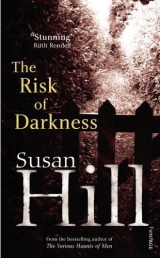
Текст книги "The Risk of Darkness"
Автор книги: Susan Hill
Жанры:
Криминальные детективы
,сообщить о нарушении
Текущая страница: 15 (всего у книги 19 страниц)
“Uncle Simon, Uncle Simon, this is Jane, she’s brought us two books, I’ve got a new Lemony Snicket and Sam’s got—”
“No you haven’t, it isn’t just for you, Lemony Snicket is for me as well, so—”
“Sam c”
“Well, I read Lemony Snicket first, I found out about it and now Hannah’s pretending she likes it best.”
“And the other book is called The Fantora Family Files, have you read that?”
Felix started to wail. Mephisto the cat leapt off the kitchen sofa and fled out between Simon’s legs and up the stairs. Simon stood in the doorway, besieged by the children, his arms full of presents. Cat was at the table but was now reaching down to haul the wailing Felix on to her lap. Beside her sat the young woman priest who had been kept prisoner in her house by Max Jameson. She wore a pale pink T-shirt and no dog collar.
Cat gave a single sharp look at the stuff he was carrying. “Ah. Guilt offerings.”
“God, I knew you’d say that.”
“Well, it’s true. Come on then, hand over. Lovely, lovely booze, oh, Si, what fantastic delphiniums.”
“I’m afraid one of the books seems to be redundant.” He took the Lemony Snicket volume out of its paper bag.
Sam came over and held out his hand. “Thanks,” he said, “one each. I can read mine to myself. Hannah has to have it read to her.”
“Sam c”
“Oi, I’ll have you carpeted, DC Deerbon, that’s no way to talk to your DCI.”
“Sorry, guv.”
Simon dumped the bottle on the table and went to the cupboard to look for a vase to put the flowers in, Hannah beside him, clinging on to his arm, Sam following, trying to push his sister out of the way.
“Jane and I were planning on a nice quiet girls’ night in.”
“OK, fine, I know where the fish-and-chip shop is.”
“It’s fish and chips here c well, haddock and a potato-and-parsley bake.”
“So much more delicious.”
He filled the vase with water, stripped off the paper and cut the stems of the flowers. Jane Fitzroy was watching him.
“Oh, yes, he’s quite handy,” Cat said, seeing her.
“Uncle Simon, there was lightning with blue in it.”
“In Lafferton it had a red lining.”
“Scar-y.”
“Lightning is caused by—” Sam began.
A mobile phone rang. The room was a picture in a frame, the children silenced.
“Oh, help, it’s mine, sorry, sorry. Where is it?” Jane got up and looked round the kitchen.
A denim bag was hanging on the chair handle beside Simon. He looked down at the blue light flashing on the mobile in its depths. “Seems to be here.”
“Help c sorry, how stupid. I hope it isn’t anything, I’m enjoying myself too much.”
“That’s because of us,” Sam Deerbon said airily, plonking himself on the sofa and opening his own copy of Lemony Snicket.
Jane went out of the room, holding the phone to her ear, still apologising.
“Sorry,” Simon said to Cat, watching Jane.
“OK. Thanks for the guilt offerings.”
“Not sure it was my shout.”
“What?”
He held up his hands.
Cat subsided. Felix reached out and grabbed the peppermill, which crashed on to the floor.
“I don’t mind going. If you’ve got things to talk about.”
“We’d finished the business meeting. Hospice politics.”
“Problems?”
“Yes. You don’t want to know. Stay.”
“I’d like to.” He glanced at the door through which Jane had vanished.
“No, Si,” Cat said. “Absolutely not.”
“I didn’t see it at first. She’s beautiful.”
“Yes, she is. And no!” But then Cat looked up. “Jane? What’s the matter?”
Jane’s face was pale as a candle as she stood just inside the doorway, staring at her phone.
“Jane?”
It seemed a long time before she could speak. “That was the police. About my mother.”
“Isn’t she back at home?”
“Yes. Apparently someone broke in.”
“Oh no, Jane, not again c have they taken a lot?”
“They c he didn’t say. About anything being taken. Just that they’d beaten her unconscious. She’s very ill.” She looked around her as if not understanding where she was. “I have to go,” she said. “I have to go to London.”
Simon put down the wine glass he had been holding. “Let me have your phone. For the number. I’ll call them back.”
“I have to go.”
“I know,” he said, holding out his hand. Jane handed him her mobile. “You just get ready,” he said, leaving the kitchen to make the call outside. “I’ll drive you there.”
Ten minutes later Simon closed the car door, glanced back and saw Cat beckoning. He hesitated, then waved, and swung the car towards the gate, without looking back.
Five minutes later, his own phone rang. He clicked it on to hands-free.
“Guv?”
“Hi, Nathan, anything? I’m just setting off for London.”
“Oh. Right. Only we’ve got a body.”
“Hold on.” He slowed and glanced at Jane. “Sorry, I’ll have to take this.”
“Don’t be silly, it’s your job. It’s fine.”
“Sure?”
She smiled. “Just do it.”
“Nathan?”
“OK, guv, young woman, Hayley Twiston, single mother, one boy, living in a couple of rooms in Sanctus Road.”
“Behind the canal.”
“That’s it c neighbours heard her baby crying for a long time. Went round eventually. Baby was on its own in a cot, quite distressed, seemed to have been there for a bit. They found the mother in the garden. She’d been hit over the head, probably a brick or a stone from the garden path. Someone had smashed down part of the fence. There’s blood marks on it, whoever it was cut themselves getting through.”
“The girl?”‘
“Doc says dead from one of two blows on the head.”
Jane drew in a sharp breath.
“Right. Forensics there?”
“Guv.”
“You take over now, Nathan, find out what you can, put people on to the neighbours, all the rest. I want everyone in the area questioned, anyone who might have seen someone on the canal path this afternoon. Relatives?”
“A brother in Bevham. Someone’s on to that.”
“The baby?”
“Social services are dealing.”
“Good work. I don’t know when I’ll be back, I’m driving a friend—her mother’s been taken to hospital. Keep me posted.”
“Guv.”
“You’re probably having second thoughts about Lafferton,” Simon said.
“No. I didn’t want a retirement village.”
“All the same. You were taken prisoner in your own house. Not good.”
“You live in the close, don’t you?”
He nodded.
“The peaceful life?”
“At the end of the day’s work among the violent and disaffected, yes.”
“It isn’t where I live or what happened which makes me wonder if I’ve come to the right place.”
“Do you wonder that?”
“Yes.”
He accelerated down the slip road and on to the motorway. The traffic was heavy.
“But everything’s connected, I suppose. The moment I arrived, my mother was burgled and I had to be back in London.”
“Is that where you were before Lafferton?”
“Yes. Assistant priest at a big north London church. Before that I was in Cambridge. That was where I trained.”
“Why did you move?”
“The cathedral. And I wanted to move into hospital chaplaincy c the job came up. That’s what happens. People don’t always realise it.”
“Like the police. You look for a particular job. Apply for it. Move.”
“Will you?”
“Move?” He shrugged.
“Sorry.”
Simon zipped into the fast lane and picked up speed. “Police driver,” he said, “so hang on.”
She did not speak again until they had left the first motorway and joined the next, which was quieter, now that the home-going traffic had eased. Then she said, “Poor girl. How will they start looking for whoever it was?”
“Probably straightforward. Usually is. It’ll be a relationship thing, boyfriend, some score to settle. Could well be sorted by the time I get back.”
“Just like that.”
“Hm.”
“Not like my mother.”
“Is there anyone who might have it in for her?”
“Only the thugs who came last time.”
“The Met’s pretty hot. They’ll have them.”
“But that won’t help her, will it? She can’t stay there. I’ll have to bring her to Lafferton, somehow.”
“Do you have room?”
“I’d have to find room.”
“Would she want to come?”
“To live with me? No. My mother’s an independent woman. And she finds it pretty embarrassing having a priest for a daughter.”
“Ah. My father finds it embarrassing having a policeman for a son.”
“Why on earth—”
“Serraillers are doctors. Hadn’t you noticed?”
“Like Fitzroys are Jews. My mother’s a child psychiatrist. A Hampstead intellectual atheist.”
“You’d fight?”
“Yes. But there’s no other solution.”
Simon had spoken on Jane’s mobile to the London police, so he knew that her mother’s condition was more serious than she realised. Lavatory paper had been pushed into her mouth, she had been tied to the sofa leg with wire, and then beaten.
Now he said calmly, “Take it bit by bit.”
“It would make it even more difficult for me to move.”
“So Lafferton was one big mistake?”
“I don’t know, Simon. It feels like it some days c nothing is working. I don’t like the bungalow; but is that because I was attacked there? I don’t find my colleagues in the cathedral easy; but is that because I’m so much younger than them and the only woman? I’m not getting on that well at Bevham hospital because not many people want a chaplain and a lot of those who do are Catholics or Muslim, which leaves me a bit of a spare part. I love the time I spend at the hospice but there’s a problem there c that’s what Cat and I were talking about this evening.”
“So you’ll run away.”
She was silent.
“I’m sorry. I don’t know how I could have said that.”
“Perhaps because you’re right. I was feeling sorry for myself. People who feel sorry for themselves quite often run away. It’s been a bit of a turbulent few weeks. Your sister has been a big help.”
“That’s Cat.”
“You’re close?”
“Usually.”
The phone rang.
“Nathan?”
“I’m at BG, guv. Just talked to the girl’s brother. He’s here to identify. Nobody on the scene—child’s father’s a Greek, holiday fling. Never been in the country. No other boyfriend so far as he knows. Doesn’t look like your open-and-shut. They’re getting DNA on the blood. No one saw or heard anything—no one much around in the afternoons there any road. You in London yet?”
“Another half-hour or so.” The call ended and Simon sighed.
“Worrying,” Jane said.
“DNA’s a wonderful thing.”
“Maybe.”
“They’ll go over your mother’s house for it, don’t worry. There’s an awful lot can be done nowadays.”
“How do you cope? You have to have a coping strategy, we all do.”
“I switch off.”
“How?”
He hesitated.
“I’m sorry. Not prying. But it’s interesting. Cat and I were talking about it, oddly enough. She has her family.”
“You have God.”
“Do you?”
“Not sure. I draw.”
“Draw?”
Simon negotiated the roundabout between the motorway and the stretch of dual carriageway into London. It was raining now. A stream of dipped headlights crossed theirs, heading in the opposite direction.
“As in pencil,” he said. “It was a toss-up between that and the police. Maybe still is.”
“So you’re good?”
He shrugged.
“With me, it was swimming.”
“Water or God, then?”
“Not mutually exclusive.”
“There’s a good pool in Bevham.”
“I stopped. In sport, there’s a point when you either go for it, to the top—or quit. I wasn’t going to the top. And even if I had, in the end swimming wasn’t enough.”
“Why not?”
“I’m not competitive enough. And you have to be. Aggressively competitive. I’m not.”
“Lafferton should suit you. Not a very striving, achieving sort of place. Nor, I guess, is the Church of England.”
“Oh, you’d be surprised. But I didn’t come to Lafferton for the quiet life.”
“But you did come to get away from London.”
“Not really. I came to get away from my mother.” She put her hands to her face. “Oh God.”
“It’s OK,” Simon said quietly.
Under an hour later, he stood just outside the main entrance to the hospital talking to the Met’s DI Alex Goldman. He looked younger than Nathan Coates.
“She’s in a bad way. Docs aren’t hopeful.”
“This isn’t the first time.”
“Might be unconnected. This time, nothing was taken, nothing disturbed. Forensics are all over everything. We’ll get them. You a relative?”
“No.”
The DI gave him a sharp look. “Right.”
“Just no.”
“We’ll need to talk to the Reverend at some point.”
Simon’s phone rang.
“Nathan.”
“Nothing new, guv. I’m for home. Be in first thing. Get on top of it then. You OK?”
Simon hesitated. He wanted to tell Nathan where he was and why, and the need to do so puzzled him. “Fine. Just sorting something out for a friend. I’ll see you in the morning.”
“Cheers, guv.”
Two women, a hundred or so miles apart, one young, battered to death in her garden, one old, battered almost to death in her house. No obvious suspects, no obvious motives, no robberies, no trace of anyone or anything. They were unconnected and yet, to Serrailler, they seemed linked in some dreadful intangible way, part of a pattern, part of a connection with him and with his work and his life. He was angry at the apparently pointless, random violence, but there seemed more behind both incidents than there would be behind a couple of street muggings or burglaries which had got out of hand.
He was putting his phone away and heading towards the entrance doors when he saw Jane Fitzroy walking slowly down the corridor. He watched her. She looked small, distracted, pale. Vulnerable. Her hair was like curling copper wire, glinting in the artificial light. He wanted to freeze her image until he had caught it with pencil on paper.
He went through the doors towards her.
“She didn’t come round.” She was shaking. Simon took her arm and led her to a bench against the wall.
“She didn’t know I was there.”
“But you were. And you know you can never be sure c people often do sense someone with them.”
“I’ve said that. I’ve tried to make people feel better. But she didn’t, Simon. She was miles away and she just went further and further c like someone drifting out to sea. I couldn’t reach her and then she was gone. She looked c terrible. She didn’t look like herself. Whoever did this to her c”
She fell silent. Out of the corner of his eye Simon saw DI Goldman and waved him away.
“What am I going to do?”
“Do you want to go to the house?”
“Must I?”
“Absolutely not. There won’t be anything else for you to do tonight. I’ll take you back.”
“Where?”
“Back to Lafferton.”
“Yes. Is that home? I suppose it is.”
“I’ll ring my sister. You shouldn’t be on your own and her spare room is always ready for someone.”
“It’ll be too late, I couldn’t c”
“Jane. It’s fine.”
“I feel hopeless. I ought not to be like this.”
“Oh? And why is that?”
She smiled weakly.
“So, policemen and doctors and what DI Goldman calls reverends are superhuman—whatever.”
He stood up and held out his hand and, after a moment, she took it. As they reached Simon’s car, she began to cry.
Fifty-one
He was wet. He was near water. He put his hands up to his hair and it was wet. His head ached and his left hand burned with pain. The sky growled. Lizzie. He fumbled about in the dark cavities of his memory to find out what had happened to her. Lizzie. She had been sitting in a garden with her back to him and there had been something wrong, something different.
Max realised that he was bending forwards, as if he had been trying to vomit on to the ground but there was no vomit. He sat up. It was almost dark. He stood up. The canal smelled of rotting vegetation churned up by the storm. No one was near. Not Lizzie. Not c
He stumbled away, along the path, slipping on the mud. Something was wrong, something buzzed in his head like a warning, but he had no sense of what it could be. He had been drinking whisky but the bottle was no longer in his pocket. It had been hot and humid and he had seen Lizzie in a garden but something had been different. His hand hurt.
It was like having a broken dish with the pieces scattered randomly about the floor and some of the large, important sections missing altogether. He kept shaking his head as he made his way back down the towpath to the gap, through it and into the street. There was no one about and he wanted there to be someone, anyone that he could speak to, anyone who would reassure him that he was still a man, who existed, who had a name and a home, who was c There was no one. He needed warmth and a drink, dry clothes. Lizzie. Anyone. If he did not see someone he might somehow lose all sense of himself, lose his grasp on where he was as well as who, lose everything that he had left.
He went slowly up the stairs to the apartment. Someone might be there now, Lizzie might have come back before him. He thought he could smell her, the slightly sharp, lemon scent she always wore.
There was no one, of course. No Lizzie. No anyone. The flat always brought Max back to himself.
His clothes seemed to be drying. He took out a fresh bottle of whisky, poured himself a tumbler, and switched on the radio beside the sink.
Ten minutes later, he was running, the whisky burning in his mouth and the pit of his stomach, the flat door left open, the radio still on. He ran through the streets like a deranged animal, chased by the voices, slipped on the wet pavement and almost fell, crossed the road and was almost struck by a motorbike, ran through a knot of people, ran round a couple, skirted a bus shelter, took a wrong turn and came down a cul-de-sac and had to retreat, still running, running, running, and now the rain came again, soaking him for the second time and somehow helping him, clearing his head and washing everything out of him and down into the gutters.
Running, running, running, away from the voices and towards the place of safety.
Fifty-two
“Whatever I may have said, whatever impression I gave, my childhood was good. By comparison with most of the people I deal with every day, it was a paradise. The same probably goes for you, so let’s set aside the fucked-up childhood c begging your pardon, Reverend.”
“If you call me Reverend once more, I walk.”
“Walk home?”
“Right.”
Simon looked at her across the table. “I bet you would too.”
He had pulled off the motorway for petrol, and for food and coffee. The place was almost deserted. The all-day breakfast was surprisingly good, the coffee foul. Jane put a piece of bacon on the end of her fork, stared at it, then set it down again.
“Eat.”
“I have.”
“Half a piece of tomato. Uh-huh, Reverend.”
But he saw that the joke was over. All jokes were over. There was no joke about where they had been and why.
“You’re right of course. My mother was difficult, but my father was wonderful, we had a comfortable home, I liked my school, I had swimming. Nothing to whinge about. Will they want me back there tomorrow?”
“No. It’ll wait a few days. They’ll focus on finding whoever it was.”
“Why would they come back again and then take nothing? Why?”
“For the record, I don’t think they did. I think this was someone else.”
Jane shook her head.
“I’ll be on to them in the morning. Nothing for you to do.”
“I’m at Bevham General all day. That’ll keep my mind occupied.”
“Sure you should? It isn’t business as usual. Your mother was murdered, Jane.”
“Thank you. I know what happened.”
As they went to the door, a car pulled up and unloaded a pile of young men, in various stages of abusive drunkenness. Two of them barged through into the café, the third was violently sick all over his own feet. A fourth swayed towards Simon and Jane.
“What you fuckin’ starin’ at?”
“That’s enough,” Simon said quietly.
“Oh yeah? Enough, enough c” He spat hard.
Simon glanced back into the café. He could see the drunks, leaning over the counter, shouting, grabbing trays and food. There were a couple of women behind the counter, a teenage girl clearing tables.
“Take the keys, lock yourself into the car. I’ll call a patrol. Go.”
Jane ran. Two of the men were still on the forecourt. Simon backed away, so that he could keep his eye on them while he used his phone. But now the driver of the car had parked and was walking towards him.
“Stay where you are, I’m a police officer. Stand still.”
“So fuck yourself, Blondie, who you telling to stand still, I ain’t done anything, what’ve I fuckin’ supposed to have done?”
“Driven a car while under the influence, for starters. I said, stay where you are.”
There was a scream from the café, then another. Simon swung round and in through the doors. One man was standing on a table, holding a chair up in the air, the other was leaning over the counter, gripping the wrist of the server. The only thing in Simon’s favour was that they were drunk and all over the place and he was focused, but he was outnumbered, and the others would be inside at any moment.
He pressed the button on his mobile again, and issued another, urgent request, keeping his eye on the two men, barring the door to the others as best he could. The women were screaming and in the split second it took him to glance at the girl who was being held, the man with the chair jumped down and hurled it at Simon’s head. He ducked but by now the man himself was lunging forward, fists going for Simon’s face, foot up ready to kick into him.
There had been no one else in the café, but, as he warded off a blow with his arm, Simon saw a figure come forward in a rugby tackle and bring his attacker crashing down and yelping with pain as he hit the floor, his arm bent under him.
Seconds later, the forecourt was full of screeching tyres and spinning blue lights and the café full of uniform.
The man who had brought Simon’s assailant down was brushing his coat sleeves. He was in his fifties with the build of a tank.
“Came from the Gents and heard the screaming. You OK?”
“I’m bloody glad you did. Thanks. You’ll be needed as a witness. I’m a police officer by the way—not with this force. I was having a pit stop when it all kicked off. They’ll take your details.”
Simon shook the man’s hand. How rare, he thought, how almost unheard of for a member of the public to wade in instead of making a run for it. He deserved a commendation. Press recognition. A medal.
Jane was in his car, the doors locked, white as chalk. She let Simon in.
“I think I’ve had enough,” she said.
The roads were quiet and Simon drove fast. He had called ahead to Cat and the spare room was ready. For half an hour, Jane slept. The phone woke her.
“Serrailler.”
It was the duty sergeant processing the drunken young men.
“Gentleman who stopped your attacker, sir—you get his name by any chance?”
“No. Didn’t ask. Your mob showed up so I left everything to them.”
“Right.”
“Go on, don’t tell me.”
“Well, apparently there was mayhem, and the bloke didn’t wait. We got his car on the forecourt CCTV though.”
“Well, trace him through that.”
“We did. Car’s registered to a Bishop Waterman.”
“Didn’t look like a bishop.”
“He wasn’t, that’s the thing. Car was reported stolen fromthe Bishop a couple of days ago.”
“No wonder he didn’t give me his name.”
“Some hero!”
“Look, Sergeant, I don’t care if he’s nicked a bus. So far as I’m concerned he stopped a fist before it hit my face.”
“We’ll need a statement.”
“Goodnight, Sergeant.”
“When I was younger,” Jane said, “my mother had a saying: kindness never pays. I hated it then and I hate it now—as if you do a kindness in order to be paid. Only the trouble is, and it’s very, very annoying, it so often turns out to be true.”
“Do a good deed and it turns round and bites you?”
“Something does.”
“Right. We call it police work.”
“You drive very fast.”
“Sorry.” He eased his foot off the accelerator.
“I suppose you have automatic immunity.”
“No, not when I’m not on duty.”
“Will you take me home? I can’t land on your sister.”
“She likes it.”
“I feel I’m losing myself in all of this.”
“No. You’ve had a series of appalling things happen. Let other people take the strain. What’s wrong with that?”
“I do the strain-taking. I should.”
“Oh, for God’s sake.”
“Yes.”
“I’m not sure about God. You’d better know that.”
“Why?”
“Not sure. Cat always has been—she says she couldn’t do her job otherwise.”
“Not: why not God? Why had I better know it?”
He did not reply.
“I meet more people who are not sure about God than who are. I often meet them at the point where they start asking the question.”
“I’m not asking the question.”
“Fine. But I didn’t become a priest to preach to the converted, though I suppose I do that most of the time.”
“You prefer being at the hospital to being in the cathedral?”
Jane leaned her head back wearily. “I don’t know, Simon. I honestly don’t know if any of it is working out. I used to think I’d become a nun.”
“God Almighty.”
“Indeed.”
“I’m glad you changed your mind.”
“I don’t know that I did.”
“You can’t mean that?”
They were on the Lafferton bypass making for the Deerbons’ farmhouse. Simon was aware that he had been driving too long. He thought he would make sure Jane was settled and then sleep on the sofa in the kitchen. He was too tired for another twenty-minute drive back into Lafferton.
“I go on retreat to a monastery twice a year. Sometimes I think I’ll stay.”
He had nothing to say. The idea appalled him but too much had happened for him to feel safe to ask why. He turned into the farmhouse gateway. Lights were on upstairs and down. It was after two o’clock.
Chris was in the kitchen waiting for some milk to heat and upstairs Felix was crying.
“Hi. Bad night?”
“Bad night,” Simon said.
“You’re Jane, I’m Chris. I’ve just come in.”
Ten minutes later Jane was upstairs talking to Cat who had resettled Felix. Chris had taken hot chocolate to them both.
“Whisky,” he said, coming back into the kitchen.
“Now you’re talking. I’ll kip on here if it’s OK, I can’t drive home.”
“Sure. Her mother died?”
“Surprised she made it to hospital, the injuries she sustained. I saw the DI on the case.”
“What’s going on, Si? Patient of mine was murdered in her own garden and I was called out to the hospice tonight to a body in theirs. Bloke slit his wrists out there. Some poor woman whose husband had just died went out to get some air and found him.” Chris slumped on to the sofa. “I’ve had it up to here.”
“Have a weekend off. Ma’ll have the children.”
“She can’t cope with Felix. Not sure she can cope with the others now, to be honest. We’ve been a bit concerned about her.”
“I need to go over there. I get so caught up. Bloody stupid. What’s wrong?”
“Not sure. Cat wanted her to go for tests but she won’t of course. I feel like heading off, Si.”
“Thought you were heading back into hospital life. You’re just tired of being a GP.”
“Tired, period.”
There it came again, the threat Simon tried to ward off, that the new start would mean Australia. That and Jane Fitzroy’s threat—
“You could have the camp bed in Sam’s room,” Chris said getting up. “Or I could put it in Cat’s office.”
“I’m too tall for the camp bed and Sam wakes up at half past five.”
“See you then.”
Simon fetched the blanket and pillow from the playroom. He liked the kitchen. It was warm and it gave off a faint, comforting hum. The red light glowed from the dishwasher. After a couple of minutes, he heard the bump of the cat flap and felt Mephisto leap on to the sofa, curl into the small of his back, and settle down to purr.
Fifty-three
The noise was the worst thing. She wasn’t bothered by the rest of it, only by the noise. Banging, rattling, shouting, clanging. Everything here was made of metal, everything made a racket. Plates and doors and staircases and corridors and keys. Nobody walked about without their footsteps sounding through your head, nobody spoke without their voice echoing round the iron stairwells. In the day it was bad but the nights were worse. Someone started shouting, another followed, someone else screamed, someone began to bang on a door. Then the footsteps and the keys and the shouting again. Ed had put her pillow over her head but it made no difference. She screwed toilet paper into plugs and stuffed them in her ears but the noises were still there, only hollow, like noises heard at the bottom of a well. Still heard though. Her breakfast had come. She’d eaten the toast and drunk the tea. Everything else was filth. Slime and filth and grease. But the toast was OK. More or less cold but OK.
Then the footsteps and the key.
“Morning, Ed.”
That was one thing. They’d asked what she wanted to be called and she’d said Ed and that had been that.
This one’s name was Yvonne and she was like a sparrow, not much bigger than Ed. Her hair had a red streak down the side where she’d tried out a colour, she said, only thank God she had just done the one streak. “What was I thinking?”
“How are you?”
Ed shrugged.
“Right, there’s been a contact through the Prison Location Service. Your mother sent in a visitor’s request.”
“I don’t want to see her. I don’t have to.”
“No. You don’t have to, you have that right. Only– think about it, Ed. How’s she feeling?”
“Haven’t a clue.”
“Do you not get on with your mother?”
Ed shrugged again.
“Fell out?”
“Not exactly.”
“She’s your mother though, and you’ve just got the one. She’d be a support, wouldn’t she?”
“I don’t need a support.”
“You sure about that?”
“What do you keep asking me things like that for?”
“Because most people in your situation need support c they need all the support they can get, ask me.”
“She isn’t involved.”
“Looks like she wants to be.”
“Well, I’ve said, I don’t want her. So I don’t want to see her. Anyway, she’s got other fish to fry.”
“You got sisters and brothers?”
“Nothing to do with you.”
Yvonne sighed. “Gawd, you make life difficult.”
Silence.
“Not difficult for me, Ed, difficult for yourself. What are you so proud for?”
“The sausages are disgusting. Tell them I said so.”
“Right. I mean, right, your mother will be told via the PLS that you don’t want contact, not right I’ll put your complaint to the kitchens. You should be so lucky. Thing is though, Ed, she can write to you. She can’t come and see you without your agreement, but wouldn’t it be good to get a letter?”
“No.”
“Think about her.”
“You’ve said that once.”
“She’ll have things she wants to say. Questions maybe.”
“She won’t get answers. I told you, she’s got other stuff c she got married again. Leave it there.”
“You don’t get on with your stepfather then? Well, that’s nothing unusual. Matter of fact, I don’t much go for mine but he’s made my mum happy. Think about it, Ed.”
“Can I go to the library?”
“Sure. Open at ten. I’ll fetch you.”
“What do you have to fetch me for? Let me go on my own, for God’s sake. What do you have to nanny me for? Bloody hell.”
Yvonne leaned against the wall and looked Ed full in the face for some moments, in silence.
She’s OK, Ed thought. She’s not soft, she’s not clever, but she’s OK. I could do worse for a minder.