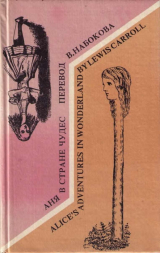
Текст книги "Alice's Adventures in Wonderland. Аня в стране чудес"
Автор книги: Льюис Кэрролл
Жанры:
Зарубежная классика
,сообщить о нарушении
Текущая страница: 2 (всего у книги 12 страниц)
По этому же пути пошел и Набоков – и создал легкие, блестящие и очень смешные пародии! «Исходными» для них послужили «Казачья колыбельная», «Бородино», «Песнь о Вещем Олеге» и некоторые другие стихи, столь же хорошо известные русским детям, как и английские – читателям Кэрролла. А Набоков адресовал свой перевод детям – и, вероятно, даже и не думал о том, что в этой веселой детской книге многое может быть понятно лишь весьма образованным взрослым и специалистам. Не будем упрекать его в этом: мы уже говорили, что глубинный математический, логический и лингвистический смысл обеих сказок об Алисе открылся современному читателю благодаря специальным комментариям представителей разных областей знаний лишь во второй половине XX века.
Перевод имен персонажей «Страны чудес» ставит перед переводчиком ряд дополнительных проблем, которые не разрешимы путем простого русификаторства. Ведь имена у Кэрролла не просто значимы: они зачастую определяют и характер персонажа, и его поведение. Скажем, «Шляпник» в главе о «Безумном чаепитии» – не просто шляпник: он вызывает у английского читателя немедленную ассоциацию с «Безумным Шляпником» из поговорки: «as mad as a hatter». У русского читателя такая аллюзия не возникает – и в результате он не понимает, что в этой главе действуют два патентованных безумца («Мартовский Заяц» перекочевал к Кэрроллу из другой поговорки: «as mad as a March Hare»). Отсюда и вся безумная логика этой главы, и загадки без ответа, и глупейшие каламбуры, и многое-многое другое. Набоков не ставил перед собой задачи дать русскому читателю намек об исконном, идущем из далеких времен «безумстве» персонажей. Точно так же, назвав «Mock-Turtle» «Чепупахой» (веселое «бессмысленное» словечко, в котором брезжит и некий «смысл», как и полагается по законам нонсенса!), он утрачивает «этимологию» этого имени. Правда, Герцогиня в девятой главе объясняет Алисе, что «это то существо, из которого варится поддельный черепаховый суп», а немного дальше в той же главе Чепупаха смотрит ни них «большими телячьими глазами, полными слез», но все ли поняли эти намеки даже в тогдашней, благополучной относительно нас России и русском зарубежье? Да и как связать эти детали с именем Чепупахи, даже если знаешь, что «поддельный черепаховый суп» варится из телячьих ножек? Характерно, что на рисунке Залшупина Чепупаха не имеет никаких «телячьих» атрибутов, в то время как у Тенниела их предостаточно.
Ряд персонажей у Кэрролла имеют имена, прямо связанные с ним самим или с сестрами Лидделл и другими известными им лицами. Скажем, Додо – это сам доктор Доджсон: когда он волновался, он начинал заикаться и произносил, представляясь, свое имя «До-до-джсон», Попугай Лори – это сестра Алисы Лорина, Eaglet – это вторая ее сестра Edith, Duck – приятель Доджсона Роберт Дакворт (Duckworth), который принимал участие в знаменитом пикнике, когда Кэрролл начал рассказывать по просьбе Алисы сказку. Сестры Лидделл появляются опять в главе о «Безумном чаепитии» под зашифрованными именами Elsie, Lacie, Tillie – очень смешные у Набокова «Мася, Пася и Дася» с реальными именами девочек Лидделл никак не связаны. Сейчас нам очень трудно сказать, насколько известна была биография Кэрролла Набокову в то время, когда он переводил «Алису». Знал ли он вышедшее в год смерти Кэрролла подробное жизнеописание, составленное его племянником и первым биографом доктором Коллингвудом, и другие материалы, исправно публиковавшиеся в течение всей первой четверти нового века? Или, что тоже вполне возможно, не ставил перед собой задачи связывать свой перевод со всеми этими частными подробностями авторской жизни, полагая, что они не будут должным образом восприняты в детской книге без комментария?
По части словесной игры «Страна чудес» представляет для переводчика множество всяких головоломок. Уоррен Уивер, видный американский математик, составивший замечательную коллекцию переводов «Алисы в Стране чудес», которую незадолго до смерти он продал Техасскому университету, так классифицировал эти трудности в книге «Алиса на многих языках»:
а) «стихи, которые в большинстве случаев представляют собой пародии английских стихов, без сомнения, хорошо знакомых современникам Доджсона»…
б) «каламбуры,
в) использование специально сконструированных слов или слов-нонсенсов, которые порой попадаются в тексте и весьма часто – в стихах,
г) шутки, связанные с логикой,
д) и, наконец, не поддающиеся классификации сдвиги в значениях, в основе юмористические, всегда неожиданные и неотразимые, которые иногда бывают мягкими, а иногда довольно резкими».[19]
Мы уже говорили о стихах. Каламбуры Кэрролла Набокову очень удаются – думается, что это происходит в силу той соприродности, о которой шла речь в начале нашей статьи. Перечитайте главы о «Безумном чаепитии» или «Омаровую кадриль», которые изобилуют словесными шутками такого рода, и вы увидите, с каким удовольствием молодой Набоков предается этой игре. Порой, правда, его каламбуры грубоваты – приведем одну из строф «Папы Вильяма»:
Еще одно позволь мне слово:
Сажаешь ты угря живого
На угреватый нос.
Его подкинешь два-три раза,
Поймаешь… Дядя, жду рассказа:
Как приобрел ты верность глаза?
Волнующий вопрос!
Викторианца Кэрролла, избегающего каких бы то ни было «сальностей» или физических подробностей типа «сопли», весьма часто встречающихся у молодого Набокова, верно, покоробило бы от «угреватого носа», никак не вписывающегося в его поэтику. Заметим тут же, что подробности такого рода нередки в переводе Набокова, впрочем, это не умаляет выразительности придуманных им параллелей.
Не менее каламбуров удаются Набокову шутки, святые с логикой, или «сдвиги», которые, по словам Уивера, особенно трудны для перевода, ибо зависят от тончайших оттенков в употреблении слов. Эти неожиданные «сдвиги» Набоков также очень чувствует и удачно передает – хотя они у него опять звучат несколько более определенно и даже грубо.
Вообще говоря, в почерке молодого Набокова чувствуется большая сила и накал, однако, может быть, это происходит потому, что он адресует свою книгу детям – и только детям, и вот у него Кролик «семенит», а Алиса, «вихрем сорвавшись», кидается за ним, а он же опять от нее «улепетывает в темноту», дочь старой Рачихи «огрызается», Гусеница «взвивается на дыбы», Голубь «взвизгивает» и т. д. Впрочем, возможно, что таково уж свойство русского языка, гораздо более определенного и эмоционального в окраске отдельных слов? В своем знаменитом «Постскриптуме к русскому изданию» романа «Лолита» стареющий писатель признавал: «Телодвижения, ужимки, ландшафты, томление деревьев, запахи, дожди, тающие и переливчатые оттенки природы, все нелепо-человеческое (как ни странно!), а также все мужицкое, грубое, сочно-похабное выходит по-русски не хуже, если не лучше, чем по-английски; но столь свойственные английскому тонкие недоговоренности, поэзия мысли, мгновенная перекличка между твлеченнейшими понятиями, роение односложных эпитетов, – все это, а также все относящееся к технике, модам, спорту, естественным наукам и противоестественным страстям становится по-русски топорным, многословным и часто отвратительным в смысле стиля и языка. Эта неувязка отражает основную разницу в историческом плане между зеленым русским литературным языком и зрелым, как лопающаяся по швам смоква, языком английским: между гениальным, но еще недостаточно образованным, а иногда довольно безвкусным юношей и маститым гением, соединяющим в себе запасы пестрого знания с полной свободой духа. Свобода духа! Все дыхание человечества в этом сочетании слов».[20] В словах мастера о гениальном юноше слышится, как нам кажется, и отзвук мыслей о себе…
О набоковском переводе можно еще многое было бы сказать. Например, он весьма удачно справляется с синтаксисом, гораздо более тяжелым в русском языке, чем в английском («в английском, видимо, требуется не столь сложная электропроводка, как в русском», заметит он в 1959 году), свидетельствует начало сказки, где он разрубает большие периоды Кэрролла на более короткие русские фразы и таким образом избегает тяжести, которая неизбежно возникла бы из-за длины русских слов и сложного синтаксиса. Можно было бы писать и о том, как уже здесь он проявляет склонность к прямым калькам с английского – это станет осознанным художественным приемом позднее. И снова то, что впоследствии будет декларировано как «vive le pedant и долой простаков, которые думают, что все хорошо, если передан дух (а слова между тем без присмотра пустились в бега…»),[21] ощущается порой как «неуклюжесть» одаренного юноши, которому еще предстоит – но мы это твердо знаем! – стать мастером.
Конечно, можно было бы и отметить некоторые провалы или просчеты – скажем, между «роялем и слоном» в загадке, которую задает Шляпник, гораздо больше сходства, чем между «вороном и конторкой» (the raven и the desk) у Кэрролла. Или что личные местоимения, как ни странно, представляют некую сложность для молодого переводчика, который заставляет «существ» обращаться к Алисе то на «ты», а то на «вы» (и это одно и то же «существо» и один и тот же разговор, и психологической подоплеки для этого нет никакой), и что он, очевидно, не учитывает, что по английской традиции все сказочные персонажи – существа мужского рода, в то время как в русском языке нет такого строгого ограничения (именно этим объясняется тот странный факт, что у Набокова на яйцах сидит не голубка, а голубь). Но не будем вдаваться во все эти подробности.[22] Нам гораздо важнее сейчас отметить другой факт – что работа над «Страной чудес» проявила ту изначально существовавшую потенциальную соприродность двух авторов. И дело не только в том, что оба страдали бессонницей, были «педантами», увлекались шахматными задачами и кроссвордами (известно, что Нароков немало времени и сил отдал составлению шахматных задач и «крестословиц», что и нашло свое преломление в его творчестве), задумывались о таких метафизических проблемах, как «время», «пустота» или «ничто», имели вкус к конструированию особых слов и миров. Дело еще и в том, что у обоих была та редкая склонность к всевозможной словесной «игре», которая отличает лишь очень немногих. Возможно, что вчитывание в «Страну чудес» в самом начале творческого пути определило – или, скорее, помогло определить – многие темы зрелого, гениального Набокова. И тема сна – перечитайте подряд конец «Страны чудес» и финал «Приглашения на казнь»! – и тема зеркал или двойничества, и неотвязный вопрос «Who are you?», и многое-многое другое. И за это мы должны быть благодарны тому неизвестному нам сейчас человеку, который предложил молодому русскому эмигранту сделать перевод классической детской книжки, написанной скромным английским математиком.
В переводе «Ани» очень чувствуется глубоко личная, «набоковская» тема. Она звучит и в его заменах: скажем, «сироп» вместо английской «патоки» (treacle) в главе о «Безумном чаепитии» заставляет немедленно вспомнить «Другие берега» («За брекфастом яркий паточный сироп, golden syrup, наматывался блестящими кольцами на ложку, а оттуда сползал змеей на деревенским маслом намазанный русский черный хлеб»),[23] а «ангельский» напоминает о том, что в семействе Набоковых слово «английский» произносилось «с классическим ударением (на первом слоге)». И может быть, тот факт, что из всех стихотворений «Страны чудес» Набоков опустил стихотворное посвящение, предваряющее сказку, имеет в этом плане особый смысл.
Alice! A childish story take,
And, with a gentle hand,
Lay it where Childhood’s dreams are twined In
Memory’s dreams mystic band,
Like pilgrims wither’d wreath of flowers
Pluck’d in a far-off land.
Это посвящение Кэрролла, обращенное в прошлое, Набокову было невозможно перевести, ибо оно напоминало – столь живо и ясно! – об утраченном золотом сне, «сказочном счастливом» детстве и годах, проведенных в России…[24]
Н. Демурова
Alice's Adventures in Wonderland

All in the golden afternoon
Full leisurely we glide;
For both our oars, with little skill,
By little arms are plied,
While little hands make vain pretence
Our wanderings to guide.
Ah, cruel Three! In such an hour,
Beneath such dreamy weather,
To beg a tale of breath too weak
To stir the tiniest feather!
Yet what can one poor voice avail
Against three tongues together?
Imperious Prima flashes forth
Her edict 'to begin it':
In gentler tones Secunda hopes
«There will be nonsense in it!»
While Tertia interrupts the tale
Not more than once a minute.
Anon, to sudden silence won,
In fancy they pursue
The dream-child moving through a land
Of wonders wild and new,
In friendly chat with bird or beast —
And half believe it true.
And ever, as the story drained
The wells of fancy dry,
And faintly strove that weary one
To put the subject by,
«The rest next time» – «It is next time!»
The happy voices cry.
Thus grew the tale of Wonderland:
Thus slowly, one by one,
Its quaint events were hammered out —
And now the tale is done,
And home we steer, a merry crew,
Beneath the setting sun.
Alice! A childish story take,
And, with a gentle hand,
Lay it where Childhood’s dreams are twined
In Memory’s mystic band,
Like pilgrim’s wither’d wreath of flowers[25]
Pluck’d in a far-off land.[26]
Christmas-Greetings
(From a Fairy to a Child)
Lady dear, if Fairies may
Far a moment lay aside
Cunning tricks and elfish play,
Tis at happy Christmas-tide.
We have heard the children say —
Gentle children, whom we love —
Long ago, on Christmas-Day,
Came a message from above.
Still, as Christmas-tide comes round,
They remember it again —
Echo still the joyful sound
«Peace on earth, good-will to men!»
Yet the hearts must child-like be
Where such heavenly guests abide;
Unto children, in their glee,
All the year is Christmas-tide.
Thus, forgetting tricks and play
For a moment, Lady dear,
We would wish you, if we may,
Merry Christmas, glad New Year!
Christmas, 1867.

I. Down the Rabbit-Hole

Alice was beginning to get very tired of sitting by her sister on the bank, and of having nothing to do: once or twice she had peeped into the book her sister was reading, but it had no pictures or conversations in it, 'and what is the use of a book, thought Alice 'without pictures or conversation?’
So she was considering in her own mind (as well as she could, for the hot day made her feel very sleepy and stupid), whether the pleasure of making a daisy-chain would be worth the trouble of getting up and picking the daisies, when suddenly a White Rabbit with pink eyes ran close by her.
There was nothing so very remarkable in that; nor did Alice think it so very much out of the way to hear the Rabbit say to itself, 'Oh dear! Oh dear! I shall be late!’ (when she thought it over afterwards, it occurred to her that she ought to have wondered at this, but at the time it all seemed quite natural); but when the Rabbit actually took a watch out of its waistcoat-pocket, and looked at it, and then hurried on, Alice started to her feet, for it flashed across her mind that she had never before seen a rabbit with either a waistcoat-pocket, or a watch to take out of it, and burning with curiosity, she ran across the field after it, and fortunately was just in time to see it pop down a large rabbit-hole under the hedge.
In another moment down went Alice after it, never once considering how in the world she was to get out again.
The rabbit-hole went straight on like a tunnel for some way, and then dipped suddenly down, so suddenly that Alice had not a moment to think about stopping herself before she found herself falling down a very deep well.
Either the well was very deep, or she fell very slowly, for she had plenty of time as she went down to look about her and to wonder what was going to happen next. First, she tried to look down and make out what she was coming to, but it was too dark to see anything; then she looked at the sides of the well, and noticed that they were filled with cupboards and book-shelves; here and there she saw maps and pictures hung upon pegs. She took down a jar from one of the shelves as she passed; it was labelled 'ORANGE MARMALADE', but to her great disappointment it was empty: she did not like to drop the jar for fear of killing somebody, so managed to put it into one of the cupboards as she fell past it.
'Well!’ thought Alice to herself, 'after such a fall as this, I shall think nothing of tumbling down stairs! How brave they'll all think me at home! Why, I wouldn't say anything about it, even if I fell off the top of the house!’ (Which was very likely true.)[27]
Down, down, down. Would the fall never come to an end!’I wonder how many miles I've fallen by this time?’ she said aloud. 'I must be getting somewhere near the centre of the earth. Let me see: that would be four thousand miles down, I think– (for, you see, Alice had learnt several things of this sort in her lessons in the schoolroom, and though this was not a VERY good opportunity for showing off her knowledge, as there was no one to listen to her, still it was good practice to say it over) – yes, that's about the right distance-but then I wonder what Latitude or Longitude I've got to?’ (Alice had no idea what Latitude was, or Longitude either, but thought they were nice grand words to say.)
Presently she began again. 'I wonder if I shall fall right through the earth! How funny it'll seem to come out among the people that walk with their heads downward! The Antipathies,[28] I think – (she was rather glad there WAS no one listening, this time, as it didn't sound at all the right word) – but I shall have to ask them what the name of the country is, you know. Please, Ma'am, is this New Zealand or Australia?’ (and she tried to curtsey as she spoke-fancy curtseying as you're falling through the air! Do you think you could manage it?) 'And what an ignorant little girl she'll think me for asking! No, it'll never do to ask: perhaps I shall see it written up somewhere.
Down, down, down. There was nothing else to do, so Alice soon began talking again. 'Dinah'll miss me very much to-night, I should think!’ (Dinah was the cat.)[29] 'I hope they'll remember her saucer of milk at tea-time. Dinah my dear! I wish you were down here with me! There are no mice in the air, I'm afraid, but you might catch a bat, and that's very like a mouse, you know. But do cats eat bats, I wonder?’ And here Alice began to get rather sleepy, and went on saying to herself, in a dreamy sort of way, 'Do cats eat bats? Do cats eat bats?’ and sometimes, 'Do bats eat cats?’[30] for, you see, as she couldn't answer either question, it didn't much matter which way she put it. She felt that she was dozing off, and had just begun to dream that she was walking hand in hand with Dinah, and saying to her very earnestly, 'Now, Dinah, tell me the truth: did you ever eat a bat?’ when suddenly, thump! thump! down she came upon a heap of sticks and dry leaves, and the fall was over.
Alice was not a bit hurt, and she jumped up on to her feet in a moment: she looked up, but it was all dark overhead; before her was another long passage, and the White Rabbit was still in sight, hurrying down it. There was not a moment to be lost: away went Alice like the wind, and was just in time to hear it say, as it turned a corner, 'Oh my ears and whiskers, how late it's getting!’ She was close behind it when she turned the corner, but the Rabbit was no longer to be seen: she found herself in a long, low hall, which was lit up by a row of lamps hanging from the roof.
There were doors all round the hall, but they were all locked; and when Alice had been all the way down one side and up the other, trying every door, she walked sadly down the middle, wondering how she was ever to get out again.

Suddenly she came upon a little three-legged table, all made of solid glass; there was nothing on it except a tiny golden key, and Alice's first thought was that it might belong to one of the doors of the hall; but, alas! either the locks were too large, or the key was too small, but at any rate it would not open any of them. However, on the second time round, she came upon a low curtain she had not noticed before, and behind it was a little door about fifteen inches high: she tried the little golden key in the lock, and to her great delight it fitted!
Alice opened the door and found that it led into a small passage, not much larger than a rat-hole: she knelt down and looked along the passage into the loveliest garden you ever saw. How she longed to get out of that dark hall, and wander about among those beds of bright flowers and those cool fountains,[31] but she could not even get her head though the doorway;’and even if my head would go through, thought poor Alice, 'it would be of very little use without my shoulders. Oh, how I wish I could shut up like a telescope! I think I could, if I only know how to begin. For, you see, so many out-of-the-way things had happened lately, that Alice had begun to think that very few things indeed were really impossible.
There seemed to be no use in waiting by the little door, so she went back to the table, half hoping she might find another key on it, or at any rate a book of rules for shutting people up like telescopes: this time she found a little bottle on it, ('which certainly was not here before, said Alice,) and round the neck of the bottle was a paper label, with the words 'DRINK ME' beautifully printed on it in large letters.

It was all very well to say 'Drink me, but the wise little Alice was not going to do that in a hurry. 'No, I'll look first, she said, 'and see whether it's marked «poison» or not'; for she had read several nice little histories about children who had got burnt, and eaten up by wild beasts and other unpleasant things, all because they would not remember the simple rules their friends had taught them: such as, that a red-hot poker will burn you if you hold it too long; and that if you cut your finger very deeply with a knife, it usually bleeds; and she had never forgotten that, if you drink much from a bottle marked poison, it is almost certain to disagree with you, sooner or later.
However, this bottle was not marked 'poison, so Alice ventured to taste it, and finding it very nice, (it had, in fact, a sort of mixed flavour of cherry-tart, custard, pine-apple, roast turkey, toffee, and hot buttered toast),[32] she very soon finished it off.
* * *
'What a curious feeling!’ said Alice ’I must be shutting up like a telescope’.
And so it was indeed: she was now only ten inches high, and her face brightened up at the thought that she was now the right size for going through the little door into that lovely garden. First, however, she waited for a few minutes to see if she was going to shrink any further: she felt a little nervous about this;’for it might end, you know, said Alice to herself, 'in my going out altogether, like a candle. I wonder what I should be like then?’ And she tried to fancy what the flame of a candle is like after the candle is blown out, for she could not remember ever having seen such a thing.
After a while, finding that nothing more happened, she decided on going into the garden at once; but, alas for poor Alice! when she got to the door, she found she had forgotten the little golden key, and when she went back to the table for it, she found she could not possibly reach it: she could see it quite plainly through the glass, and she tried her best to climb up one of the legs of the table, but it was too slippery; and when she had tired herself out with trying, the poor little thing sat down and cried.
'Come, there's no use in crying like that!’ said Alice to herself, rather sharply;’I advise you to leave off this minute!’ She generally gave herself very good advice, (though she very seldom followed it), and sometimes she scolded herself so severely as to bring tears into her eyes; and once she remembered trying to box her own ears for having cheated herself in a game of croquet she was playing against herself, for this curious child was very fond of pretending to be two people.[33] 'But it's no use now, thought poor Alice, 'to pretend to be two people! Why, there's hardly enough of me left to make ONE respectable person!’
Soon her eye fell on a little glass box that was lying under the table: she opened it, and found in it a very small cake, on which the words 'EAT ME' were beautifully marked in currants. 'Well, I'll eat it, said Alice, 'and if it makes me grow larger, I can reach the key; and if it makes me grow smaller, I can creep under the door; so either way I'll get into the garden, and I don't care which happens!’
She ate a little bit, and said anxiously to herself, 'Which way? Which way?’, holding her hand on the top of her head to feel which way it was growing, and she was quite surprised to find that she remained the same size: to be sure, this generally happens when one eats cake, but Alice had got so much into the way of expecting nothing but out-of-the-way things to happen, that it seemed quite dull and stupid for life to go on in the common way.
So she set to work, and very soon finished off the cake.
II. The Pool of Tears
'Curiouser and curiouser!’ cried Alice (she was so much surprised, that for the moment she quite forgot how to speak good English);’now I'm opening out like the largest telescope that ever was! Good-bye, feet!’[34] (for when she looked down at her feet, they seemed to be almost out of sight, they were getting so far off). 'Oh, my poor little feet, I wonder who will put on your shoes and stockings for you now, dears? I'm sure I shan't be able! I shall be a great deal too far off to trouble myself about you: you must manage the best way you can; – but I must be kind to them, thought Alice, 'or perhaps they won't walk the way I want to go! Let me see: I'll give them a new pair of boots every Christmas.

And she went on planning to herself how she would manage it. 'They must go by the carrier, she thought;’and how funny it'll seem, sending presents to one's own feet! And how odd the directions will look!
ALICE 'S RIGHT FOOT, ESQ.
HEARTHRUG,
NEAR THE FENDER,
(WITH ALICE 'S LOVE).
Oh dear, what nonsense I'm talking!’
Just then her head struck against the roof of the hall: in fact she was now more than nine feet high, and she at once took up the little golden key and hurried off to the garden door.
Poor Alice! It was as much as she could do, lying down on one side, to look through into the garden with one eye; but to get through was more hopeless than ever: she sat down and began to cry again.
'You ought to be ashamed of yourself, said Alice, 'a great girl like you, (she might well say this), 'to go on crying in this way! Stop this moment, I tell you!’ But she went on all the same, shedding gallons of tears, until there was a large pool all round her, about four inches deep and reaching half down the hall.
After a time she heard a little pattering of feet in the distance, and she hastily dried her eyes to see what was coming. It was the White Rabbit returning, splendidly dressed, with a pair of white kid gloves in one hand and a large fan in the other: he came trotting along in a great hurry, muttering to himself as he came, 'Oh! the Duchess, the Duchess! Oh! won't she be savage if I've kept her waiting!’ Alice felt so desperate that she was ready to ask help of any one; so, when the Rabbit came near her, she began, in a low, timid voice, 'If you please, sir– The Rabbit started violently, dropped the white kid gloves and the fan, and skurried away into the darkness as hard as he could go.

Alice took up the fan and gloves, and, as the hall was very hot, she kept fanning herself all the time she went on talking: 'Dear, dear! How queer everything is to-day! And yesterday things went on just as usual. I wonder if I've been changed in the night? Let me think: was I the same when I got up this morning? I almost think I can remember feeling a little different. But if I'm not the same, the next question is, Who in the world am I? Ah, that's the great puzzle!’ And she began thinking over all the children she knew that were of the same age as herself, to see if she could have been changed for any of them.
'I'm sure I'm not Ada, she said, 'for her hair goes in such long ringlets, and mine doesn't go in ringlets at all; and I'm sure I can't be Mabel,[35] for I know all sorts of things, and she, oh! she knows such a very little! Besides, she's she, and I'm I, and-oh dear, how puzzling it all is! I'll try if I know all the things I used to know. Let me see: four times five is twelve, and four times six is thirteen, and four times seven is-oh dear! I shall never get to twenty at that rate! However, the Multiplication Table doesn't signify: let's try Geography. London is the capital of Paris, and Paris is the capital of Rome, and Rome – no, that's all wrong, I'm certain! I must have been changed for Mabel! I'll try and say «How doth the little-» and she crossed her hands on her lap as if she were saying lessons, and began to repeat it, but her voice sounded hoarse and strange, and the words did not come the same as they used to do: —
'How doth the little crocodile
Improve his shining tail,
And pour the waters of the Nile
On every golden scale!
How cheerfully he seems to grin,
How neatly spread his claws,
And welcome little fishes in
With gently smiling jaws!’
[36]
'I'm sure those are not the right words, said poor Alice, and her eyes filled with tears again as she went on, 'I must be Mabel after all, and I shall have to go and live in that poky little house, and have next to no toys to play with, and oh! ever so many lessons to learn! No, I've made up my mind about it; if I'm Mabel, I'll stay down here! It'll be no use their putting their heads down and saying «Come up again, dear!» I shall only look up and say «Who am I then? Tell me that first, and then, if I like being that person, I'll come up: if not, I'll stay down here till I'm somebody else» – but, oh dear!’ cried Alice, with a sudden burst of tears, 'I do wish they would put their heads down! I am so very tired of being all alone here!’
As she said this she looked down at her hands, and was surprised to see that she had put on one of the Rabbit's little white kid gloves while she was talking. 'How can I have done that?’ she thought. 'I must be growing small again. She got up and went to the table to measure herself by it, and found that, as nearly as she could guess, she was now about two feet high, and was going on shrinking rapidly: she soon found out that the cause of this was the fan she was holding, and she dropped it hastily, just in time to avoid shrinking away altogether.
Почитать похожее на эту книгу

 Сквозь зеркало и что там увидела Алиса, или Алиса в Зазеркалье (Пер.Н.М. Де ...
Автор: Льюис Кэрролл