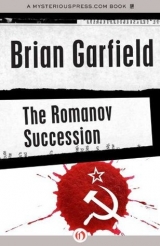
Текст книги "The Romanov Succession"
Автор книги: Brian Garfield
сообщить о нарушении
Текущая страница: 3 (всего у книги 22 страниц)
He knew it was no good trying to go back to where they’d been long before; clocks didn’t run backward. But that wasn’t what she was asking for. It took a great effort of will for her to express contrition: it was the first time he’d known her to humble herself when it wasn’t contrived. She was an aristocrat, the daughter of a Count-they were a class of people who’d go to war before they’d apologize for anything important. He had a feeling she’d agonized over this; she’d rehearsed it. But that didn’t make it any less genuine-it only emphasized the vital importance it had for her.
“Irina-”
“You don’t need to be gentle.” But she was watching him, ready to close everything down and bleed silently inside.
He touched her nape and she half turned on the couch; her breast trembled against him. Her face came up and she curled obediently into his arms. Then suddenly she was gripping his back with desperate strength and the tears burst from her. “Oh my darling Alex.”
Daylight curled around the drapes. Irina lay across the bed with sprawled abandon.
He waited until the day brought her awake. Her eyes were puzzled for a brief instant and then they softened; it made the planes of her face blur in contentment.
He kissed her and got to his feet. Her lips parted; she followed him with her eyes. She stretched opulently like a cat.
“I’ve got to go to Washington.”
“I know. You’ll be back tomorrow.”
“You could come down with me.”
“I haven’t finished doing Fifth Avenue.” She smiled, watching him knot his tie.
In the dining room, waiting to be led to their table, she wet her lips and contrived to touch his hand with elaborate casualness; at the table she devoured her first cup of coffee greedily and stared at him wide-eyed with her lips peeled back from her teeth: sultry and sensuous. She was the most sophisticated of women and the most primitive. Her appetites were atavistic and without inhibition and when she committed herself she held nothing back.
Walking him out to the portico she drew and held the stares of every pair of eyes in the plush lobby. She’s Garbo and Dietrich in one, young Prince Felix had said in awe after he’d first met Irina.
When the taxi took him away she was standing on the steps shading her eyes.
8
Colonel Glenn Buckner had an office in an overflow annex not far from the War Department. Alex tried to get his bearings; the lettering in the corridors was baffling. Officers carrying documents hurried through in creased poplin-there was a kind of muted urgency about them. Alex asked directions and reached Buckner’s office ten minutes ahead of his scheduled appointment.
A half-bald sergeant sat at a small desk rattling a typewriter. He stopped long enough to look up.
“Colonel Danilov to see Colonel Buckner.”
“I’m sorry sir, he’s over to the White House. He’ll be here sometime, that’s all I can tell you. You can get coffee in the canteen down the hall.”
Finally at ten minutes before twelve a bulky brisk man in a blue flannel suit came along the hall. “Danilov? I’m Glenn Buckner.”
Buckner was not more than thirty. His hair was cordovan brown and all his bones were big. He had a wide square face and quick blue eyes. “I’m sorry I kept you waiting.”
The sergeant said, “You had a call from Admiral King’s C of S, sir.”
“Later.” Buckner’s handshake was firm but he wasn’t a knuckle-grinder. “Come on in. Don’t mind me being in mufti-people on the Hill get nervous if they see too many uniforms goose-stepping into the White House so a lot of us wear civvies. The President’s idea. Shut the door, will you? Take a seat. Be right with you.”
It was a small room with a metal desk and two telephones; no window. The walls were pale yellow on plain sheetrock-temporary partitions. It had been carved out of a bigger room at some point. Buckner pulled open a wooden file drawer and rummaged; made a throat noise of satisfaction, lifted out a thin folder and carried it to the desk. “Go on-sit down, sit down.” Buckner cocked a hip on the corner of the desk and sat with one ankle dangling.
“I’d better start by establishing credentials. You know who I am?”
“Aide to General Marshall, I gather.”
“In a way. Actually I’m attached to the White House-military advisor on Soviet affairs. I was Military Attache in Moscow until a few months ago.”
Alex shifted mental gears; he hadn’t anticipated this.
Buckner said, “I’m told you hate the Bolsheviks.”
“No.”
Buckner smiled slowly. “Okay, You’d better explain that one.”
“I’m a White Russian, Colonel. We were brought up to hate Bolsheviks but you outgrow that after a while. I’m not crazy about Communists but I don’t hate them.”
“For a man who can’t be bothered to hate them you’ve spent a lot of time shooting at them.”
“That’s something else,” Alex said. “That’s Stalin.”
“Ah. I see now.”
“Stalin’s no more a Communist than Hitler is.”
“Well you’ve got a point there.” Buckner watched him speculatively. “You’re acquainted with General A. I. Deniken, I think.”
“Yes.”
“He commands a good deal of clout in Washington. Secretary Stimson’s known him for years. Your General Deniken was in a position to get the ear of the Secretary. He brought us an idea. Deniken approached Secretary Stimson. The Secretary and I conferred and then we took it to the President. He listened. The idea didn’t originate with Deniken, it came to him from a group of your people in Europe. Principally the group around your Grand Duke Feodor and his cousin, what’s his name, Leo Kirov?”
“Leon. Prince Leon.”
“Ordinarily it wouldn’t have cut any ice. I mean it’s a bunch of exiled leaders who’ve never even bothered to set up a government-in-exile on paper. There are three Grand Dukes all claiming to be the real Pretender to the Czar’s throne-and none of them speak to each other and one of them’s a Nazi. I mean it’s not the kind of situation anybody takes seriously from the outside. That’d be sort of like trying to restore the King of England to the North American throne.
“But Deniken wasn’t talking about restoring the monarchy in Russia. He was talking about winning the war, or losing the war.
“Right now this country’s in the same frame of mind that Chamberlain’s England was in at the time of the Munich pact. We need time to educate the people. Time for the President to convince those blind idiots in Congress that they can fight or they can surrender but they can’t just go on ignoring it. You can’t be an isolationist in the age of the long-range bomber and the aircraft carrier.”
The pencil point broke; Buckner threw it down. “Sorry. I didn’t mean to speechify. I get pissed about it. All right, this proposal your people put forward-the President thinks it may help us buy the time we need.”
“You’re keeping a lot under your hat.”
“I have to. Look, this conversation is not taking place. Understood?”
“Yes.”
“You’re not going to meet President Roosevelt, Colonel. You’re only going to meet me. You understand why?”
“I think so.”
“If you flap your lip in the wrong places it won’t hurt anybody but me. I’ll deny it and you’ll look like an ass. Officially I’m not on the White House staff. There’s nothing on paper that empowers me to speak for the President. That’s the way it’s got to be-we’ve got to cover the President’s ass. Clear enough?”
“Yes.”
“If I’m challenged I’m prepared to testify that you and I are meeting right now to discuss your duties on your new assignment on the Soviet desk at War Department Intelligence. That’s your official roster duty, by the way, until you hand in your resignation.”
“My what?”
“We’ll get to that,” Buckner said. “This is a complex operation they’ve proposed. We’re going to need close liaison at all points. Your name was put forward by Prince Leon and his group-they said you were one of them and one of us at the same time, you’d be the ideal contact man.”
“What about you? What do you think?”
“I go along with them. It’s their operation.”
“From the way you’re talking I’m getting the feeling you’re making it yours. President Roosevelt’s.”
“It’s got to be a Russian operation. Led by Russians and manned by Russians exclusively. There can’t be a single American involved in it. We’ll provide support but it’s got to be invisible. You can understand that.”
“I might if I knew what it was.”
“I have to leave that up to your own people.”
“I’m an officer in the United States Army. You’re my people,”
“Not if you take this job on. You’ll have to resign your commission. That’s what I meant before.” Buckner smiled a bit ruefully; his smile laced crow’s feet around his eyes and gave him an outdoor look. “It won’t be a piece of cake, Colonel, but it could make you a mighty big place in history if that sort of thing impresses you.”
“Tell me this-who’s got the final authority over operational plans?”
“I’d hope we’d be able to take that on the basis of mutual cooperation. But the decision will have to be up to your people, ultimately. Frankly that’s one reason I’m pleased with this meeting. I have a feeling you and I should be able to work together pretty well.”
Buckner riffled the files in the open folder on his desk. “If your people blow the operation it’s their own neck. The United States had nothing to do with it. I hope they all understand that.”
“I’ll make sure they do.” It could affect their decisions; it might even cool them from the plan, if that seemed necessary. He felt handcuffed by ignorance: he had to contain his anger.
Buckner produced a typed letter-order. “You’re officially on thirty-day furlough as of now. Go to Europe, talk to them, get it all settled among you. Then come back and tell me what you’ve decided and we’ll get to work.” He handed it across the desk. “Don’t waste time. The war isn’t standing still for us. I’m going to book you on the diplomatic plane to Lisbon tomorrow afternoon.”
“You’d better make it two seats.”
It caused a momentary freeze. Buckner’s expression inquired of him; then it changed before Alex could speak. “The Countess. Sorry, I forgot.”
It was Irina’s mother who was the Countess but he didn’t take the trouble to set Buckner straight. “You don’t miss much, do you?”
Buckner had an ingratiating grin that showed a great many teeth. “Not when it counts. That’s what the President pays me for.”
Alex found himself liking the American despite his suspicions. Buckner didn’t have the secretive trappings that usually went with positions like his.
Buckner seemed to sense the line of his thinking. “You’re coming into this dead cold, aren’t you? It’s all brand new to you. I gather the Countess couldn’t tell you much about it.”
“No.”
“That’s a hell of a woman.” He was turning pages over; he paused at one. “This is your letter of resignation. You’ll decide whether you want to sign it-it’ll be waiting here when you get back from Europe.”
“You’re pretty confident. Otherwise you wouldn’t have had it typed up.”
“You’ll take the job,” Buckner said. “You’d be crazy not to.”
But Buckner didn’t know Vassily Devenko.
PART TWO:
August 1941
1
The assassin stood in shadow just within the fringe of the oaks. He could not be seen out of the sunlight-he was merely another dark vertical shape in the forest shadows with the heavier mass of the mountains looming above and behind him.
It was his last chance. He’d tried it and miffed it twice before. Blow it again and his employers would have his head in a basket. But he didn’t feel nervous on that account. If you had nerves you didn’t go into this game in the first place.
He held the 8x Zeiss glasses casually by their strap. At intervals he fitted the reticles to his eye sockets and studied the long motorcars arriving by ones and twos.
The villa a thousand meters below him was a restored seventeenth century ducal summer palace, erected recklessly in the foothills of the Pyrenees by an insensitive Bourbon during a time of Spanish decline and retrenchment. Its builder’s wealth obviously had exceeded his grasp of architectural unities: from the assassin’s angle of view it resembled a village of semidetached buildings haphazardly assembled at different times.
He had never been inside it but he had seen photographs of the interior and had committed a draftsman’s schematic plans to memory. Its rooms were constructed on an awesomely grand scale-made possible by the mild Spanish climate which minimized the need to contain heat. The ceilings were very high, most of them arched or vaulted; there were floors of marble and walls of Alhambra tile; floors of inlaid wood and walls of common plaster covered with murals and extensive bas-relief. There were enough stately bedchambers to accommodate a score of royal hunting guests and courtesans; and plain quarters sufficient to contain fifty-two servants. Many of these were unoccupied now.
The assassin knew that the king’s chamber-the four balconied windows directly above the porte cochere – was occupied by the villa’s present owner-of-record, the Grand Duke Feodor Vladimirovitch-one of the three Romanov Pretenders to the throne of St. Petersburg and a leading member of the last ruling family of Imperial Russia.
But the Grand Duke was an old man and infirm. It was his first cousin, Prince Leon Kirov, who managed the Grand Duke’s villa-as well as his widespread business affairs, his social and familial obligations and his life.
Feodor’s estate was maintained by twelve house servants, five gardeners, two grooms and four chauffeurs. On the grounds they kept a string of jumpers and thoroughbred pleasure horses, seven automobiles and a flock of ducks and geese on the man-made pond. The Romanovs and Kirovs took their exercise on bridle paths or playing tennis on the lawn or practicing archery against targets stuffed with straw. There were garden parties all summer long and none of the motorcars parked below the porte cocehre was below the rank of Duesenberg or Hispano-Suiza.
The thick green lawn stretched away from the house two hundred yards down a wide swath bordered by formal woods. The main gate at the foot of the lawn, just visible to the assassin, was made of heavy wrought iron and it was guarded by two liveried sentries who wore sidearms. Beyond the gate waited a ravenous pack of tattletale journalists from international gossip rags; now and then when a stately car drew up a photographer would rush forward and crouch to get a picture but that was all right so long as they remained outside the gate.
The assassin watched a silver-grey Rolls approach the gate. He focused his field glasses on it until he could read the number plate. It hardly paused; it swept grandly through the portals and up the driveway. The assassin lowered his glasses. He had watched long enough to know the security procedures and that was all he needed. It was inside the villa that he’d have to do the job. He glanced at the sky, slung the field glasses and walked back through the wood.
He opened the boot of the gleaming black Packard. He seated the Zeiss binoculars in their case and changed from his scuffed climbing shoes into a pair of elegant black pumps-a better match for his evening clothes.
The Packard moved slowly down the rutted dirt track toward its intersection with the road that ran past the gate of the villa.
2
Within the villa the gathering of elegant people sprawled through more than half a dozen of the building’s public rooms on two stories. In the vaulted main ballroom-a spaciously proportioned chamber of seventeenth century grandeur, hung with old masters and ornate tapestries-a string orchestra played saccharine music and guests nibbled tidbits from an immense Louis XIV table set with crystal and silver and candelabra and vased blossoms from the villa’s greenhouse.
Toward the rear of the villa in the high arched gallery which gave out through glass panes onto formal gardens a separate balalaika orchestra provided accompaniment to a band of hired Cossack dancers who entertained inexhaustibly, squatting and leaping, grunting and shouting ferociously. Now and then a noble White Russian general would get swept up in the spirit of it and join the dancers.
Upstairs in the great drawing room the more sedate and elderly guests sat talking after each in turn had made the ritual pilgrimage into the bedchamber that contained the Grand Duke Feodor, confined to his canopied bed by a painful S-curved spine, the result of degenerative disc ailments that had afflicted him for more than a decade. The Grand Duke was sixty-three-not very old by Romanov standards of longevity-but the athletic strength of his St. Petersburg youth had been mocked by two decades of malaise, and what once had been a splendid towering physique was now twisted and cadaverous. A palsy of alarming intensity afflicted his long-fingered hands, mottled with cyanotic spots; his eyes blinked rapidly and his jaws worked and he looked at least eighty; his mind was lucid only at intervals. Prince Leon employed a Swiss physician full-time to watch over the failing Grand Duke with the help of two registered nurses from Harley Street and one of the three was always in attendance in Feodor’s antechamber.
The drawing room was occupied by a male elite. Most of them were fifty or more; all of them held titles or high military commissions from the long-ago Empire of Czar Nicholas II. The room was filled with cigar smoke and the fumes of Courvoisier and vodka and voices that said War, Invasion, Hitler, Minsk, the Stalin Line, Bolshevism, the Wehrmacht, the Red Army, Soviet Disaster-the last phrase spoken frequently and with energetic relish. To the extent that the rambling discussion was led its leader was Count Anatol Markov and he was speaking furiously. Betrayal, he said, and Vulnerability. Consequences. Country. Responsibility. And, he said, Decision.
3
Sergei Bulygin drove fast down the narrow gravel tracks of the Spanish foothills, enjoying the freedom and the sense of solitary control, the exhilaration of the twelve-cylinder roar and the rush of wind about the cockpit of the open Mercedes touring car. It made him understand what drew the young Prince Felix so obsessively to motor racing and airplanes. The young prince had explained it once to the old soldier, the white teeth flashing in his long tan face. “We’re a useless class of people, Sergei. Our circumstances prohibit us doing the ordinary things that you can do-working, earning a living. A man’s got to take an interest in something to justify his existence.” It had sounded cynical but he knew better: the young prince lived for the racing.
The gravel road carried him down a narrow ladder of bends and on down the river through the farms and villages of the valley. Most of it was cluttered with carts and pedestrians and the occasional chain-drive lorry and he made poor time but he had anticipated that; he arrived in ample time at the corrugated metal airport terminal of Barcelona, parked at the curb and went into the primitive waiting room; it was just past five o’clock and Alexsander’s plane was due.
There was no sign of the aircraft but that was not alarming. The German-dominated customs people at Lisbon enjoyed enforcing their petty bureaucratic power by hectoring foreign travelers with endless paper delays.
Sergei had not seen young Alex since Helsinki but there wouldn’t have been much change unless the American food had put weight on him; scars at the throat now, of course, from that Bolshevik bullet on the Finland border but perhaps Alex had taken to wearing a scarf to cover that. A scarf would be good, Sergei thought: it would give Alex a dashing look like an aviator.
He was only a valet now in the service of Prince Leon Kirov but Sergei was a soldier, that was his real calling and he looked forward keenly to Alex’s arrival because he had a feeling it meant there would be soldiering to do. There was a big war on and there ought to be a piece of it for Sergei Bulygin who had been a lance corporal in the Imperial Russian Infantry.
Sergei watched the sky through the dusty window of the waiting room and finally he was rewarded. The airplane appeared suddenly at low altitude; it described a slow turn at the far end of the tarmac. Sergei stood up.
Alex and Irina were the last of twelve off the plane. Irina was radiant, beaming up into Alex’s face, holding his arm-it was like years ago and Sergei felt a warm thrill of pleasure.
Alex wore a Shetland jacket and butternut trousers; against his thick brown hair the darkly tanned face looked hard and outdoor-wrinkled. He was leaner than ever and he towered over the other passengers walking across the tarmac. The sunlight lit the grey of his eyes as he turned out of sight into the customs-and-immigration doorway and Sergei was shaken momentarily by the coldness of them.
By twos and threes the arriving passengers appeared in the doorway with their luggage, were met and greeted and sometimes embraced; and trooped away across the waiting room. Finally Sergei was alone by the door and he saw them coming from the customs. Alex was folding visas and inspection documents into his passport and sliding it into his pocket, trailed by two porters carrying their grips. Then Alex looked up and found Sergei there.
The smile made him look very American. It was what Sergei had hoped to see. He lifted his big arms.
Alex laughed and folded Sergei in his strong hug. “Old friend-it’s so damned good to see you.”
Irina Markova had the expression Sergei could never fathom-like a cat’s. “I told you I’d bring him back, Sergei.” But then a shadow seemed to cross her face and suddenly her cryptic stare unsettled Sergei. He reached for their luggage.
He thought, Vassily Devenko should have died in Finland. “I’ll take you to the car. Was it a good flight? Was it the Portuguese who made you late? Has America changed at all since we were there?” He kept talking too fast for them to answer, all the way out to the car. They were laughing at him but it was good laughter and when he started the engine he made it roar out of his sheer exuberance.
The air was warm and a little damp coming off the Med. Irina found Alex’s hand and clasped it quietly. The Mercedes sighed in the road and the hair whipped around Irina’s face but she didn’t scarf it or tie it back. They passed under the lee of the mountain with Sergei monopolizing the talk and then they were curling along a river with the low sun stabbing through a spindle tracery of brush and trees. Small clouds scudded over the peaks. Alex felt deaf in the wind.
Sergei said, “The General Vassily Ilyavitch was not yet at the villa when I left. He is expected.”
“Yes,” Alex said. He turned and found Irina’s face deathly calm, chiseled in profile.
Sergei turned the car smoothly toward a massive open gateway. Flashbulbs erupted around them and Irina stared without expression past the photographers: they were beneath her recognition. They angered Alex-petty mongrels scrambling for scraps-but he didn’t let it show. A guard waved Sergei through and when he switched off amid the herd of big cars below the porte cochere the engine pinged with heat contractions and Alex heard music and a multitude of voices muttering from the villa. Colorfully costumed guests walked amid the profusion of formally shaped flower beds in the garden.
The car swayed when Sergei got out: he was a huge old man, a Kuban bear with his kind brown eyes and his wide Russian peasant face. The door opened under Sergei’s hand and Alex got out and waited for Irina; she swiveled to emerge and gracefully smoothed her elegant grey skirt. “You’ll enjoy the villa-it’s rather grand. Sergei, perhaps we can slip in by the kitchen? We’ll have to dress.”
But Sergei was looking past them toward the hills beyond the garden. Alex followed his gaze and saw a solitary horseman cantering down the distant bridle path.
“Heroes are always sculpted on horseback, aren’t they,” Irina said. “Isn’t it just like Vassily to arrive like that.” Then she laughed and the echoes rang back.