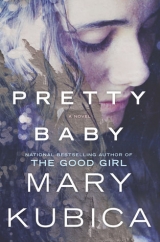
Текст книги "Pretty Baby"
Автор книги: Mary Kubica
Жанр:
Триллеры
сообщить о нарушении
Текущая страница: 10 (всего у книги 24 страниц) [доступный отрывок для чтения: 10 страниц]
“Coochy, coochy, coo,” I say, and it’s then that Zoe rises to her feet, unexpectedly, and says, “God! Enough with the baby talk already,” in that high frequency, falsetto voice only an adolescent girl can attain, before waltzing down the hall and slamming the door to her room.
WILLOW
“What was Miriam’s medical condition? Was she schizophrenic?”
I shake my head. “I don’t know.”
Outside the single, barred window, the one placed too high on the cinderblock wall, the sky is turning colors: red and orange quickly displacing the blue. The sentry in the corner yawns, a long, drawn out, exaggerated yawn, and Louise Flores looks at him sharply and asks, “Are we boring you?” and he stands suddenly at attention: chin up, chest out, shoulders back, stomach in.
“No, ma’am,” he replies and the jagged woman eyes him until even I begin to blush.
What was wrong with Miriam, I didn’t know, but whatever it was, I was pretty sure it was Joseph’s doing.
“You said that Miriam would take medicine on occasion?” Ms. Flores asks and I nod my head, yes. “What kind of medicine?”
“Little white pills,” I say. “Sometimes another one, too.” I tell her that the pills made Miriam look better, made her feel better and get out of bed for a while, but if she got to taking them too much, they just put her back in bed again.
But Miriam was always tired. Whether or not she was taking the pills.
“Did Joseph ever have her to a doctor?”
“No, ma’am. Miriam didn’t leave.”
“She didn’t leave the house?”
“No, ma’am. Never.”
“Why wasn’t Miriam medicated all the time?”
“Joseph said if God wanted her well, he would make her well.”
“But sometimes Joseph gave her the medicine?”
“Yes, ma’am. When Ms. Amber Adler came.”
“The caseworker?”
“Yes, ma’am.”
“Where did Joseph get the pills? If he didn’t take her to the doctor?”
“In the medicine cabinet. In the bathroom.”
“Yes, Claire, but how did the pills get there, if there was no doctor? You likely need a prescription for such medication. A pharmacy.”
I say that I don’t know. Joseph would tell me to fetch them, the little plastic baggies—she stops me there: “Plastic baggies?” she asks, and I say yes, and she scribbles something down on that notebook of hers beside the word z-e-a-l-o-t which I’ve been reading upside down for half an hour now, and still have no idea what it means. He’d pull some pills out and force Miriam to take them. Sometimes he had to pry her mouth open while I popped in the pills and then we’d wait, for as long as it took, for her to swallow. Miriam didn’t like the pills.
But once or twice a year, Joseph would get her to take the pills for a while, and she’d come out from the room and bathe herself, and we’d open up all the windows and it would be my job to get that god-awful Miriam smell out of the home before Ms. Amber Adler, in her junker car with the too-big Nike bag, arrived. He’d get out his toolbox and start fixing things around the house, paint over stains that had cropped up here and there around the home. Only when Amber Adler came to call did the dead lightbulbs get replaced, and squeaky hinges get oiled.
Joseph always had a new dress for me as opposed to the small, musty duds he dropped off in my room in a large white garbage bag, like he’d picked it up at the end of someone’s drive on garbage day. Once he even brought me a pair of shoes, patent leather which were far too big, but he told me to put them on nonetheless so Ms. Adler could see.
The caseworker brought letters from Paul and Lily Zeeger. She said she could give the Zeegers my new address, but after Joseph tore the photos of Momma into shreds, I said no thanks, that was all right, she could just bring the letters along when she came. Lily Zeeger wrote beautiful letters about my baby sister, Rose (Lily) with the name Lily always in parenthesis just in case I didn’t know who it was she was talking about. She said that Rose (Lily) was growing bigger and bigger every day, and that from the photos she’s seen, Rose (Lily) was looking more and more like our Momma, who was a stunning, sensational, dazzling woman (as if the many compliments might negate the fact that she’s dead). She said that Rose (Lily) was learning her ABCs, and how to count to ten, and that she could sing as well as the Yellow Warbler which, according to Big Lily, surrounded their Colorado home, and there were photos attached, of a charming little A-frame home snuggled right in the middle of the woods, with mountains in the background and a tiny dog, like a cocker spaniel or something, running around the legs of my Lily. And there she is, Little Lily, with the ringlets of black hair, black like Momma’s, that had grown longer and were clipped back in ladybug barrettes, and she was wearing a bright yellow sundress with ruffles and a bow as big as her head. And she was smiling. Paul Zeeger stood on a balcony in a shirt and striped tie, looking down at Little Lily, and I imagined Big Lily took the picture ’cause she was nowhere to be seen. Even the dog looked happy. The letter said how Rose (Lily) was taking a ballet class and loved to practice her pirouettes and relevés for Paul and Lily, and how she absolutely adored her cerise leotard and tutu, and that in the fall Rose (Lily) would begin preschool at the Montessori school in town.
“What’s a Montessori school?” I asked Ms. Amber Adler and she looked at me and smiled and said, “It’s a good thing,” while patting my hand.
I asked her why Paul and Lily Zeeger didn’t have any kids of their own. Why’d they need my Lily? And she said sometimes things just worked out that way. One or the other of them couldn’t have kids. It just wasn’t meant to be. And I thought of Joseph saying that if God wanted Miriam to be well, he’d make her well, and I thought that if God wanted Paul and Lily to have kids, he would have given them kids. Kids of their own. Not my Lily. Lily was mine.
I thought a lot about that A-frame house where Lily now lived. I thought about the tall, tall trees and the mountains and the dog. I thought how I’d like to go there, to that house in the woods, and see my Lily again. I wondered if I ever could.
Big Lily said that I could write a letter back to Rose (Lily) if I wanted to and she’d read it to her. So I did. I told her about the tulips outside our home (of which there were none) and what I was learning in school (there was no school). The only reading that went on in our home was from the Bible; the only writing was when Joseph made me copy word for word from Deuteronomy or Leviticus. The school reports that Joseph handed over to the caseworker—those which showed my poor grades in school—were forged, photocopies of Matthew’s or Isaac’s report cards that had been altered with my name, with failing grades in math and science, with teacher comments that detailed my disregard for authority figures, my misbehavior.
“Don’t you like school?” the caseworker would ask.
“I like it just fine,” I’d say.
“What’s your favorite subject?” she wanted to know. I didn’t know much about subjects. So I said math. “But, Claire, it says here that you are failing your math class,” and I would shrug and say that it was hard and she’d remind me, as she often did, how lucky I was to have Joseph and Miriam in my life. How other foster families would not be so flexible and understanding. “You need to try harder,” she would say to me, and to Joseph and Miriam, she’d suggest a tutor.
In my letters, I told Little Lily about living in the big city—Omaha—and I described the buildings; though I’d never once seen the buildings, I had an inkling they were there. This Omaha place was much different than Ogallala. I could tell that from the smells, the sounds, the kids on the other side of the window. Momma used to talk about Omaha when we were kids. About the people and buildings, museums and zoos. In my letters I told Lily about my brothers (who I barely knew). I told her about the friends I’d made in school (there were no friends) and how my teachers were an absolute delight (there were no teachers).
In Big Lily’s responses, she told me of Rose’s (Lily’s) fourth birthday present: a new bike, mint green and pink, with training wheels and tassels, a white wicker basket and a banana seat. There were pictures. Little Lily in a helmet on the bike with Paul Zeeger pushing from behind. The little cocker spaniel running after them. She told me of an upcoming vacation to California to see the beach. She said that this would be Rose’s (Lily’s) first time ever seeing the ocean and wondered: had I seen the ocean before? They’d picked out a new swimsuit and cover-up for the occasion. The next time the caseworker arrived, there were drawings from Lily herself, of the ocean and fish and blobs in the sand that may or may not have been seashells. And a bright yellow sun with rays that swept off the page. On the back Big Lily had written in her perfect penmanship: Rose (Lily), 4 years old.
They weren’t bad people.
In time I understood that.
But knowing it in my mind and in my heart were two very different things.
HEIDI
In the morning, Zoe—reluctantly—offers up another outfit for Willow to wear. This time black leggings that are far too short for Zoe’s own legs—and much shorter on Willow’s—and a sweatshirt with paint splatters on the front, an art smock from the previous school year.
“Zoe, please,” I say, “this one is a mess.”
“Fine,” she gripes, yanking an extra school cardigan from its hanger and thrusting it into Willow’s hands, “here.”
The girls eat breakfast—heaping bowls of Frosted Flakes—and then Zoe disappears to bathe and dress. Ruby, on my lap, is sound asleep, finally, having been up and agitated since before 5:00 a.m., awoken in the early hours of dawn by a fever. Because unhappy babies need to be rocked when they’re upset—and we, of course, had no rocking chair—I pressed her to my chest and moved back and forth, back and forth in a seesaw motion until she finally began to settle, until the muscles in my back began to burn. But I didn’t mind. There was something gratifying about it, something so satisfying when Ruby finally began to grow tired and slowly closed her eyes.
It was then that I lowered my body onto the leather armchair, completely immersed in the way Ruby’s eyelids fluttered when asleep, the way her tiny fingers folded over my thumb, refusing to let go. Completely immersed in the tiny toes of her left foot where she’d wiggled the lacy sock right off and onto the hardwood floor. Completely immersed in the filaments of hair that emerged from her head, in the softness of her scalp, the blanch skin.
So immersed, in fact, that I lost track of time completely, forgot about the need to walk Zoe to school, the need to go to work.
Before I know it, Zoe stands, hovering before the front door, her backpack thrown over a shoulder. She has her coat on, partway zipped, and an umbrella dangling by its cord from her wrist. “You ready to go?” she asks and I peer down at my own attire: at the robe and a pair of sheepskin slippers still warming my feet.
“Mom,” Zoe snaps this time, having just discovered that I’m still in my pajamas. I make no effort to move, fearful of waking Ruby from her nap. I feel my mouth open, a shh emerging so that Zoe’s voice will not rouse the baby from sleep.
Zoe, in a huff, frowns, her eyes bouncing between a clock on the wall and me, her body antsy. Her posture sags, her shoulders slump forward, the small of her back arched. Her backpack falls from her shoulder and into the crook of an elbow before she thrusts it back up and sighs.
I whisper, “I’m not going to work,” just like that. “You’ll have to walk yourself to school,” I say, expecting her to leap up and down with joy, for this is the one thing she’s been begging for years to do. To walk herself to school, alone, as her best friend Taylor is allowed to do.
But instead of joy, her mouth drops open and she says to me with disdain, “What do you mean you’re not going to work? You always go to work,” a fact altogether true, for the times that I’ve called in sick for work—even when a young Zoe was home sick with the flu—were few and far between. Often times it was Chris I begged to stay home from work, or when he was unable, his parents beckoned from their west suburban home, or, in moments of desperation, Graham.
But the weight of Ruby, sound asleep on my lap, reminds me that I cannot leave.
My finger, nestled in the flabby clutches of her hand, assures me I cannot go.
“I have plenty of vacation time accrued,” I say in a hushed tone, and then remind Zoe about the paper lunch sack awaiting her on the kitchen counter with ants on a log inside, a recent fad now that she’s watching her weight. I wonder if I watched my weight when I was twelve, doubtful, imagining that that, too, came later, sixteen or seventeen perhaps. She gropes for the bag, the paper crinkling loudly in the palm of her hand. Ruby stirs on my lap and opens her eyes ever so slightly, before stretching her arms high above her head and falling back to sleep.
“Have a good day,” I whisper to Zoe before she leaves, and she responds with a noncommittal, “Whatever,” before disappearing into the hall, leaving the door wide-open so that I have to ask Willow to close it please.
I’m hopeful that Zoe will remember to keep Willow a secret, that she will remember that she’s not to mention our guest to her classmates at school, to her teachers. Harboring a runaway for more than 48 hours is deemed a crime, a Class A misdemeanor punishable by up to a year in prison, years of probation, a hefty fine.
But knowing this and believing this are two different things. I find it hard to believe that I could ever be caught, or that the police would enforce such a penalty when what I am doing is helping this girl. I wonder where the police were when someone thwacked Willow so hard that the ochre bruise formed on her head, or when some lecherous man laid himself atop her body. Was she alone when Ruby was born, tucked down some dark alley at night, beneath rusting fire escapes and dripping air conditioner units, beside rat infested Dumpsters, leaned up against some brick wall covered with graffiti, the sounds of the city invalidating the sounds of her screams.
There’s an image I carry in my mind, that image of Willow, down a darkened alley, giving birth to a baby. As I sit on the leather armchair with Ruby sound asleep in my lap—Willow perched by the window in silence, watching pedestrians come and go—I count back four months in my head: March, February, January, December. Ruby would have been born sometime in December. Add to my image: dirty, slushy snow; the biting cold, freezing the blood as it oozed from the birthing canal.
In my image, Willow is replaced by Zoe: a daughter, someone’s daughter.
Where is her mother?
Why wasn’t her mother there to protect her from this ghastly fate?
I find myself staring at Willow, at the hair that hangs in her face, covering eyes that are slowly catching up on sleep, skin that is beginning to soften from the cold, spring air. She isn’t a tall girl, per se, about six inches shorter than me, so that I can see the top of her head, the place where tawny roots grow in from her scalp, uninterrupted by the imitation red.
I reach out and, without thinking, lay my fingers briefly on her infected earring holes, the skin red and crusty, the lobe beginning to bulge. She withdraws quickly from my touch, blanching as if I’d slapped her with the back of a hand.
“I’m so sorry,” I gasp, withdrawing my hand. “I’m sorry. I didn’t...” My voice wanders off. I gather myself, and try again with, “We should take a look at that. A little Neosporin might do the trick,” knowing that between Ruby’s ever-present fever and this, we may need to see a doctor before long.
After some time Willow asks, apprehensively, to borrow my copy of Anne of Green Gables, and I, of course, say yes, watching as she retires to Chris’s office to read. I watch as she carries the worn copy pressed close to her heart, and I wonder what significance the novel holds for her, its narrative committed to her memory like biblical text. I could ask her, I could ask Willow about the book, but I imagine her curling into a ball like an armadillo—or a woodlouse—at my interrogation, and hiding inside her armor shell.
I slip from the leather armchair and settle down at the kitchen table with my laptop and a mug of coffee, Ruby swaddled in a blanket and set on my lap. I pull up a search engine and type into the box: child abuse.
I come to learn that over a thousand children die each year in our country due to abuse or neglect on the part of their caregivers. Over three million child abuse reports are made each year, by teachers, local authorities, friends of the family, neighbors or the ubiquitous anonymous calls that child services receives. Child abuse can result in physical injuries: bruises and bone fractures, the need for sutures, damage to the spinal cord, the brain, the neck, second-and third-degree burns, and so on and so forth. Emotionally, the abuse is damaging, as well, leading to depression in even the youngest of victims, withdrawal, antisocial behavior, eating disorders, attempts at suicide, illicit sexual activities. And—as my eyes drift over the words, my mind forms an image of Willow, pregnant with a fetal Ruby growing inside her womb—teenage pregnancy. Victims of abuse are more likely to use alcohol and drugs, to participate in criminal activity, to fare poorer in school than the comparable child who has not been abused.
Who is the father of that child? I wonder as I get a second cup of coffee, dribbling creamer along the countertop as I do.
A lover? A boyfriend? A sadistic school teacher, one who took advantage of his position of power to seduce a student or maybe tempt her with an easygoing smile and an approachable manner? Or perhaps her own father? A neighbor? A sibling?
And then I remember: Matthew. Her brother Matthew. Who reads Anne of Green Gables.
Is Matthew the father of that child?
The sound of Willow’s feet pitches me across the room, and I slam the laptop shut so she doesn’t see the words scattered at random across the screen: assault and molest and sexual abuse. I stand, breathing hard, with hands on hips in an overdone impression of relaxation, as she asks permission to turn on the TV and I say, yes, of course, so long as she keeps the volume low. I watch as she settles on the leather chair and turns the TV to Sesame Street, the kind of kids’ show Zoe hasn’t watched since she was four or five. I find it odd, odd indeed; I’m not quite sure what to make of it.
But then, somehow or other, my concern for Willow starts to wane and I find my attention focusing on Ruby instead, the online child-abuse investigation morphing into a shopping expedition for rocking chairs, thinking less about that ochre bruise atop Willow’s head and more about a baby’s need to rock, about nestling before the big bay window with Ruby in my arms and watching for hours as raindrops fall from the sky.
CHRIS
One night turns into two.
Then two nights turn into three.
I’m not quite sure how it happens. I come home from work, ready and motivated to tell Heidi it is time for her to leave. I make a plan in my head, how I will give the girl fifty dollars—no a hundred bucks—enough for her to make due for a while.
I’ll map out the homeless shelters within the city limits, so Heidi can see I’m trying.
I’ll get her there myself. In a cab. Make sure she gets inside the shelter. Make sure they accept babies.
I go through the words in my head, what I will say to Heidi. I jot down a numbered list in my notes on the way home from work, the writing like chicken scratches from the motion of the train. As I walk from the Fullerton Station, I polish the words in my head. We’ll be generous, I’ll say. Give her plenty. Make sure she has everything she needs.
I’ll gaze into Heidi’s bewitching brown eyes and make her understand that this is the way it has to be. I’ll be tactful and delicate, I’ll use Zoe as justification.
Zoe might think you care more about Willow’s needs than you do her own.
Then she’ll see. If I pit Zoe against Willow, Heidi will see.
But as they say, the best laid plans of mice and men often go astray.
I’m not a block from home when thunder explodes in an otherwise quiet night, when the rain—cold, thick rain—begins to drop from the sky. A band of clouds rolls in across the city like a cinderblock wall. I break into a jog, aware that the temperature has begun to plunge, as well, a fifty-degree day morphing into a thirty-degree night.
What kind of monster would I be if I sent this girl off into a monsoon? That’s what Heidi would say, I think, as I climb the steps to our home, shaking the rainwater off my coat and hair.
I come in to find the girl on the couch, the evil black cat on her lap. Heidi and Zoe are at the kitchen table, discussing probability. Probability of simple events. Probability of overlapping events.
What is the probability of another rainy night during the wettest April on record?
Heidi has not gone to work for two days now in a row. Two days. It was me who, days ago, forbid her from leaving that girl alone in our home as my eyes roved from personal files to jewelry boxes to various electronics, pointing out all the things she was liable to steal. Heidi had eyed the forty-inch TV perched on the wall, imagined the girl walking down Fullerton with that in her hands, and asked, “Really, Chris?” pointing out what a pessimist I could be.
And I had said, “Don’t be so naive.”
But she has used this to her advantage, as an excuse to stay home from work rather than kick the girl to the curb as I had hoped she’d do. She said she couldn’t leave Willow alone for fear she’d steal something, the forty-inch TV or her father’s wedding ring.
The baby is on the floor, sound asleep. There are weathermen on the TV, talking about the string of storms set to pass through the city during the night, the type of storm system, they say, that produces tornadoes, causing widespread damage. If you live in the towns of Dixon or Eldena, take cover now. The storms are headed our way from central Illinois, from Iowa, red and orange blips on the Doppler radar that the weathermen flash on the TV screen.
Heidi asks, “Raining again?” as I hang my saturated coat on a hook by the door and slip out of my shoes, her voice elevated over the thumping sound of the rain. I say that it is.
“Just started up,” I say. “Getting colder, too,” as a clap of thunder rattles through the sky, shaking the building and everyone inside.
“Going to be a doozy,” says Heidi, about the storm, her eyes set on Willow across the room, stroking the cat with the palm of her hand, staring vacantly out the blackened windows. Lightning brightens the sky and she jumps, withdrawing into the sofa cushions as if she’s trying to hide.
I kiss Heidi and Zoe on the cheek, and take my leftover dinner, the plate on the countertop, tucked beneath a paper towel, to the microwave to reheat it. I peek under the paper towel and see pork chops.
Maybe this girl isn’t so bad after all.
The cold air disseminates through our home, through the breaches in the drafty windows. Outside, the wind howls and the trees sway. Heidi rises from her chair, crosses the room and flips on the gas fireplace to warm the space.
It’s then that I see, out of the corner of my eye, a look of dread that overtakes Willow, as she springs to her feet, the black cat plummeting to the ground. Her eyes are fastened to that fireplace. The fire glowing orange among the artificial embers. The flames, how they dance dramatically behind the mesh screen, coaxing the cats, enticing them, the both of them, to the warmth of the fire. They sprawl out beside it, oblivious to Willow’s distress.
“Fire,” she says, her voice shaky and subdued. She’s pointing. At the black fireplace with its black louvers on the white wall, surrounded by built-in nooks and crannies that house Heidi’s knickknacks: her snow globes and vases, a collection of vintage jars. “Fire,” she says again, and I’m reminded of cavemen discovering fire for the very first time. Her eyes are glassy, like marbles; her face has gone white.
It’s a knee-jerk reflex when Heidi flips the fireplace off.
The flames disappear. The gas logs return to their hand painted, blackened state.
“Willow,” she says, her voice as wobbly as Willow’s when she said fire. But there’s a calmness in Heidi’s voice that the girl doesn’t possess. A hint of reason. The rest of us in the room, we’re silent. The cats stare at the fireplace, growing cold.
“It’s okay, Willow,” Heidi declares, “it’s just a fireplace. It’s safe. Perfectly safe,” and her eyes stray to mine, begging to know what in the hell just happened. My shoulders rise and fall as Willow settles back down on the sofa, shaking the image of that fire from her mind.
I eat my dinner and excuse myself, into the bedroom to make a call. A work call, I say so that I won’t be interrupted.
But it isn’t a work call at all.
I’ve been doing my own research on Willow Greer, hitting one dead end after the next. I’ve widened my search to more than a Google search. In every spare second of downtime, I’m on my laptop, searching for the girl.
I’ve moved on to the National Center for Missing & Exploited Children and to searching active AMBER alerts. I even signed up to receive AMBER alerts via email, and am now being notified every time some alienated spouse tries to run off with his or her own kid. But so far, nothing. Nada.
After discovering the Twitter account @LostWithoutU linked to a W. Greer, I spent more time than I’d ever admit reading the girl’s bleak tweets, the threats of self-destruction, staring at photos she’s posted online, her arms scratched to smithereens, or so she claimed, by the sharp edge of a razor blade. Cutting. There were responses from all sorts of other hooligans, their photos of self-inflicted wounds trying to one up each other, jagged, red words chiseled into the skin: fat and pain and whore. There were challenges made in response to @LostWithoutU’s suicidal threats: Do it, and I double dog dare you.
There were more photos, too, of her various tattoos: assorted occult symbols on a shoulder and leg, some sort of butterfly with black-and-yellow wings, spread across the palm of a hand. A close up of her face and there, hidden behind gangly red hair, a pair of cross earrings much like the ones our Willow wore. A pair of angel’s wings.
Could it be a coincidence? I stare long and hard at those earrings and think: probably not.
Could our Willow Greer be the same girl, with a profile photo that is not her own? Maybe. I browse others’ profile photos: a dog, a cat, Marilyn Monroe. There’s no law that says your photo has to be your photo. On a whim I set up my own Twitter account. @MoneyMan3. I upload a photo I find online, some male model with blue eyes and bushy blond hair, shirtless, flaunting six-pack abs.
A man can dream.
I send a tweet to @LostWithoutU.
Does it hurt? I ask, about the parallel red lines lacerated into the skin.
And then I make my phone call.
I have an old college friend who does some PI work around town, mostly in the realm of cheating spouses. Martin Miller. He’s got the best stories to tell, stories of high-class women winding up in seedy hotels. His website claims to find lost loves, college sweethearts, teenage runaways. Maybe he can help.
When Martin answers I tell him about our little situation. He vows to be utterly discreet.
The last thing I need is Heidi to know I’ve hired a PI. Or for this information to wind up in the wrong hands. If he turns the information over to authorities... No, I think. I scan the website again. Utmost discretion, it says. And besides, I know this guy.
How is it, then, that I know about the high-class women and the seedy hotels? No, I think, pushing that thought from my mind. I hear him laugh about it at some dive bar out in Logan Square. It was about five years ago, maybe more. We were drunk.
I know this guy.
Later that night, as I lie in the magenta sleeping bag on the floor, I think of that girl, the look on her face when she saw the fire. How does a teenage girl come to be terrified of lightning? Of fire?
Zoe hasn’t been scared of those things since she was eight.
I almost feel sorry for her. Almost.
But then again, being solicitous isn’t really my thing. It’s Heidi’s.