Текст книги "A Feast of Flesh"
Автор книги: Aaron Polson
Жанр:
Ужасы
сообщить о нарушении
Текущая страница: 1 (всего у книги 5 страниц)
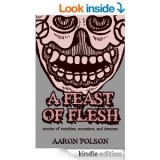
A FEAST OF FLESH: STORIES OF ZOMBIES, MONSTERS, and DEMONS
by
AARON POLSON
* * * * *
A FEAST OF FLESH
Published by Aaron Polson on Smashwords
Copyright 2011 by Aaron Polson
All rights reserved. Without limiting the rights under copyright reserved above, no part of this publication may be reproduced, stored in or introduced into a retrieval system, or transmitted, in any form, or by any means (electronic, mechanical, photocopying, recording, or otherwise) without the prior written permission of both the copyright owner and the above publisher of this book.
This is a work of fiction. Names, characters, places, brands, media, and incidents are either the product of the author's imagination or are used fictitiously. The author acknowledges the trademarked status and trademark owners of various products referenced in this work of fiction, which have been used without permission. The publication/use of these trademarks is not authorized, associated with, or sponsored by the trademark owners.
Smashwords Edition License Notes
This ebook is licensed for your personal enjoyment only. This ebook may not be re-sold or given away to other people. If you would like to share this book with another person, please purchase an additional copy for each person you share it with. If you're reading this book and did not purchase it, or it was not purchased for your use only, then you should return to Smashwords.com and purchase your own copy. Thank you for respecting the author's work.
Table of Conents
Cargo
Tesoro’s Magic Bullet
The Way of Things in Fly-Over Country
Former Vocations (a poem)
The Distillery
In the Primal Library
Familiar Faces
Sea of Green, Sea of Gold
Bona Fide King of His Realm
Down There
Acknowledgements
Cargo
Start with the remnants of a desert town, a little girl, a man with a truck.
The town consists of shacks and ruined shells of larger buildings, rolls of barbed wire and sharpened lumber surrounding it on all sides like a great, prickly tortoise slumbering in the heat. The girl is too thin, like the rest of the survivors, with naps of sun-bleached hair in long, disordered strands. Her large eyes call from an impish face, blue and clear like the sky on good days, the days without dust storms. Both the man and the truck wear layers of grime like armor.
He only works after a moonless night, the ones survivors call “nameless.”
The Ruined Ones come with secret, padding feet to the edge of the wire. They learn the hard lesson of sharpened lumber and rolls of razor wire after scores of their brothers and sisters—should they even consider the word—thrust themselves into the teeth of the village’s defense. On nameless nights, their hot, angry cries scald the sky. In the morning, the man starts his truck, a rusted, grumbling thing, and rides it toward the gates. The men at the gates collect the dead—humans wrapped in burial shrouds and those grim-grey husks impaled on the fortifications—and heave body upon body until the bed of the truck hunches under the load.
On most days, no one watches him drive through the broken remnants of city streets.
No one expects anything from the man but to be rid of the bodies. For this, they keep him fed from their gardens. For this, no one expects more. On the days with cargo, the man and his truck chug across the dusty flats to the pit. He earns his food and shelter on the days with cargo.
Since Red shot himself in the mouth, he does the job alone.
He carries dozens of dirty pseudonyms, glares, and hateful, whispered rumors so the rest of the survivors can pretend they are safe and different and far away from the rotten, dying world. After the nameless nights, the others shut themselves in. They live without the burden of the dead. For nearly a month, they pretend the world can be good again and they all love one another.
Everyone but the man and his truck.
No one knows his proper name.
After one “nameless” night, the girl stands by the side of the road and waits as the truck rumbles past. The man hardly offers a glance, but the girl’s bone-thin hand reaches out. Dust blows in her face. She squints through the cloud of brown ash, studying as the men piled bodies onto the bed. She watches until the truck fades from the gate into a dark speck in the desert.
The man wears one long scar across his left cheek and nose. Red’s face had been scarred too many times to count, his skin a latticework of pockmarks and lines. Before the end of everything, Red raced dirt bikes, and half the scars dated from that far back. The survivors chose Red because of fear, because no one else had enough courage to leave the wire barricades even during daylight. Red chose the man because he could drive the truck, and the man wasn’t afraid, either. Handling corpses, tossing them into the pit like garbage, meant nothing to either of them. At the pit, the smell lingered, always lingered. Death and decay and ruin in one, cloying stew.
Red claimed he lost his sense of smell in a bike crash.
The man never said much at all.
On the night after she watches the truck, the Ruined Ones grow bold and attack again despite the sliver of moon. Howls of pain and hunger break through the whispering, desert winds. Behind walls and under roofs, children huddle with the elderly, clutching at each other to fight away the real boogiemen that probe the edges of their fortified oasis.
In the center of the village, the man sits on the cab of his truck and watches. He sees waves of Ruined Ones fall upon the defenses in the dim moonlight, and then those behind scramble over the bodies of their dead to get into the compound. The man smiles when defenders push forward carrying sharpened timbers, scrap lumber fashioned into pikes to impale the coming monsters. Bullets are precious, and the Ruined Ones are legion. Nights are cold in the desert.
He climbs down, ducks inside his shelter, and goes to sleep despite the shrieks in the distance. Tomorrow will be a busy day, and he needs his rest.
In the morning, she waits again, standing in the same spot. The man downshifts, and the truck protests with a shuddering stop. Already, volunteers pile the dead near the gates, but the rest of the city is silent.
“You got a pickup?” he asks through the window.
The girl hesitates, kicks and the ground with the toe of her shoe, and shakes her head. “Just wondered what you looked like,” she says, lifting her eyes to his. “Grandpa calls you the Grim Reaper. I’ve never seen the Grim Reaper.”
The man scratches his stubble, grunts, and drives away. Spouts of dust kick into the air, swirling like brown ghosts as he passes. The girl starts to run. Her mouth opens and shuts like she has something else to say, something she wants the man to hear, but his eyes aim forward. When he glances behind, she’s stopped running, just a shape behind a tan cloud.
Red shot himself in the mouth with snub-nosed .38 revolver six months before the man met the girl. Six months ago, the end of the world was a fresh, palpable thing. They both carried guns then, both the driver and Red. The survivors in the village told stories about the Ruined Ones, how they ate flesh or drank blood, how their teeth carried poison. How they could change shape in the shadows. Not much was really known about them, what their limits were, how they thrived only in the darkest nights. Only stories. Stories could lie. Each man carried his weapon with fear-charged hands.
But that day the truck lurched unexpectedly and came to a sudden stop. Red, often asleep during the short, jostling ride to the pit, woke with a start.
“Whassthat?”
The man peered out his open window. “Nothing. Nothing I can see, anyway.” He scanned the rearview mirror, checking the load of corpses for movement. “Can’t tell.”
Both men gathered their guns, Red his .38 and the man a Luger older than either of them. They hopped from the cab onto the dusty, sandy ground, their boots grinding into the earth with a crunch. Heat shimmered in the distance, dancing from the horizon in all directions. The man held his gun in front of him in one hand. He walked with even, slow steps. By the time he rounded the end of the truck, Red knelt over a black mass thirty yards away.
Bodies slid off at times, especially those shrouded with cloth or plastic, unfortunates among the survivors. When the man reached Red, he knew without looking. A body had fallen from the side and the truck’s rear tires dragged it under, smashing the chest and lower abdomen. Crushed and twisted, the bag opened at one end to reveal a face, a young girl, pale and almost peaceful. The desert wind caught the plastic cloak and rattled it in the wind.
“Shit, man.” Red closed his eyes.
The man wrapped the corpse as well as he could and helped Red carry it to the truck. They finished the run at a slower pace, neither talking, just listening to the rattle of metal and grind of tires against rocky path until they reach their destination. The man’s eyes roved the horizon, scanning for a shift in the rough brown smudge of a world. Nothing but scrub grass, sand, and dirt. Wasteland.
Before them, the pit showed itself, a scar on the earth, a black, hungry mouth. The truck slid to a halt at the lip of the pit. Dust skittered across the landscape in a game of chase.
Both men continued in silence, tossing body after body into the smoldering remains below. The charred remnants of a thousand lives lay in the pit, broken and blackened bits of bone and scorched flesh. The bodies landed with tiny thumps. Without rain to quench its thirst, a fire burned at the bottom. At last they tossed in the girl’s body, the last body, each taking one end and heaving it together, until it hung in the air, suspended for a moment, then twisted and tumbled with the others into the reeking smoke below.
The man climbed into the cab.
Red didn’t move. He slid his .38 from his waistband. “Fuck this, man. I’m done.”
The gun made a tiny noise in Red’s mouth, a quick, muted pop. A spray of blood, flesh, bone and brain matter colored the sky momentarily, and then his lifeless body tumbled over, and slid into the pit.
The girl is gone when the truck lumbers toward the gate after the third consecutive night of attacks. There are mutters from the men near the fence, mutters of creatures not afraid of death, a host of horrors willing to run themselves onto a stake, clawed hands and yellow teeth snapping at the air. The black eyes, they say, are the worst. The Ruined Ones have lost their fear of the moon. Casualties are high, and the man looks away when a tiny, shrouded body is loaded on the truck.
He drives alone, in silence, the Luger sitting on the empty seat next to him. The grind of rubber tires against packed desert sings through the metal of the truck. At the pit, the work is hard for one man, but no one else will come. No one else dares the awful, pungent stench of burnt flesh. No one else carries enough courage to tread in the silent, dead places of the world. He pulls the bodies from the bed one by one, saving the small, shrouded victim for last.
He avoids it until—
It shifts.
He staggers back.
A thin hand pokes through the fold, and the man wishes for his gun. The girl’s face emerges from the shroud. Her cheeks are smudged and dirty, but her eyes steal the blue from the sky.
She doesn’t move for a few, sluggish seconds. “Sorry,” she says. She stretches and dusts off her clothes, and the cloth falls to the bed like a discarded shadow. Desert winds kick up and chase her hair across her face.
“I wanted to see outside the village.”
“Dangerous,” he mutters.
She nods. Her eyes soften. “Sorry.”
The man hoists the girl to the desert floor. Her body doesn’t weigh much. For a moment, they stare at each other, the girl with her blue eyes and the man behind his shell. Smoke winds from the bottom of the pit. The girl’s eyes follow a tendril of dark grey until it fades into the clouds. She climbs into the cab as the man brushes sweat from his face, realizing the girl must have crawled into that shroud before the night had ended, before the men near the gate had collected all the bodies from the night’s butchery. He climbs into the driver’s seat.
“Where’d you get that scar?” she asks.
The man touches his face, runs a finger over the shallow groove in his skin. “Before…this,” he says.
Neither speaks for a minute. The man pinches the wires together, starting the truck. The engine spits and growls to life. Another gust tosses some dirt into the air, and the dusty cloud gallops across the flats. Behind them, in the distance, the remains of the city stand out like a smudge of black in the tan wasteland not much different than the pit.
“What’s your name?” she asks, eyes forward.
“Does it matter?”
She studies him. “Not really, I guess.”
He forces the metal beast into gear. Neither speaks as they crawl toward the remnants of civilization. The flats stretch on, seemingly an endless plain of brown nothing.
“I’d like to help you.”
He shakes his head.
“When I’m older,” she adds quickly. “When I have to choose something for my life, I want to help you do what you do.”
He drives, thinking of the choices already made for her, for all of them. Back inside the fence, the truck slows. She glances at the man as the truck idles in front of her shack. The weight of her blue eyes presses against his chest. He looks away and watches the volunteers work the defenses, string barbed wire, and push sharpened stakes into the ground.
Less than a year, and the Ruined Ones are this strong?
He closes his eyes. “Maybe.”
Her hand brushes against the rough skin on the back of his. In a moment, she’s gone, running into the shack. A voice rises over the grumbling engine—her grandfather’s, berating her for being gone, asking why she was with the man in the truck. The reaper. The man who will always be unclean.
He smiles, pushes the shifter into gear, and rumbles away.
Tesoro’s Magic Bullet
Tesoro comes home with a bullet on a chain around his neck. Not just any bullet, but the bullet, the one that the doctors pried from his ribcage, the one that should have killed him, only it didn’t. It didn’t even look like a bullet anymore. Now, it is a lump of lead, a misshapen mass of grey metal in a small bag dangling above the Marine Corps tattoo on his chest.
“It’s a magic bullet,” he tells his little brother the first night. As he does, his breath reeks of stale blood like the stains on their father’s work clothes after a shift at the meatpacking plant. Saul turns away.
Despite the smell, the ashen hue in Tesoro’s cheek, they are brothers. Saul basks in Tesoro’s machismo and wants to be a Marine one day.
On the mornings after Tesoro’s late nights, Saul sleeps late and skips school. In Garden City, a place of pork and beef processors surrounded by Kansas plains, no one notices, no one wonders about another Latino kid missing school. The teachers lose count of their shifting student body, and Saul becomes less than a number. He sleeps late those mornings. He sleeps easier because the sun is up, warming his bed through the open window. Bad dreams hide during the daylight, so Saul sleeps a black sleep with no dreams.
It happened like this:
Tesoro was on foot patrol in Baghdad. A car exploded, bright flames pushing the sky. The other Marines tensed, took cover. Tesoro didn’t move, watching a woman stream from the flames with a tail of smoke. She screamed louder than the bellow of the burning wreck, and the sound solidified his flesh just long enough. Too long. When the bullet broke through his chest, tearing cloth and skin and bone, his ears lost everything: the screaming woman, his sergeant’s barking voice, the fire, and the crunch of his body on the rocky dust. His ears lost everything except the snap of that bullet, the sound coming after it cut into his body.
A moment later, return fire from the Marines sounded distant, like firecrackers under metal cans. The blue sky lay across his dying eyes like a shroud.
In the evenings, after all but Tesoro dine together at the table, their father listens to an AM radio station that broadcasts the news in Spanish. He sits in his chair, worn and tired; lines like wrinkled leather punctuate his face. His finger taps against his lips as he listens.
The radio announcer reads the police reports, and sometimes their father mutters, “Dios mio.” His head hangs as he listens to the report of another body, a dead Latino teen found in a ditch outside of town. The Spanish station alone reports the missing. The only pattern to the tragedy is that the victims have been the children of undocumented workers—killed by a bullet in their brainpans. But the bodies were mauled after death, mangled and partially eaten. He listens and tries not to think of the layer of dust on Tesoro’s truck. He tries not to think of his son’s late nights. He fights against the horrible visions of those victims—bodies that must share a raw, red color with the beef carcasses hanging in the plant cooler.
In the kitchen, their mother scrubs the sink, pushing hard with the wire brush to blot the sound of the announcer’s voice while Saul sits at the little table and ignores his homework. The kitchen stings of bleach before she is through. Tesoro’s truck rumbles in the yard—the ’62 Ford that he promises to paint one day and their father once joked was dead and resurrected. The joke died when Tesoro came back with the bullet around his neck. The truck still wears patches of rust like bullet wounds.
Saul knows when he hears the truck’s growl fade. He knows it will be a late night for his brother and an early morning for him. He closes that math book, knowing he will sleep in the morning sunlight and his teachers will overlook his absence. In his mind he counts the bullets in his father’s gun.
When his mother cries, Saul says, “It’s alright, Mama. He’s still our Tesoro.”
On some evenings, rare evenings, Tesoro joins the family and tells stories while his father drinks cold cerveza. He tells the story of the old woman in a black berka, the woman whose wrinkled fingers looked like wet tissue paper on a piñata. Unreal fingers. Fake fingers. Tesoro talks about the talisman, the blessed scroll of paper he bought and carried in his shirt pocket, a superstitious custom to bring him home alive.
Old magic, she said in her tongue. Dark magic.
The other Marines laughed. Tesoro smiled and laughed, too.
That afternoon, a car exploded in a small, Baghdad market.
That afternoon, Tesoro didn’t die.
Sometimes, in Saul’s nightmares, Tesoro’s eyes shine with a yellowish light, an amber light. He pulls his shirt open, and then pushes fingers into the scar where the bullet broke his skin. His fingers pull back, and the blood pours out like oil, thick and dark. Tesoro smiles, and says, “Magia.”
Sometimes, Saul wakes with a cold sheen of sweat and listens to the songs of frogs and crickets floating on the night air. He waits for the sound of his brother’s truck, but it doesn’t come. He sees the faces of the children from school in ditches outside of town, dead faces with open eyes, staring at him. He knows it is a nightmare when the dead reach out, clutching with gnarled fingers, accusing with their blank stares. His father’s old handgun hides under his pillow, an uncomfortable lump, but Saul keeps it close.
But Tesoro is his brother. The dead are strangers.
A night comes when the rumble of Tesoro’s truck takes away the dream. Saul wakes, creeps down the hallway, and listens at his parents’ door. Nothing. Another sound, a door clicking shut in the unfinished basement. Tesoro’s room is down there. Saul checks the locks on the door and glances out the window. The rusty Ford is in the lawn next to the drive.
His mouth goes dry. Tesoro is his brother. His flesh and blood. When he pulls the gun from under his pillow it is heavy and cold. A shudder crosses his body.
Saul starts on the steps, and a little creaking noise calls out with each. Halfway down, he stops breathing and waits for a moment. A light glows from under Tesoro’s door. Like a moth, Saul is drawn to it, likely to burn up in the flame. His hand rests on the knob, the other clutches the pistol grip. The smell of stale blood is back, worse now. Amplified.
“Saul?” Tesoro asks through the door, his voice cold like a block of granite.
Inside, Saul finds what is left of Tesoro on his bed. His shirt is off, bunched in a pile on the floor. Both hands rest on his knees. When Tesoro looks up, his face is streaked with blood. His teeth are dark and discolored, his mouth blotted. Tesoro’s face wears neither a smile nor frown—a blank expression with black eyes.
“You brought a gun?”
Saul looks at the pistol, his hand shaking. “Papa’s.”
Tesoro’s lips curl slightly at the corners and one hand stretches toward his brother, palm open. “They will come for me, sooner or later. They will need more than guns.” The other hand touches the lump of lead dangling from his neck.
For a moment, neither speaks.
In that moment, Saul understands; in that moment, he kneels to the old magic in his brother’s eyes. What crawls Saul’s spine is damp and black and dead. His eyes close and fingers uncurl. The gun drops into Tesoro’s open hand.
He smiles, showing the full horror of his tainted mouth.
“I’m leaving.”
Saul steps forward and touches his brother’s shoulder. The flesh ticks like a horse’s flank chasing a fly. The skin is cold and almost grey. “We can take your truck.”
“Si,” Tesoro replies. “Mi hermano.”
Saul hesitates, breathing through his mouth to avoid the smell. He looks at his fingers, imagines the skin peeling away from scrubbing. Blood makes a stubborn stain. “First the bleach. I will clean your clothes… the truck, and then we go.” He stoops, gathers Tesoro’s shirt, and leaves the room without another glance at his brother.
The Way of Things in Fly-Over Country
The search beams crossed in front of the gate when my buddy Dan, broad and strong like a spit of granite, hunched over on all fours and made a little scaffold out of his back for me to climb. I scrambled over his shoulders, flopped over the gate, and dropped to the ground on the other side. The first over, Davin, was waiting for me with his shotgun poking out into the kill zone. Once I dusted off a bit and straightened my glasses, we waited for the lights to swing by again before tossing Dan the rope; I held the outside end steady while he climbed. Davin kept me covered. I was scared, shaking like chimes in the wind, but Davin held steady.
Once Dan dropped to the ground, I reeled in the rope, and the three of us hunched in the shadow of the big gate while the lights swung by once more. Davin looked at Dan and me, smiled crookedly, and nodded. The lights rotated away, and we sprinted for the shadows at the edge of Old Town. I figured the guards probably saw dumb kids like us half the time, but no one ever fired a shot.
So there we were: seventeen, full of piss and stupidity, creeping through ruined streets on a Friday night with a couple of jars of Uncle Jeb’s homemade booze, our guns, and an ache to celebrate Dan’s eighteenth birthday. One week later, hopping the fence would land Dan in the stockade—a crime believed to endanger the whole village, but this was coming of age, our ritual. Plenty of other dumb bastards snuck out of the compound before they officially became men; Dad even admitted to sneaking out just before his brother’s eighteenth.
I glanced back over my shoulder at the wall: randomly fused sections of steel, brick, concrete, and stone. Originally a desperate measure against the walking dead, that wall had stood for something like eighty years. For boys raised in captivity, the world outside the wall reeked with mystery, and we devoured grand lies that became our motivation to hop the wall—a man’s right to be free, all that crap. The older men in the compound filled us with stories, baiting us like a lantern to a moth, knowing we’d bite, go over, and look for danger. The stifling closeness behind the wall pushed us, too—personally caught me in the throat.
“What’ll it be boys?” Davin asked once we found the shadows. The moon shone pretty bright that night, drawing the silver out of the world. Davin shimmered like a bit of fresh aluminum.
“Hell, I’m itching to splat a couple tonight.” Dan walked ahead a few steps with long, loping strides, the pinnacle of our small triangle.
“Old man Jantz says we have to check out the church. Says it’s beautiful, sacred ground. Inside the building, with a moon like this, the whole place lights up like a rainbow.” Davin stopped and cocked his head to once side, pointing toward the hill that led to the little building. We all knew about the church, the center of so many stories. Supposedly, that building remained mostly intact after all these years; a vestige of old superstitions lurking in our new ones kept folks from smashing it up.
“Fine, but I want to show you guys something first. Something my brother told me about.” Dan pointed the barrel of his shotgun into a thick patch of inky shadow ahead and strode forward.
Most of the big trees in Old Town were gone, knocked down for safety, but saplings, crooked grass, and snaking weeds groped toward the sky all around. I was surprised at how well I could see with just the moon. With the bright searchlights back at the wall, the rest of the night world look as black as spent oil, but the hunched backs of old houses, broken business, and other buildings rubbed against the blue night and field of stars in plain detail as we walked through Old Town.
I’d heard some stories, mostly from Grandpa, that the bigger cities had drained the plains of their population long before the end. In the meantime, the big corporate farms finished off the aquifers and sucked the land dry. Without water, there wasn’t much reason to live in the flat land. Without too many people out here, there couldn’t be too many of them, the zombies. Hell, I’d only seen maybe a dozen in my life, but they left the taint of decay smeared across everything. You could see it all over Old Town.
As we stumbled down the split asphalt of an ancient street, Dan reached into his pack, rummaged around, and produced a jar of booze. It was nothing but rot-gut moonshine, but all we had because most drivers wouldn’t risk a run through the wastelands just to drop off some beer for a bunch of hold-out hicks. That’s the way Grandpa painted it, anyway. The scavengers in the wastelands seemed worse than a whole stockyard of zombies.
Dan screwed off the lid, tossed back a swig, and shook his head. “Not bad, boys.” He slowed, passed the jar to Davin.
“No,” Davin said, waving Dan off with the barrel of his gun. “Not until I’m kicked back in the church.”
“Nate?”
“Sure,” I said, cupping the jar in one hand while clutching my own shotgun in the other. The gun had my great-grandfather’s; Grandpa said he used it on birds—quail and pheasant mostly—as a boy. I’d only fired the thing a few times myself, mostly at wooden targets that wouldn’t bite. The guns did make me nervous—we were warned against using them as the report would rouse any undead in the area. I tossed back a swig from the jar. Damn, that shit tasted awful, but the warm humming feeling that grew out to my finger tips after a few swigs kept me going.
“Did hear about Stacy’s cousin, over in New Colby?” Dan asked, reaching for the jar.
“Yeah,” Davin muttered.
“Gawd, I never want to see another burning in my life.” Dan spat on the street.
Davin’s eyes narrowed. “I don’t want those superstitious old bastards to set me on fire when I kick off.”
I shook my head and fingered Dad’s old lighter in my pocket, fighting a shiver born of too many burnings. Mom, for one, after Melina was born. Too much blood, not enough medical knowledge, a bad mix of both. Dad tried to explain the need for a burning, the whole ritual, but I wanted none of it. I know you can’t just bury the dead anymore—paranoia, hysteria, and the real likelihood that the undead will sniff out a fresh corpse. When I was five, watching my mother burn to black ash, none of that rationalization amounted to a hill of shit. Grandpa whispered something about Viking warriors in my ear that day, trying to cheer me. “Great big pyres, big as a house,” he said, “it was pride, not fear and shame made ‘em build those pyres.”
Dan clicked on the lantern he’d taped to the barrel of his gun. “Here we are fellas. Used to serve food here. C’mon.” The light reached out, starting to grope the heavy shadow inside a mashed up brick building. I’d never heard anything about that particular spot, and I couldn’t figure what he wanted us to see.
Rows of benches stretched down a tiled hallway; some broken with bits tossed askew to the grid. Across a counter to our right sat the old kitchen, a steel grill and some broken cash machines. A few coins littered the floor, shining on the floor like dead minnows. The whole place rested under a thick dust like frost on a January morning.
“Ssssh.” Dan, walking just ahead of us, waved back with one hand. My heart started pumping against my ribcage until I thought it would spring free and skitter across the floor. I heard why Dan shushed us then—I could smell the thing, too, a rotten, fishy smell mixed with mud.
Davin pushed forward, raising his gun. “Dan, give me a little,” he whispered, and Dan obliged, poking his flashlight around the corner.
“Use a baton,” I whispered, fearing gun’s report and its siren song to other zombies. I reached down to my side and fingered the black rod hanging on my belt.
Davin glanced back at me and uttered a low, “naw.”
Then I saw it, a little thing, bobbing its matted blonde head up and down as it munched on something—most likely a rat or stray cat. Davin clicked his tongue to get its attention, and the thing rotated to face us. It was a girl, six or seven maybe, although she could’ve been six or seven for years now. The undead didn’t age like us. Her little mouth, blotted with blood, opened and a little moaning sound trickled out. I closed my eyes for a moment and saw my sister’s face.